 Aja Beckham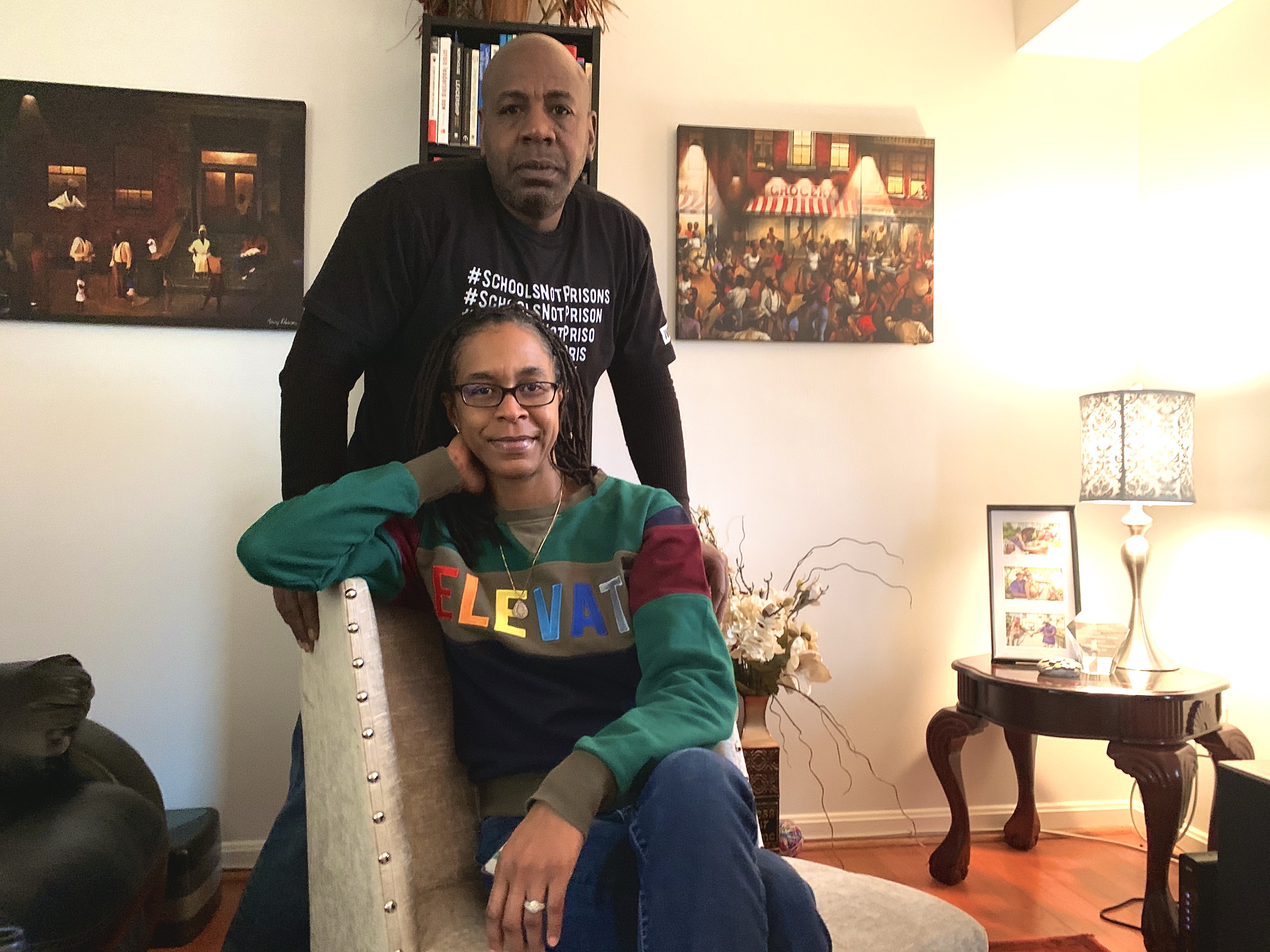
Lashonia Thompson-El, 48, says it was love at first sight when her now-husband, Sean Thompson-El, 56, arrived at Washington Dulles International Airport seven years ago.
“Ever had someone hug you so tight that they put your broken pieces back together again?” says Lashonia. “That’s the way he hugged me when I went to pick him up at the airport for our first date.”
It was the first time they met in person. After they found each other on Facebook’s “suggested friends” feature, they added each other and spoke regularly on the phone for a year—Lashonia from her home in D.C. and Sean from his in Chicago—before he visited her. They shared a common history: both served decades in prison. Both were determined to help others avoid the same fate.
Lashonia says the way that Sean talked about his trauma “exemplified resilience, and I had a feeling he would add that to my life.”
After dating for one year, Sean relocated to D.C. after he completed his Master’s program at the University of Illinois at Chicago. (Sean earned a Master’s degree in Criminology Law and Justice, and Lashonia has a Bachelor’s degree in Human Relations.) That year, in 2015, the couple would marry and embark together on a shared goal: lowering incarceration rates in the D.C. area by helping those who are either headed down the wrong path or striving to turn things around.
They say that their marriage is part of the foundation that helps them support others and heal together from their past trauma.
Sean works nights as an emergency behavioral specialist through a D.C. government-run program called Comprehensive Psychiatric Emergency Program, which provides adults with emergency psychiatric care – a service that often prevents people who are experiencing mental health crises from being wrongfully put in jail.
Lashonia co-leads Cure The Streets, a program aimed at reducing gun violence in wards 5, 7, and 8 by training and hiring violence interrupters, people who facilitate conversations to help rivals peacefully resolve conflict. It is managed by the D.C. Office of the Attorney General. Lashonia also helped co-found The W.I.R.E., a non-profit dedicated to building social support and work opportunities for women returning citizens.
Their work is made all the more urgent by the rising number of homicides in D.C., particularly due to gun violence: There have been 23 homicides to date in 2021, compared to 19 homicides at this time last year. In late January, Ward 8 Councilmember Trayon White asked the District to declare a state of emergency in response to gun violence. Last year D.C. homicide rates were higher than they have been in 15 years, as the city recorded 198 homicides—also a 21% increase from 2019.
But it wasn’t always the case that the couple was in a position to provide that kind of help. At one point, both were incarcerated for charges similar to those they are working to prevent in the District today.
Sean, a Saint Louis, Missouri native, was first incarcerated at 12 years old for an assault charge when he stabbed someone; he served eight months in prison. Four months after his release, he stabbed someone else and returned to prison again.
For decades, Thompson-El would go in and out of prison, and it would take many years before his life direction pivoted for the better. Lashonia, a Southeast D.C. native, was also first incarcerated at a young age. She was 19 years old when she was charged with a double homicide that would lead to her serving 18 years in prison. Collectively, Sean and Lashonia served 45 years in prison.
“Crime was almost like a comfort zone [in my community],” says Sean. “To step outside the box, to go to school, to reinvent yourself, that was difficult.” Lashonia also says crime was the norm in the 80’s, when crack cocaine plagued the District, and in the 90’s, when D.C. became known as the murder capital.
Sean says Lashonia isn’t uncomfortable with his past, such as him selling heroin at 12 years old.
“My wife gets me. She understands my past, and I understand hers,” he says. “We don’t get tired of talking about work because it’s [connected to] our personal lives.”
Lashonia agrees: “Everyday I get to heal with him, debate with him, and talk to him about these issues.”
It’s not atypical for Sean’s work week to involve responding to an attempted suicide, and for Lashonia to occasionally respond to the murder of another violence interrupter—such as Lorraine Marie Thomas, who helped end a rivalry in Washington Highlands and months later was found shot and killed in a car while in that same neighborhood, where she also grew up.
Through it all, Sean and Lashonia lean on each other for support.
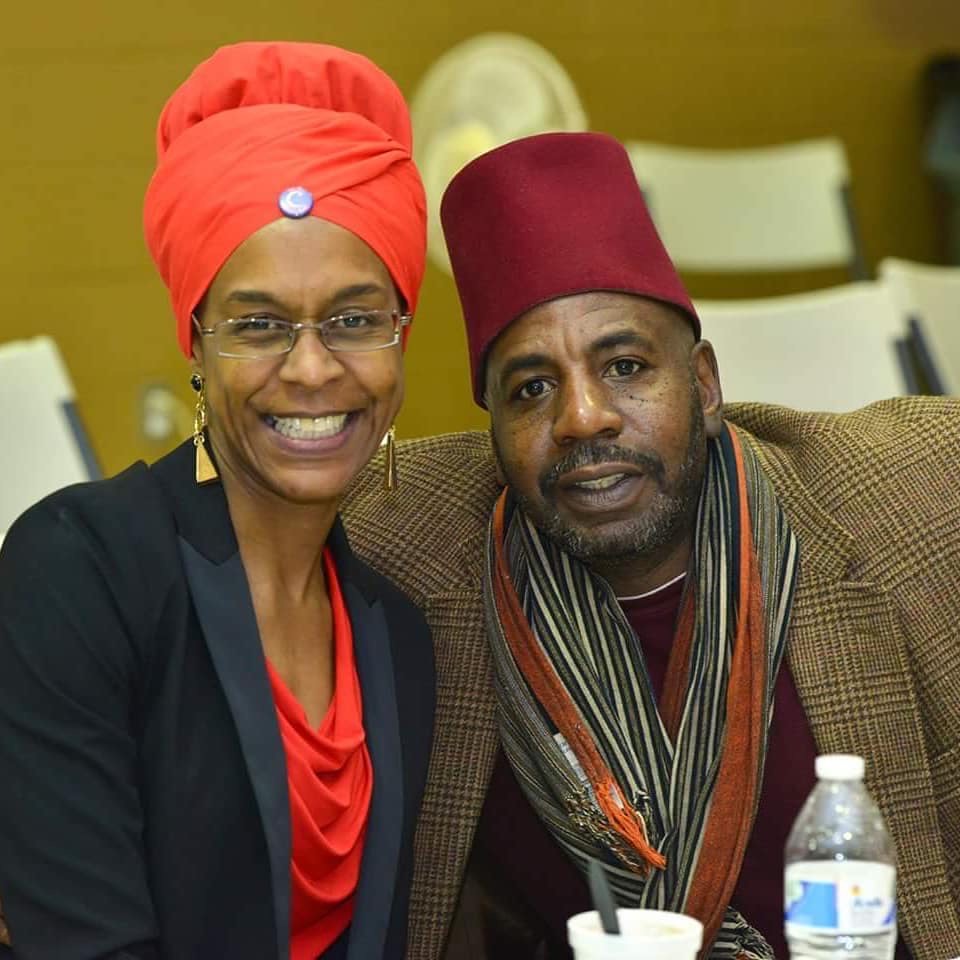
Their religious beliefs help to sustain them. Both Sean and Lashonia separately embraced their religion, Moorish Science, from prison. It’s the practice that brought them together as a couple and helped them begin to move forward from their past and work on their self-worth and self-image. (Sean was first introduced to the religion when he was about eight after his mother returned home from prison. He learned more about Moorish Science when he was incarcerated.)
“[The religion] teaches that a man cannot be Negro, Black, or Colored – that these names were given [by] slave owners,” says Sean. “It also teaches that African ancestors were educated in schools and not barbaric.” Sean says the religion prompted his realization that violence often comes from a place of “self-hate, [a] lack of self-esteem, and being miseducated.”
Not only did Moorish Science change Sean and Lashonia’s perspective about race and who they were descended from, they also developed stronger values such as “love, truth, freedom, justice, and [a] covenant that you are your brother’s keeper. [The religion] teaches you to have a deep appreciation for womanhood, family, and to be a useful member to the community,” says Sean.
“It’s been the foundation of my transformational process,” says Lashonia, who says before practicing the religion she had low self-esteem and ran with the wrong crowds because they affirmed her.
And in a more concrete sense, the religion helped the couple find each other. When someone becomes a member of the Moorish Science religion, they add “El” or “Bey” to the end of their name—similar to some Muslims adding X to the end of their name to erase enslavers’ last names. That’s one thing that struck both Lashonia and Sean when they saw each other on Facebook—both had “El” in their last names.
Sean says “the religion is about peace,” and he’s trying to transfer that principle to communities he works in: “[Lashonia and I], we just are trying to get peace in the hood.”
And that effort comes with struggle and more trauma, but the couple says it’s easier for them to navigate and bear the weight of it all together.
“Like for example, if I’m triggered I’ll say, ‘I’m triggered right now’ or ‘I just had an intrusive memory,’ and he’ll do the same thing,” she says. “So if we’re having a disagreement, and he says, ‘my trauma is triggered,’ then I know now is not the time to deal with that.”
Around the age of 40, Sean was diagnosed with post-traumatic stress disorder; he adds that gun access and violence in D.C. is overwhelming and further heightens that distress.
“Like right now today, you can go to Southeast D.C., and someone has a foreign made weapon,” Sean says. “How did they get in Southeast D.C.? How are they so accessible?”
Each week, to manage trauma from their past and careers, the couple intentionally makes time to care for themselves and each other during “self-care Sundays,” which includes facials, pedicures, movies, and margaritas at their home.
They also make sure to spend time with family: Sean and Lashonia each have two children from previous relationships, along with 16 grandchildren and two great-grandchildren.
On other days of the week, their work helps them resolve their pasts. Lashonia wrote a book called “Through The W.I.R.E.: My Search For Redemption,” about her organization, The W.I.R.E.. “The actions of my past have been like a cancer on my spirit; my work through the W.I.R.E has been my chemo,” Lashonia writes in the book description.
In May, during mental health awareness month, the couple will be featured in a book project organized by Tyreese McAllister called “Mind Over Matter: Dealing With Stigma, Society, and Self,” which will feature 16 contributing authors who write about mental health challenges and coping skills. McAllister wants to make sure that people aren’t “written off” because they’re dealing with mental health crises.
In the book, Sean will discuss untreated trauma and being diagnosed with PTSD later instead of sooner in life; Lashonia will discuss strategies for coping with the mental weight of seeking redemption after perpetrating gun violence.
Their work, personal projects, and relationship grounds them, particularly when their life stories and work intersect.
“I love ‘Shonia. She’s my friend, and she’s like a female version of me,” Sean says.