Colleen Grablick
Five cases of COVID-19 variants first identified in California were reported in Northern Virginia between December 2020 and February 2021, according to the Virginia Health Department.
The two variant strains — B.1.427 and B.1.429 — originated in California in summer 2020. Like other variants, the Californian strains have not proven to be more deadly or cause more serious illness than other forms of the virus, but they are associated with increased person-to-person transmission.
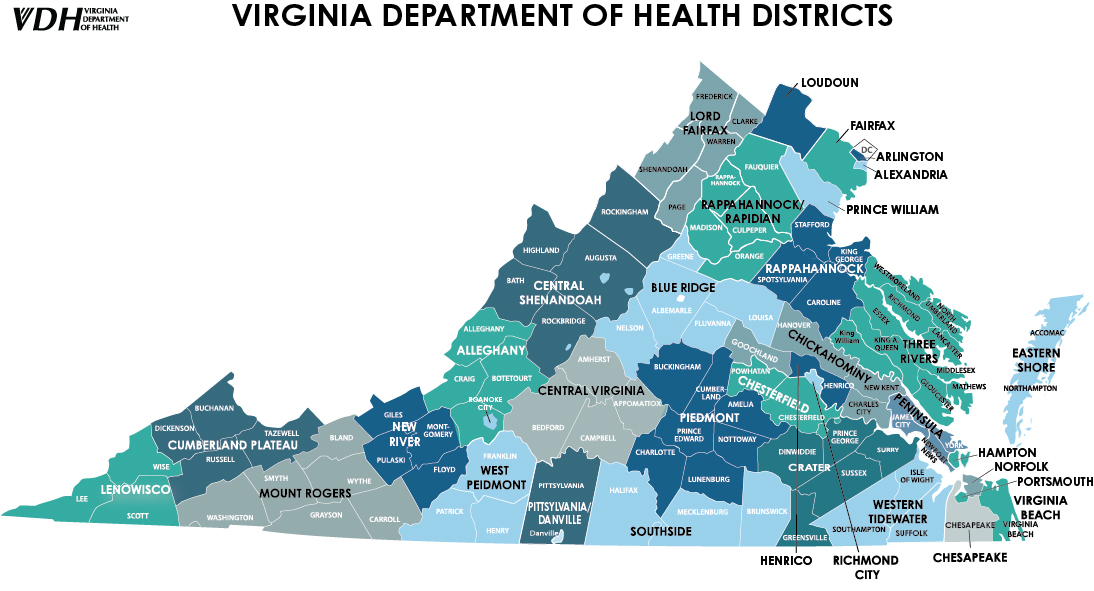
In Northern Virginia, which includes Loudoun, Fairfax, Prince William, and Arlington counties, and the city of Alexandria, three cases of the B.1.427 strain and two of the B.1.429 strain were identified in samples collected between December last year and February 2021. Statewide, 23 instances of both strains were identified during the reporting period.
Three other variants—from the U.K., South Africa, and Brazil—were reported in the D.C. region earlier this year. While they aren’t associated with increase risk of death, they are highly transmissible, causing overwhelming surges in the countries where they originated. According to a VDH press release, the state has reported 26 total cases of the South African variant and 127 cases of the U.K. variant, as of March 25.
The emergence of new variants comes amidst rising coronavirus cases in the D.C. region, despite the progression of vaccine rollouts. Maryland — including Montgomery and Prince George’s counties — have reported cases of the South African and U.K. variants, and the Brazilian variant has also been detected in the state. In early February, D.C. reported its first cases of the U.K. and South African variants.
Due to sampling limitations, it’s difficult to identify every instance of variant spread in a locality. In late February, Maryland Gov. Larry Hogan announced a partnership with the University of Maryland and Johns Hopkins University to increase screening of variants from Brazil, South Africa and the U.K. by more than 100%. The new California variants were identified using a process called next-generation sequencing, which shows a genetic blueprint of the virus.
According to VDH’s Thursday press release, it’s likely that more variants of the virus will continue to emerge.
“With the combined state and national surveillance efforts, it is likely that additional cases with SARS-CoV-2 variants of concern will be identified,” reads the press release. “Viruses change all the time, and VDH expects to see new variants of the SARS-CoV-2 virus as disease spreads.”
Elliot Williams contributed reporting.