Jacob Fenston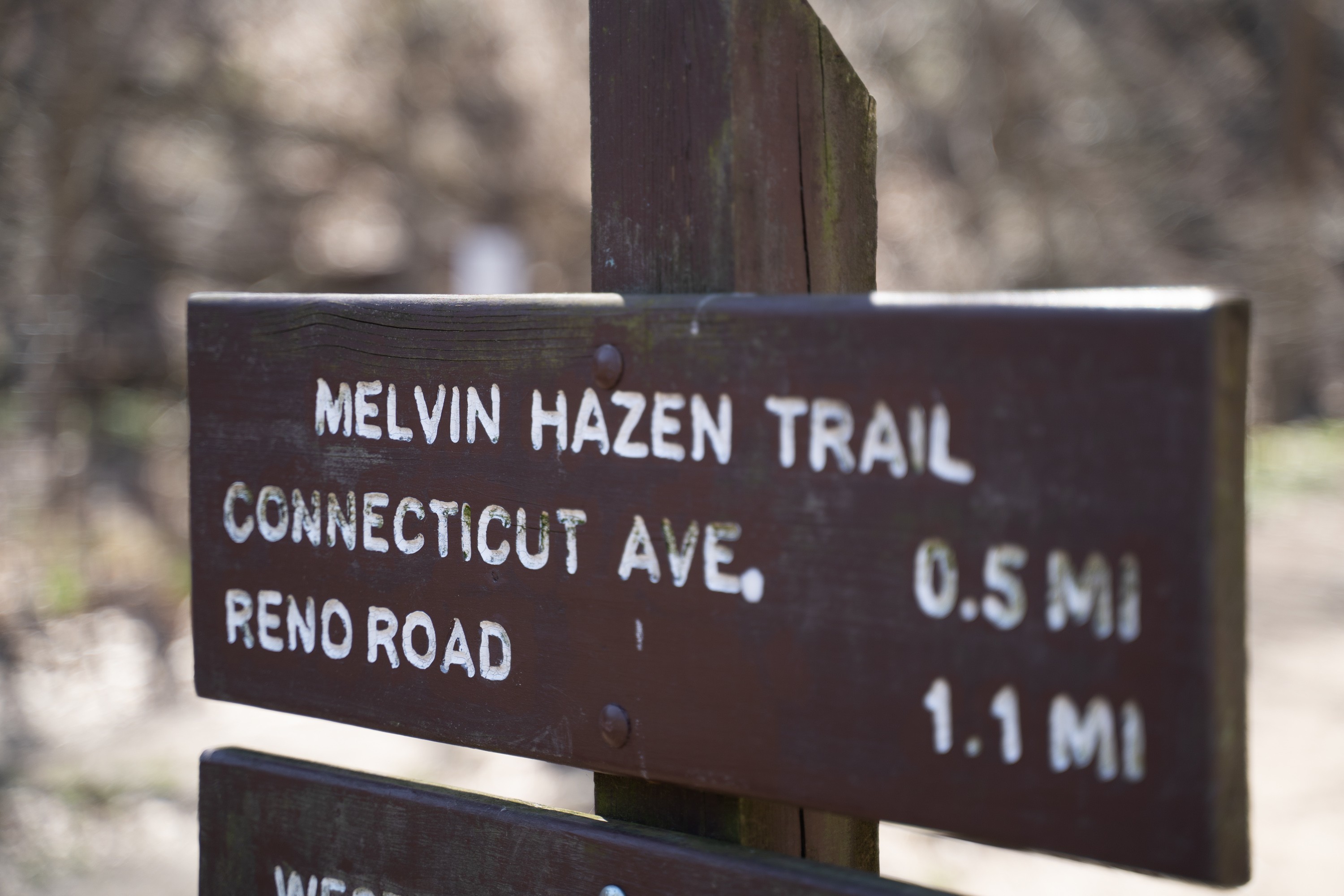
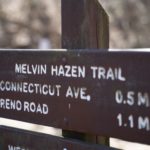
Eighty years ago, any Washingtonian would have likely known the name Melvin Hazen — he was the most powerful official in local government. Hazen is largely forgotten — except for a creek, trail and park named after him in Northwest D.C.
Now, neighbors and officials are calling for Hazen’s name to be removed, citing his role in segregating the city. It’s the latest effort to scrub the city — and the country — of names and monuments with racist legacies.
“Basically it’s thanks to him that Ward 3, Upper Northwest, is as white as it is,” says Monika Nemeth, an Advisory Neighborhood Commissioner in the area. “He made it a point of basically excluding, ejecting or removing Black people. There’s no polite way to say that.”
Nemeth sponsored an ANC resolution, which passed unanimously, calling for the National Park Service to strip Hazen’s name from the park that occupies a narrow valley, meandering up from Rock Creek up to Connecticut Ave., NW and Reno Rd., NW.

Hazen was instrumental in razing and displacing one of the only Black communities west of Rock Creek. “It is an ill-devised, ill-shaped subdivision, that you cannot do anything with unless you just wipe it off,” Hazen said of the community, known as Reno.
“Given the ugly history, is this really who we want to be memorialized, is this the image that we want in our neighborhood and our community?” asks Nemeth, rhetorically. “The answer is no.”
D.C. Congresswoman Eleanor Holmes Norton has also called for Hazen’s name to be removed. In a letter to the National Park Service in February, Norton wrote that Hazen “actively participated in demolishing” a vibrant African American community.
The segregated city that Hazen and many others worked to create is still visible to this day: Ward 3, where Melvin Hazen Park is located, is just 7% Black. City wide, Black residents make up a plurality — 46% of the population.
Hazen’s career shaped the D.C. map
Melvin Hazen’s career in the D.C. government spanned more than 50 years. His first job with the city was in 1889 as an axeman, clearing land for surveying crews as they mapped out streets north of L’Enfant’s original 1791 street grid. Hazen worked his way up through the city bureaucracy until reaching the highest office — the president of the D.C. Board of Commissioners.
In 1941, Hazen died at his desk in what is now the Wilson Building, while discussing a zoning matter with two friends.
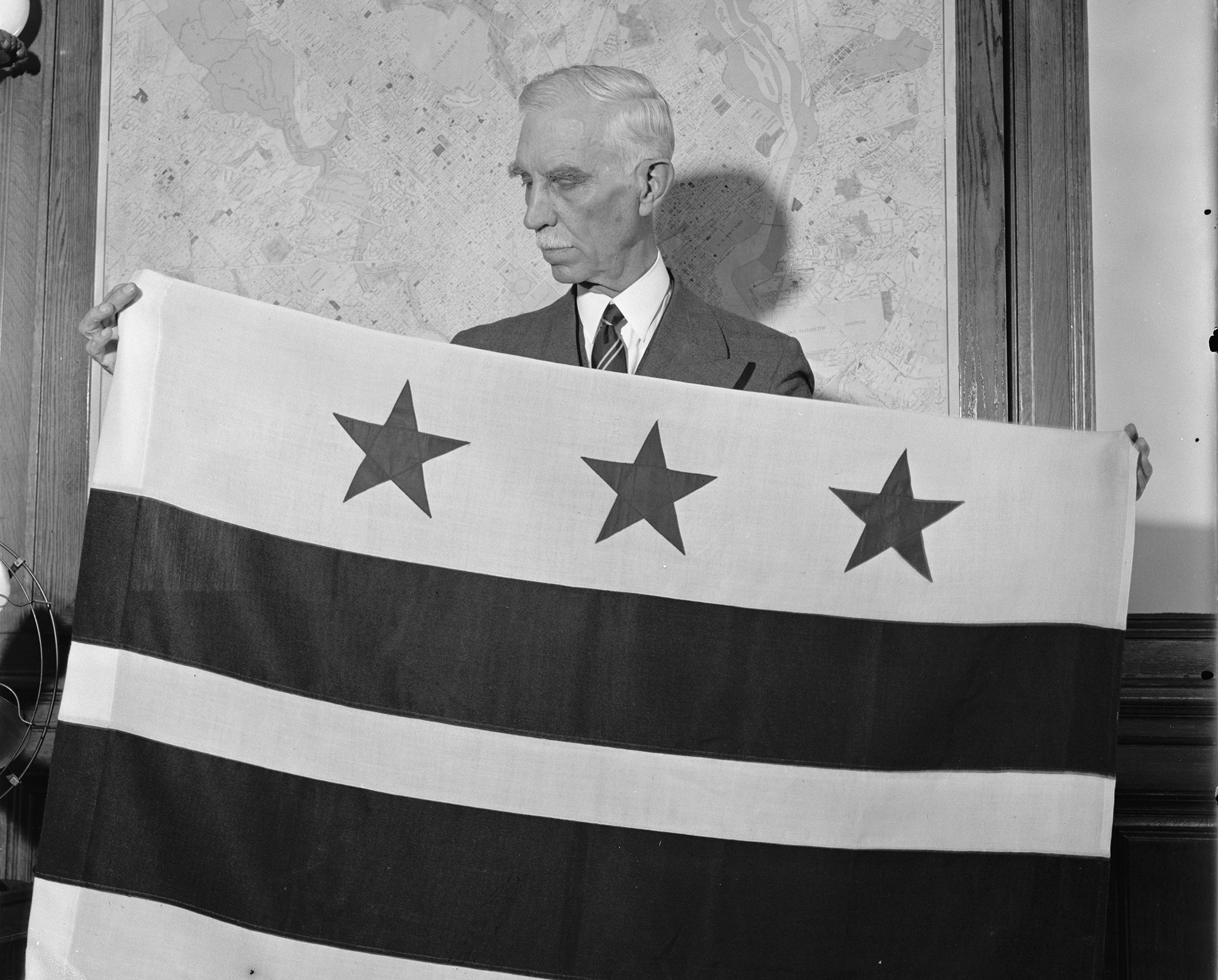
At the time, he was known as Washington’s “first citizen,” the “grand old man of the District,” the “boss” and the “mayor.” Days after his death, Hazen was honored with a mile-long funeral procession. During his long career, Hazen was instrumental in preserving parkland, he advocated for D.C. self-governance — he even helped chose the design for the D.C. flag in 1938.
Unremarked upon in news accounts at the time of Hazen’s death was the negative impact he had on the lives of Black Washingtonians. Over the course of his career, Hazen pursued policies that had the effect of displacing Black residents from areas white people lived, or wanted to live. He advocated for the removal of “alley dwellings” — the small, alley-facing houses that used to be found in many old D.C. neighborhoods, housing Black residents directly behind wealthier white residents. Thousands of Black people were left without homes, and officials showed little regard for where they ended up.
Starting in 1914, when Hazen was District surveyor, he became particularly fixated on a 52-acre area in Tenleytown. It was known as Reno, home to 375 families, most of them Black.

Reno was established just after the Civil War, in 1869, when upper Northwest D.C. was mostly farmland. As the District population boomed in the early 1900s, Hazen was responsible for laying out new streets, radiating from the original federal city. Reno, he said, didn’t fit this well-organized city street grid.
Multiple times over the years, Hazen recommended razing Reno. While he said it was about regularizing the street grid, it also happened to align with the interests of white developers, who were building houses nearby at a rapid clip, and marketing the area as an exclusive suburban enclave.
‘A sore on the body’ of the District
There were various proposals for how exactly to seize Reno; one of them was to use eminent domain to buy up the land, then sell it to white developers.
“That should sound like urban renewal to you, because it is essentially the concept behind urban renewal,” says Neil Flanagan, a local historian and writer. The current attention to Melvin Hazen is due largely to Flanagan’s research into the history of Reno. During this research, Flanagan came across boxes of files related to Hazen at the dusty, overcrowded D.C. Archives, located in a converted stable in Shaw.
“I would say that I may be the person who knows the most about Melvin Hazen that’s alive today,” says Flanagan. “But I still barely know him because this period has not been really studied.”
Flanagan says the story of Hazen and Reno is worth digging into, even though he’s now a forgotten figure commemorated in an unremarkable park.
“It’s a story that explains a lot about why D.C. looks the way it does. Why Black people live on one side of Rock Creek Park and why white people live on the other.”

Hazen presented the plan for razing Reno at a U.S. senate hearing in 1926. (Congress directly managed the District in those pre-home-rule days.)
“This area is more or less a blight on the public development of the highway plan,” Hazen said of Reno.
“It is not big enough for a golf course, is it?” joked one of the senators.
White neighbors testified, echoing Hazen’s language. “It is a blight, it is a sore on the body, on the whole plan of the District,” said Luther Derrick, with the Northwest Suburban Citizens’ Association.
At one point, Hazen bragged that “all the civic leaders and prominent people” in the city had been asked their views on the plan to demolish Reno.
James Neill, a Howard-educated lawyer and Reno resident jumped in to ask, “Were the property owners invited?”
Hazen, seemingly unfazed, responded, “The property owners were not particularly consulted.”
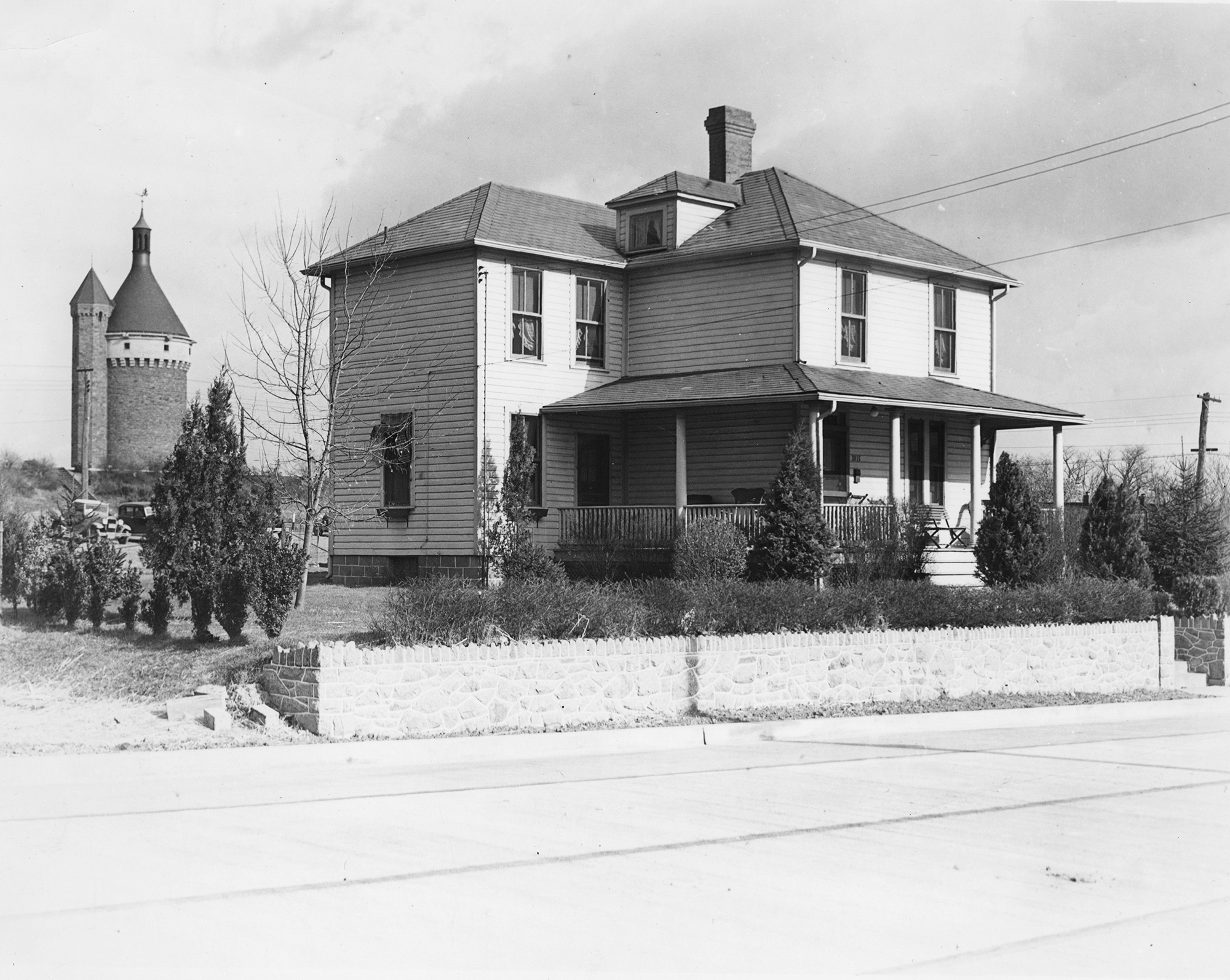
Neill and other Reno residents were also not invited to the senate hearing on their neighborhood. But they found out about it, and showed up anyway, determined to do what they could to save their homes.
Neill called out Hazen and the others for their coded language about his neighborhood, asking “Why is it blight?”
He answered his own question: “Simply because Negroes occupy it. They want a white settlement there,” he said.
Reno was eventually wiped off the map, as Hazen had long advocated. The old houses and churches were demolished to make way for Ft. Reno Park and Alice Deal Junior High School, which opened in 1931, welcoming white students only.
A story that resonates in 2021
On the trail, on a recent bright blue spring day, a pair of mallard ducks splashed in Melvin Hazen creek. Hikers and joggers navigated the roots and rocks on Melvin Hazen trail. Among the hikers was Shanelle Jacobs, wearing a green velvet face mask. When told the history behind the name of the trail she was on, she said the story of displacement resonated with her.
“It makes me think of all the families that and all the people I know that are also shoved and pushed into other areas because how high the rent has gotten,” says Jacobs, who is Black.
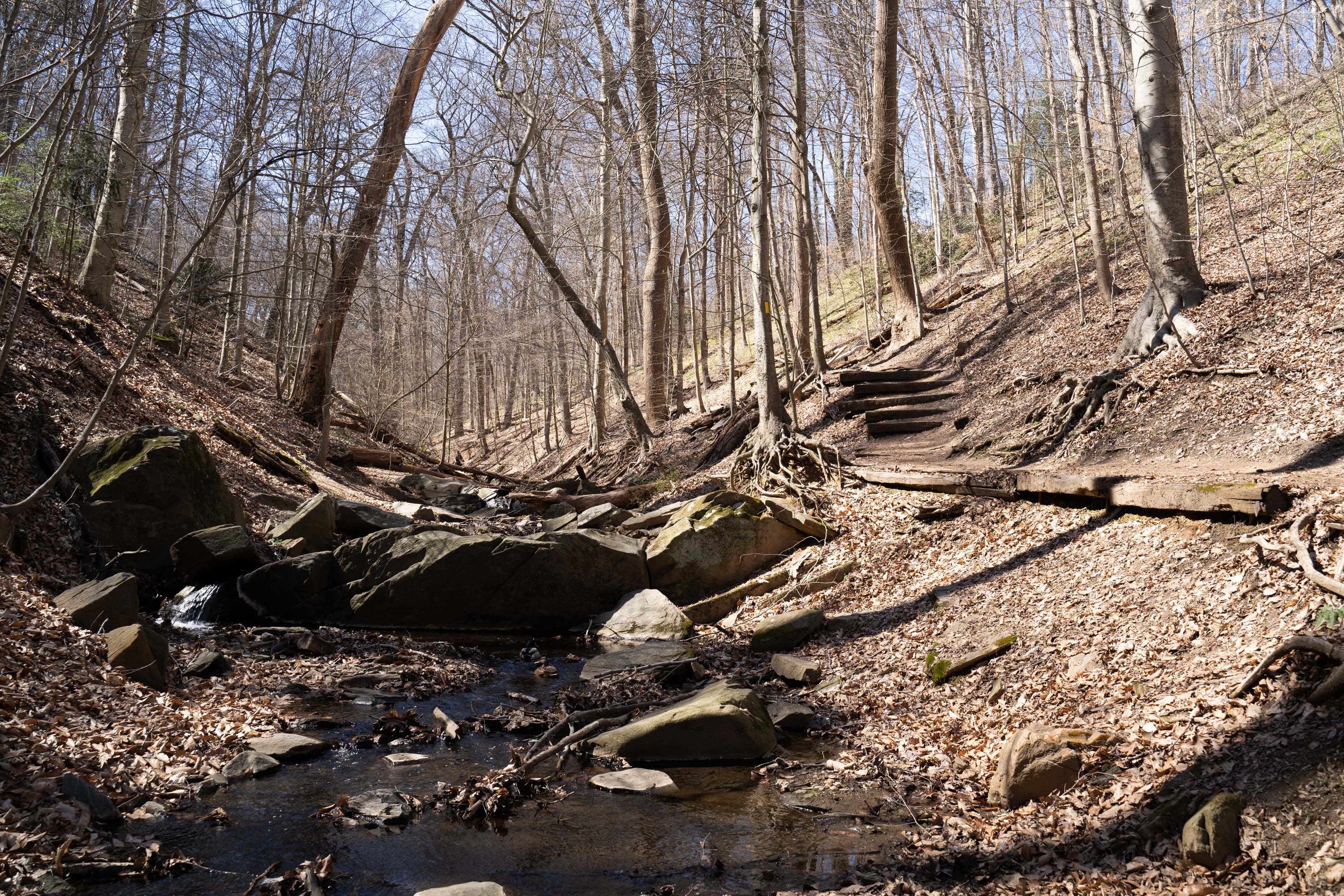
Jacobs says she supports changing the name, but not forgetting the history.
“I feel like a lot of times we do have that narrative that we need to tear down all of this. We need to know it, and see it, so we can continue to learn from the past and not continue to regress,” Jacobs says.
Jeanne Braha, executive director of the nonprofit Rock Creek Conservancy, has brought hundreds of volunteers to Melvin Hazen to remove invasive plants, and plant native shrubs and wildflowers. She says the park was named for Hazen shortly after his death, likely in recognition of his efforts to set aside parkland as the city grew. After looking into the history herself, Braha says she supports renaming the park, the trail and the creek.
As for what the new name should be?
“We’d love to see one of the stories you don’t hear all the time, perhaps one of the the Black people who played a formative role in the park,” Braha says. She suggests the park could be renamed for former superintendent of Rock Creek Park, Georgia Ellard, one of the first Black women in the country to hold such a position. Or, Hattie Sewell, a Black woman who ran a tea house at Peirce Mill in the 1920s, until officials cancelled her contract after complaints from influential, and racist, white neighbors.
A park service spokesperson declined to comment on the question of renaming Melvin Hazen. Congresswoman Norton, in her letter to NPS requesting a name change, asked for a response by March 23, but still had not received any at the time of publication, according to a spokesperson.
The National Park Service is currently being inundated with requests to rename, remove, relocate and contextualize assets in parks across the country. In D.C., residents have been lobbying to remove statues on NPS land in Lincoln Park and Lafayette Square, and to remove a plaque in Chevy Chase honoring a white supremacist senator.
“There are racial epithets and slurs that have been place names, and the government that has taken the opportunity to clean up some of those,” says Alan Spears, with the National Parks Conservation Association, a nonprofit that works to support NPS. “We’ve still got some more work to do,” says Spears.
Spears says the National Park Service needs to have a better process for deciding which names to change or monuments to remove, given the intense public scrutiny of these memorials.
On the local level, the D.C. government released a report in September, after reviewing more than 1,300 government-owned assets named for or memorializing historical figures. The report identified 153 “persons of concern” and recommended renaming 49 buildings, schools and parks. Melvin Hazen was not mentioned.
“This appears to be more alchemy than mathematics,” says Spears. “It depends upon the particular circumstance, the particular name, the derivation of that name and what the legacy is of the individual.”
As for Hazen’s legacy, he is far from the only influential historical figure to have advocated for the displacement of Black residents. The pattern of displacement has played out again and again, from Georgetown in the 1930s, to Southwest D.C.’s urban renewal in the 1950s and ’60s.
James Neill, the lawyer and Reno resident, noted this at the hearing in 1926. “We are being pressed to the wall,” he said. “If we are in a settlement and want to get in a better settlement, they won’t let us come. If we are to ourselves, they won’t let us stay there,” said Neill.
“What we want is to be given a chance to live as the other people live.”