 Christian Zapata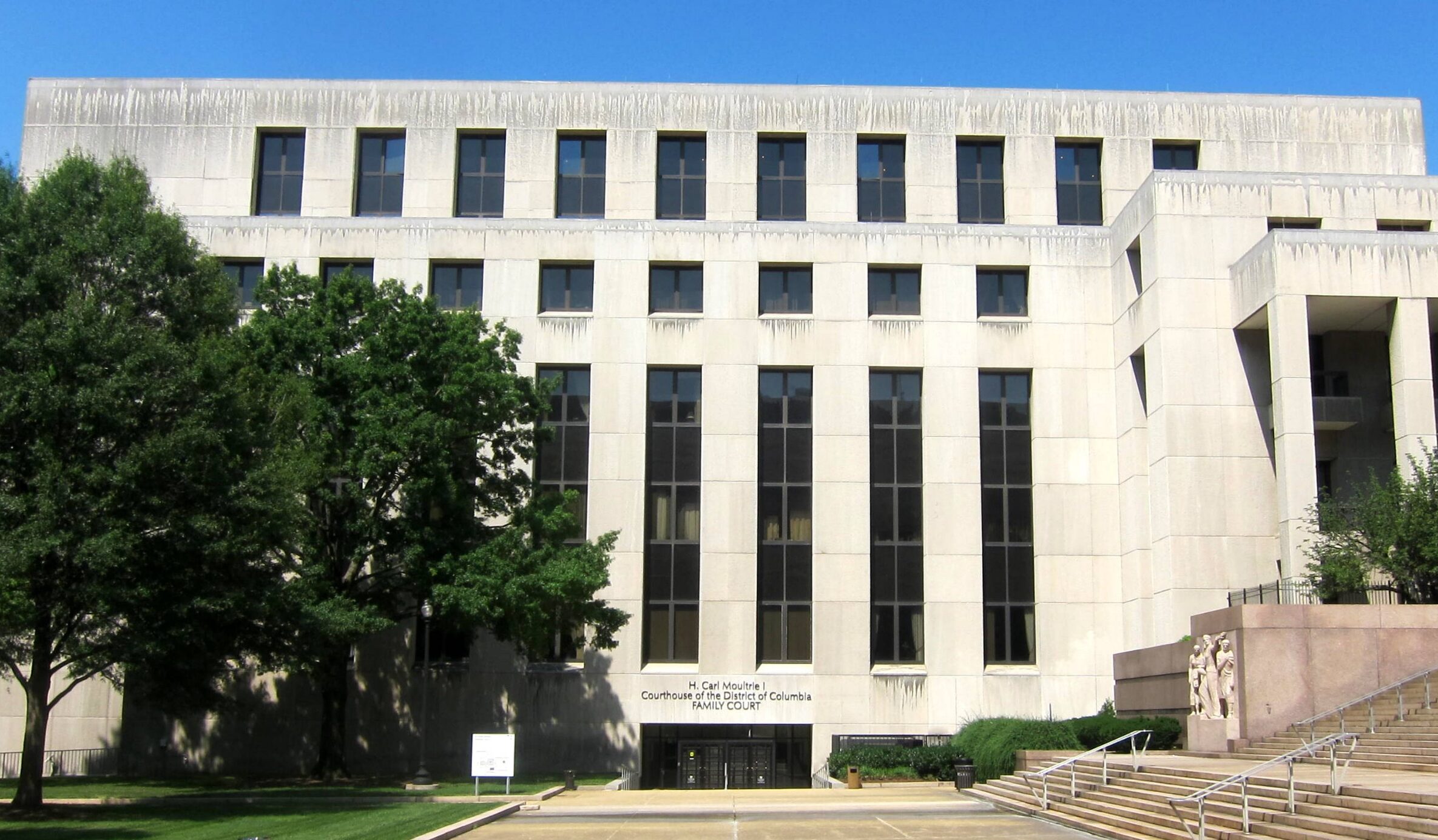
D.C. Superior Court will resume jury trials next week after suspending in-person court proceedings more than a year ago because of the pandemic.
The court is implementing additional safety measures including six feet of space between seats, temperature scans, health questionnaires, capacity limits, mask requirements, and plexiglass shields at locations like the judge’s bench and defendant and plaintiff’s tables.
Jurors can fill out an online questionnaire to see if they’re eligible for virtual jury duty. People who aren’t will fill out a health questionnaire and be directed to socially-distanced spaces for jury deliberations. On-site daycare will be available, and jurors are asked to wear face coverings at all times.
“We’ve put many procedures in place to ensure your health and safety as you perform your civic duty,” said Chief Judge of D.C. Superior Court Anita Josey-Herring in a video announcing the facility’s reopening.
D.C. Superior Court suspended most jury trials that weren’t already in progress last March and has held limited in-person hearings for emergency court operations and qualifying cases, such as juvenile cases and misdemeanor arraignments. All cases set to expire before May 15 were suspended or extended under the public health emergency.
With trial dates suspended, many inmates at the D.C. Jail were left waiting in jail indefinitely for a new court date on the other side of the pandemic. The D.C. Code specifies anyone held for more than 100 days pre-trial should be released until their hearing begins, but former D.C. Superior Court’s Chief Judge Robert Morin issued an order last March suspending that deadline.
Data published by the D.C. Department of Corrections estimates men spend an average of 10 to 11 months in jail awaiting a trial date, and women spend 8 to 9 months. With a backlog of cases accrued during the pandemic, inmates could now be held for years before their trials begin.
D.C. doesn’t offer cash bail and instead uses a rating system to determine how likely it is someone will show up for court; it also takes into account factors like the nature of the offense and criminal history.
Around 90% of inmates are released pending trial, and most defendants are released after their first appearance, but during the pandemic, even those held faced the threat of COVID-19 in the D.C. Jail.
In June, a judge ruled in favor of a class-action lawsuit filed by the ACLU of D.C. and the Public Defender Service on behalf of inmates at the jail claiming the facility failed to provide adequate health care during the pandemic. The facility was then ordered to find a way to reduce an influx of inmates jailed during the pandemic and better protect them from the coronavirus.
With more people being held at the District’s correctional facilities, inmates with medical conditions have also feared for their safety. By early June of last year, more than 200 inmates at the city’s Correctional Detention Facility and the Correctional Treatment Facility tested positive for COVID-19, hundreds were in quarantine, and at least two people died.
A spokesperson for the court told DCist in January the court will prioritize cases of defendants who have been detained before trial for the longest. Spokespeople for the court did not immediately respond to follow-up questions as to whether this is still the case.
“As we bring back more in-person operations to the D.C. Court, the focus is on you,” said Josey-Herring.
This story was updated to include a court order issued last March pausing the 100-day deadline for defendants to be tried and to better represent what the court takes into consideration when determining pretrial release.