 Jordan Pascale
“That included requiring more complete data, and emphasizing to WMATA that it is their responsibility to properly classify and report these events to the WMSC and FTA,” Mayer said Tuesday. “Metrorail must have the same commitment as WMATA has written in its agency safety plan that all departments and all employees, from the highest level to the frontline, are focused on open communication to identify and mitigate safety issues.”
The Washington Metrorail Safety Commission says Metro needs to be more diligent in properly investigating, identifying and classifying incidents when they happen.
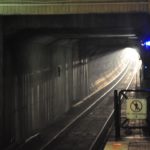
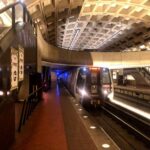
The criticism came Tuesday as the safety oversight body responded to a March 26 incident where a Red Line train stalled for more than 90 minutes near the Rhode Island Avenue station platform with 109 passengers onboard. No passengers were hurt, though two passengers left the train and walked back to the station while the third rail was still electrified. Metro didn’t report that detail to the safety commission, said CEO David Mayer said.
After all the passengers were offloaded, the train slowly rolled 100 feet while crews were trying to attach another train to tow it, another fact that Metro didn’t include in preliminary reports and didn’t reveal to the public for weeks. Metro is supposed to report a runaway train incident within two hours, Mayer said.
Metro says they reported it on April 8 after a review of the event. But WMSC staff say they were the ones who notified WMATA first and that a “runaway train” as it’s defined would elevate the event from just a safety “occurrence” to an “accident,” which requires more notifications to both the WMSC and the Federal Transit Administration.
The WMSC is still investigating the March 26 event. The final report will determine if Metro had any training or procedural issues and what communications with passengers looked like. It will also consider ways to avoid stranding riders for an extended period when other safe options exist.
Ahead of the meeting, Metro announced Saturday that it would change a number of its processes, including having emergency management staff in the Rail Operations Control Center (ROCC) 24/7, moving incident management from the ROCC to Metro’s safety department and lower the threshold for what was considered an “emergency.”
Now, any stalled trains, buses or Metro Access vehicles with passengers on them will trigger more cross-department communication in Metro and a responsibility to call in emergency responders sooner. Previously events were deemed emergencies only under certain criteria, like if there was a medical issue, a train was stuck in a tunnel or aerial structure, or if a certain amount of time passed.
“For example, under the prior policy, a train may have a brake issue that is resolved within a few minutes and would not have been considered an emergency,” a Metro spokesperson said in an email. “Under the new policy it would be treated as an emergency regardless and notifications would be made to prepare for an emergency.”
Mayer applauded that move.
“As we have emphasized to WMATA before, safety must come first – including erring on the side of calling first responders,” Mayer said Tuesday. “We appreciate that it appears WMATA may be moving more strongly in that direction.”
Metro also said it would shift who handles safety incidents. Previously, the Rail Operations Control Center and Fire Liaison staff worked to call 911, but Metro said its response “was not as well coordinated as it should have been,” according to a statement from the transit agency.
“This move will establish an independent oversight function within WMATA to assure our actions are aligned with our values of ‘Safety Trumps Service,'” according to the statement.
Dave Statter, an independent journalist, has chronicled the series of calls that were made around the incident that showed the proper information wasn’t getting relayed to emergency responders. Getting Fire & EMS to the right location of a rail emergency and equipped with the correct information must be a priority, Statter said on Twitter. “If not, people will die,” he wrote.
Also on Tuesday, the WMSC heard several reports that Metro needs to install sensors along more of its fence lines where required. A recent incident showed that the system was not in place near Union Station.
An intrusion-defense warning system detects when a fence has been breached and changes signals in the area to red to avoid a collision and alert Metro’s operations control center. Officials say this system is especially important along tracks that parallels freight train traffic. Early warnings of a derailment on those tracks could prevent a Metro train from plowing into the obstruction, officials said.