Martin Austermuhle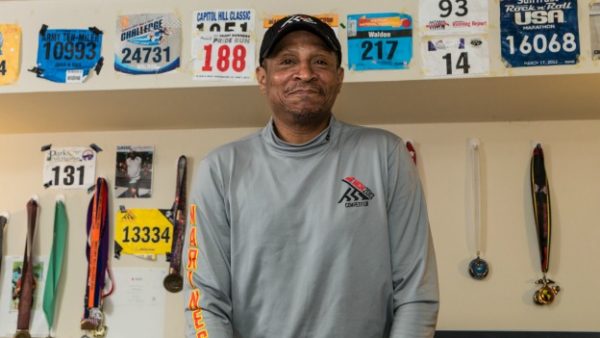
Police on Monday identified two pedestrians who were killed by a driver at Hains Point on Saturday morning: Waldon Adams, 60, and Rhonda Whitaker, 55, both of whom experienced homelessness and later dedicated their lives to helping people with the same experience.
Adams and Whitaker were walking at Hains Point around 10:30 on Saturday morning when they were hit by a driver in a pickup truck who fled the scene, but was later found by police. The driver is said to be cooperating with the investigation, and it will be up to the U.S. Attorney for D.C. whether charges will be pressed in the fatal incident.
Adams and Whitaker’s deaths have rocked the city’s tight-knit homeless advocacy community. People who knew the pair referred to them as “incredible” and “an inspiration“; they said they were “shocked,” “numb” and “devastated” by the sudden deaths.
“Both Rhonda and Waldon were longtime members of the Miriam’s Kitchen family, and tireless advocates for ending homelessness in D.C.,” said James C. Durrah II, the director of communications for the organization, where both Adams and Whitaker had worked. “The Miriam’s Kitchen community mourns this tragic loss. We will honor their memories by continuing to fight for housing justice in D.C. We ask that everyone respect the ways that their families and the Miriam’s Kitchen community are grieving at this time.”
In a 2015 WAMU profile, Waldon shared his story of drug addiction, mental illness, homelessness, and how an opportunity at permanent supportive housing saved his life. (In the process, Waldon also became an avid marathon runner.)
“I still have that fear I have to get over. I’ve got 35 years of being a failure and things falling apart, so I still have that paranoia,” he said in the profile. “So it’s taken me a while. Some people take longer than others, some people get in this, they’re going to get careers, they’re going to be lawyers and doctors when they get in permanent supportive housing. Some people just start getting a life like me. So does everybody succeed like society wants them to succeed, no, but at least they have someplace to live and get better.”
Adams joined the staff at Miriam’s Kitchen, and later worked with Pathways to Housing D.C. He also served on the steering committee of The Way Home Campaign, which seeks to end chronic homelessness in D.C.
“Waldon lived on the street in his work,” says Christy Respress, executive director of Pathways to Housing D.C. “He spent his time going out and speaking with folks on the street under the bridges, anywhere he could find folks experiencing homelessness, who he would then do everything he could and move mountains to get into housing. “He literally was on call 24/7 to every single person he worked with who had his number on speed dial.”
That lived-experience was evident in Whitaker, a mother of two boys who was homeless for more than two decades, “sleeping wherever I could just lay my head,” she said in a biographical video posted last year my Miriam’s Kitchen. She was later arrested for stealing food from a store and spent two years in jail.
“That day… my life changed forever,” she said, explaining how she eventually found her way to the Foggy Bottom-based organization, which helped her get a birth certificate, apply for housing, and advocate on behalf of other people experiencing what she had.
Whitaker testified before the D.C. Council last month, speaking about her own experience navigating the homelessness system and how engaging people like her to help can make a difference. She referenced people experiencing homelessness near her apartment in Van Ness — she moved in in mid-2019 under a D.C. housing program — and how she had started speaking with and helping them.
“I buy them food and coffee and I have come to have a relationship with them. I too know what it’s like to be in their shoes,” she said. “We’ve got to find a better way to support and house people who are afraid of the system… People like myself know how to approach and build relationships with people living outside as we’ve been through lots of the same things.”
Rhonda Whitaker of Ward 3, a member of the @miriamskitchen Speaker's Bureau, testified today.
"Every time I leave my apartment up in Van Ness, I’m faced with the fact that we – DC, the capital of the United States of America – are not doing nearly enough to end homelessness. pic.twitter.com/xXaDDEeuf7
— The Way Home DC (@thewayhomeDC) March 1, 2021
“Today I sit here in my apartment with the peace of mind to put my key in my door, sit on my sofa and watch TV,” she said in the video posted by Miriam’s Kitchen about finally having a place to call her own. “After living 20-some years on the street, I have peace of mind today.”
In his WAMU profile, Adams made a similar point about how getting into permanent housing changed his trajectory — and even let him bounce back more quickly when he fell back into drugs. “I’m still here. Nobody put me out like happened in transitional housing. I gave myself a chance,” he said.
Respress says people like Whitaker are some of the best advocates and fighters for others experiencing homelessness.
“I cannot stress enough how critical it is to have folks like Waldon or Rhonda, people with lived experience of homelessness, substance-use challenges, mental health challenges, on our staff,” she says. “It is an absolute priority in this work. And it seems so obvious. But it’s it’s not a given. It is critical because I’ve not experienced those things. And Waldon, for example, was able to use his lived experience so that people could trust him in a different kind of way than they can trust people who haven’t gone through it. People experiencing homelessness have been promised a lot of things by a very broken system.”
“Their legacy,” she adds, “has to be putting an end to homelessness.”