Ally Schweitzer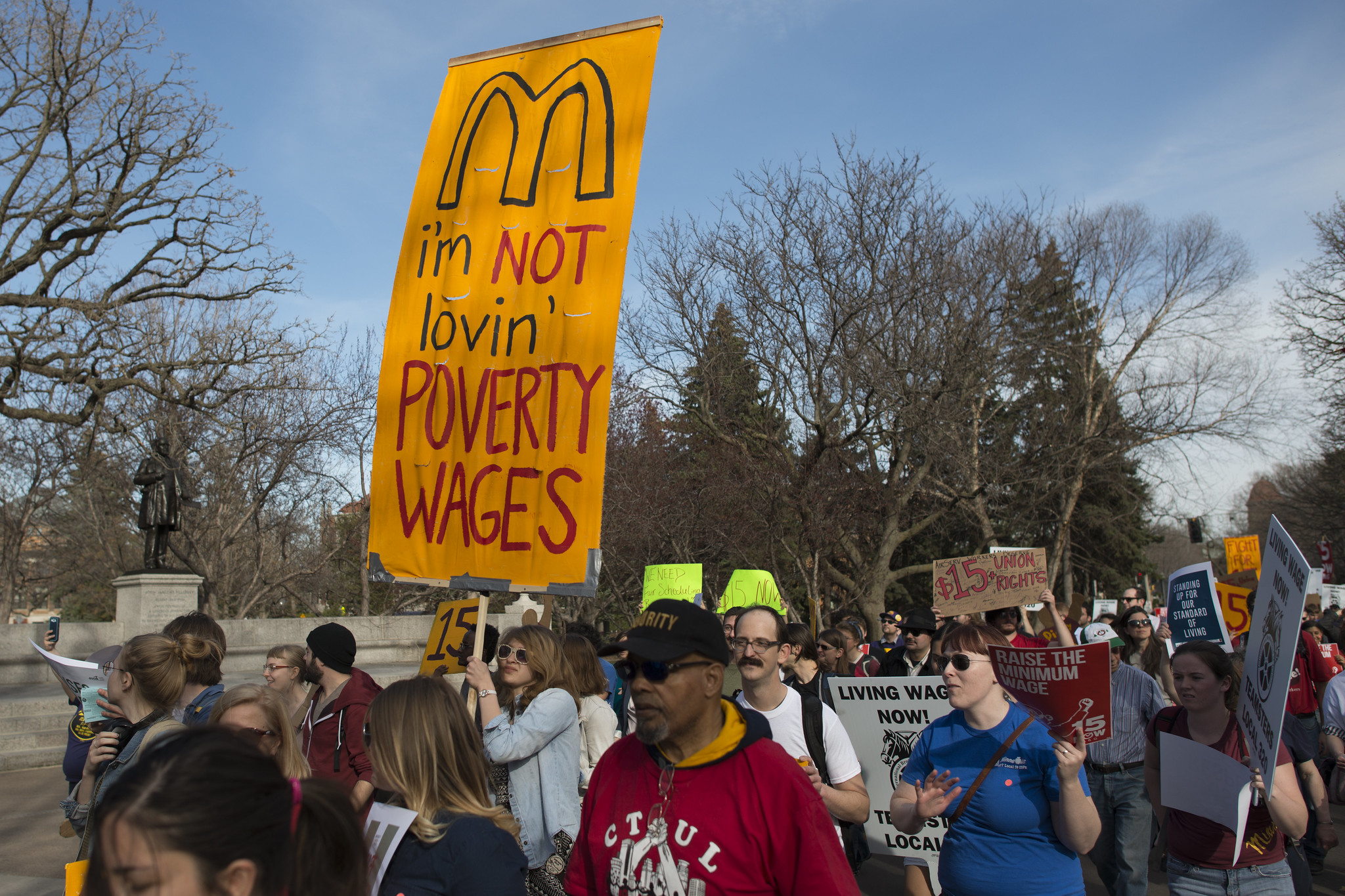
In the past, Virginia has been ranked the best state for business owners in the country — and the worst for workers. That imbalance could begin to shift May 1, when two bills backed by labor advocates go into effect.
One is an increase to the commonwealth’s minimum wage, the first pay hike to hit the state since 2009. Starting Saturday, the base wage will increase from $7.25 to $9.50, and eventually reach $15 in 2026, pending legislative approval in 2024. The increase was originally scheduled to take effect in January, but Gov. Ralph Northam agreed to push implementation to May 1 after employers raised concerns about the pandemic’s impact on their bottom lines.
The second new law will affect government workers at the county, city, and town level in Virginia: May 1 is the first day that localities will be granted the authority to adopt collective bargaining agreements with public employees such as teachers and first responders. Until now, Virginia had been one of three states — along with South Carolina and North Carolina — that explicitly barred government workers from negotiating over their pay and other terms of employment.
May 1 also happens to be May Day, an international day of recognition for laborers.
The passage of both laws was unimaginable in Virginia just two years ago, says state Sen. Scott Surovell, a Democrat who represents Eastern Fairfax in the upper chamber. Republicans had held the legislative majority for 25 years until 2019, when Democrats took over the House and Senate, riding a wave of anti-Trump sentiment.
“There’s no way that either of these bills would have passed without the election results in 2019. The GOP made it crystal clear that [raising the minimum wage and allowing public sector bargaining] were two things that weren’t even going to get out of committee,” says Surovell, who negotiated the minimum wage bill with House lawmakers. “This is a classic example of when elections have consequences.”
Democrats say that both bills could make many parts of Virginia more competitive with higher-paying areas, such as the District.
Del. Elizabeth Guzman (D-Woodbridge), who sponsored the collective bargaining legislation, says allowing government workers to negotiate for better pay and benefits could create more attractive public sector jobs in jurisdictions throughout Virginia, including her own.
“I represent a locality where more than 60% of people commute to Northern Virginia or Washington, D.C., for a higher-paying job,” Guzman says. “If you want to work for a locality that allows public employees collective bargaining, you can look to the city next door that is actually valuing their employees and allowing them to have a seat at the table.”
Virginia’s local government workers could bargain collectively until 1977, when the state Supreme Court ruled that localities have no power to negotiate with workers. After both chambers approved Guzman’s bill last year, the city of Alexandria was the first in the state to adopt a public employee collective bargaining ordinance; its city council voted unanimously to take that first step on April 17. More counties, cities and towns are expected to follow suit.
The minimum wage increase was sponsored in the House by veteran Democrat Jeion Ward, who represents the Hampton area. The bill she introduced sought a more aggressive timeline for raises, plus eliminations on exemptions that exclude farm laborers and tipped workers from minimum wage protections. The version that ultimately passed last year was the product of extensive compromise with liberal members of the House and centrist Democrats in the Senate, Ward says.
“We had some really progressive people [in the House] who wanted to come up with the $15 right now. It was not easy in either chamber. We had a lot of discussion, a lot of debate. Then we had some people who were coming up and asking for exemptions,” Ward says.
Ultimately, the version that passed kept the exemption for farm workers, whose employers can continue to pay them less than the minimum wage, though Surovell points out that agricultural employers sometimes provide non-wage benefits such as living accommodations. The bill also retained the tipped minimum wage, so workers such as servers, bartenders, bellhops and others who are tipped will continue to earn a minimum of $2.13 before gratuities.
Ward laments that she and her colleagues couldn’t do more for farm laborers and tipped employees in the end.
“That cut deep,” Ward says. “I felt like I had let them down.”
But both Ward and Guzman say they’re confident that their bills represent a step forward for workers in Virginia — and that more change is on the way. Guzman say Democrats may even revive an effort to repeal Virginia’s right-to-work statute, which prohibits private sector labor unions from requiring their members to pay dues. An attempt by Del. Lee Carter, a Democratic socialist from Manassas, failed to advance in the 2021 session.
“I think [public sector bargaining] is going to have a positive impact, because we’re going to be able to use the successful stories of how we have improved the condition of employees, and we can use that to elaborate and have the conversations about repealing the right to work in Virginia,” Guzman says.
But Democrats’ efforts are sure to be matched by the business sector, which has argued convincingly that increasing wages and granting more power to labor unions would slow economic development in Virginia. Both of these issues are also being debated on the national level, as President Joe Biden continues to support a $15 national minimum wage and the Protecting the Right to Organize (PRO) Act, a labor-backed bill that would provide protections for workers seeking to organize their workplaces. The PRO Act passed the House of Representatives in March, but it faces intense opposition from Senate Republicans.
A Congressional Budget Office study released in February concluded that increasing the federal minimum wage to $15 could bring 900,000 Americans out of poverty — but also slash 1.4 million jobs.
Surovell says that liberal-skewing lawmakers from Northern Virginia can also expect resistance from rural parts of the state on any legislation that could increase employers’ costs.
“The rest of the state is not nearly as wealthy as Northern Virginia, and we have to pass laws that apply to everybody, not just Northern Virginia,” the state senator says. “But I think over the long term, we’ll continue to make progress as long as our political majorities hold.”