 Jordan Pascale
They came to Rock Creek Park from all over the region, with all sorts of life experiences and one similar goal: to learn to ride a bike again.
“I haven’t been on a bike in years and years and really want to get out there,” said Greg Hourigan of Rockville, Maryland. He lost both of his legs below the knee.
“Prior to taking my leg off, I was cycling about 13 miles every other couple of days, and now this is something else I can do,” said Cecil Brathwaite of Temple Hills, Maryland.
“I’ve gone back to hiking two to three miles a day, but I want to get on a bicycle so I can go faster,” said Jean McAulay of Adelphi, Maryland. She had her right leg amputated five years ago and lost her other leg a few months ago.
“I’m a Vietnam veteran. I have a brand new athletic limb on… and this is my first attempt on this [bike],” said Dallas Scott of Crofton, Maryland.
David McCrae has been an amputee and an athlete all his life. He started cycling to keep up with his fitness as he got older, he says. He was there to help others learn, too. “This is a fantastic opportunity for us all to learn from each other in every single aspect, not just the sport, but in life,” he said.
All of them were taking part in the new D.C. Amputee Cycling Clinic, which aims to help people who have lost a limb learn — or re-learn — to ride a bicycle. And it’s not only for mobility, say organizers, but also for confidence.
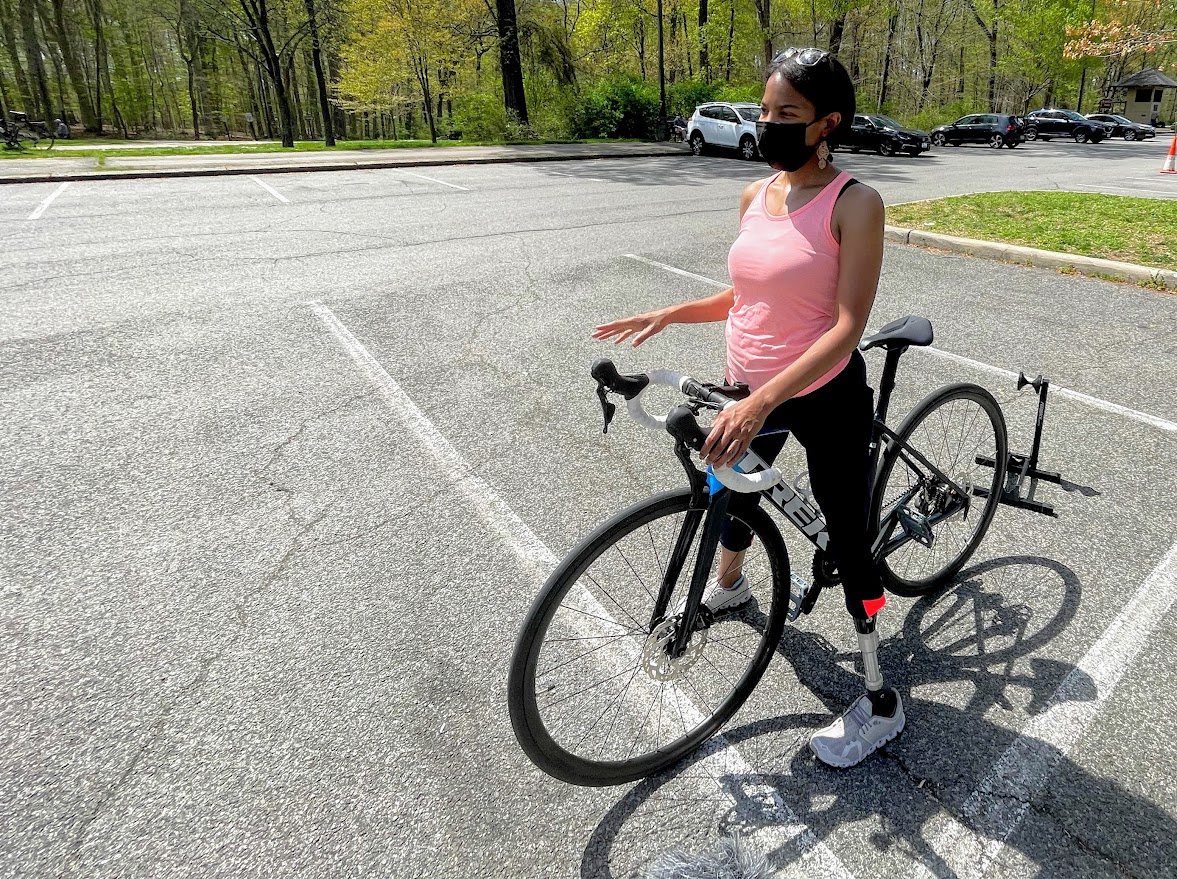
Katie Savage organized the two-hour class on a Sunday morning last month; it was the second one she’s run so far. Rain threatened, but this was too important to cancel, she thought the night before. The stage — and significance — were just too big.
About 25 amputees and more than 100 volunteers — people who make prosthetics, doctors, medical students, bike shop folks — gathered in a parking lot in Rock Creek Park. Savage told the crowd she lost her leg when she was 14 after surgical complications. But during the pandemic, she wanted to learn how to ride a bike.
“It’s just been life-changing, not only physically, but just seeing how many people have cared about me and just being able just to extend the community of new friends I’ve met,” she said.
Those new friends helped her get fitted for a bike, made sure she had a prosthesis that worked, and got her the equipment she needed. They set her up for success. For Savage, the bike was liberation.
“I wanted to give that to others, what they gave to me,” she said.
Savage’s non-profit, Give-A-Limb Inc., aims to raise money to pay for sports prosthetics that insurance might not always cover and for bikes that give people the mobility they might not otherwise have. She says cycling is one sport where amputees can thrive alongside others.
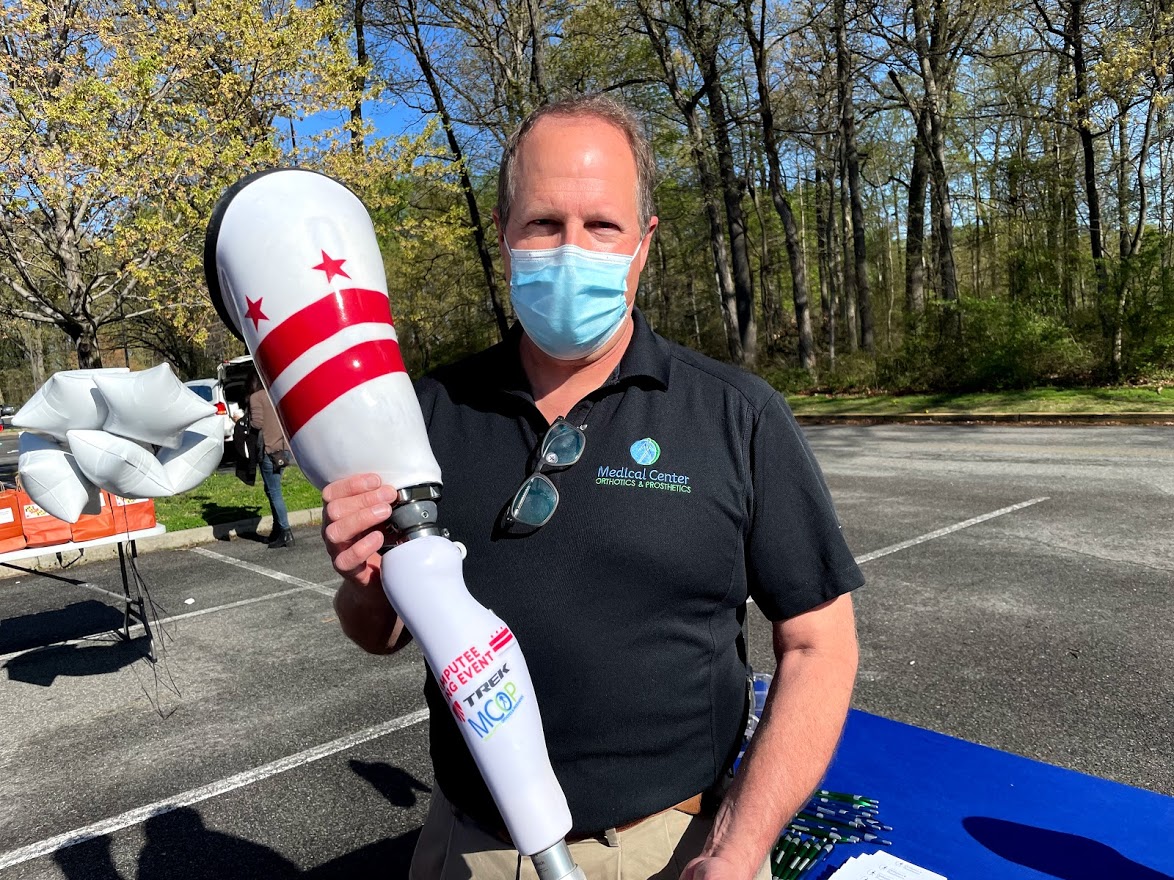
Jamie Vandersea of Medical Center Orthotics and Prosthetics was there to demonstrate devices from a basic prosthetic for walking to more advanced ones that can switch from a walking mode to a golf mode to a cycling mode. He says getting back to recreation helps people cope with the loss of a limb.
“You know, they go through a depression initially after the amputation,” Vandersea said. “And when they get involved with these types of activities, they kind of awaken and say, ‘I can do it again.’ Maybe it looks a little different, but it’s a great way to get back involved with things.”
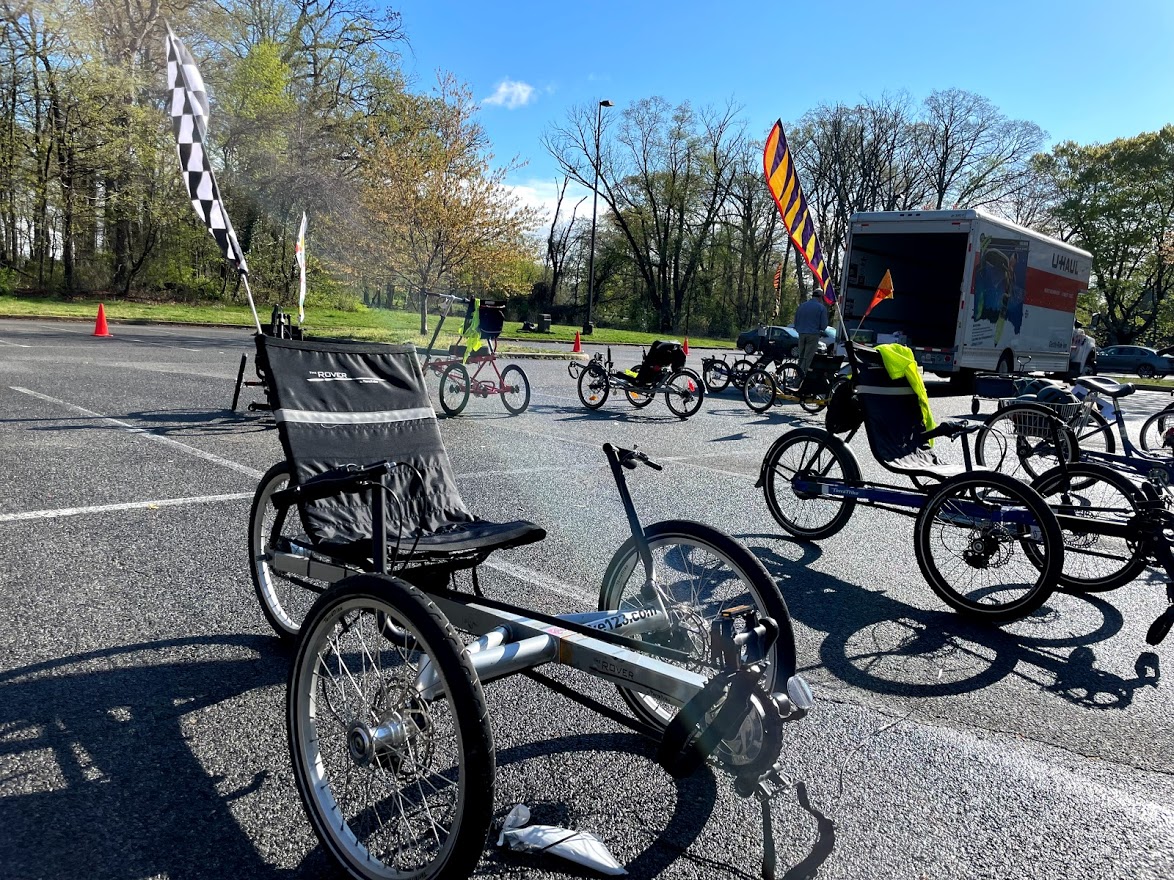
Dozens of upright bikes and recumbent bikes from Trek and local bike shops were set up on stationary trainers across the parking lot.
On one, Jason Waggoner tried to get his shoe placed just right on the pedal. Helpers fashioned a strap to keep his prosthetic foot in place. It does feel a little clunky, Waggoner said, but he’s getting the hang of it. He said he hadn’t ridden in a while.
“It’s probably been close to 20 years,” Waggoner said. “I got blown up in Iraq in ‘07. That’s when I lost my leg. But I hadn’t ridden the bike probably a couple of years before then. So, yeah, it’s been a long time.”
His new prosthetic has a greater range of motion, which he hopes will allow him to join his wife for a ride for the first time. She got a new bike during the pandemic and wants to explore. “It’s a beautiful area. It’s fantastic for bikes,” he said. “So we want to get outside and enjoy that.”
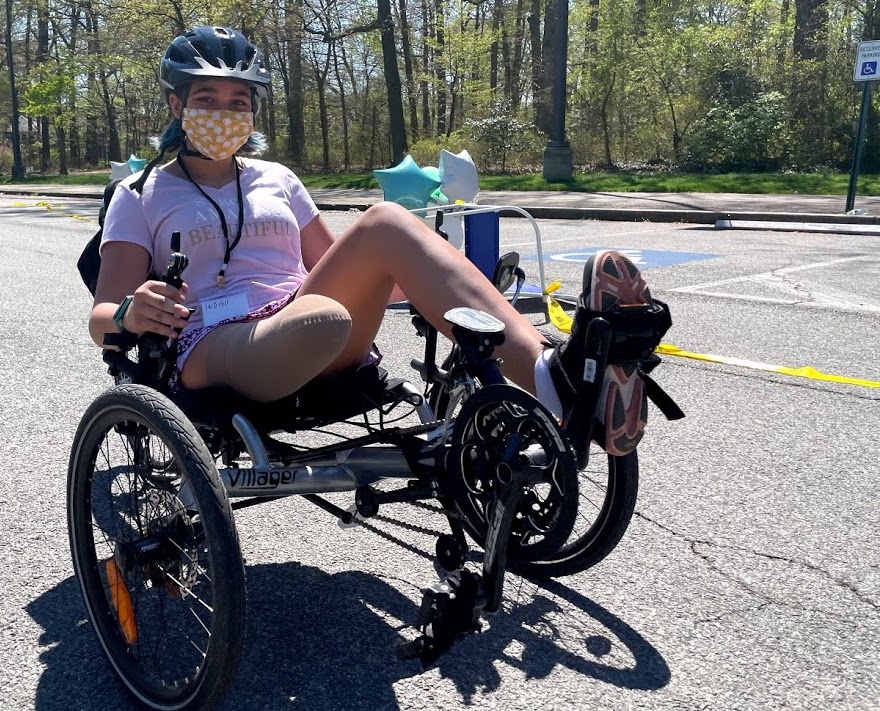
Nearby, 13-year-old Indigo Bruhweiler was on a recumbent bike, with her one foot strapped in. She got the hang of this type of bike pretty easily, but says it hasn’t always been easy.
“I’ve had more than 20 surgeries,” she said. “And every time after surgery I have to learn how to ride a bike.”
Keri Gray, who lost her leg early in life, said she was sometimes embarrassed by her prosthetic as a child, but not anymore. She says it’s important for people to be their full selves as soon as possible.
“It took me like 15 years to wear a pair of shorts. And so, like, the goal is like, how do we get people to live that life sooner?” she asked. “How do we get people to not be hesitant to go swimming because you have to take your prosthetics off in front of people? How do you get people to not be hesitant to bike because you’re unsure if you’re really able to keep up with folks?”
Events like this are one way, Gray says.
Savage, the clinic’s organizer, says cycling saved her during the pandemic and changed her life. She’s having another clinic on June 27, hoping it will change their lives, too.