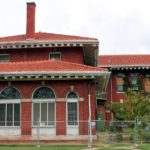
The troubled United Medical Center is set to close in 2023 to make way for a new facility at St. Elizabeths campus. In the meantime, UMC remains the only hospital in Ward 8, and it faces an uncertain future.
The D.C. Council rejected a proposal last week that would increase the subsidies the city spends to keep the hospital afloat. Without it, the hospital’s management is likely to revert to a fiscal management board.
Ward 7 Councilmember Vincent Gray and the nurses union are urging lawmakers to reconsider, but it’s not clear if there’s another path forward. The Washington Post first reported on the vote.
United Medical Center has long been known for financial chaos. The city took the hospital over in 2010 after its prior owner went bankrupt. In 2016, a well-connected consulting firm, Veritas was hired to help the hospital better manage its finances. Within two years, its obstetrics ward was shut down after regulators found “dangerous mistakes” in care delivery, the nurses union took a no confidence vote, and lawmakers opted not to renew its contract.
The hospital is now operated under contract by a different private provider, Mazars, and it relies on an additional government subsidy to stay afloat.
Mayor Muriel Bowser tried to raise the cap on that subsidy to $40 million in her 2020 budget, but ultimately lawmakers included a provision that the hospital would have to balance its budget to within a $15 million subsidy or trigger a financial control board.
Bowser’s office and some analysts, including the left-leaning think tank D.C. Fiscal Policy Institute, have long argued that the hospital has not received enough money to support its operation. This is in large part due to its high uninsured and publicly insured population, meaning lower reimbursement rates to the hospital from Medicare and Medicaid and care that goes uncompensated..
Meanwhile, the hospital says its financial position has worsened in the past year due to lowered admissions during the pandemic, as fewer people came to the hospital for procedures on top of the hospital’s pre-pandemic attempts to cut expenses.
The interim chief executive officer for the Not-For-Profit Hospital Corporation, which is the governing board appointed by the city to oversee the hospital, proposed legislation in April to avoid triggering the review board by raising the cap from $15 million to $20 million per fiscal year. The proposed legislation would raise the cap further to $40 million in the event of a public health emergency, including the pandemic.
At last week’s hearing, Deputy Mayor for Health and Human Services Wayne Turnage warned that if the control board comes in, the hospital will be “viciously pruned,” meaning a loss in jobs and reduced service.
But some councilmembers expressed skepticism about raising the cap, citing the hospital’s past health and safety record.
“We put the threat of the control board in as a bumper,” At-Large Councilmember Robert White said. Not triggering the control board is “moving the stick,” he argued.
At-large Councilmember Christina Henderson, who ultimately voted no, said she had “severe reservations” about raising the cap given the hospital’s previous financial record.
“I don’t want people to not be able to make their bills, etcetera, but I also don’t want to be in the same position in a year,” she said.
At-large Councilmember Anita Bonds, who also voted no, said she recalls facing financial issues with the hospital for the past several years.
“We’re talking about residents and we’re talking about their health care. But we also are trying to talk about our responsibility as custodians of this government,” she said.
Other councilmembers argued that the hospital needed money to operate now.
“I do know a level of health disparities … east of the Anacostia River … we shouldn’t be in a place to decide if we’re going to do [help the hospital], but how we’re going to do it,” Ward 8 Councilmember Trayon White said, adding doing so should include accountability measures.
Ultimately, lawmakers voted 7-6 on the legislation; because the bill was proposed as emergency legislation, it would have needed 9 votes to pass.
Wala Blegay, a staff attorney for the D.C. Nurses Association, says the vote came as a surprise. She adds that they received no notice, otherwise nurses would have more aggressively lobbied in favor of raising the cap.
Morale at UMC is low, Blegay says, particularly at a time when staff is caring for COVID-19 patients without enough resources.
They “do not feel appreciated. And now this is just going to make things worse,” Blegay argues, saying implementation of a control board is sure to mean cuts for the hospital.
“That’s the scary part about control boards. All they think about is the bottom line,” not patient needs or resource needs, she says.
Ed Lazere, who ran for D.C. Council in 2020 and is a senior fellow for state fiscal policy at the left-leaning Center on Budget and Policy Priorities, said on Twitter that the vote dooms the hospital for deeper financial cuts.
“A shameful disregard for health care east of the Anacostia River,” he wrote.
Although Gray argued for the lower subsidy number in a feud with the mayor in 2019, he wrote a letter last week urging colleagues asking them to reconsider the vote. He said that it’s become clear that the pandemic has led to lower patient admissions as many people postponed care, causing an insurmountable shortfall for the hospital.
He argued that raising the cap will allow the hospital to remain operational until a new one can open in the fall of 2024.
“Realistically, I do not anticipate a scenario in which UMC’s patient volume and revenue rebounds to pre-COVID levels over these next three years,” Gray wrote. “Thus I am prepared to support a local funds subsidy that is greater than $15 million, so long as I see continued restraint and prudence on the expenditure side of UMC’s ledger.”