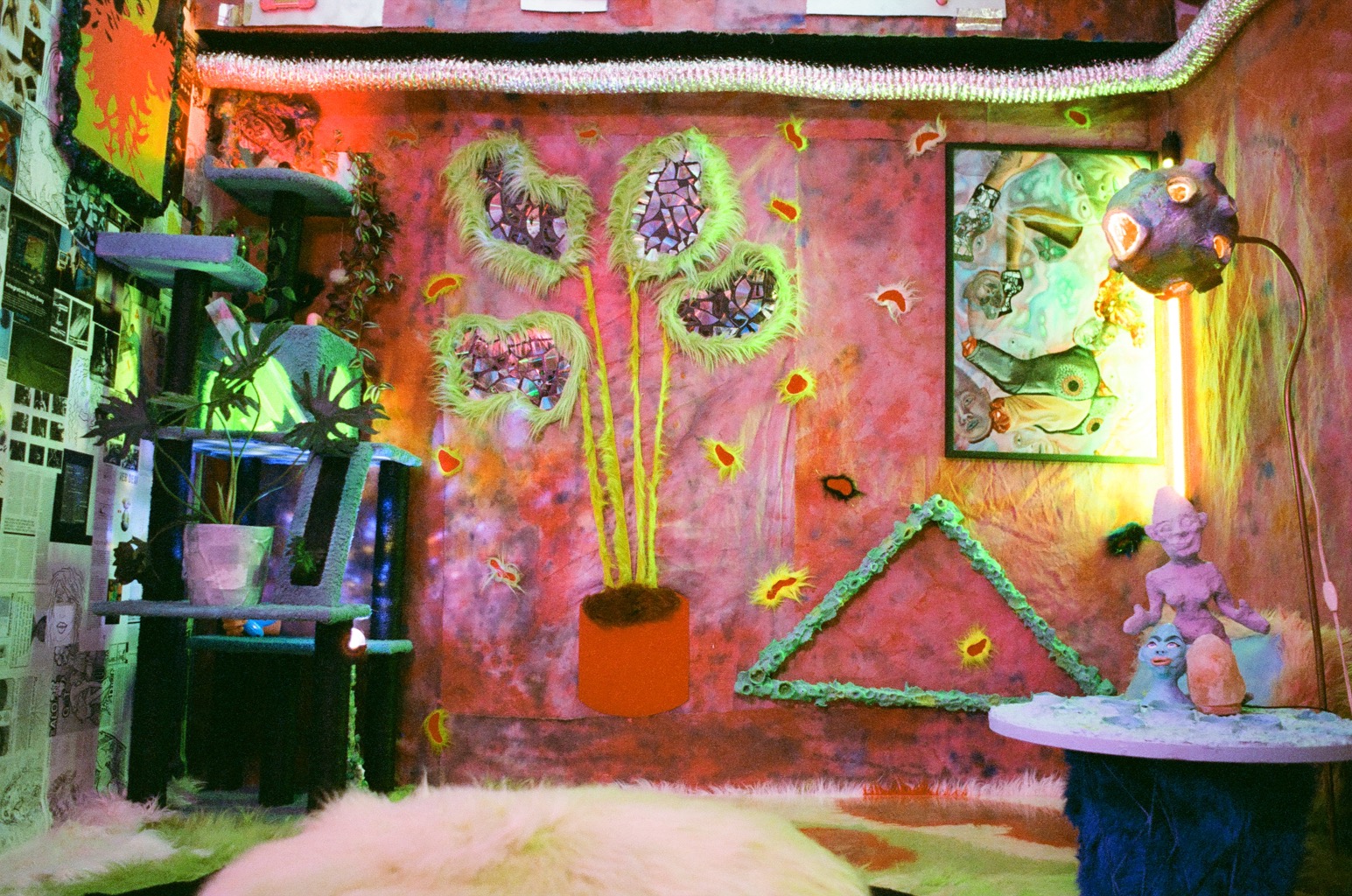
At any number of CSA — community supported agriculture — programs in town, you can get lettuce or turnips from a neighbor.
A subscriber-only, one-time performance, though? Or a limited-edition cassette? That’s more like it.
The inaugural season of Community Supported Art, a new initiative from Rhizome DC and Guilded Freelancers Cooperative, opens this summer, featuring nine local artists. The goal is for Washingtonians to purchase 50 “shares,” which are available on a sliding scale, starting at $200.
Paying upfront will help fund $1,500 grants each for the artists, and in return, each CSA member will receive nine works of art, one from each artist. (There will be three pickup events throughout the summer.) Rhizome is budgeting $2,000 for Guilded’s services, and about $1,000 for such costs as advertising, printing, and packaging. Anything left over will help cover Rhizome’s administrative costs.
“We were specifically trying to come up with something that would provide substantial support for working artists in and around D.C.,” says Layne Garrett, program director at Rhizome, a nonprofit community arts space in Takoma. “Things keep getting more and more expensive here, and it’s harder and harder to make it as an artist. We’re trying to do our tiny little part to make the city a more viable place to live for working artists.”
Years ago, in college, Garrett was introduced to the concept of community supported agriculture, which makes it easy for consumers to buy local, seasonal food directly from a farmer. He even spent time working on a farm. The model stood out to him as a great way for people to “put their money where their mouth is.” “It’s been in the back of my mind as a potentially powerful tool for communities to support our artists,” he says.
But he wasn’t sure how to go about it until the Guilded Freelancers Cooperative reached out to brainstorm ways the two organizations could collaborate. (The cooperative is a local chapter of the U.S. Federation of Worker Cooperatives. It’s currently investing in different ways to support freelancers.)
Rhizome’s CSA program has been in the works for about six months. A team of curators that included Garrett reviewed submissions from nearly 40 artists who responded to an open call for applications. (There was no fee for artists to apply.) The recently announced inaugural season of grant recipients features a multidisciplinary mix of artists, including: Katie Macyshyn, whose performative works explore isolation, mental health, and self-discovery. Julia Marks, a theater-maker who delights in spectacle. And Nate Scheible, a local drummer with a recent focus on the process of analog sound materials.
SIFU SUN, an artist who blends painting, movement, and sound, says her CSA project will involve experimental soundscapes on cassette. “All these artists are crazy,” she says of her fellow CSA participants. “They really reach deep into their creative bag of freedom.”
Community supported art programs already exist in other cities. Rhizome’s efforts are modeled in part on Community Supported Art in Minnesota, which offers a toolkit for other cities that want to replicate the program. Yellow Springs, Ohio, recently launched its own CSA, in which subscribers will receive a box of art a month for three months, with pickups scheduled to coincide with this summer’s full moons. And back in 2013, one patron described Pittsburgh’s CSA program as “kind of like Christmas in the middle of July.” At the time, Miami and Detroit were among other cities that had similar CSAs in place.
The programs are touted as a way for community members to build their own art collections, while engaging with (and supporting) local artists in a new way.
“The city doesn’t necessarily do a lot in terms of material support for artists,” Garrett says. “We’re trying to make the shares as accessible as possible, while also providing a decent stipend for the artist.”
Garrett hopes this inaugural class of artists bonds with each other – and with the public. “What we’re really hoping for is that some relationships develop between the artists, but also between artists and members of the community who might commission something or introduce an artist to someone else who is interested in their work,” he says. He’s aiming to plan special events around the pickups that would allow the public and artists to interact.
SIFU SUN sees joining the CSA as an opportunity to be part of something special and fleeting.
“The world is our oyster, and we’re giving people a part of it,” she says. “I know a few artists are doing actual performances, so that’s like a one-time thing. It’s only happening for this event. I personally wouldn’t want to miss out on it.”