Margaret Barthel
 Dominique Maria Bonessi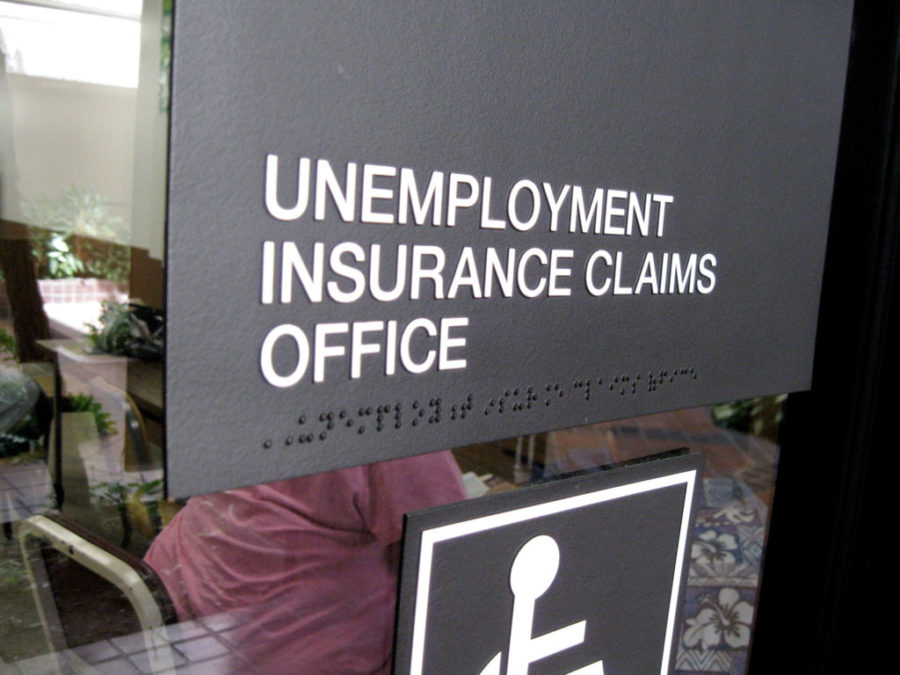
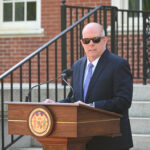
Maryland will end its participation in federal pandemic unemployment benefits programs in July, Gov. Larry Hogan announced today, including the additional $300 per week payment. The state will simultaneously reinstate a requirement that people seeking unemployment benefits prove they are actively seeking work.
Maryland joins 24 other states in announcing plans to end the payments early (the American Rescue Plan authorized the extended benefits through September 6). The District and Virginia both continue to retain the enhanced payments, but the commonwealth also recently brought back its work search requirement.
Hogan billed the changes, which will go into effect on July 3, as a means of jumpstarting the Maryland economy.
“While these federal programs provided important temporary relief, vaccines and jobs are now in good supply. And we have a critical problem where businesses across our state are trying to hire more people, but many are facing severe worker shortages,” he said in a news release. “After 12 consecutive months of job growth, we look forward to getting more Marylanders back to work.”
Hospitality workers, like Felicia Gibbs, who worked at the Gaylord National Harbor before being laid off in March 2020, were outraged by the decision.
“Losing the additional Federal benefits I have been receiving would be a disaster for me and my family,” Gibbs said. “I rely on that extra money to keep a roof over our heads, and this just sends us scrambling as we waited to hear back from our old jobs. Governor Hogan should reverse this terrible decision.”
The region’s hospitality workers’ union, Unite Here Local 25, said in a statement that Hogan’s decision was “out of touch with the industry trends”and the experience of its workers.
“85% of our members are still out of work. Cutting their Federal benefits and forcing them to apply for jobs that have not yet come back online does nothing but exacerbate the economic hardship they’ve been suffering for the last eighteen months,” said John Boardman, the union’s executive secretary-treasurer. “If non-union employers are worried about getting people to come back to work, they should take a hard look at the paltry wages and benefits they routinely offer.”
Prince George’s County Delegate Dereck Davis (D) told DCist/WAMU that he thought the bigger issue was the low wages being offered by employers in the state. While the state legislature is currently not in session, Davis says he will propose to speed up the timeline agreed upon during the 2019 legislative to increase the minimum wage to $15 an hour.
Other Maryland officials also pushed back on the move, suggesting that it was premature and would hurt workers already reeling from the pandemic.
State Comptroller Peter Franchot, who’s running for governor in 2022, says ending the extended benefits two months early means the state will forgo $1.5 billion in additional federal stimulus.
“It’s not like we’re talking about tax breaks for rich corporations and billionaires obviously, they’ve had tremendous benefits doled out to them,” Franchot said at a Board of Public Works meeting Wednesday morning. “Those [extended unemployment] benefits have been economic multipliers and have helped our local businesses and helped the economy everywhere in the state of Maryland, much more broadly than just the recipients.”
Lt. Gov. Boyd Rutherford, who attended Wednesday’s meeting, took no time to respond to Franchot’s comments and proceeded with the meeting agenda saying, “I agree with the governor.”
Maryland Senate President Bill Ferguson agreed with Franchot in a statement from his office Wednesday night.
“This rash and rushed decision will hurt Marylanders who have been hit the hardest during the pandemic, having lost jobs through no fault of their own,” said Ferguson in the statement. “It feeds into a hard right-wing narrative that denies human dignity, puts profits over people, and puts politics over sound economic research.”
More than 15,000 Marylanders applied for unemployment benefits during the week of May 22, the most recent week in the state’s public data.
In addition to the weekly $300 benefit, Maryland is ending its participation in Mixed Earners Unemployment Compensation (MEUC), which covers people whose income comes from traditional work as well as self-employment; Pandemic Emergency Unemployment Compensation (PEUC), which uses CARES Act money to cover people who have exhausted other forms of unemployment assistance; and Pandemic Unemployment Assistance (PUA), which helps contractors, gig workers, and self-employed people put out of work by the pandemic.
At the same time that Maryland’s participation in those programs ends, the state will reinstate the work search requirement it waived at the beginning of the pandemic. Applicants for unemployment assistance will need to show proof that they are engaging in three “reemployment activities” — like attending a job fair, submitting a job application, or completing a workshop — or risk losing out on aid.
Maryland has distributed over $12.3 billion in unemployment benefits to more than 730,000 people since the beginning of the pandemic, according to Hogan’s office. The state says it has resolved more than 97% of claims, but many claimants say the system has been riddled with delays during the pandemic. In February, Ferguson said legislative staff in the General Assembly were working on resolving over 4,000 stalled unemployment claims.
This story was updated with comments from Maryland Comptroller Peter Franchot and Unite Here Local 25.