 Dominique Maria Bonessi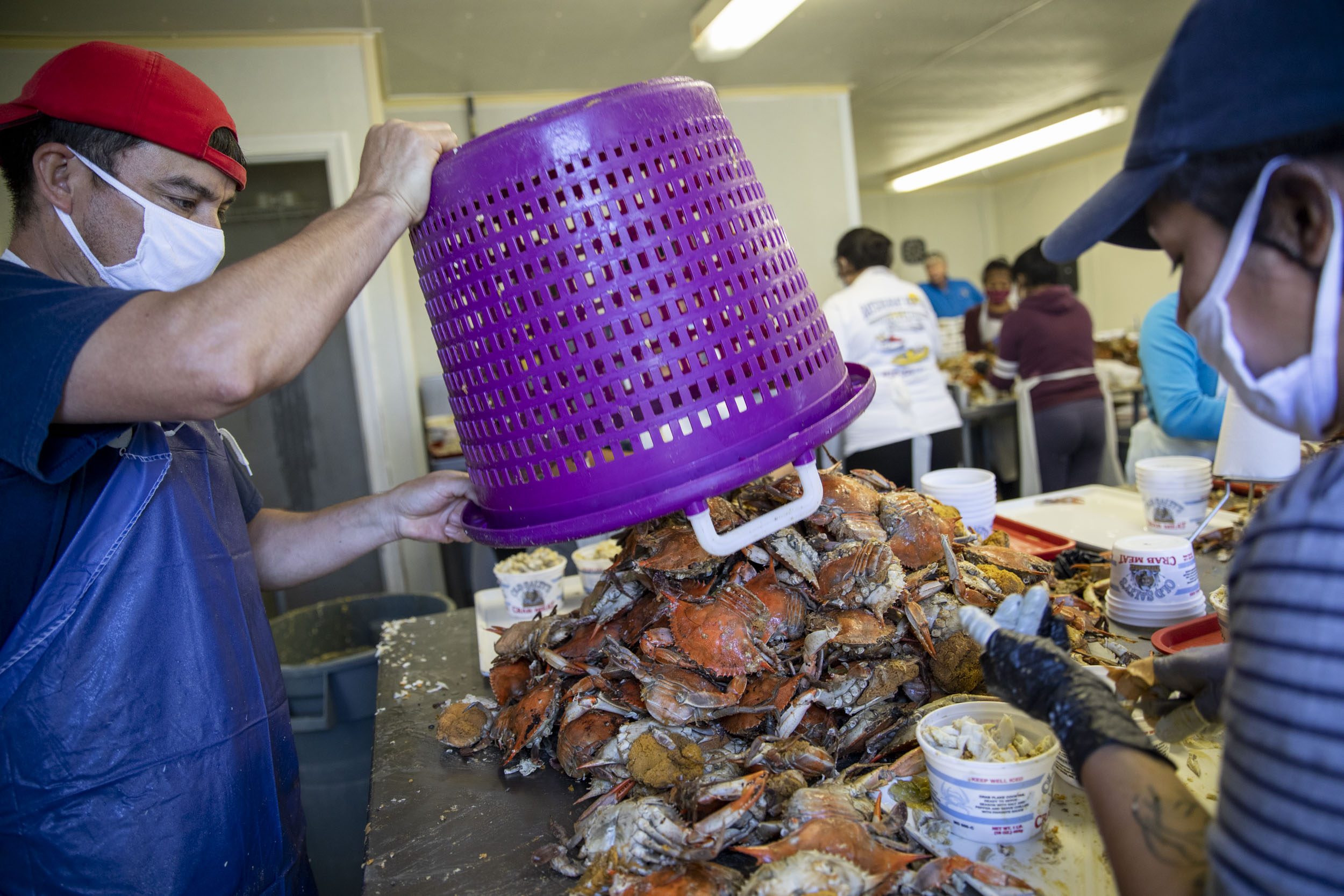
Guadalupe Garcia, a veteran crab picker from Morena Michoacán in south central Mexico, has been working at the same crab processing plant at Hooper’s Island on the Eastern Shore for 24 years.
“Every year is the same,” Garcia tells DCist/WAMU in Spanish. “First there’s little work, then a lot of work, and then as the season winds down there’s less work again.”
After a challenging year-and-a-half of lack of H-2B migrant worker visas, COVID-19, and a crab shortage, crab industry workers say things are getting better. Garcia and other workers were able to get the second dose of the COVID vaccine last month through the local county health department.
“We’re better off this year,” Garcia says, sitting at the breakfast table with the three other female migrant workers she lives and works with for eight months every year. “We still need to continue with the health safety measures. But yes, I feel a bit more calm this year.”
The four workers: Garcia, Engracia Galarza, Pola Tobar, and Norma Martinez live in a two-story remote farm house that’s owned by the operator of the processing plant they work at down the street. At 8 a.m, the four women have just come off of a three-hour shift. The smell of breakfast tortillas wafts through the home, and Spanish cable plays on TV. There’s a washer and dryer in the house to deal with the seafood smell in their clothes, and a car to take them into town for groceries. They each pay the owner $45 a month in rent.
They sit around the breakfast table talking about what it was like last year, when they came for only two months, because of COVID and visa restrictions. They say they wore masks everywhere: at work, at the grocery store, but when they were home they felt comfortable enough to not wear them.
“We like family…we sit here watch telenovelas together, eat together, and go out to do things together…we clean the house together,” Galarza says. “Since our family isn’t here, I’ll ask one of them for help with something and they always help me and they’ve never said ‘no.’”
They say luckily no one at the plant where they work contracted COVID. The local county health department couldn’t independently verify that, citing confidentiality concerns, but there were at least 50 coronavirus cases with two outbreaks among crab processing workers in the region last July. At least 40 of those cases were at Russell Hall Seafood, according to Delmarva Now.
Just down the road, Jay Newcomb, owner and operator of Old Salty’s Restaurant, also says there were zero cases at his processing plant. Again the health department was not able to independently verify.
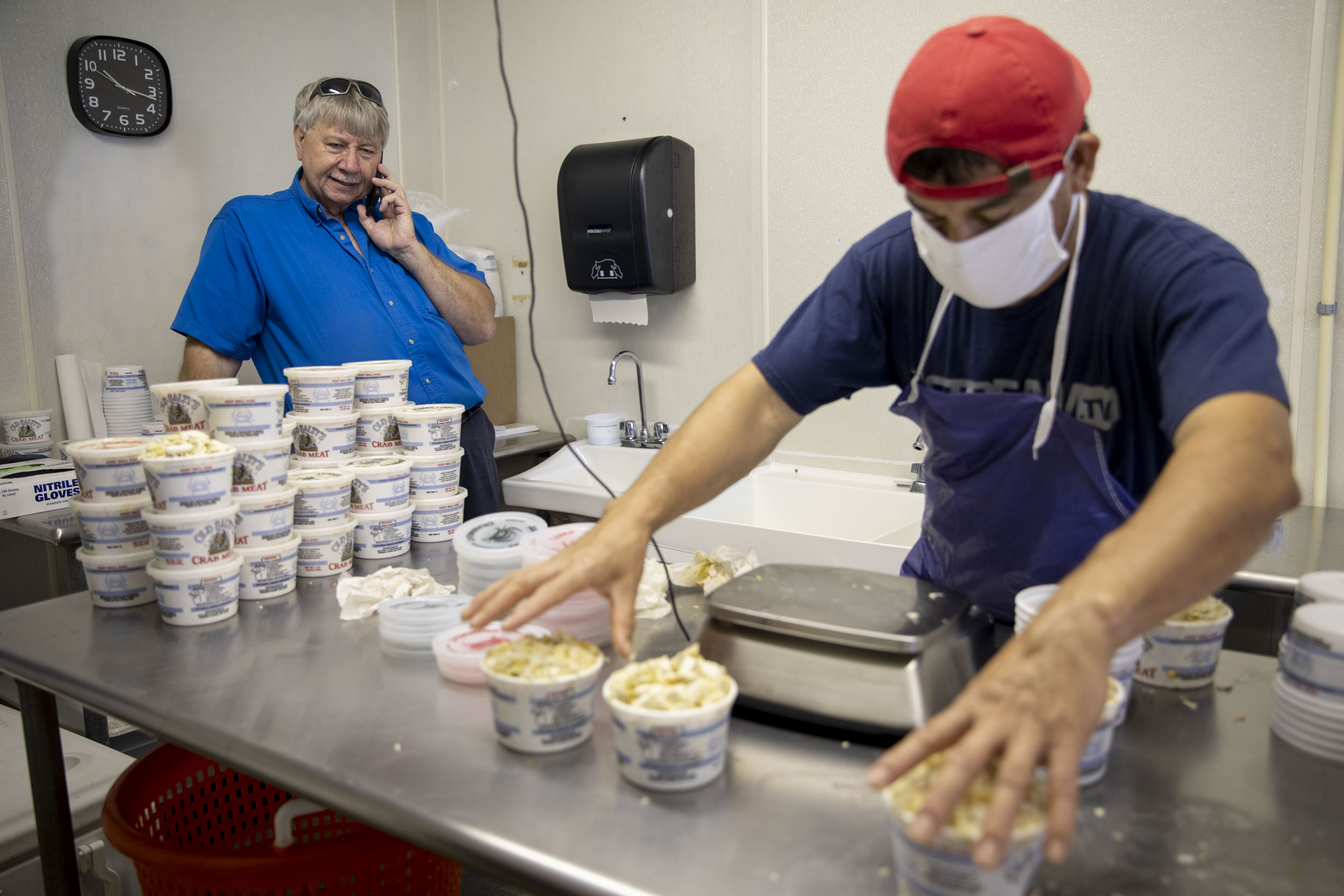
Newcomb, who’s been in the business for 25 years, says there were “a lot of unknowns” last year during the pandemic.
“We kept our social distance, wore our masks, and we isolated, but it all worked out. Nobody got sick at all, so we’re very fortunate,” Newcomb tells DCist/WAMU.
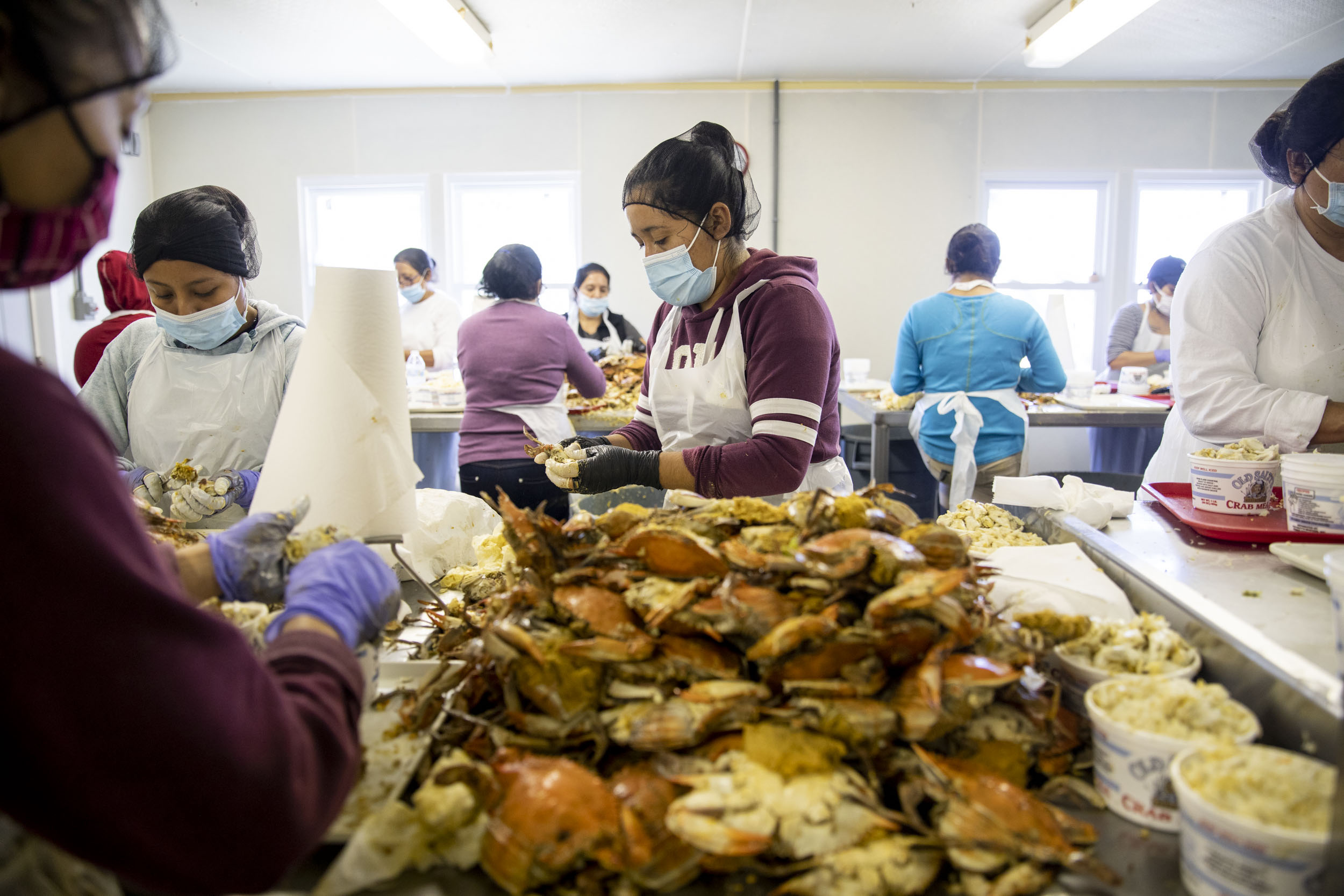
At the Old Salty’s processing area, more than a dozen workers pick crab while listening to Spanish radio in an air conditioned wood structure a bit larger than a trailer. They stand in rows along stainless steel tables piled high with crabs. Mother and daughter team from Sinaloa on Mexico’s west coast, Semyra Nevarres and Fabiola Elenes, work quickly. Their gloved hands move at lightning speed to separate the morsels of crabmeat from the shell.
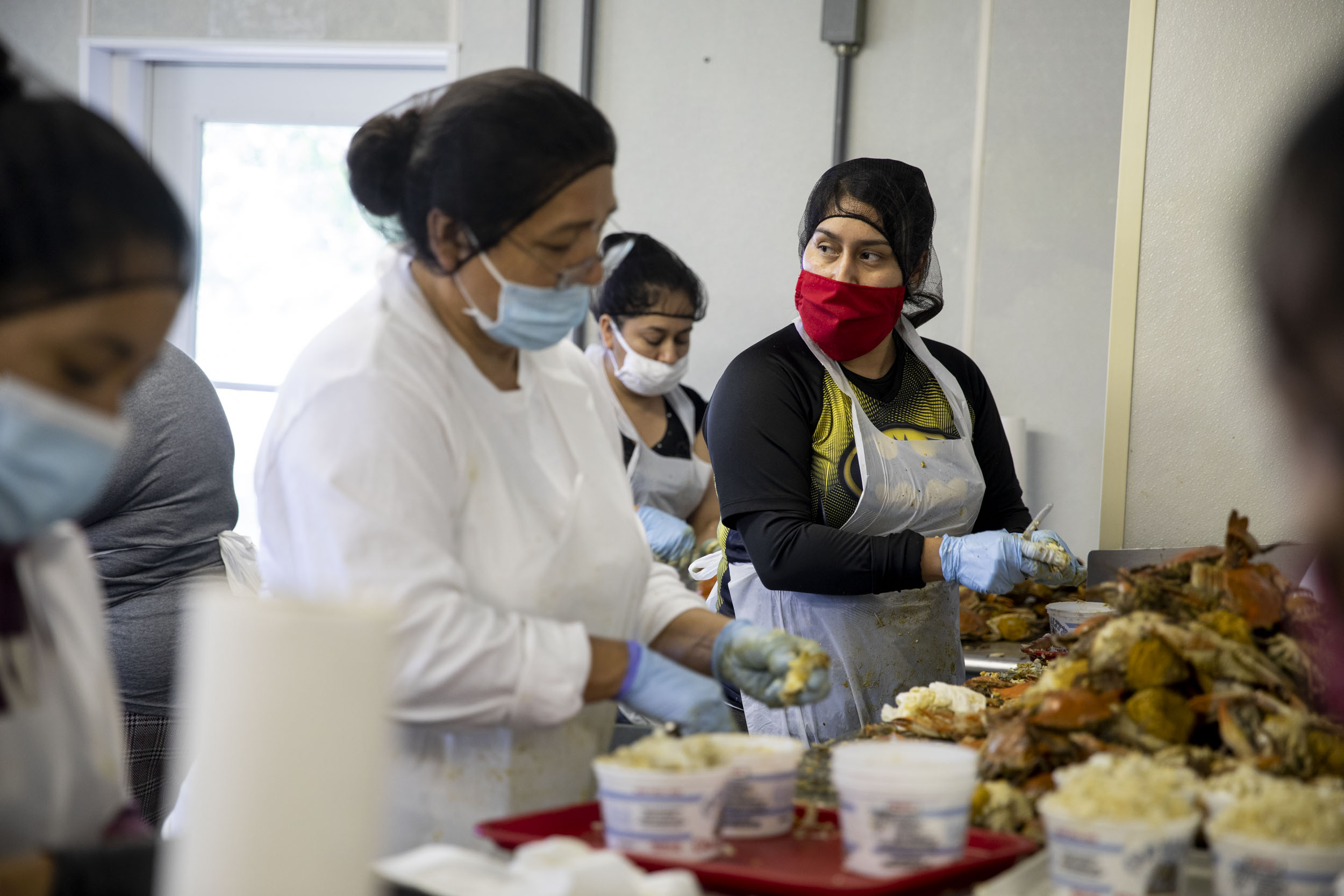
“It’s not a competition, but I don’t want to fall behind her,” Nevarres says.
Around 10 a.m., the duo already has about 20 containers of white crab meat in front of them. In one hour of work, they can be paid $12 for picking three pounds of meat, or the $11 minimum wage.
“Yeah the pay is good. Thank God. It’s better than the pay in Mexico,” Elenes says.
These workers were able to receive their second dose of the vaccine in mid-May. Now, with healthy workers and the pandemic more under control, there’s another concern for crab workers: a shortage of crab.
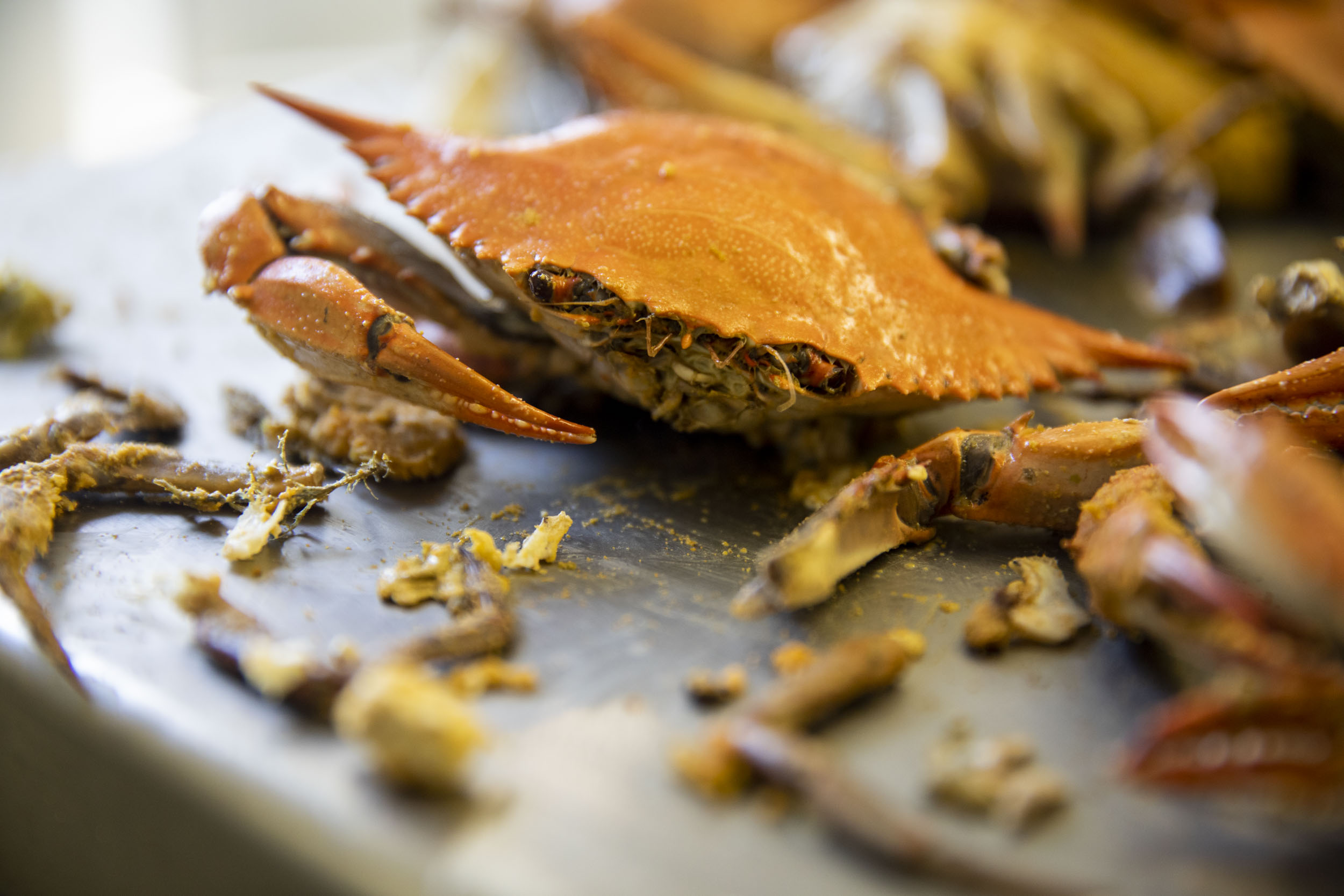
The population of juvenile crabs in the bay has fallen to its lowest level since 1990 — about 110 million, according to the state’s department of natural resources. But experts with the Maryland Watermen’s Association say they’re not concerned because the availability of crab fluctuates year to year.
Newcomb also says he’s not worried and suggests that the bigger problem is not having enough migrant workers to pick crab.
“If we don’t have our workers…that controls everything. Mother nature takes care of the crabs that goes up and down, but we need to have our workers,” Newcomb says.
He says he thinks the federal government needs to lift the cap on crab worker visas that’s been the same since the early 1990s.
Back at the house, Guadalupe Garcia and the others are finished with breakfast. Garcia says she’s not worried about the shortage of crabs because as the summer temperatures start heating up there will be more work.
“But we haven’t had to pay rent in the last two months since there hasn’t been as much work,” she adds.
It’s the instability in the availability of crabs and H-2B visas that keep the industry in a constant state of flux. All Garcia and other women can do for now is wait and hope for the hotter summer days to work more hours.