 Christian Zapata
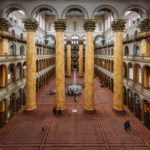
Every July, the National Building Museum sets up a big exhibit — like, literally, massive.
A vast ball pit, a rolling hill of grass, and a towering maze have all previously been centerpieces of the museum’s summer programming. But this year, after a yearlong hiatus due to the pandemic, the museum is setting up a series of art installations instead.
“It is a treat for the museum to be able to offer D.C. residents and visitors a variety of experiences this summer that fulfill our mission in many ways, from amazing architecture and engineering installations to engaging educational programs to partnerships with local organizations, artists, and designers,” said Aileen Fuchs, president and executive director of the Museum, in a press release.
This year’s events include smaller projects better suited for the “early post-pandemic era of smaller gatherings and social distancing,” the press release said. For one project, the city’s Business Improvement Districts commissioned local muralist Lisa Marie Thalhammer to create an outdoor, lawn-based exhibit. The result, a design called the “Equilateral Network,” features a walking path dressed in pink triangles that the museum says will pay homage to both D.C.’s LGBTQ+ community and Pierre Charles L’Enfant’s geometric designs for D.C.’s layout.
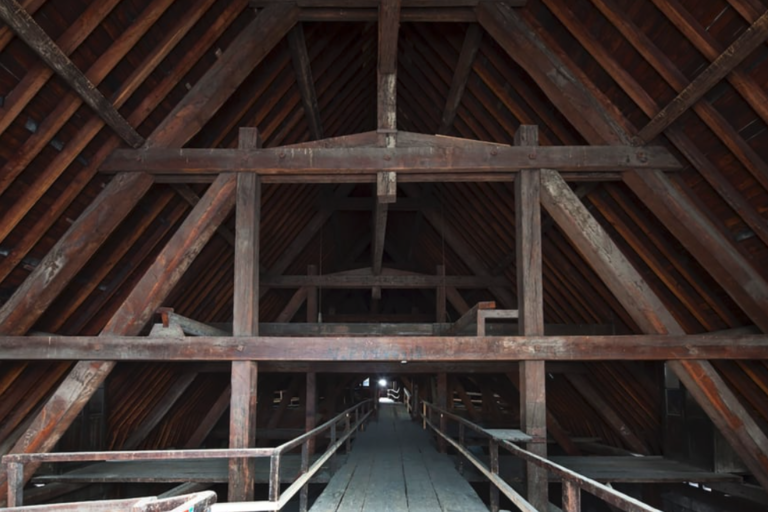
Exhibits located inside the museum’s Great Hall include the “Notre Dame Truss Project,” a replica of part of the Notre-Dame de Paris cathedral, which burned down in April 2019. Organizations, including the National Park Service and the School of Architecture and Planning at D.C.’s Catholic University, collaborated on the project, which the museum is hosting. Once the exhibit closes, the National Building Museum will ship the truss to France, where they hope it will be used to help rebuild the Notre-Dame.
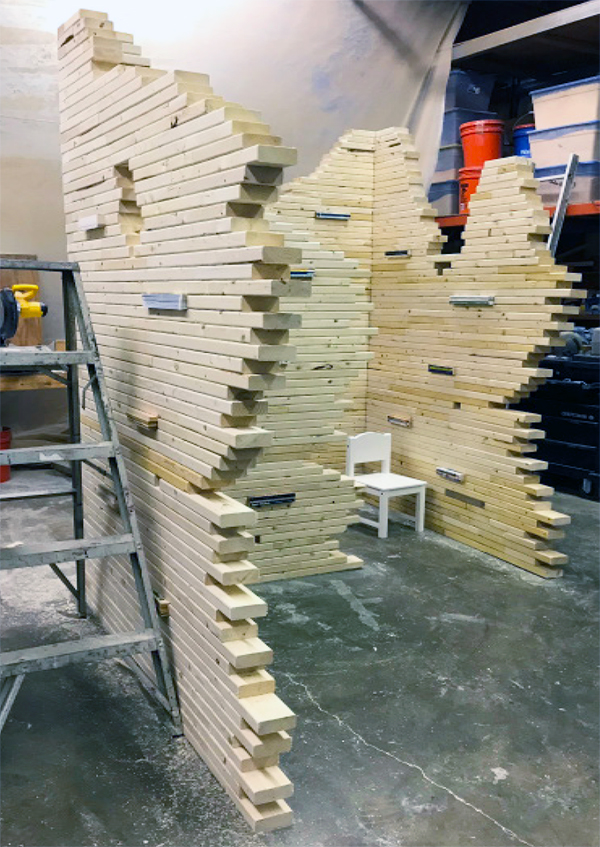
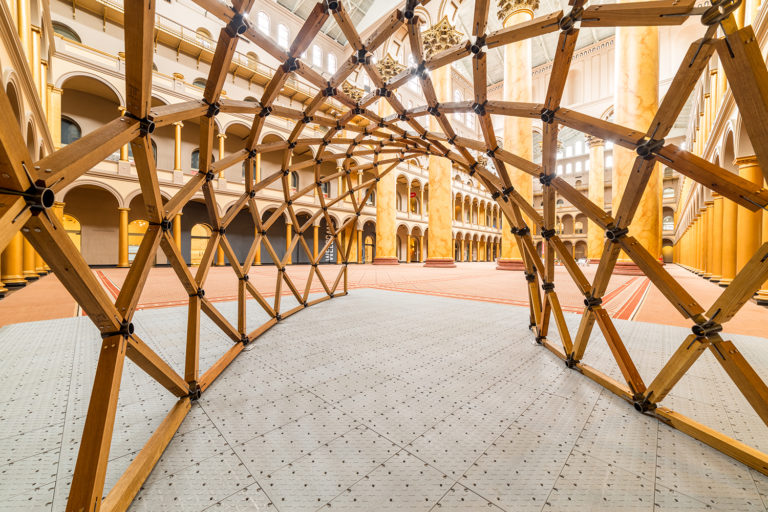
If you spent the last year and a half catching up on books, you might recognize some titles from the museum’s “Maze of Knowledge“ — an 8-foot-high, dilapidated labyrinth made of wooden blocks and embedded with books throughout the maze. The structure means to highlight how humans acquire knowledge and understanding from ancient ruins. And the Lo-Fab Pavilion attempts to answer some of society’s most pressing questions: How can complex structures be erected in areas where skilled labor is in short supply?
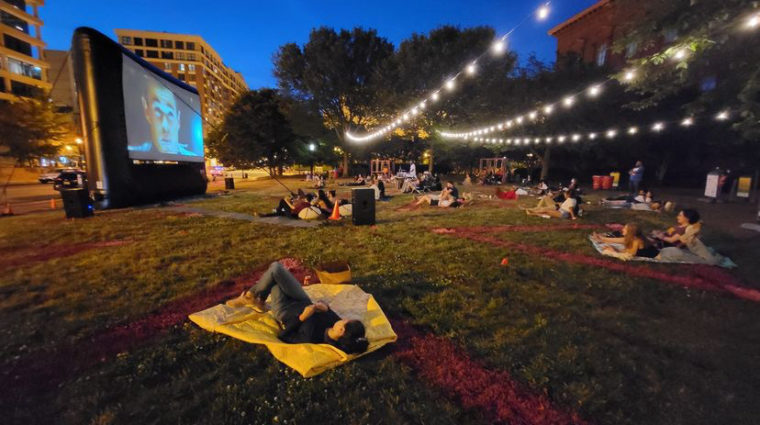
The museum will also host the fourth annual DowntownDC Summer Flicks–Can I Kick It? outdoor free movie series. Weekly Tuesday night screenings will build on this year’s theme — “The Future” — and “travel through time and space across a range of science fiction movie favorites.” Each movie will be scored with an original soundtrack of hip-hop and soul by weekly guest DJs.
The museum postponed several large public programs and events last year, including the Folger Shakespeare Playhouse — an Elizabethan-inspired stage that would host family-friendly programming during the day and performances of “A Midsummer Night’s Dream” in the evening. It initially closed in December 2019 to undergo renovations through March but was forced to stay closed due to the pandemic. At the time, the museum laid off eight percent of its staff, which then-executive director Chase Rynd told DCist was the result of the renovations and broader financial challenges.
“The ongoing shutdown in D.C. and elsewhere has severely limited the Museum’s ability, and that of our partners, to plan and produce programming,” said Rynd in a press release at the time.
The museum reopened on April 9 — 16 months after it closed — to a new foundation, classroom on the ground floor, and exhibition spaces. A spokesperson told DCist in May that the museum will be rehiring staff, some of whom will include returning employees.
“We have been very fortunate to welcome back previously employed staff members to our workforce,” a spokesperson for the museum wrote DCist in an emailed statement Thursday. “Unfortunately, COVID-19 upended our operations and impacted our staffing, as it did for many museums. As we welcome the public back into our historic home and expand our operations, we will be taking a strategic look at our overall staffing and recruitment plan.”
This article was updated to reflect the museum’s plans for the Notre Dame truss after hosting it.