Colleen Grablick
For Andie U., coming out to D.C.’s pride celebration on Saturday was special — and not just because it marked an in-person return to the exuberance of the day that was lost to the pandemic last year.
“I feel like I could cry just being out here,” said Andie, who declined to give their last name. Raised in a conservative household, Andie hasn’t come out about their gender identity or sexuality yet to their parents, who immigrated to the U.S. from Peru. “I’ve had to hide who I am for almost 20 years. I feel like I can scream that I’m queer and not be terrified anymore, and it’s just wonderful.”
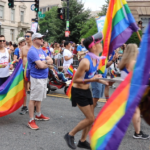
Andie and their roommate, both VCU students, came to Dupont Circle to attend their first ever Pride. While 2020’s Capital Pride events were disrupted due to the pandemic (D.C. had just ended its months-long stay-at-home order at the time), this year, streets in Northwest flooded with bright colors and glitter again — making a space for IRL joy after months of loss and pain.
“I just got out of the Metro station and I immediately saw flags, I saw people with crazy hairstyles…I had just the feeling of [being] free,” Andie said. “Being around people that I know share the same heart as me, and that I know had the struggle that I had, of coming to terms with this thing that I thought was wrong for most of my life. And now I’ve discovered that it’s not wrong — it’s love, it is pride, it’s joy.”
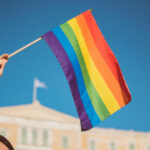
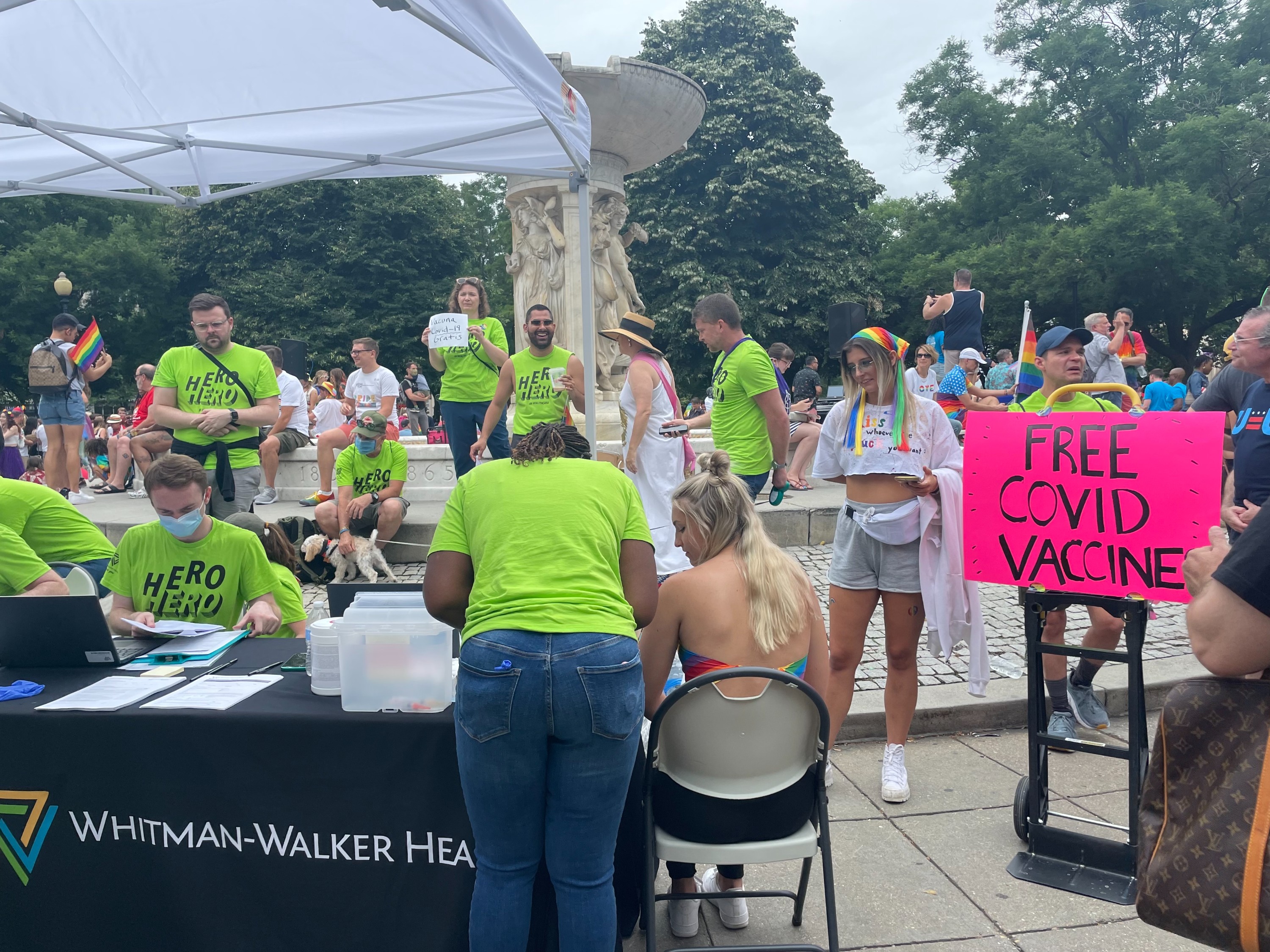
Near the Dupont Circle fountain, Chuck Brown and the Soul Searchers’ hit “Bustin’ Loose” blasted from speakers. Workers at a pop-tent from Whitman-Walker Health, a D.C.-based health clinic serving the LGBTQ+ community, offered free COVID-19 vaccinations. Throughout the park, people walked around with flags draped over their backs — laughing, dancing, and taking photos.
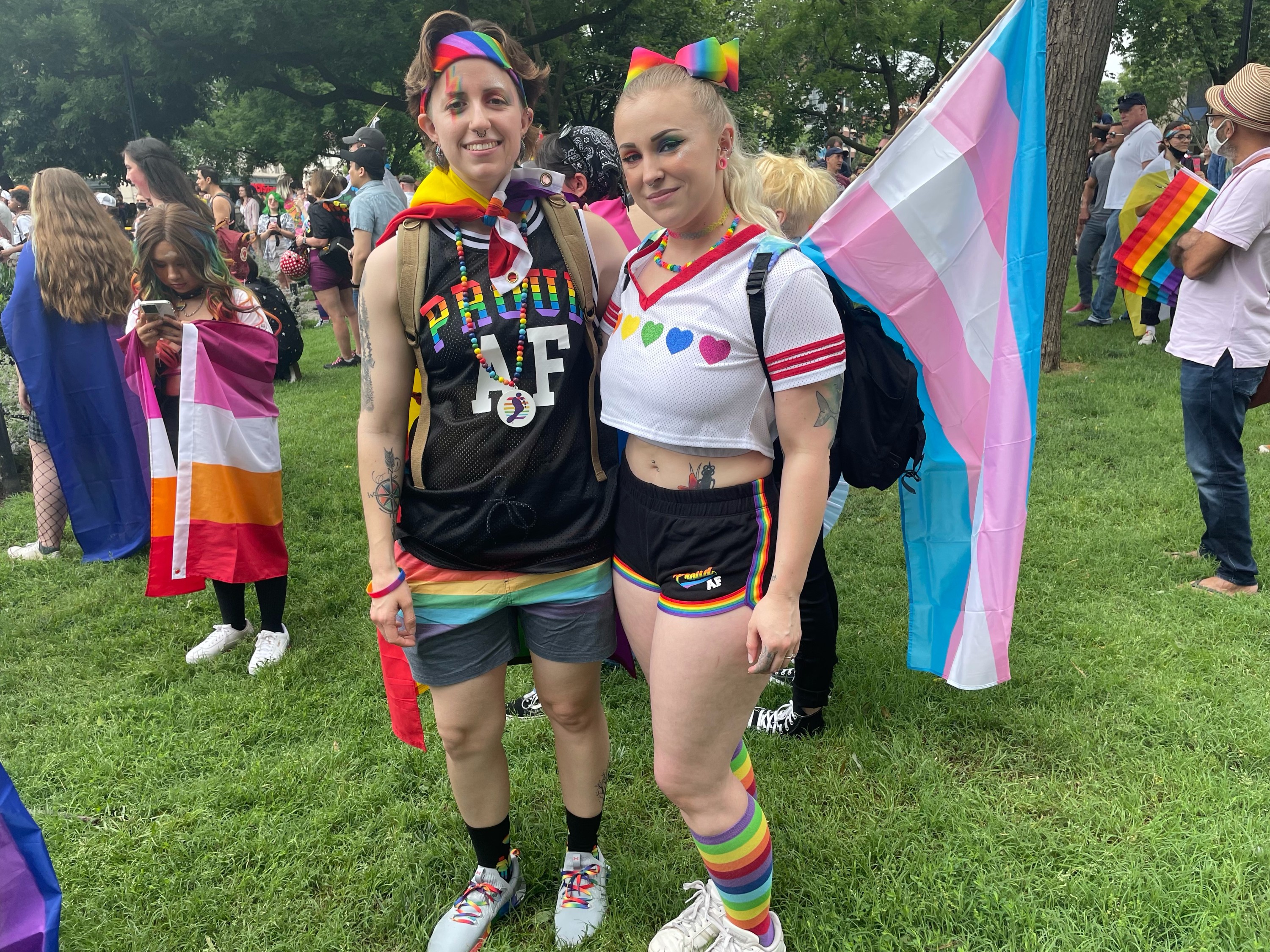
For Erika Katchmark and Elena Mussienko, both residents of Upper Marlboro, Maryland, being able to gather in person to celebrate Pride underlines what pride month means to them – building safe spaces for the LGBTQ+ community. The couple, who got engaged last July, was standing and chatting with a group of people they said they had just met, including some teenagers who were attending Pride for the first time.
“Even though we’ve made huge strides in the last two decades, we’re still fighting to feel safe and protected,” said Mussienko, a Maryland native. “Everyone knows in this space that they can go up to anyone, and that person is a safe person to speak with to ask for help, and that they will help you out. You can’t do that [just] anywhere.”
Sage Shapiro, 23, came out alone on Saturday to experience their first ever D.C. Pride. They moved to the city only about three weeks ago for an internship – and said on Saturday that everyone seemed “so nice.”
“[Pride] is just a celebration of identity and who you are, even if that isn’t necessarily part of being LGBT,” Shapiro says. “It’s just being authentic to yourself.”
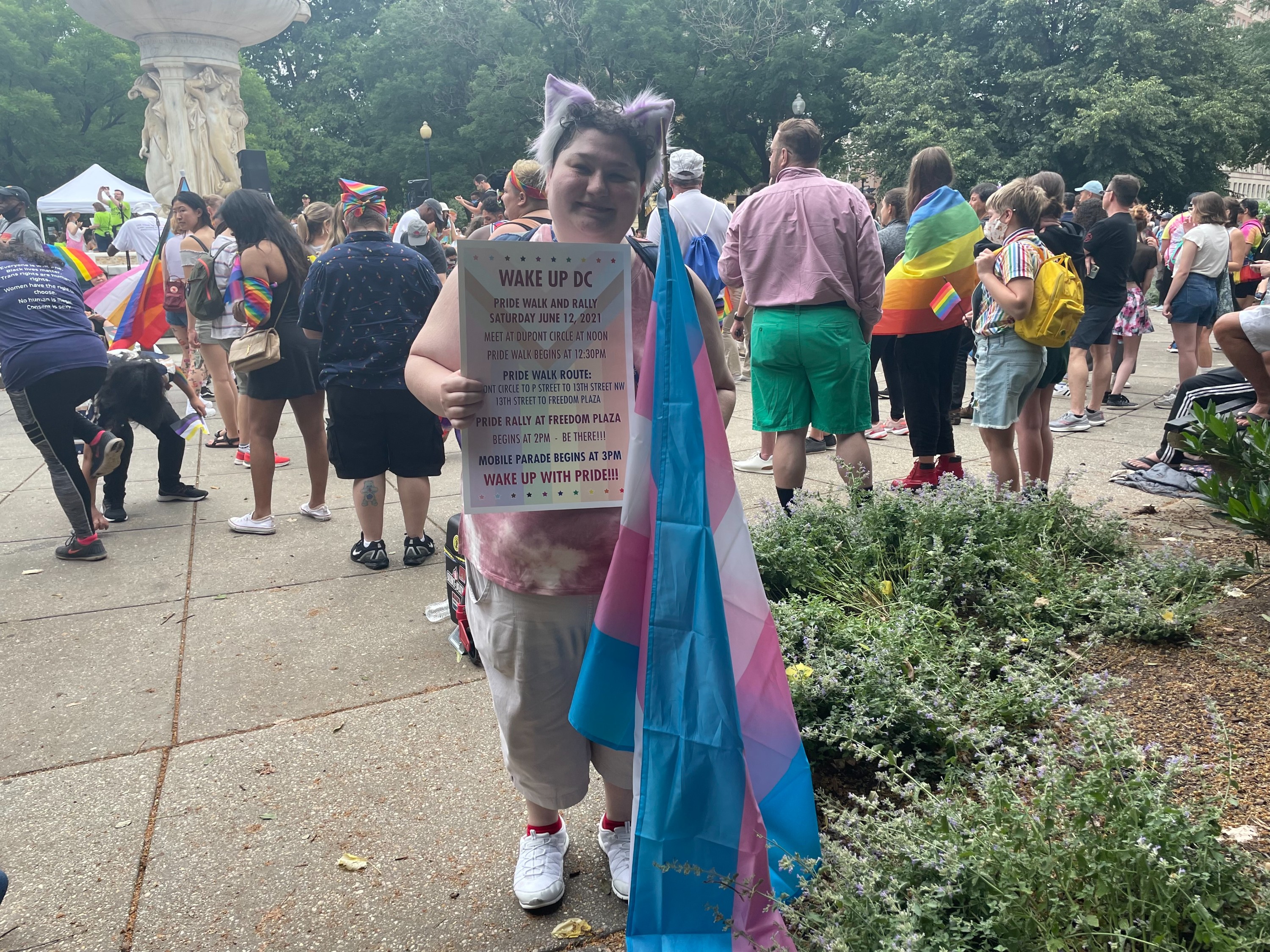
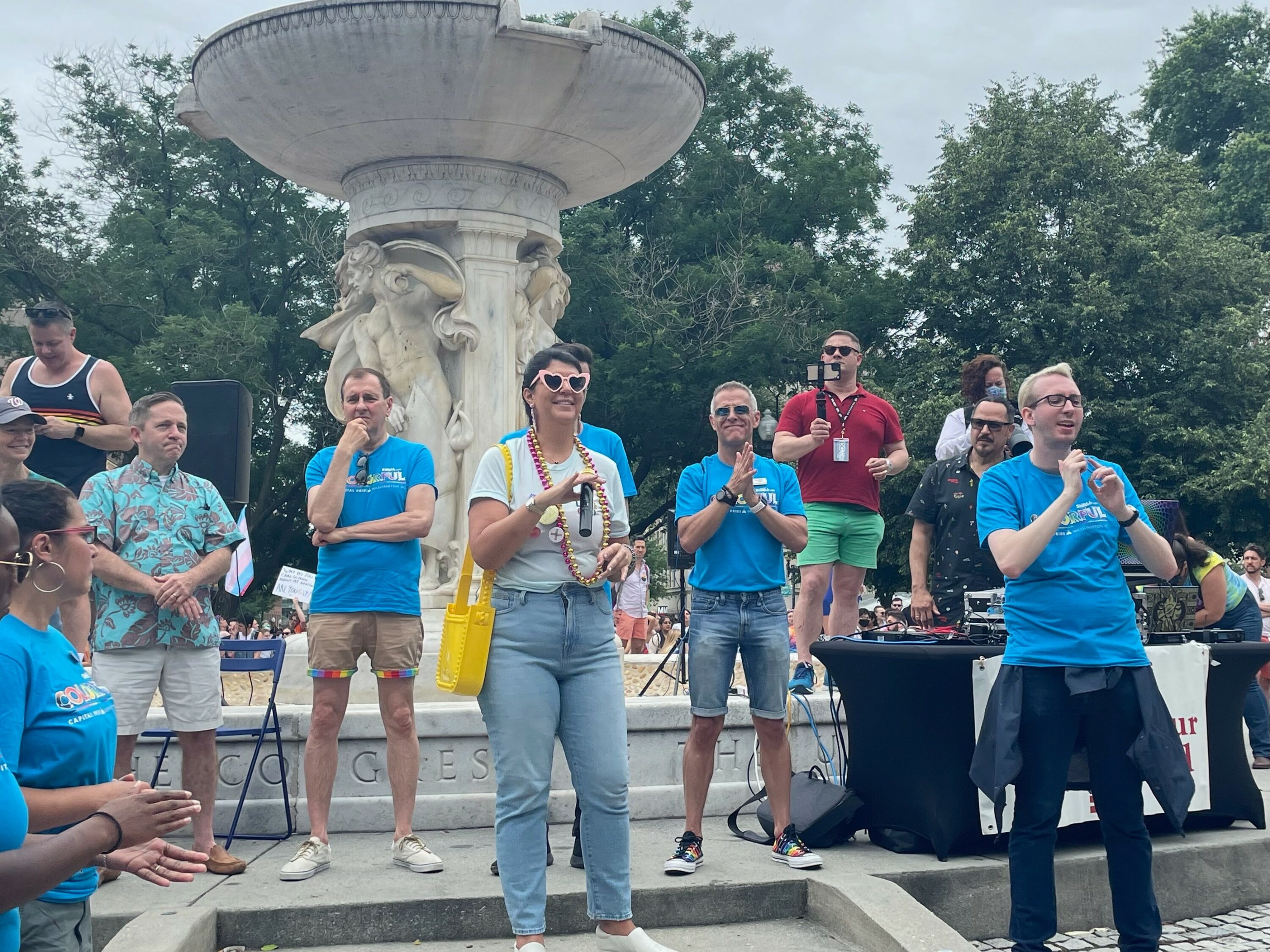
By early afternoon, the crowd in Dupont Circle mobilized into a march downtown, which ended at a rally at Freedom Plaza. (Vice President Kamala Harris also joined in along the way). D.C. Mayor Muriel Bowser delivered remarks at the rally, condemning recent legislation in other states’ that’s taken aim at the rights of LGBTQ+ students and calling on D.C. to be an model of acceptance.
“We are going to make sure that D.C. is a leader in LGBTQ issues,” Bowser said. “I’ve had the privilege of going literally around the world to tell people that we are the gayest city in America. That requires us to take on that position of leadership to tell other cities what they should be doing.”
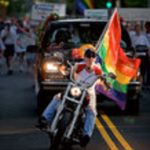
Unlike in years past, when D.C.’s Capital Pride Parade has featured a string of over-the-top floats and marchers, a vehicle-only parade kicked off midafternoon, passing throughout downtown.
The weekend of festivities comes as D.C. officially ends all pandemic-era restrictions on nightclubs and bars – meaning businesses can pack however many people they’d like Saturday night, as the celebrations continue.