Elliot C. Williams
 Colleen Grablick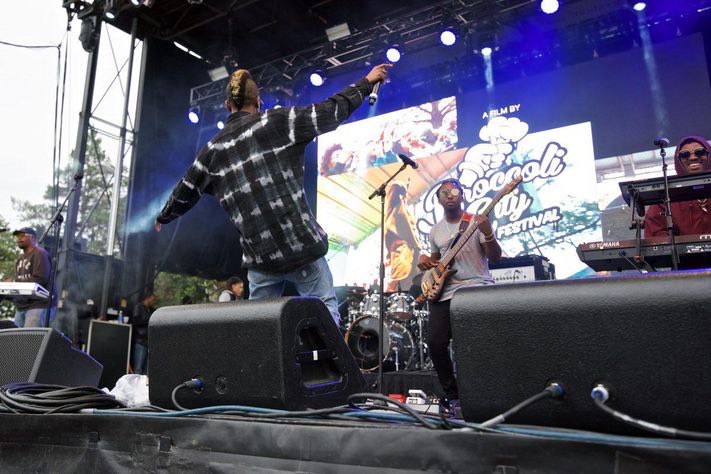
Update: For the second year in a row, Broccoli City Fest has been canceled due to concerns of COVID-19 spread.
The fest’s Twitter account announced the cancellation on Tuesday night. The event was scheduled to take place on Oct. 2 at RFK Stadium’s festival grounds.
“We have decided to cancel the Broccoli City Festival 2021 this October to reduce the likelihood of exposure to COVID-19 and to do our part to slow the spread in the communities of color we serve,” reads the statement.
Tickets will be refunded within 30 business days.
Original:
Broccoli City has increasingly become a local staple since its first festival in 2013, in part because it has leaned fully into D.C. culture. In just over a decade, the founders — four HBCU grads from D.C. and North Carolina — took their Los Angeles streetwear and eco-conscious events company to D.C. They quickly went from hosting a few up-and-coming rappers to Jay-Z and Live Nation competing for their brand.
After postponing for a year due to COVID precautions, tickets for the October festival, held at RFK Stadium’s festival grounds, go on sale Friday.
While the top half of the lineup features the classic set of big names from out of town — Lil Baby, Snoh Aalegra, Monebyagg Yo, and Lucky Daye — the bottom half reads like one big D.C. party.
Hosted by Rodney Rikai, former Wizards’ emcee at Capital One Arena, and WKYS on-air personality Little Bacon Bear, the festival includes sets from D.C. artists like rapper 3oh Black, DJ Domo, and Malcolm Xavier.
Local DJ collectives Everything Nice and AdoboDMV — responsible for many a pre-pandemic party around the region — will also throw down parties of their own at the fest.
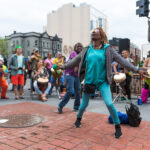
And while the festival has featured go-go artists in the past (Future Band, Black Alley, New Impressionz, and Rare Essence), this year’s festival features the Moechella movement. Organized by LongLiveGoGo — the collective behind much of the city’s go-go-fueled protests over the past few years — Moechella has shut down streets, protested outside of government officials’ homes, and generally provided a soundtrack for the city’s activism.

“We definitely try to always include the community that helped build us,” Brandon McEachern, one of the Broccoli City founders, tells DCist/WAMU. “When I look at other festivals, I don’t really see them do that too much. They come to somebody’s hometown and just slap a whole bunch of artists up there to have no ties to the community that they’re in. So we definitely do that every year — there’s always some type of D.C. sauce included in the festival lineup.”
Moechella will park its jubilant go-go truck directly on the festival grounds, the organizers say.
“I’m somebody who’s from North Carolina, but every summer I’d come to D.C., it was go-go,” McEachern says. “So, when I saw what [Moechella] was doing, I just thought it was super powerful, and we just thought it’d be really inclusive of the city.”
Justin “Yaddiya” Johnson, the LongLiveGoGo founder says he’s been talking to the Broccoli City organizers for a while about collaborating.
“Everything’s coming full circle,” Johnson says. “I’m excited for us to enter a new space — the festival space.”
While the annual festival is their biggest attraction, Broccoli City has evolved to become more like a social enterprise. The four founders who keep it running — McEachern, Marcus Allen, Darryl Perkins, and Jermon Williams — have attracted more than 125,000 total attendees with events that include community service opportunities, Juneteenth bike rides, 5K runs, and drive-in movies at RFK Stadium during the pandemic.
The pandemic, of course, shifted the way they thought about organizing events with thousands of people. Last summer’s tech and entrepreneur meetup BroccoliCon was held virtually, for example. People who bought their tickets for 2020’s festival can get a refund or apply them to this year’s event.
The organizers say that with venues reopening, they’re competing with bigger festivals around the world to book major artists.
“It’s extremely tough, the entertainment industry, especially when it comes to hip-hop acts,” McEachern says. “When it comes to booking artists in 2021, it has been a very difficult thing to do. The big festivals, sometimes they don’t necessarily think about D.C. But we fought to bring what we brought.”
Details are still in the works, but there will be a number of D.C. food vendors, creatives, and more at the festival’s marketplace.
“I like to call it the Wakanda of music festivals,” says organizer Jermon Williams. “We want everybody to come in, but know that when you get here, you’re gonna get this culture.”