D.C. Water’s Northeast Boundary Tunnel (NEBT) Project is one step closer to reality. With the completion of the underground tunnel construction, work is now focused on completing work at the above-ground construction sites along the alignment. Future work will include connecting the new tunnel to the existing tunnel system and bringing the NEBT online. D.C. Water plans to have all this completed in 2023.
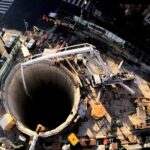
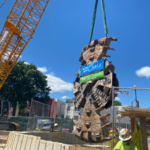
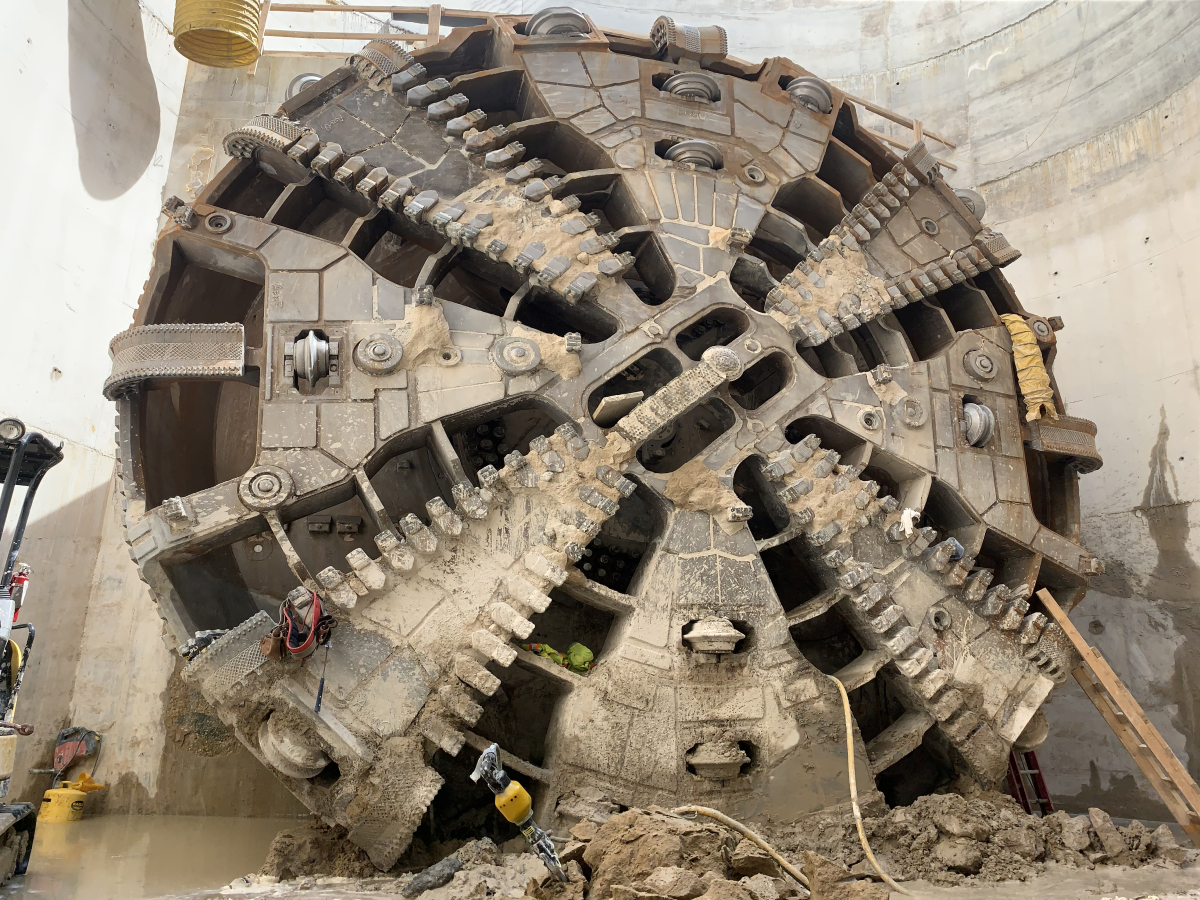
In March of 2018, the Tunnel Boring Machine (TBM) named Chris, in honor of the late Clean Rivers Assistant Program Director Christopher Allen, was placed into the ground at a construction site south of RFK Stadium. It was there Chris began its three-year journey – 100 feet underground – through soil about 65-million years old – north to Mt. Olivet Road and continuing on to Rhode Island Avenue, where the TBM took a sharp left toward its final destination at 6th and R Streets, Northwest. Thus, the tunnel construction was complete for one of Washington, D.C.’s most significant public infrastructure project to date, adding capacity to an overburdened sewer system that overflows into the streets in neighborhoods like Bloomingdale, Eckington and Trinidad during periods of heavy rain.
“Our primary goal here is to create a system that will do two things,” said David L. Gadis, D.C. Water’s Chief Executive Officer and General Manager. “First, it will significantly lessen the chance of devastating flooding in the most flood-prone areas of the city, and second, it will greatly reduce the amount of combined sewer overflow (CSO) that reaches the Anacostia River when we have strong storms.” The first phase of the Anacostia Tunnel System has been in service since March 2018 and has already captured over 10.8 billion gallons of CSO for treatment at D.C. Water’s Blue Plains treatment facility. There, the wastewater is treated and released into the Potomac River. Also, 6,000 tons of trash that would have otherwise ended up in the river via storm drain outflows have been captured.
The Northeast Boundary Tunnel will connect to the previously completed Anacostia River Tunnel and the First Street Tunnel in Bloomingdale. Combined, these projects make up the Anacostia River Tunnel System, which is comprised of over 13 miles of tunnels with a storage capacity of more than 157 million gallons. The project has been touted by environmental groups and District residents as a huge leap forward in cleaning up the Anacostia. Once one of America’s most polluted rivers, the Anacostia is making a comeback. With wildlife flourishing in the river and along its banks over the past several years, environmental groups and city agencies are dedicated to making the river fishable and swimmable again.
D.C. Water’s tunnel programs and efforts to keep sewage overflows out of the river are playing a key role in the restoration of the Anacostia. You can read more about that plan here, and you can read more about the Northeast Boundary Tunnel project here.