Morgan Baskin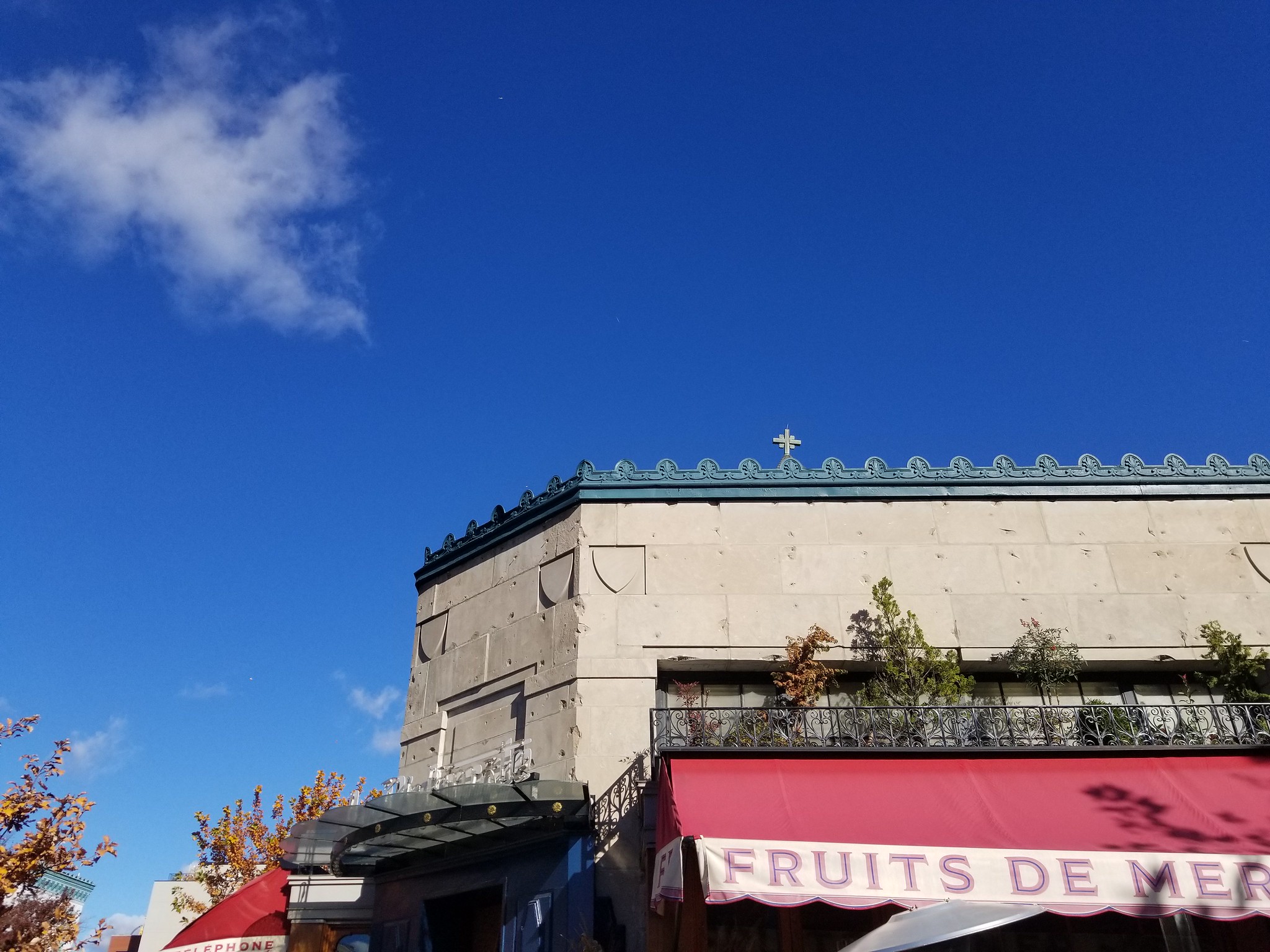
It seemed like much of the Washington press corps was dining and drinking north of Logan Circle on a balmy Thursday evening, when gunmen fired between 20 and 30 bullets near the intersection of 14th and Riggs streets NW, wounding two men.
One of the journalists close to the scene, CNN’s Jim Acosta, tweeted a harrowing video of pedestrians fleeing the area as shots rang through the street around 8:20 p.m. “It sounded like a war zone,” said one witness Acosta interviewed. “Scary night on one of the busiest streets in D.C.,” another national political reporter tweeted.
Restaurant and bar patrons outside joints like Mexicue and Le Diplomate began frantically tweeting about what they were witnessing, for a time turning a slice of local D.C. Twitter into a chorus of distress and horror. “I’ve sat in those very seats at Mexicue and no doubt everyone else has as well,” one user wrote, “which makes it more visceral for people to process.”
Metropolitan Police Department Chief Robert Contee announced a $10,000 reward for information about the shooters, who are still at large. “People are mad as hell, and I don’t blame them,” he said during a Friday afternoon press conference.
Perhaps because of the existing media presence on the scene, the incident received wide national attention — including on CNN, which dedicated a segment of Anderson Cooper’s nightly news show to Acosta’s reporting from the field. Headlines in Yahoo, The Hill, and Huffington Post emphasized the shooting’s newsworthiness because of its proximity to restaurants. “2 People Shot In Popular Washington Restaurant District,” was the latter’s headline.
It was the second local shooting in as many weeks that drew coverage from pockets of journalists who don’t typically cast their eye to local D.C. stories. A drive-by shooting outside of Nationals Park that suspended an ongoing game on July 17 similarly prompted widespread coverage. As the Associated Press noted at the time, the District is facing a rising number of violent crimes and homicides.
But in a city where 40% of bullets are fired in 2% of city blocks, Black public safety and gun violence prevention activists say they are dismayed to watch as affluent, mostly white residents see their fear and pain validated on national television — while they are left to quietly grieve the deaths of family and neighbors with little notice from prominent media.
“Somebody gets shot on 14th Street, and, you know, affluent people, rich people, white people, however those Venn diagrams come together, are tweeting about it; Jim Acosta is right there, so it’s on CNN. It’s sort of like, okay, so when the right people are upset, not only does it sort of rocket to the top of all concern in the city, but [the attitude is], ‘Oh my god this is terrible. This is so scary,’” says Eugene Puryear, a long time D.C. resident and political activist who has previously run for D.C. Council. “[But] the collateral damage, that trauma, and all those other pieces — I feel they just don’t actually get brought out about communities like where I’ve lived in Congress Heights.”
Nowhere was the parallel clearer than in the death of 6-year-old Nyiah Courtney, who was killed in a drive-by shooting in Ward 8 the night before the shooting at Nats Park; five others were injured. On Wednesday, just 24 hours before the shooting on 14th St., three men — 27-year-old Malcolm Johnson, 25-year-old Kevin Sanders, and 25-year-old Malik Mack — died from gunshot wounds in separate incidents across Southeast and Northeast.
D.C. has allocated $7.8 million in the fiscal year 2022 budget for the violence interrupter program, an effort intended to offer more support and resources to residential neighborhoods that often see gun violence. But as DCist reported last year, those workers face an uphill battle coming out of the pandemic. The city has seen 108 homicides to date in 2021, 81 of which were the result of shootings — a slight uptick since this time last year, when more homicides occurred in any year since 2008. (Violent crime has declined slightly since this time last year.)
As she does every Friday, Jawanna Hardy spent this morning visiting the gravesite of Davon McNeal, the 11-year-old boy who was shot in the head during a cookout on the Fourth of July last year. During her visit, she came upon the grave of a former student, another young man who died two years ago.
“I didn’t know he was there, and I just broke down and cried,” says Hardy, who founded the youth and family outreach program Guns Down Friday that aims to deescalate violence and prevent kids from using guns.
It was in that context that she reflected today on the media’s treatment of Black neighborhoods that see life-threatening violence. Hardy notes that it’s not just shootings that go unreported or dismissed — it’s death.
“It occurs so much where we are, [the media] stops even covering certain stories, [like] the killings. When someone dies, it’s so common in our community that it’s not even news anymore. Even myself, you get kind of numb because it happens so much,” Hardy says. “There was a quote I’ve seen going around online. It says: ‘Outrage over gun violence should be the same whether it occurs at 14th and S [streets] NW, or 14th and and S [streets] SE.’ You know? It should be the same outrage.”
Hardy describes frustration with the thing that makes the news cycle tick: its emphasis on, well, the new. She says that outlets typically only reach out to talk to her when there is a particularly disturbing incident — the murder of a very young child, for example — or in the immediate aftermath of a tragedy.
But rarely do reporters stick around to learn about the communities and families they’re covering, or write about the ceaseless and exhausting work of gun violence prevention.
“The situation has to be creative or it just has to be different for people to [care about] it. But all the families hurt the same, you know?” she says. “The pain is all the same for us.”
(A publicist for Acosta declined DCist/WAMU’s request for an interview.)
Charles King, a Ward 5 resident who founded Helping Others With Life, a nonprofit that aims to reform the parole and probation system in D.C., says it has been disorienting to watch over the course of his life as economic development has transformed pockets of the city, making them desirable to more affluent patrons — and news consumers. He remembers the days not so long ago when “14th St. wasn’t such a nice place to be.”
As that has changed, so has the media’s response to events there, and neighborhoods like it.
“When certain crimes happen, especially gun violence, they are addressed in different ways based on the ward. Right? We’ve seen that. That’s what the national news just showed you,” he says.
He believes the story of D.C. — the real story, the one that acknowledges D.C. is “one of the most powerful cities in the United States” yet allows communities to suffer from generation-defining violence — should be compelling enough for national outlets to cover.
“A lot of people don’t even know what’s going on right in their backyard,” Hardy says. “I would just love them to come more than [when] something’s going on in Northwest or the white areas of D.C.”
This story has been updated to correct the intersection where the shooting occurred.