Debbie Truong
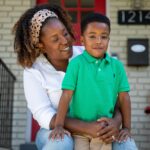
Markita Bryant does not feel it is safe to send her 10-year-old son back to his D.C. school for in-person learning. The fifth-grader has asthma that puts him at high risk of severe illness if he contracts the coronavirus.
So Bryant submitted a form to D.C. Public Schools requesting her son, who is too young to get a COVID-19 vaccine, continue with distance learning for medical reasons. It was denied.
“I’m frustrated,” Bryant said. “All we’re asking for is grace.”
Mayor Muriel Bowser has been insistent: school buildings will fully reopen for the 2021-2022 academic year. Students can only participate in distance learning if a physician signs paperwork that says it is necessary.
But Bryant and other parents with young children say guidelines the city has issued for in-person instruction are too restrictive and could endanger families with valid health concerns, especially as worries over the Delta variant grow. They want greater flexibility for distance learning until a coronavirus vaccine is available to children under 12.
Some parents have encountered challenges filling out the medical form the city has required of students who want online instruction. Others argue a virtual option should be offered to children if they live with a family member who is at high risk of becoming severely ill with COVID-19.
Heidi Schumacher, assistant superintendent of health and wellness for the Office of the State Superintendent of Education, said the city’s plans to require in-person learning for students unless they have a qualifying medical condition matches guidance from leading pediatric groups.
“Our schools have implemented robust health and safety protocols to protect the health and wellbeing of our school communities,” she said. “We strongly believe that students receive the best education and support by attending school daily in person.”
But Elizabeth Oquendo, an attorney with Children’s Law Center, an organization that represents vulnerable children, said families are being forced to make painful calculations weeks from the start of a new school year.
“We’re putting families in a really difficult position to have to choose between ensuring that their students get the education that they need and deserve and keeping their child safe,” she said.
In order to participate in virtual learning, parents must have a physician sign a form certifying a child has a health condition that “requires” the child to participate in distance learning.
The Centers for Disease Control and Prevention has identified medical conditions that may place children at higher risk for getting severely ill from COVID-19, including moderate to severe asthma, obesity and diabetes. But no national or local guidance explicitly describes which medical conditions would require virtual learning.
Oquendo said that lack of guidance has made it “difficult for providers to exercise their independent judgement.”
When Bryant went to her son’s pediatrician to get the form signed, she said the pediatrician did not feel comfortable certifying that the boy requires virtual learning.
The physician crossed out “requires” and wrote instead the boy would “benefit” from distance learning because his asthma makes him “high risk for severe disease” if he becomes sick with COVID-19, according to a copy of the form Bryant shared.
Bryant submitted the modified form to D.C. Public Schools, which denied her request for distance learning in a July 13 email. A health services coordinator told Bryant the school system could not approve the form because the doctor did not say virtual learning should be required.
“If you would like to submit another form that is not altered by the doctor and clearly states that virtual learning is required for your student, we would be happy to review the updated form,” the email said.
Bryant, who said she just wants to keep her son learning at home until he becomes eligible for a coronavirus vaccine, is not sure what she will do if her son does not have the option of distance learning when school starts next month.
She is running out of time to figure it out — the school system’s deadline to submit the form is Friday.
“I’m highly disgusted at this point,” she said. “To hear our leadership over schools basically say it’s one way or the highway, that’s not OK.”
The Office of the State Superintendent of Education, which developed the form, said physicians must use their “best professional judgment” to determine if a student requires virtual instruction.
The D.C. chapter of the American Academy of Pediatrics issued a statement in June supporting full in-person learning for students.
The physicians group, which cited research that shows schools are not major drivers of COVID-19 transmission, said distance learning should only be available to students with high-risk medical conditions. It urged “clinicians carefully weigh the risks of being out of school.”
“Most children with medical conditions, even high-risk ones, can safely attend in-person learning with COVID-19 safety precautions in place and regular medical checkups,” the statement said. “In-person learning is fundamental to child and adolescent development and well-being and should be prioritized.”
But parents say the city’s hardline stance on in-person learning ignores the realities some families face.
Megan Fowler said she did not encounter any issues getting an exemption from in-person learning for her five-year-old son, who has a medical condition that puts him at higher risk for serious illness.
But she has not been able to get a similar exemption for her four-year-old son, who is enrolled in a D.C. charter school. She worries the preschooler could get his older brother sick.
“I’m not looking to change the whole school system,” she said. “I’m just looking for some compassion.”
Another parent, Latrice Harris, said she has not been able to get an appointment before the first day of school with a physician who can sign the required medical form for her 7-year-old daughter.
Harris said the first available appointment at Children’s National Hospital for her daughter, who is obese and pre-diabetic, is in September.
Summer months are often busy for pediatricians. But many offices are experiencing a rush of families looking to get routine immunizations and physicals after delaying medical care during the worst months of the pandemic.
Harris also worries about her own health. She was hospitalized for nearly two months and attached to a ventilator after she became sick with COVID-19 last year.
She still relies on supplemental oxygen and receives help at home from a health aide. Harris received a coronavirus vaccine but, with a compromised immune system, she fears a breakthrough infection if her daughter carries the virus home.
“I may not make it out,” she said.