Ally Schweitzer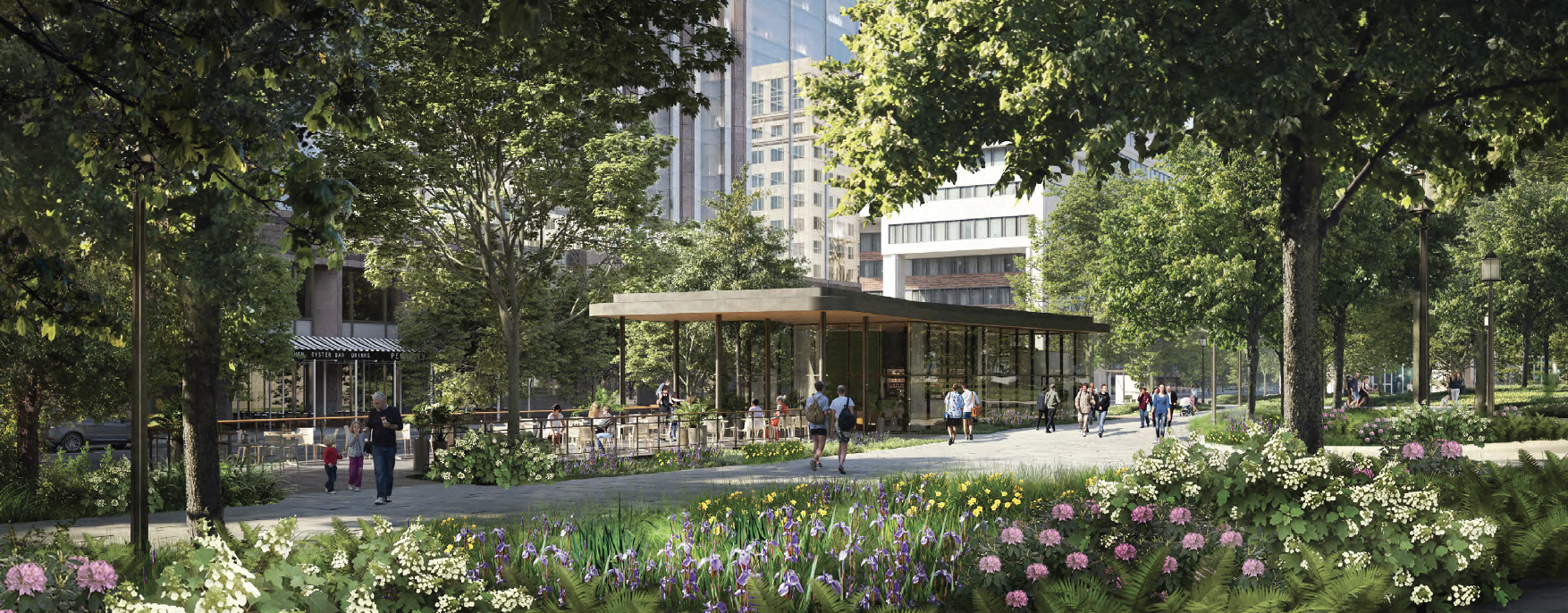
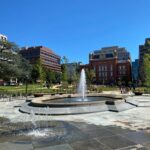
Franklin Square in downtown Washington is expected to reopen this fall after a major renovation. But one group that serves meals to unhoused residents in the park is worried they won’t be welcome back.
The organization Food Not Bombs has provided free meals to individuals experiencing homelessness in downtown D.C. for nearly eight years. Volunteers with the group say people in need haven’t been able to collect food at the park since last summer, when the Downtown D.C. Business Improvement District fenced off the area for a year-long renovation, relocating around 20 unhoused people in the process, according to the Washington Post. The BID, which provides services to the downtown business community, moved meal distribution to a location near the Department of Veterans Affairs on Vermont Avenue.
But William Reid, an organizer with Food Not Bombs’ local chapter, says that during recent public meetings the BID has not voluntarily committed to allowing food distribution at the park when it reopens to the public next month. (Disclosure: Reid previously interned at WAMU.)
“We have asked them directly, numerous times, ‘Are you going to allow church and community groups to resume providing services in Franklin Square that they’ve been doing for years?’ And they just refused to answer. So we don’t know what that means,” Reid said.
The group has since launched a petition to drum up support for a “written and verbal commitment allowing unhoused residents to resume sleeping at the park and Food Not Bombs to resume serving the Franklin Square community.”
A spokesperson for the BID tells DCist/WAMU via email that everyone will be welcome at Franklin Park when it reopens this fall, including individuals experiencing homelessness, but that organizations that want to host food giveaways must apply for a permit with the National Park Service.
“Upon opening Franklin Park in September, this mandatory NPS requirement will continue,” the spokesperson wrote. It’s not clear whether the BID has the authority to block food distribution in the public park, but it could report unpermitted activity to Park Police.
National Park Service spokesperson Mike Litterst says Food Not Bombs has never received a permit to distribute meals at Franklin Square, though more than a dozen other organizations have done so in the past. “If there’s a permitting thing now, that’s news to me,” says Food Not Bombs’ Reid, who alleges that the group’s meal giveaways have never been shut down over a permit issue.
Franklin Square sits on nearly five acres of federal land, but it’s currently undergoing an $18 million renovation paid for by the D.C. government. The new city/federal partnership was enabled by a federal lands package that gave District officials more authority over National Park Service-controlled parks in the city. The BID will manage the park once it reopens later this year, though the National Park Service will continue to oversee event permits there.
The revamped public square will include a restaurant, a pavilion, an expanded and rehabilitated fountain plaza, a children’s play area, ADA-accessible sidewalks, and new seating, according to the BID. Officials say they want it to become an attraction unto itself — something like Manhattan’s Bryant Park.
But critics wonder who the renovations will benefit most. Street Sense, a newspaper focused on issues affecting the unhoused, published an opinion piece in June that described the overhaul as hostile to resident experiencing homelessness.
“The purpose of the renovation is to impose restrictions that prevent homeless and people suffering from mental health and addiction problems from being visible in downtown D.C. — from having a safe haven where they can congregate and get basic human services from local outreach workers,” wrote Colly Dennis, an artist and Street Sense vendor. “Although the renovation of Franklin Park is highly appreciated and may be well overdue, we need to take into consideration the people who called it home for years.”
When the park was closed last year, the DowntownDC Foundation — a nonprofit established by the BID — pitched in funding to provide services to homeless individuals and establish the DowntownDC Weekend Community Services Program, which moved services from Franklin Square to Vermont Avenue. In a recent report, the BID said that volunteers staffed meal distribution events there during the pandemic, providing an average of more than 450 meals on weekends.
“Community outreach groups and individuals are welcome to utilize this reserved block of space to distribute food, clothing, books, medical and any other vital resources to over 200 individuals experiencing homelessness in the downtown area,” BID spokesperson Karyn Le Blanc wrote in an email.
But Reid with Food Not Bombs says the Vermont Avenue distribution site appeared to go quiet before the George Floyd demonstrations last summer, and only recently resumed services on a consistent basis.
“When we’re there, there’s usually no sign of anything going on,” Reid says.
The Downtown D.C. BID hired a new director of homeless services last fall. The business group also operates the Downtown Day Services Center at the New York Avenue Presbyterian Church, in partnership with D.C.’s Department of Human Services, Pathways to Housing DC, and HIPS. The center provides homeless residents access to showers, restrooms, meals, laundry facilities, computers, and case management services. The day center transitioned to appointment-only services during the pandemic, but it recently resumed walk-in access.
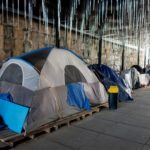
Earlier this month, the National Park Service announced plans to close two federal parks in D.C. and remove homeless encampments there, WUSA 9 reported. The announcement followed complaints from the public about alleged drug activity and violence at Burke Park and Samuel Gompers Memorial Park. Activists initially staved off evictions at Burke Park, but the clearing was rescheduled. Volunteers returned to the park over the weekend to help unhoused residents move their belongings.
Reid with Food Not Bombs says he’s worried that D.C. and federal officials are trying to make it harder for community groups to provide much-needed services to people experiencing homelessness.
“I’m concerned about the real motivation here. It’s about pushing the homeless out of the city. To them, we are helping keep homeless people there. But we’re not,” he says. “People in need exist, and that’s just the way it is.”