Elliot C. Williams
The D.C. Public Library’s Go-Go Archive is a digital and physical resource full of books, magazines, records, cassette tapes, DVDs, and 10,000 tweets about the Don’t Mute DC movement. But since it was established in 2012, the collection has suffered from an acute lack of photos capturing the culture surrounding the music — and even the bands that produced it.
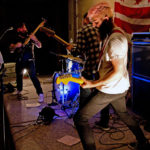
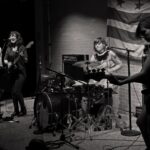
That’s changing this week, as the D.C. Public Library is adding nearly 2,000 photos that portray a decade of performances and behind-the-scenes moments shared by legendary go-go musicians and fans alike.
In his collection, photographer Chip Py captured iconic bands like Rare Essence, Backyard Band, Familiar Faces, Suttle Thoughts, Be’la Dona, and Da Mixx Band. Py was also one of Chuck Brown’s official photographers during his final years, and the collection features photos of the famed godfather of go-go on and off stage.
“When I was taking these pictures, I was convinced that they were going to be valuable someday,” Py tells DCist. “Having them in the D.C. library is perfect. It’s not a commercial venture. They’re preserved forever, beyond me.”
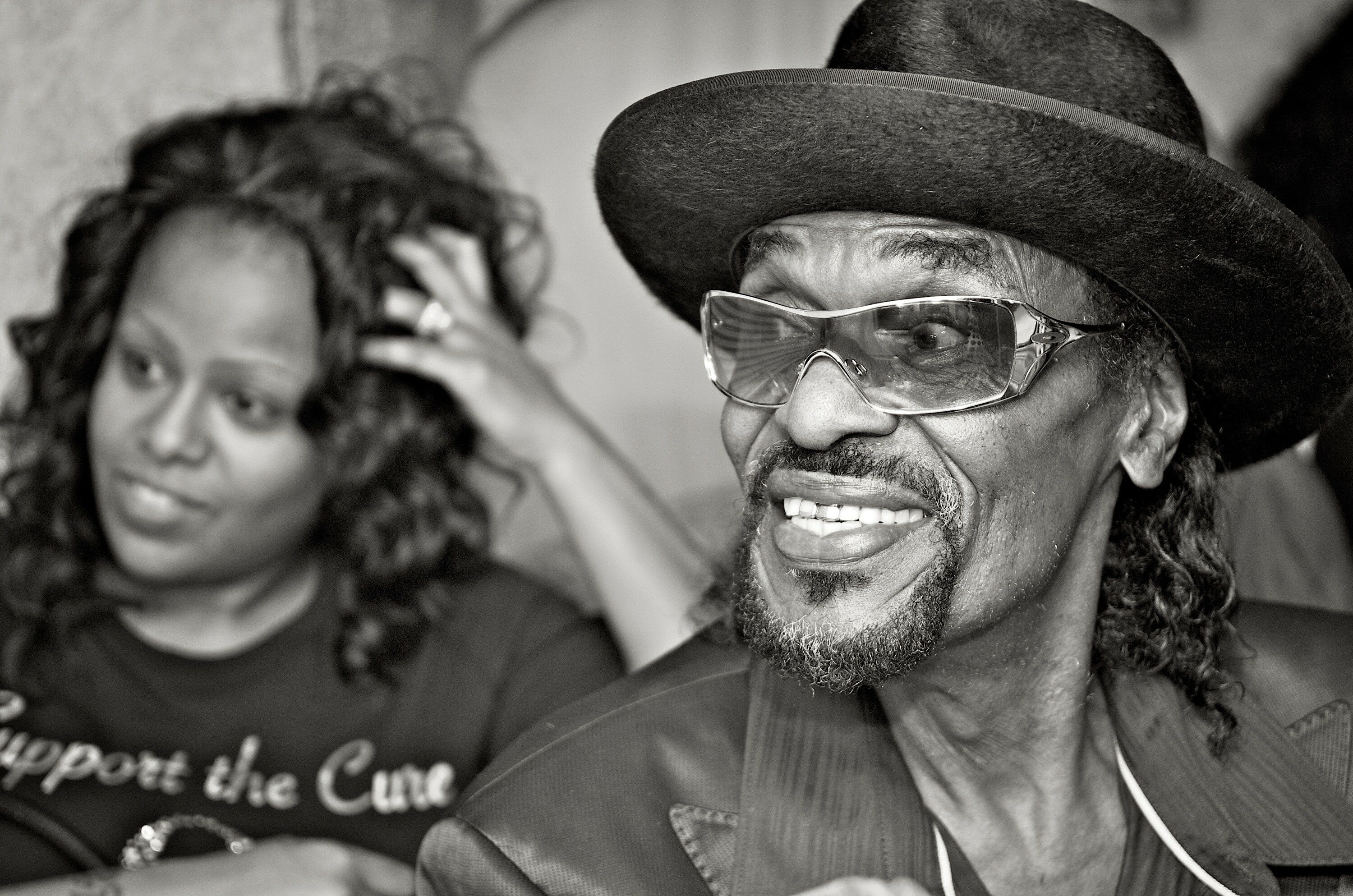

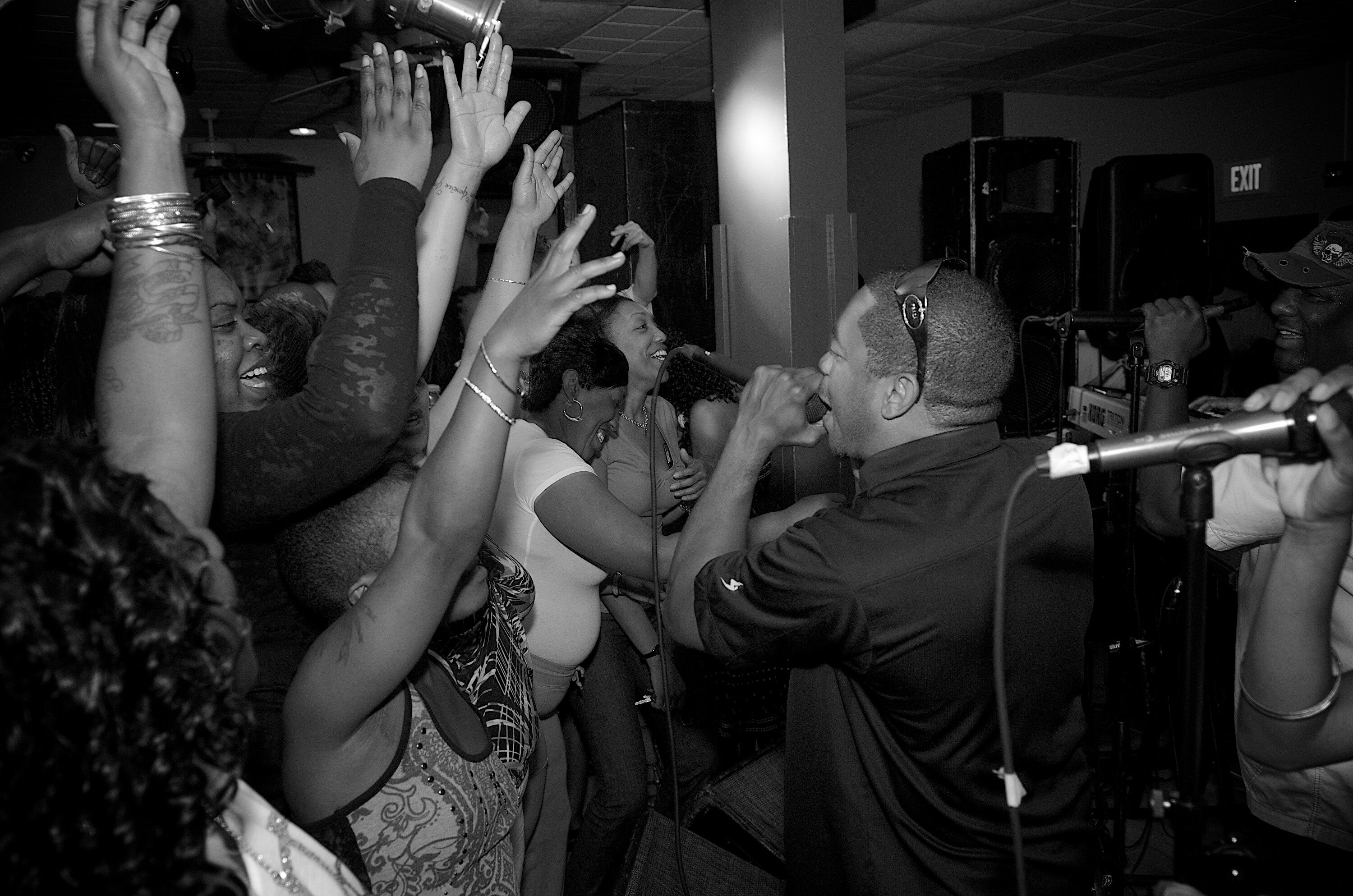
Due to the stigma in the 1990s and early 2000s that go-go was tied to gun violence and drugs, Py says go-go bands were often forced to played in venues that weren’t set up for live music — but that didn’t stop them from cranking well into the early morning hours. Py, who had spent years photographing punk and bluegrass shows in D.C., set out in 2010 with the mission of documenting go-go history. He met a promoter who let him into a few shows; at one of them, he met Chuck Brown’s manager, Tom Goldfogle.
“Tom has always said that he really wasn’t interested in how good my work was,” Py says. “He was interested to see if I was cool enough to hang around with them.”
Py passed the cool test and was welcomed into the Chuck Brown family. That’s how he got close enough to capture Brown relaxing in a trailer before a Labor Day performance on the National Mall; or shots of Sweet Cherie of the women-led band Be’la Dona rocking out on tour; or photos of go-go drummers using cowbells, buckets, and tambourines.
Shortly after Chuck Brown died in 2012, the D.C. Public Library reached out to Py, who gave talks at local libraries about go-go history and his work. Now, the DCPL acquired his photo collection, and over the past two years, he and the DCPL staff have been tagging and captioning each of the nearly 2,000 images. On Aug. 18, the photos will be available online through Dig DC.
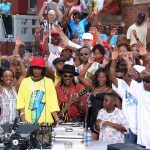
One of his photos in the collection shows a protestor dancing the night away on 14th and U Streets during the first Don’t Mute DC rally in 2019, while a few feet away, a man who said he owned a nearby condo tells a D.C. police officer to shut the protest down. Other photos capture nights when the line between audience and performer broke, and crowds joined together for sweaty, funkified, call-and-response dance parties.
“This is the only collection like it,” Py says. “Most of these are shot in an authentic go-go. And what I mean by that is, it’s not go-go at the Kennedy Center or at, you know, Strathmore. In a go-go, the people who attend the show are just as important as the band performing at the show.”


DCPL archivist Derek Gray says Py’s material adds a much-needed supply of images to the collection — previously, the archive had only about 10 photos that were donated by a Maryland legislator.
The collection comprises about 25 boxes of materials, including exhibit-friendly items like a statue of Chuck Brown made of paper-clip wire, autographed clothing, go-go bands’ drumsticks, and interviews that author Natalie Hopkinson collected for her book Go-Go Live. (Before 2012, the archive was just a folder of newspaper clippings and interview transcripts, Gray says.)
“It definitely fills an enormous hole,” Gray says. “The public just did not want to donate [photos]. Now, we definitely have a wonderful collection of photos. And what I’m looking forward to is — this will encourage the public to now, if they have photos, they might be willing to donate them to us.”
Gray hopes other photographers like Py will also contribute to the archive, which has been used for research and general interest. (Musicologists have come from as far away as New Orleans to access the archive for research on Black music.)
It’s “an archive for everybody,” Gray says, including scholars, diehard go-go fans, and newcomers who want to learn about D.C.’s official genre.
With Chuck Brown Day taking place this Saturday, Aug. 21, Py says he’s been reflecting a lot on preserving Brown’s legacy — which, he adds, was his main motivation for the project. Py remembers a show in 2011, when Brown opened for Parliament-Funkadelic at the Hampton Coliseum. Brown asked Py to follow him from the tour bus to the stage. The go-go titan looked at the photographer, as the audience screamed “wind me up, Chuck” in the background.
“He stops right before he stepped on that stage, and he says, ‘Do you know why you’re here with me?’ He said, ‘It’s important to me, it’s important to my family, and most of all, it’s important to my legacy, the work that you’ve done in the last year.'” Py recalls. “My knees kind of buckled, and then I walked out onto that stage more intentionally.”