Martin Austermuhle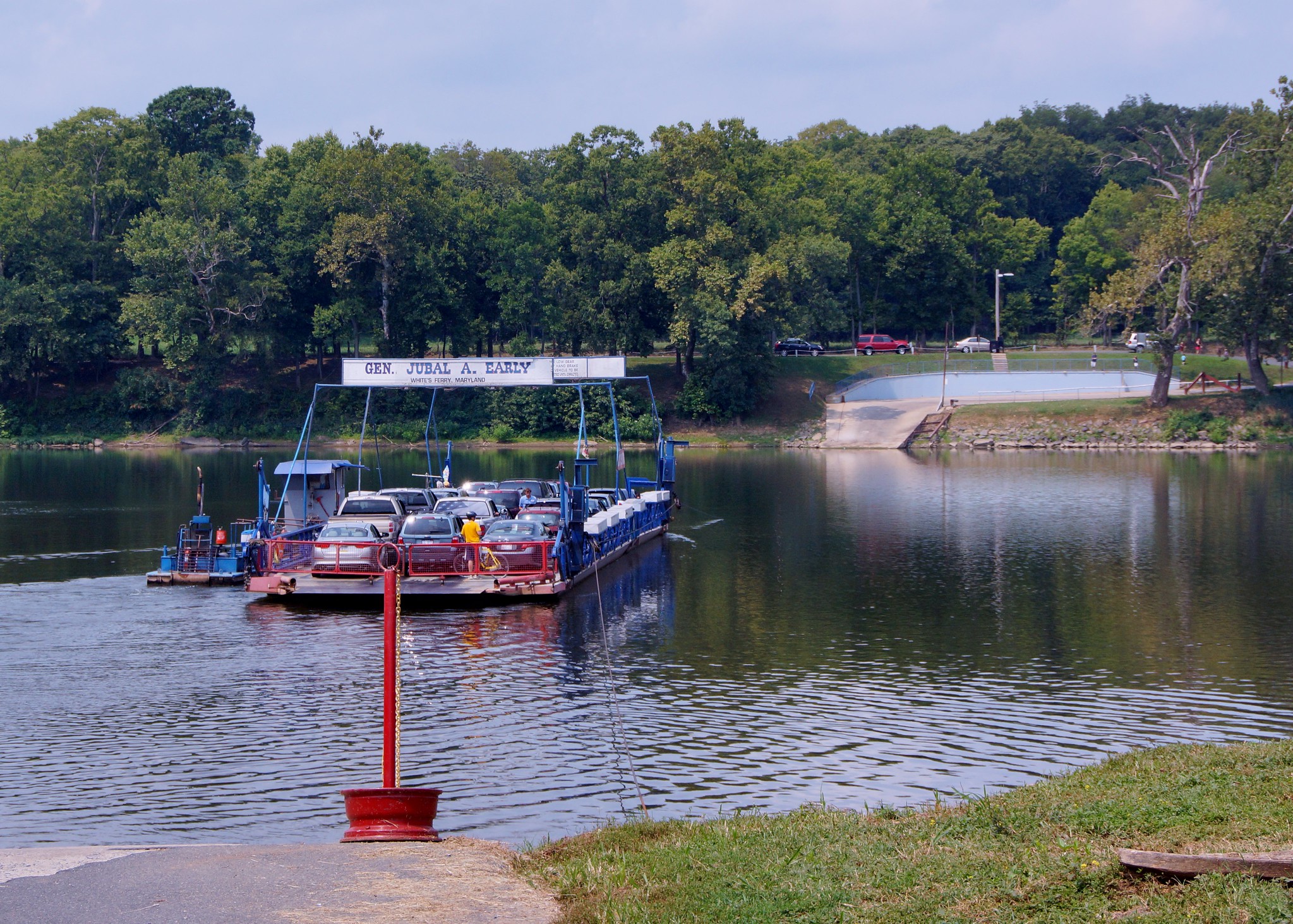
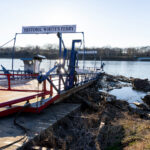
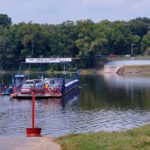
The new owner of the sole remaining ferry between Maryland and Virginia has pledged to restart service across the Potomac River, and is hinting that it may require using eminent domain to resolve a longstanding dispute over the landing on the Virginia side of the river.
“The ferry will run again,” said Chuck Kuhn at a public meeting in Poolesville on Wednesday night on the fate of White’s Ferry, which ceased operations in December because of the land dispute.
Kuhn, a businessman who lives in Loudoun County, purchased the ferry earlier this year, promising to restart stalled negotiations with the owners of the landing on the Virginia side. But in his first public comments since taking control of the historic ferry that has connected the two states since the late 1700s, Kuhn said the negotiations had proven more difficult than he expected.
“I had to say uncle. I could not get there from here regardless of our offers and attempts. There was no reasonable conclusion to the negotiations,” he said of the negotiations with owners of the Rockland Farm in Loudoun County, where the ferry’s landing sits.
Montgomery County and Loudoun County announced this week they are collaborating on a study of the operations and potential options for restarting service at White’s Ferry, which before shutting down carried between 600 and 800 cars a day between Leesburg and Poolesville.
But Kuhn indicated that using eminent domain to take the Virginia landing is the most likely outcome, a conclusion echoed by Maryland State Del. David Fraser-Hidalgo (D-Montgomery County), who has been involved in monthly calls to sketch a path forward. Still, Fraser-Hidalgo added that eminent domain — which would require approval from the Loudoun County Board of Supervisors — is itself a complicated undertaking.
“This ferry goes back a couple hundred years. There’s a lot of transactions in that period of time. And to try and figure out exactly where we stand on the Maryland side as well as where Virginia stands as well as where the new owner stands is really difficult when you have to back through 200 years of history on two different sides of the river. That is the footing that is necessary to move forward with an eminent domain option,” he said.
But the owners of the landing — which is part of the Rockland Farm in Loudoun County — say they weren’t invited to Wednesday’s meeting, and dispute Kuhn’s claim that they haven’t been willing to negotiate a deal allowing the ferry to start sailing again.
“That is misleading,” says Libby Devlin, one of the farm’s owners. “We have been attempting to negotiate with the new owner since day one, and we’ve come up with many different options.”
In a letter sent to Kuhn earlier this month, Devlin proposed that Kuhn pay a 50-cent fee for every car that uses the ferry, an annual fee of $150,000 for use of the landing, or $2 million for a permanent easement on the land that would allow the ferry to use it in perpetuity. She even offered to buy the ferry from him, an offer she had similarly made to the prior owners.
In a response, Kuhn dismissed the options as not financially feasible for the ferry. Devlin disputes that, and says Kuhn seems to be angling to take advantage of eminent domain — which would likely leave Loudoun County covering the costs of taking her land.
“The fact that the condemnation idea is out there I believe has had a chilling effect on anything that the new ferry owner would negotiate with us,” she says. “I think if he feels that he can get the ferry open for free by having our land condemned, then he’s not going to come to the table to respond to any of the offers that we’ve made.”
Devlin reiterated that she’s open to negotiations, and says that using eminent domain to benefit a private commercial enterprise would set a bad precedent.
At the meeting, Loudoun County Supervisor Caleb A. Kershner said the ferry study could be done by September, and the board would likely vote on how to proceed in its December meeting. That would push any resumption of ferry operations in 2022 at the earliest. He also used the chance to push for a more controversial alternative: a new bridge across the Potomac River. (The ferry is the only river crossing between the American Legion Bridge and Route 15 at Point of Rocks some 40 miles to the north.) Virginia officials are largely more supportive of the idea than their counterparts in Maryland.
“Quite frankly, I would be remiss if I did not mention the need at some point for a bridge crossing between Maryland and Virginia. If our jurisdictions are truly serious about mitigating congestion… we must start political discussions in this vein,” he said.
As for Kuhn, he said he remains confident the ferry will run again, and said he was considering upgrades ranging from new payment options and free Wi-Fi to an electric craft to make sure it becomes more of a “destination” in the future.
“The moment we get control of that Virginia shoreline we’ve got a cable that’s standing up on the ferry property,” he said. “It’ll take us a matter of hours to get the cable reconnected and the ferry can get moving.”