Ally Schweitzer
Could a Metro station in Georgetown be part of the solution to chronic overcrowding on the Orange, Blue, and Silver lines?
That option is central to four scenarios Metro is considering as it weighs possible fixes to backups and delays in the Rosslyn Tunnel, which carries passengers on all three lines from Northern Virginia into D.C. and on to Maryland. The scenarios are fleshed out in a new update to Metro’s two-year study of the congested transit routes.
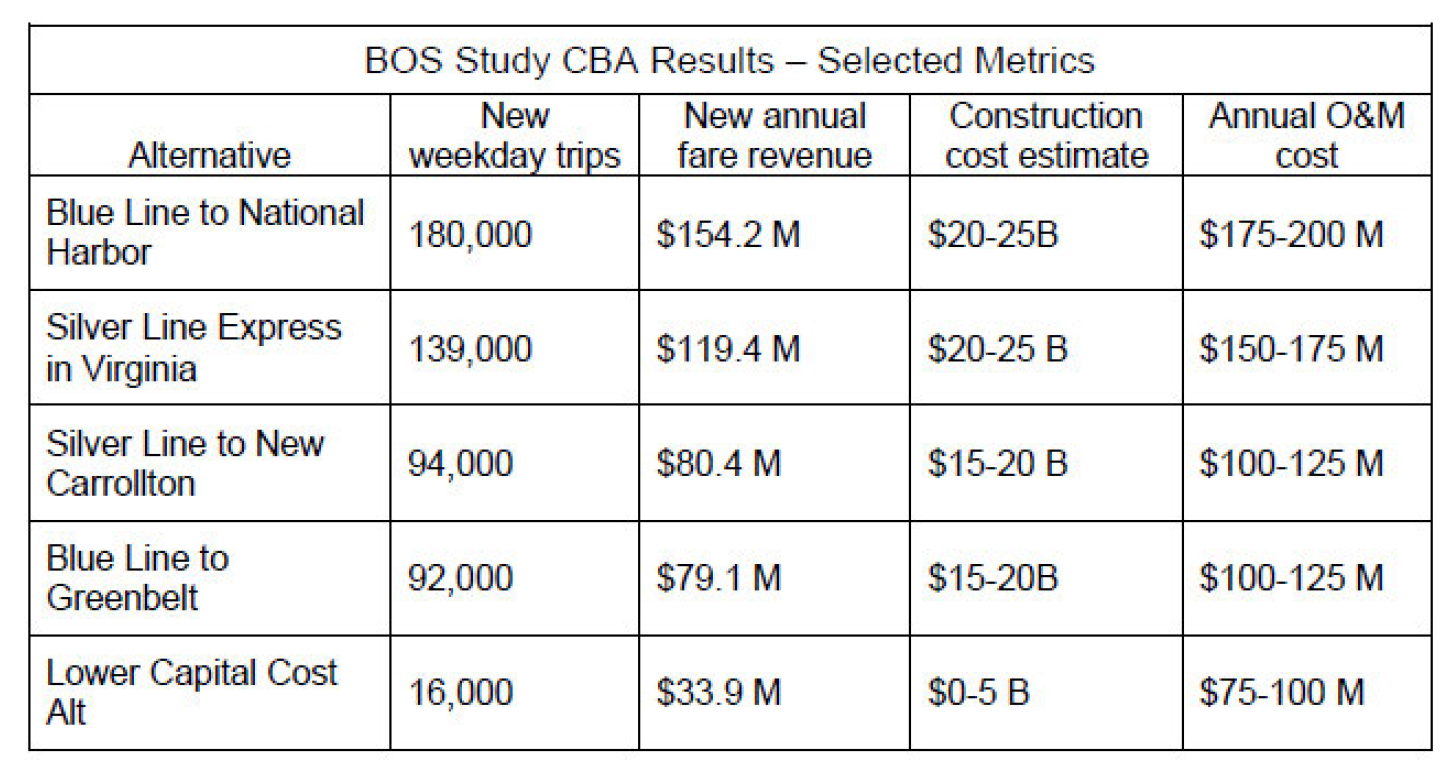
One possibility explored in the latest update is a realignment of the Blue Line that would add a second Rosslyn Metro station and a new tunnel to a Georgetown station, snaking south through Buzzard Point and the St. Elizabeths campus, ending at National Harbor. Metro says that concept would deliver more benefits than any of the included options, with an estimated construction cost of $20 to 25 billion, operating costs up to $200 million per year, and $154 million in new annual fare revenue. A project of that scale could take more than two decades to complete.
It could also be transformative for the city’s Southeast quadrant, home to the District’s lowest-income households.

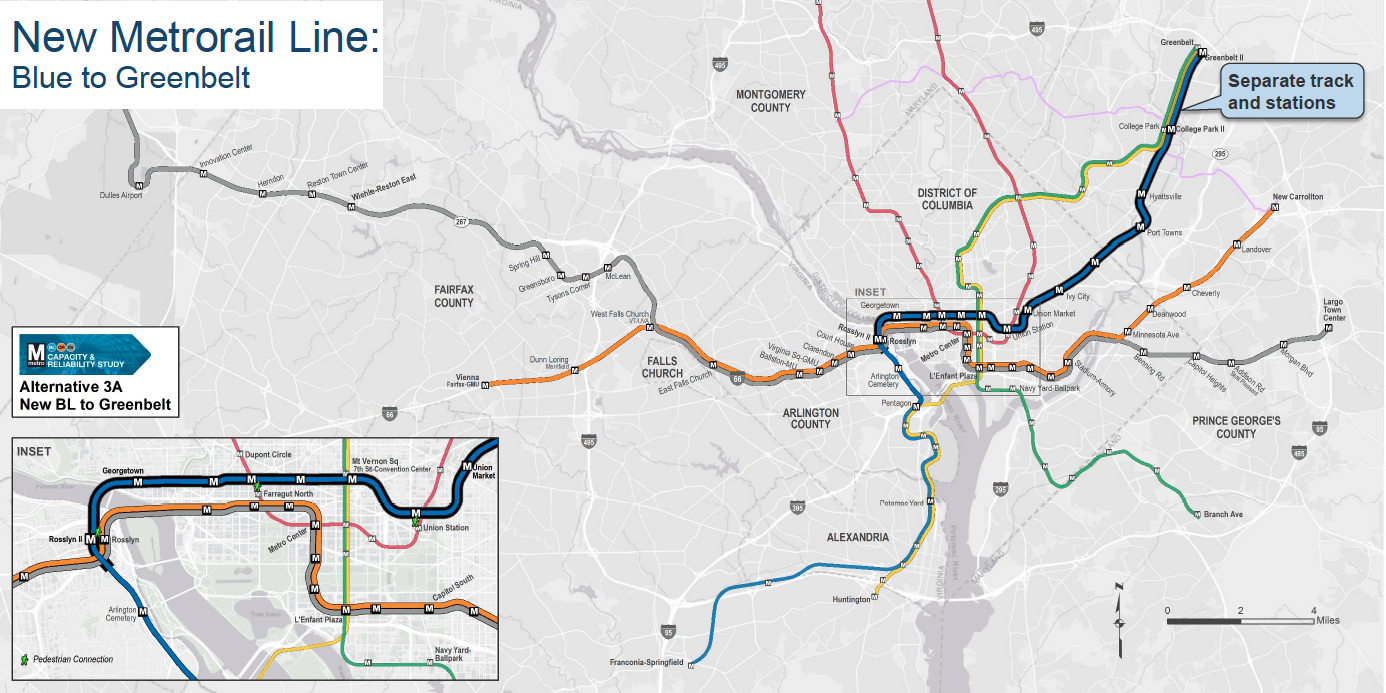


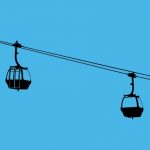
Other options would be less cost-effective, according to Metro. They include a similar Blue Line realignment, but with trains ending in Greenbelt instead of National Harbor, and proposals for a Silver Line Express option and a Silver Line that ends in New Carrollton. All include a new Metro station in Georgetown — a subject that has prompted decades of local debate. D.C. is preparing to purchase a plot of land in Georgetown that could host either a new Metro station or a hub for a cross-river gondola, according to the Washington Business Journal.
Alternatively, Metro could decide to take a cheaper approach, with potentially fewer benefits. The report explores a “lower capital cost alternative” that revolves around enhanced commuter rail and bus service, train turnbacks, and expanding capacity in core stations. A final possibility is to simply build nothing that isn’t already planned and funded, and see how that works out.
Metro would seek federal funding to pay for a large-scale expansion. Speaking to the press Tuesday at Prince George’s Plaza Metro Station, Metro General Manager Paul Wiedefeld said the agency must keep an open mind about adding new lines and stations to the system, despite the high price tag and likely public opposition.
“If you start off thinking, ‘Oh my gosh, it’s too expensive, we’ll never get through the neighborhood and environmental issues,’ then you never move. But I think these things coalesce. They build up momentum, for lots of reasons,” Wiedefeld said.
“We know there’s a bottleneck in the system, and we either live with it for the next 50-plus years, or we start to do something about it,” he added.
Members of the Metro Board’s Finance and Capital Committee will be briefed on the six ideas Thursday, with Metro expected to select a single candidate — or a “locally preferred alternative” — for the board’s final approval sometime in 2022, following a public engagement process.
The transit agency launched the analysis in 2019, focusing on how to reduce backups in the Rosslyn Tunnel in Northern Virginia. It identified six potential solutions to the problem, ranging from relatively inexpensive partial fixes to multibillion-dollar overhauls that could take decades to complete. Those concepts have since been whittled down and developed considerably.
Capacity has been strained through the Rosslyn Tunnel for more than a decade, the new report says, frustrating passengers and Metro employees alike. No more than 26 trains can run through the tunnel each hour, and Metro can’t boost service on any of the three lines without reducing service on the others. Similarly, delays on one line impact the other two.
“Running three lines through one tunnel and set of tracks (‘interlining’) creates challenges for Metro and our customers, including crowding during peak periods, service reliability issues, a lack of operational flexibility, and threats to long-term sustainability,” the study says.
Local jurisdictions forecast that the Blue, Orange, and Silver line corridors are expected to add 37% more people and 30% more jobs by 2040, potentially straining the system even more.
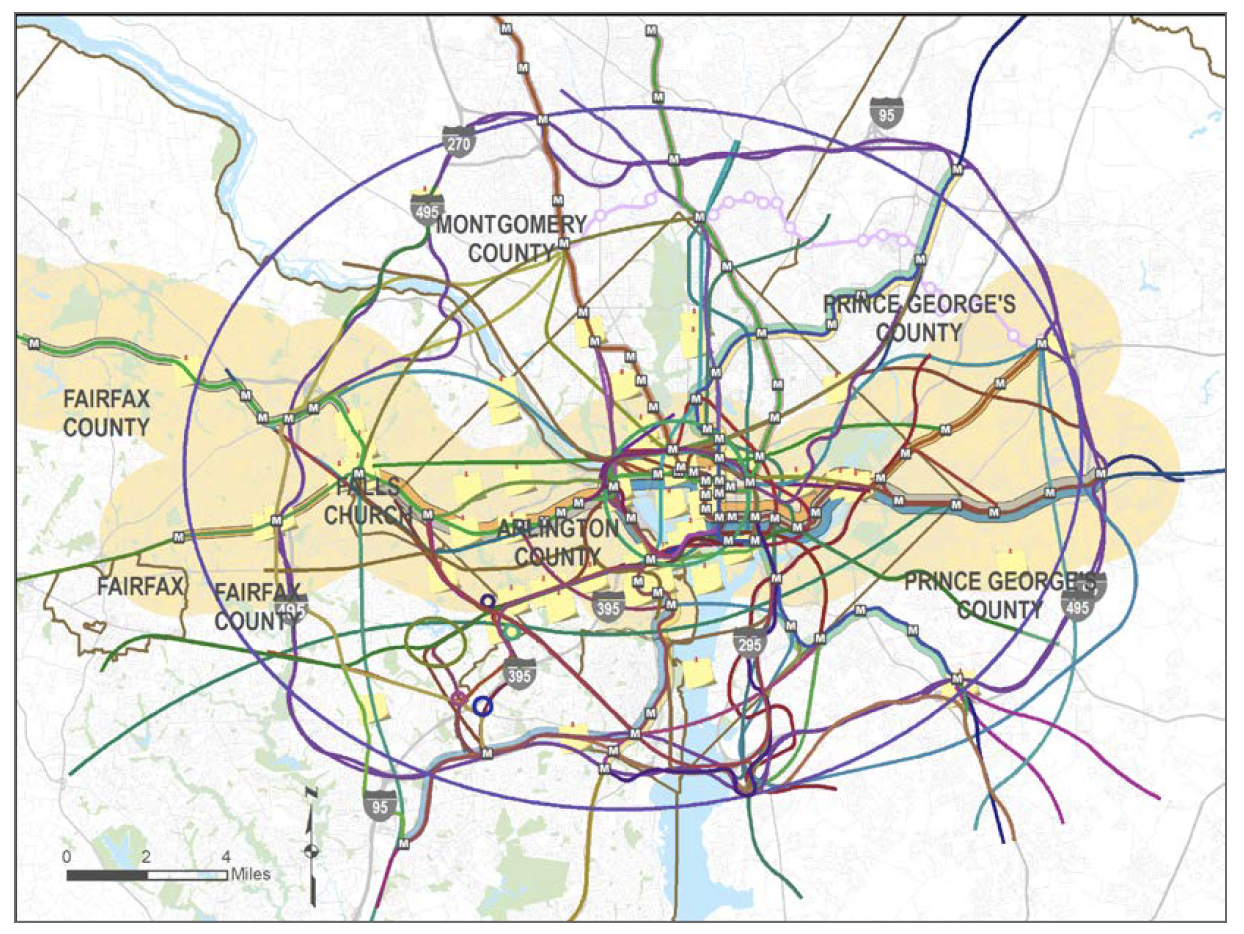
Metro held four public workshops, opened 13 pop-ups at Metro stations, and conducted an online survey to gauge public feedback on the 2019 concept proposals over two years. The public submitted more than 2,000 ideas, with more than 275 map concepts that the agency compiled into a single, complicated melange.
The latest report notes that the pandemic has changed the way people commute throughout the D.C. region, making it tougher to predict demand on the transportation system over time. But because solutions to capacity problems could take more than 20 years to implement anyway, development of a long-term fix will continue “unless and until it becomes clear improvements will not be necessary,” the study says.
Jordan Pascale contributed reporting for this story.