 Jenny Gathright
 Colleen Grablick
 Elliot C. Williams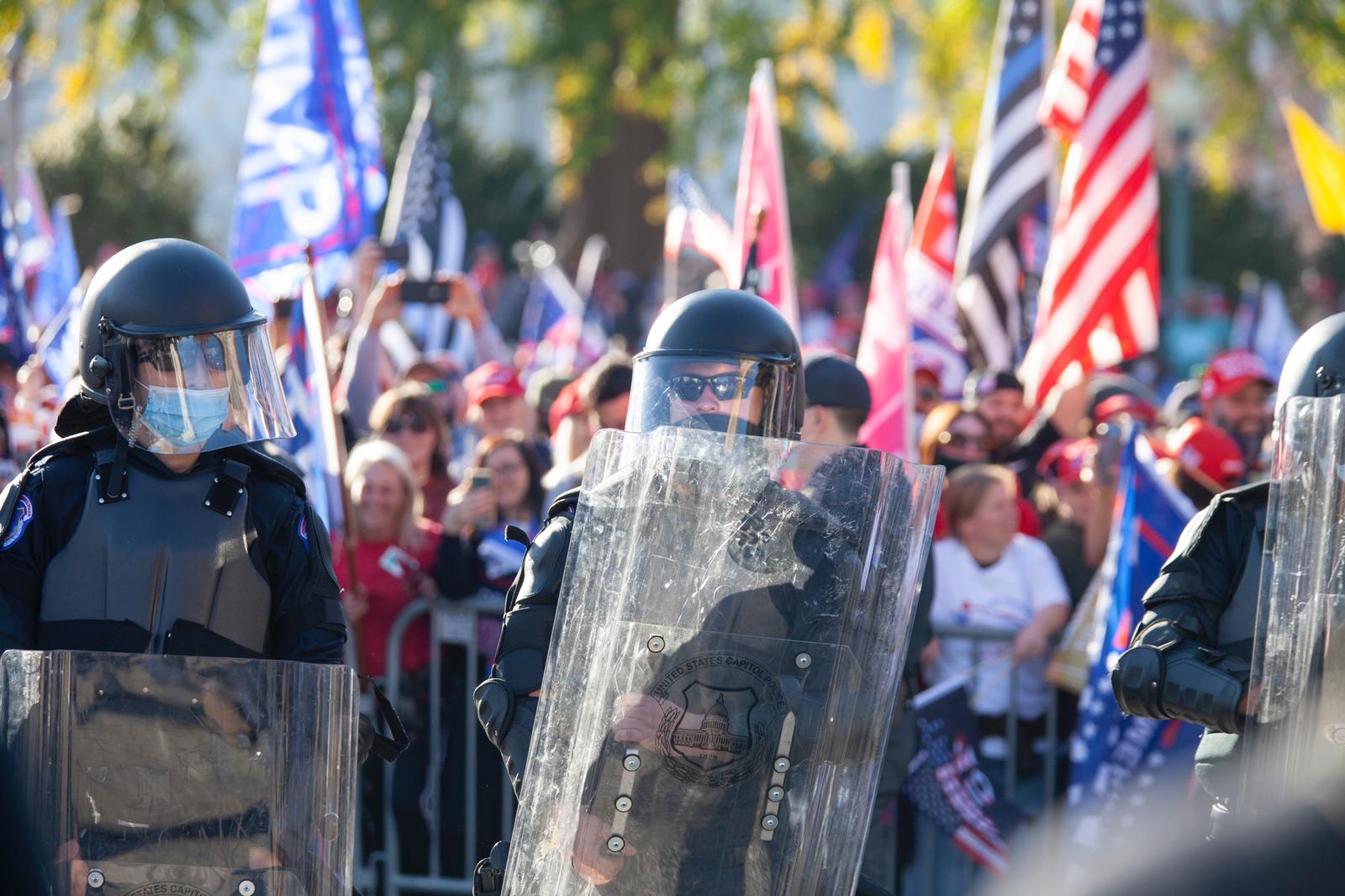
D.C. is preparing for far-right activists and, potentially, white supremacist groups to visit the city — this time, to support and defend people charged in the Jan. 6 insurrection. While experts believe the crowd size will be small, local law enforcement agencies are taking security measures. The rally falls on an already busy day in the District — the annual H Street festival will be taking place blocks away from the Capitol, Harry Styles will be performing at Capital One Arena downtown, and the Nationals will play a home game that afternoon.
Here’s a rundown of what locals need to know about the rally.
Who is protesting, and what are they protesting?
Organized by the group Look Ahead America, the rally is dubbed “Justice for J6,” in support of the defendants facing charges related to the Jan. 6 insurrection. Demonstrators are expected to gather near the west side of the Capitol, near the reflecting pool.
It’s organized by Matt Braynard, a former Trump campaign staffer. Jared Holt, a resident fellow at the Atlantic Council’s Digital Forensic Research Lab who focuses on tracking domestic extremism and how it uses the Internet, describes Braynard as “like a C-list character in the world of folks like Steve Bannon.” Holt says Braynard is not currently that influential on his own — and he relies on other people with larger platforms to amplify his messages. Right now, Braynard is focused on claims that the people who staged a violent and fatal insurrection at the U.S. Capitol on Jan. 6 are “political prisoners” who have been unfairly maligned.
“His goal at the end of the day — all he wants to do is make a name for himself, by rewriting the history of what happened on January 6 and trying to gin up undeserved sympathy towards the people who participated in a failed insurrection attempt,” says Holt.
Jen Golbeck, a professor of computer science at the University of Maryland who studies extremism online, says that there is little to no discussion or coordination for the Sept. 18 rally on far right forums, unlike before Jan. 6. The Associated Press previously reported that members of the Proud Boys and Oath Keepers were planning to attend on Saturday. At least in public forums, the Proud Boys have discouraged members from attending.
“If you go into the Proud Boys forums, where I lurk…they make it very clear that no one from the Proud Boys is to show up at this,” Golbeck says. “[The Proud Boys say] like, ‘it’s a bunch of attention seekers, all they’re looking to do is start trouble and kind of get in the way of what we want to do. So don’t [come].’”
Some member of Congress, including Matt Gaetz and Marjorie Taylor Greene, have attended Look Ahead’s events in the past, but several have indicated they don’t plan to attend the events on Saturday.
What is turnout expected to be?
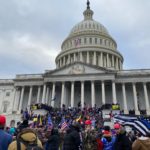
The Washington Post reported that an estimated 700 people are expected to attend, based on a permit application. That’s a fraction of the crowd that descended on the Capitol and National Mall on Jan. 6.
And Holt says he would not be surprised if the crowd was even smaller than the organizers’ predicted 700 attendees.
“My gut is telling me, based on the analysis we’ve done, that we can maybe expect a couple hundred or a few hundred people there and then a whole boatload of police, a counterprotest and tons of media,” says Holt. Holt says he is basing this analysis on monitoring he has done of online platforms where far-right extremists have discussions.
“The chatter before Jan. 6 was a[n] entirely different world than what we’re seeing ahead of this weekend in D.C.,” says Holt. “Before Jan. 6, we were seeing people both talking about logistics, talking about going to the Capitol, what people’s plans were for the day, where they were staying, how they were getting there. Some people were organizing caravans to the event. You know, there was a lot of ground movement happening to get people to D.C. and there was a lot of online chatter reflecting that.”
In contrast, Holt says, this time around he hasn’t seen much discussion of logistics. Instead, he’s seen some back-and-forth about whether or not it’s a good idea to attend the Sept. 18 event in D.C. in the first place — and some discussions among people who follow Look Ahead America as they plan the event in D.C. and other satellite events across the country.
Is there a potential for violence?
Law enforcement agencies like the U.S. Capitol Police have warned about “concerning online chatter” that they have seen, and there has been some reporting about the potential for far-right extremist groups with a history of violence (including the Proud Boys and the Oath Keepers) to attend, but experts on extremism like Golbeck say they have not personally seen evidence that would lead them to be very concerned about violence.
“From what I’ve seen, there haven’t been any explicit plans to do violence,” Golbeck says. “You know, there’s people who are going to show up and try to be intimidating, but there’s no organized plans for more, from what I can tell.”
Holt, echoing Golbeck, says that “a lot of the groups have made it very explicitly clear to other people in their communities online and especially to members of their groups, that going into the event on Saturday would be detrimental to their members that are still facing trial for participating in January 6.”
Holt says members of these groups seem to be worried about going to D.C. and further exposing themselves to examination by national intelligence agencies or federal law enforcement.
But, Holt added, “given how far-right groups have splintered since Jan. 6, there is always a possibility that you could have a few rogue individuals or even a rogue chapter [of these groups] show up.”
The Proud Boys are a far-right group categorized as a hate group by the Southern Poverty Law Center with a history of violence. The Oath Keepers are an anti-government extremist militia group, and at least 12 people associated with them are facing conspiracy charges in connection with the insurrection on Jan. 6. Prior to Jan. 6, members of the Proud Boys and other extremist or far right groups staged demonstrations in D.C. to protest election results. In November, the demonstrations ended in violence, and one person was stabbed. In December, pro-Trump demonstrators again clashed with counterprotesters, and Proud Boys chairman Enrique Tarrio stole and destroyed a Black Lives Matter flag from a D.C. church.
During an appearance on WAMU’s The Politics Hour, Chris Geldart, D.C.’s deputy mayor for public safety and justice, said that the Capitol is “quiet” a day before the rally. “People are going about their business,” he said.
What security measures are being taken?
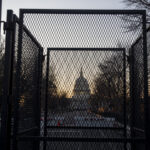
On Monday, the Capitol Police Board approved a plan to reconstruct a fence around the Capitol a few days ahead of the rally. The exact placement and perimeter of the fence has not been released, but the Associated Press reported that it will surround the Supreme Court and Capitol, but not congressional office buildings. U.S. Capitol Police Chief Tom Manger told reporters that the fencing is expected to come down shortly after the event.
In a press release earlier this week, the U.S. Capitol Police stated that officials have been collecting intelligence and coordinating planning for the event over the past month. And in August, the Metropolitan Police Department announced it would be activating its entire force for the day.
“We are here to protect everyone’s First Amendment right to peacefully protest,” Chief Tom Manger said in a USCP press release. “I urge anyone who is thinking about causing trouble to stay home. We will enforce the law and not tolerate violence.”
According to the Washington Post, Manger has also requested that police departments in the D.C. suburbs send some officers into D.C. for assistance. USCP spokespeople did not return DCist/WAMU’s request for comment on what circumstances would necessitate additional officers.
On Wednesday, USCP requested the ability to receive National Guard support on Saturday, “should the need arise.” Manger reportedly dropped his request for armed support from the National Guard after discussing it with the Pentagon — by Friday morning, the U.S. Department of Defense instead approved a request for unarmed Guard soldiers to be stationed at the D.C. Armory and deployed if needed, according to the Post.
Local D.C. officials also expect the gathering to be small, but they are asking business owners and residents to remain alert in case far-right demonstrators bring illegal firearms into the city. On Tuesday, officials in Mayor Muriel E. Bowser’s office handed out flyers warning that guns are prohibited indoors to businesses participating in the H Street Festival. According to H Street Main Street executive director, there are no plans to cancel or reschedule the festival.
At a Friday press briefing, MPD Chief Robert Contee referenced the H Street Festival, and the various sports events and concerts happening Saturday.
“Residents and visitors attending any one of these events should expect MPD officers to provide great police service and be present and visible throughout our city,” Contee said. “While we have multiple high-profile events, MPD will handle these, while continuing to provide routine police service throughout communities all throughout our nation’s capital.”
Are there road closures?
D.C. Police will close the following streets to vehicular traffic on Saturday, from 5:00 a.m. to 11:59 p.m:
- 3rd Street NW from Constitution Avenue NW to Independence Avenue SW
- Pennsylvania Avenue NW from Constitution Avenue NW to 3rd Street NW
- Madison Drive NW from 4th Street SW to 3rd Street NW
- Jefferson Drive SW from 4th Street SW to 3rd Street SW
- Maryland Avenue SW form Independence Avenue SW to 3rd Street SW
A number of streets downtown will be closed to parking from 5:00 a.m. to 11:59 p.m. According to MPD, more streets may close intermittently throughout the day. For a full list of street closures, click here, and for updates on Saturday, check the D.C. Police Traffic Twitter.
Are there counter protests?
Yes. Multiple local mutual aid groups have a rally planned in opposition on Saturday, from 12 p.m. to 4 p.m. in Freedom Plaza, about a mile away from the right-wing demonstration.
In a statement earlier this week, the groups compared their response planned for Sept. 18 to the “Unite the Right 2” rally, when counter protesters largely outnumbered the protesting white nationalists.
“It was an overwhelming show of strength and solidarity compared with the handful of fascists who showed up,” reads a statement from the organizations. “We must do it again.”
On Politics Hour, Geldart said that the distant location of the counter protest was “intentional.”
“We’re making sure we’re keeping some distance apart between those who come to express their First Amendment rights and those coming to express their First Amendment rights in opposition to the other group,” he said.
Mutual aid groups are also reaching out to residents experiencing homelessness in the area, offering transportation to shelter.
What should D.C. residents do?
“The advice I would give to people in D.C. is the same advice that a lot of these extremist groups are giving to their own members, which is don’t go. Stay away from this event,” says Holt. “Even though we’re not seeing the same kind of activity that led up to Jan. 6, there’s always the off chance that something with a cause as far right as this could produce a little bit of trouble.”
Simply put, Holt says it’s just not worth it to go and try to observe. Golbeck recommends staying away from the Capitol, but says that she’s not “especially worried” about the potential of large-scale violence due to the security measures put in place.
Prior to January 6, experts who study extremism were warning that D.C. could become a sort of battleground for the far-right. Is that still true?
Holt says that since Jan. 6, he has seen far-right extremist groups expressing more hesitancy about organizing large-scale events in D.C.
“They seem hyper aware that they are on the radar of federal intelligence and law enforcement, and for that reason have been very hesitant to come to D.C. Instead, a lot of them are opting for a local playbook,” says Holt — like getting involved in local elections or school board issues where they can still wield influence without drawing unwanted attention from federal agencies.
Golbeck says that during the Jan. 6 insurrection, former president Donald Trump served as the national, unifying force for the anger that permeated alt-right groups, and that eventually drew them into D.C. Now, without a central figure, she says the potential threats of violence expressed in the forums she monitors may stay directed at the local and state level.
“What I do see on these forums is a very strong appetite for violence, especially around COVID related issues…they’re very angry,” Golbeck says. “But we may see [that anger] manifesting as much at the state level as in D.C., so I think it really depends on if there’s a national figure who emerges to unite all of this outright discontent and focus it on D.C., but that’s not there right now.”
This story was updated to reflect that multiple mutual aid groups are organizing the event in opposition of the far-right rally and to include additional comments from police and local government officials.