 Jordan Pascale
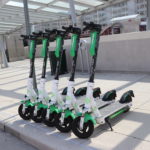
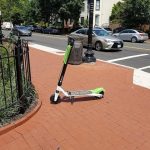
Scooters arrived in D.C. in 2018, adding a new layer of mobility to the District while exposing some poor parking habits by riders that often created obstacles and hazards on sidewalks.
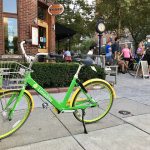
By Oct. 2020, the D.C. Council sought to fix the problems by requiring scooters to be locked to a bike rack or a signpost, or parked in a designated on-street scooter corral. (E-bikes have been required to be locked to a rack since 2018, though that doesn’t always happen.) That new scooter requirement goes into effect on Friday.
The D.C. Department of Transportation says scooters should not be locked to bus shelters, private fences or gates, trees, Capital Bikeshare docks, or garbage cans.
“By requiring these shared fleet vehicles be locked to certain infrastructure, and making more of that infrastructure available, we are keeping our sidewalks and public places open and free from obstruction for all to enjoy,” said Acting DDOT Director Everett Lott in a statement.
Scooter companies have attached coiled locks to the scooters and most are requiring riders to snap a picture of the properly-parked scooter on their app before ending a ride. “If you park responsibly, great! If not, we will have to remove you from the Lime platform — so, please park responsibly,” Lime wrote in an email to consumers this week.
Each scooter should also have a toll-free number on them so people can call to report scooters parked incorrectly. Companies have tried a number of ways to get riders to comply with parking scooters in a safe spot: photo verification, education campaigns, and free-ride credits to park in certain areas. Scooter companies were mixed on the idea of a locking requirement.
DDOT has nearly 7,500 bike racks around the District, with 1,000 more coming each year for the next three years.
DDOT did not respond to questions around if agency officials think that is enough to accommodate the 14,000-plus rentable scooters and bikes that are permitted in D.C. (The actual number on the streets is likely much lower due to demand, though.)
But the Washington Area Bicyclist Association’s Colin Browne said the lock-to requirement is “unnecessary and counterproductive, and it will certainly make bike parking more difficult in some areas” with high ridership and low parking. “One of the best things about riding a bike somewhere is that it’s usually really easy to park,” Browne said.
He said it’s unclear if the lock-to requirement will achieve the council’s goal of tidying up sidewalks. He pointed to the several e-bike rentals that don’t seem to be locked to anything even though they’ve been required for years.
“Some folks park responsibility, and some folks don’t,” he said.
Robert Gardner of Lime says he’s not convinced DDOT will install enough bike racks to keep up with demand.
“We’re eager to comply with the rules, however, we hope this change comes with a building out of scooter and biking facilities that meets the need of those who use our products,” Gardner said. He also said the rules will change how scooters are deployed — they can no longer do large drops of scooters at popular spots around the District in the morning. They’d have to find racks for those scooters.
Browne said that if the lock-to requirement is about sidewalk space, then a better approach is to make sidewalks bigger. That’s not something many politicians will likely embrace, though, since it takes away space from parking and driving.
Rachel Maisler, chair of the D.C. Bicycle Advisory Council, a group that helps form policy for lawmakers, says she isn’t as worried about bike rack space. She said the D.C. Council and DDOT spent more time discussing this issue than issues that would actually fix bike and pedestrian safety issues.
“Having places to put them will help keep sidewalks cleared, sure, but it would be great if DDOT could put the same energy into actually maintaining the sidewalks so they are promptly fixed when [issues] are reported,” she said.
This story was updated with comment from Lime.