Enough with the severe thunderstorm warnings in Washington. The calendar (and the Capital Weather Gang) say it is now fall, and we are here for it — especially the stunning bursts of red, yellow, and orange on foliage both in the city and outside the Beltway.
Read on for our 2021 guide to the best times and places for leaf peeping in the region.
Let’s cut to the chase: When is peak foliage in D.C.?
There’s no one weekend when all the leaves in the area will magically hit peak color at once, says Shenandoah National Park spokesperson Claire Comer. “It’s a very gradual process because elevation is different,” she says. “Higher elevations change more quickly.”
In other words, peak foliage time depends on where you’re going, even within one park like Shenandoah. That doesn’t stop the prognostications, though.
According to the soothsayers at SmokyMountains.com, a tourism site for the Smoky Mountain region, D.C.-area leaves should be at their most glorious from about Oct. 18 to Nov. 1. At the U.S. National Arboretum, early November is typically peak leaf-peeping time, says Scott Aker, the arboretum’s head of horticulture and education.
Predictions are never 100% accurate, and local experts will update forecasts as the weeks go by. For instance, every Thursday, both Shenandoah National Park and the Maryland Department of Natural Resources issue fall foliage updates. It’s always best to check conditions at your destination a few days before an outing.

Last year’s fall colors were the best in a while. Are we in for another good year?
Multiple factors determine how vivid leaves’ colors will be and how long they will last before falling from the trees. Think temperature, rainfall, and wind. Those factors change every year. According to the U.S. Forest Service, the recipe for picture-perfect foliage is a warm, wet spring, favorable summer weather, and warm sunny fall days with cool, crisp nights. But one day of lousy weather can ruin the most perfect run-up, says Comer. “If we get a really bad windstorm, it blows all the leaves off,” she says. October ice storms are also bad news for leaves. “We’ve had years where fall disappears overnight.”
The picture for this year is still coming into focus. For instance, the Maryland Department of Natural Resources reports that fall colors are just starting to show in the central and western parts of the state, although warmer-than-average October temperatures may affect foliage. AccuWeather’s lead long-range forecaster Paul Pastelok says residents should keep in mind that Hurricane Ida’s remnants dumped an ungodly amount of rainfall across the northeast, which could affect foliage.
Got it. Now where do I go for my leaf-peeping fix?
Shenandoah National Park is a popular destination for un-be-leaf-able views and foliage.
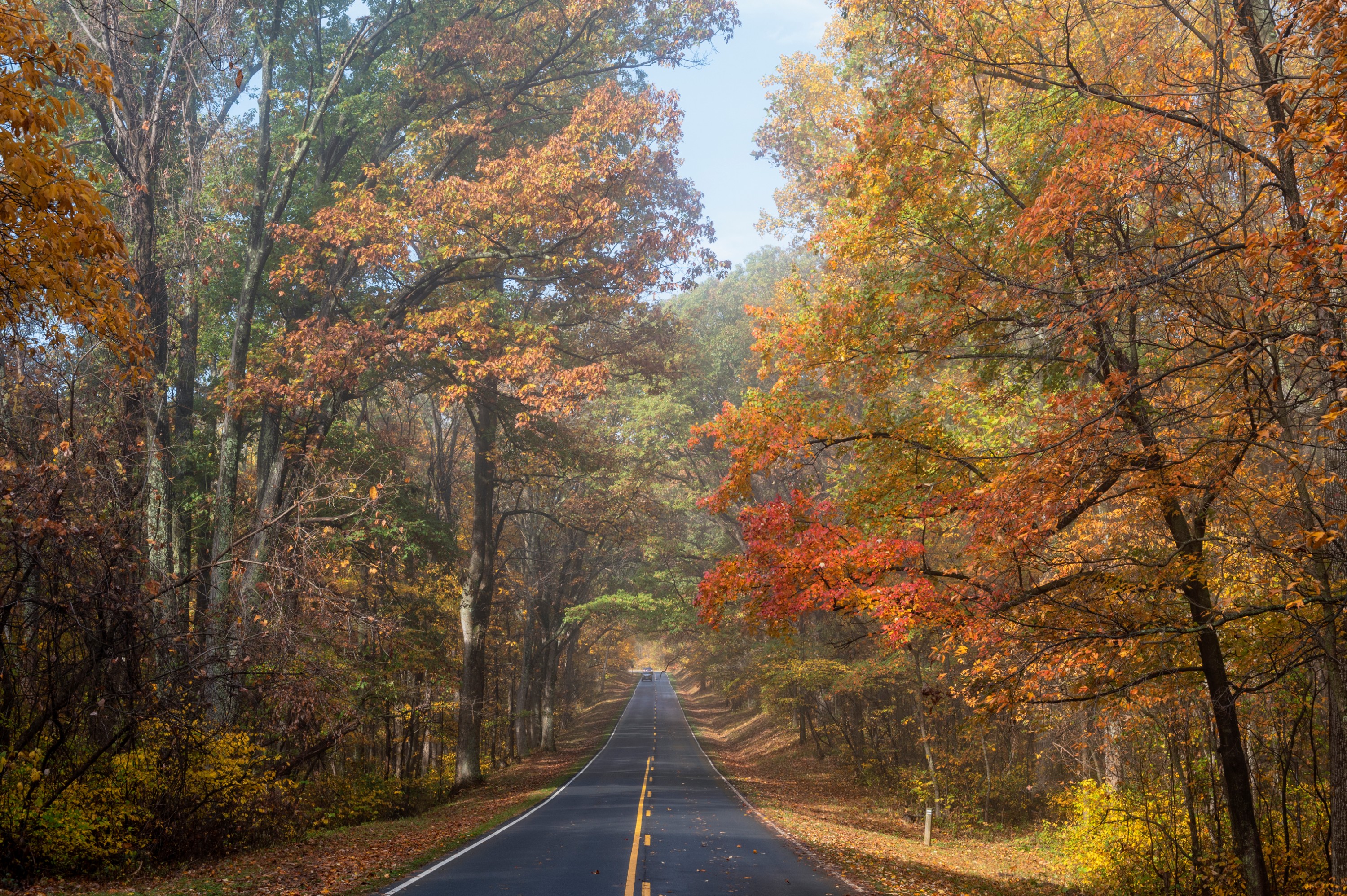
But during fall, entering Skyline Drive, the public road through the park, can feel more like an early pandemic-era grocery store line than a serene woodland retreat. On Instagram, park guides recommend a number of hikes to avoid crowds, including Hazel River Falls and Chimney Rock. Comer advises drivers to avoid the crowded northern entrances to the park from Route 66, and instead take Route 29 south to Route 33 west. Lines to enter the park from Route 33 will almost certainly be shorter, and the views of the park from Route 29 are gorgeous, she says. She also recommends purchasing entry passes in advance at recreation.gov. On crowded days, the park will open special entry lanes for pass-holders.
Local experts with the Virginia Department of Forestry want you to know you have options besides Shenandoah, so they have designed fall foliage driving tours for several other destinations across the state.

Maryland’s Seneca Creek State Park is an easy drive from downtown. Its centerpiece is a 90-acre lake, so if you count the reflections it’ll be like seeing double the amount of fall leaves you would otherwise. If you’re planning a weekend visit, be aware that the park turns away cars when it reaches capacity.
I’m only in it for the ‘Gram and I would rather stay in the city
Fair enough. Start with the Boulder Bridge hike in Rock Creek Park. The 3.5-mile loop covers terrain that President Theodore Roosevelt used to enjoy. While we’re on the subject of our 26th president, a visit to Roosevelt Island will let you experience fall colors in both woodland and swampland.
Cherry blossom fanatics might enjoy seeing a different season of their favorite tree by checking out the fall colors at the Tidal Basin.
The U.S. National Arboretum is another fall favorite. The Friends of the National Arboretum will host Fall Fest events throughout October, including a bulb sale; a fall 5K run on the arboretum grounds; and forest bathing walks, which are guided meditations in the wooded setting. Aker’s favorite spots to enjoy spectacular fall colors are a loop off of Hickey Hill Road that overlooks both the arboretum’s Asian collections and the Anacostia River, and the meadow near the Capitol columns.
If you’re not the hiking or running type, take your selfie stick to Swann Street Northwest. For a few brief days in fall, ginkgo trees surround this residential street with brilliant gold. Watch out for stray ginkgo berries, though. The squashed ones smell like vomit.
The pandemic has been tough on everyone, but perhaps fall can offer respite, Aker says. “People are still troubled and worried,” he says. “And for me, the presence of the trees and their timelessness helps remind us that nature marches on and provides us beauty if we know where to look for it.”