Martin Austermuhle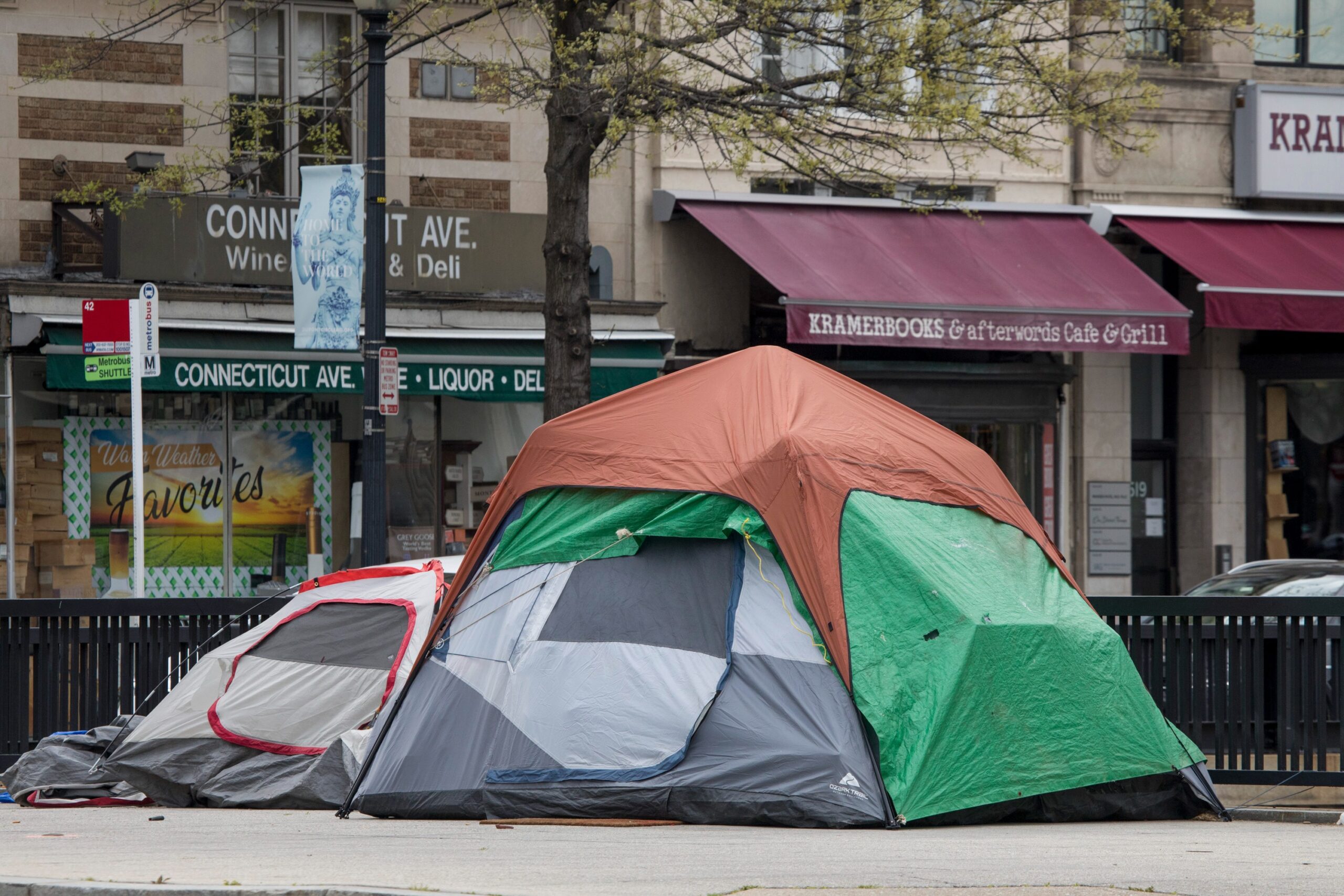
Desmond Johnson doesn’t mince words when it comes to describing what it’s like to have his own apartment. “Where I’m at now, I love it. My peace, my quiet,” he says. “This is a blessing.”
Johnson, 48, landed in the spot a stone’s throw from the National Cathedral after six years of being homeless, cycling between shelters and, when the pandemic hit, hotel rooms paid for through a federally funded program to limit COVID-19 transmission among the unhoused.
He says that once he was cleared for a voucher earlier this year, the process moved along smoothly; within three weeks he had moved from a hotel to his furnished unit, which he contributes $75 a month in rent and fully covers his own utilities.
That’s exactly what advocates say they want for everyone experiencing homelessness — a steady and certain pipeline of housing options for the people who need it, and the funding to cover the costs. And more than ever before, they say they’ll now have that funding — largely because of a tax hike on wealthy households.
Over the summer, the D.C. Council approved a tax increase on residents making more than $250,000 a year, pushing through a proposal that had failed in years past. Despite D.C. being flush with federal aid, proponents on the council said the new stream of revenue would allow for a significant increase in funding for housing. The tax hike is expected to bring in $102 million in 2022 and increase to $176 million in 2025. That revenue will be split between increasing pay for childcare workers, expanding a tax credit for low-income families, and housing programs.
And, they say, it will come at only a nominal cost to wealthy D.C. households: $375 more in annual taxes for someone earning $300,000 and roughly $6,500 for someone taking in more than $1 million.
“The tax revenue is an absolute gamechanger,” says Christy Respress, the executive director of Pathways to Housing, the homelessness services organization that worked with Johnson to get him his own apartment. “We really have the opportunity for the first time in the District to truly end chronic homelessness and all homelessness.”
According to the Point-in-Time Homelessness Count — the annual single-day census of unhoused people — there were 5,111 people experiencing homelessness in D.C. in 2021, a 20% decline from the year prior. But that decrease was fueled largely by lower numbers of families in homelessness; the number of people experiencing chronic homelessness, on the other hand, jumped almost 20% over the year.
Homelessness advocates say that even before the pandemic, D.C. resources for housing programs weren’t able to keep pace — especially with those experiencing chronic homelessness. They say the tax increase can make a dent; it’s expected to fund 2,400 additional housing vouchers over the next year alone, a four-fold increase over recent years, according to an analysis by the liberal-leaning D.C. Fiscal Policy Institute.
“For people who are concerned about encampments and folks who are experiencing homelessness, this is probably one of the most important things we’ve ever done to end it,” says Councilmember Brianne Nadeau (D-Ward 1), one of the authors of the tax increase.
According to a breakdown from Nadeau’s office, almost half of the 2,400 units funded by the revenue from the tax increase will be directed to Permanent Supportive Housing for individuals, which advocates say will address some of the hardest-to-help people experiencing homelessness.
“Permanent supportive housing we try to match to people who have the longest histories of homelessness, the biggest barriers to being successful in housing, whether histories of trauma or physical health problems, or living with mental health issues or substance abuse issues,” says Adam Rocap, the deputy director of Miriam’s Kitchen, a homelessness services organization. “That’s the model that we’ve had working really well in D.C. for almost 15 years. And we know it works. We know it’s successful.”
There will still be challenges, Rocap says — D.C. agencies and the network of homelessness services providers who connect people to housing will have to scale up to effectively manage the resources and properly address the need.
“This will be the biggest program growth that’s ever happened,” he says. “So we’re all sort of coming together as a system to try to figure out how we get all the money out the door and the vouchers match to the right people and get people through the process. There’s a scale-up that’s happening now.”
Still, Respress and others say they are ready to put the new resources to work, and expect that the impact will be significant.
“We have really been kind of playing around the edges in a sense and unable to house as many people as we need to quickly enough to end homelessness,” she says. “This is going to be dramatic. This is a critical tool and gets us close to actually manifesting the strategic plan we have as a city to end homelessness.”
This article is part of our 2021 contribution to the DC Homeless Crisis Reporting Project, in collaboration with Street Sense Media and other local newsrooms. The collective works will be published throughout the day at DCHomelessCrisis.press. You can also join the public Facebook group or follow #DCHomelessCrisis on Twitter to discuss further.