Margaret Barthel
 Tyrone Turner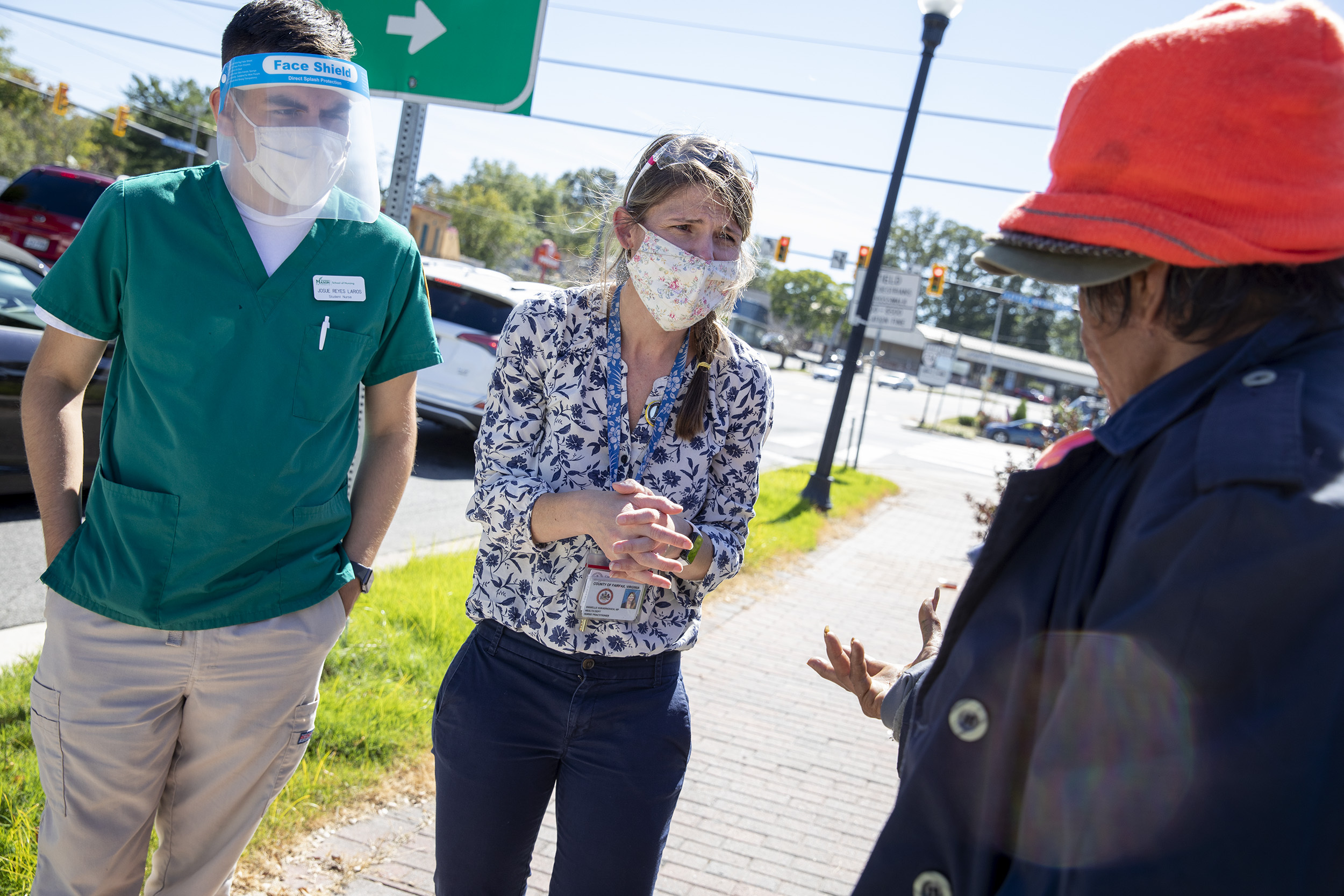
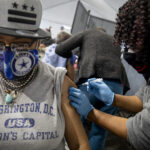
In the medical clinic room at a shelter in Bailey’s Crossroads, Josephine Hutson is getting her second shot of the Pfizer vaccine. It took her a while to decide to get the shot, but, with encouragement from her boyfriend, her ambitions to take college classes and start a new job at Wendy’s won out.
“In order for me to do any of that, I had to get the vaccine,” Hutson says.
Hutson has only lived at the Bailey’s shelter for about a month, but she’s clearly comfortable in the space. She chats with nurse practitioner Danielle Vukadinovich about the breakfast at the shelter (always bagels and cereal, per Hutson), and later jokes back and forth with another staff member in the hallway about the Patriots game (Hutson is from Pennsylvania, but she says she’s been a Patriots fan forever).
Vukadinovich, who is the lead clinician for the shelter and for unsheltered people in the surrounding area, prepares the shot and walks Hutson through what to expect with the second dose: there’s a possibility she’ll feel under the weather, Vukadinovich says, but she’ll make sure the shelter staff know to allow Hutson to stay in her room if she’s not feeling well.
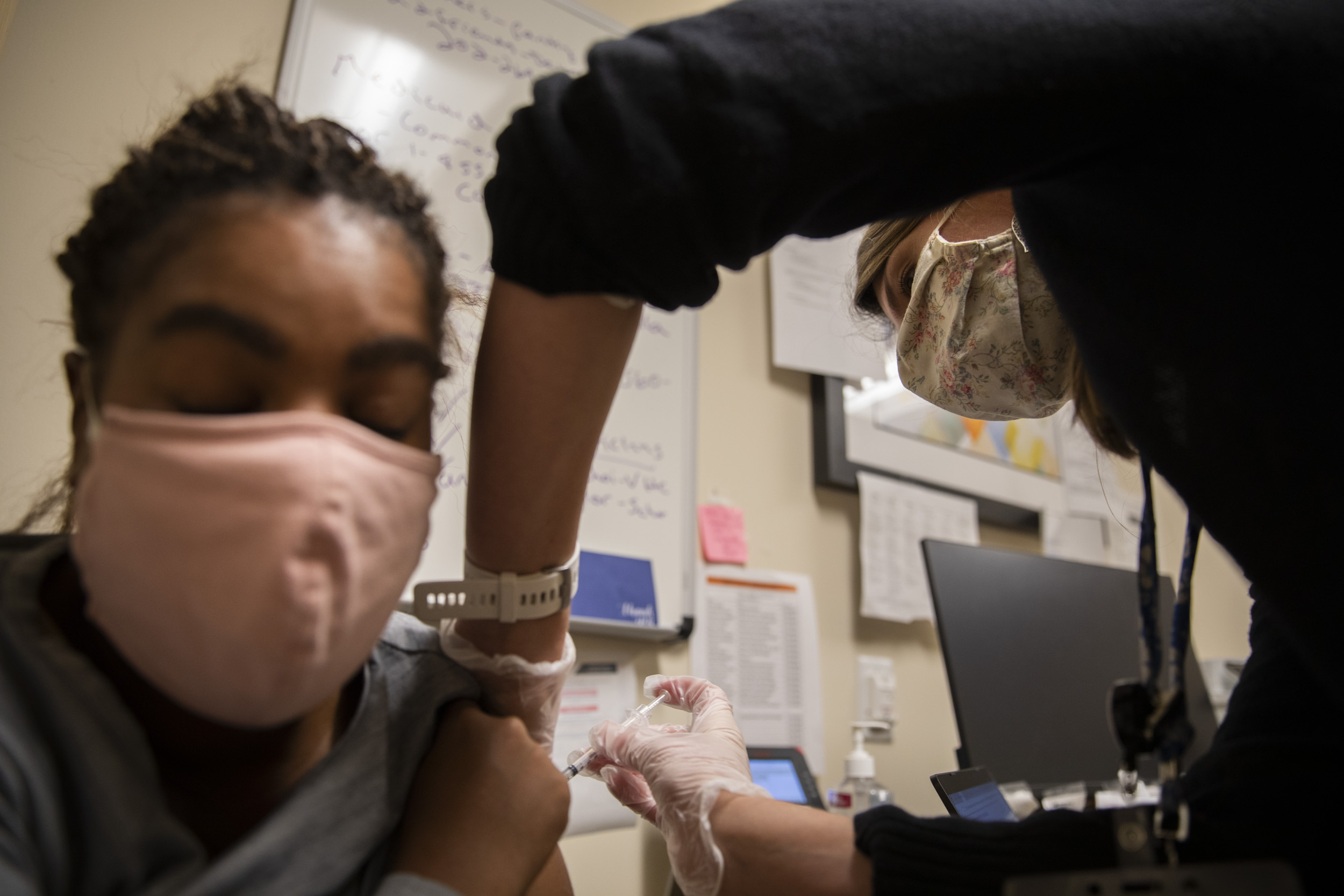
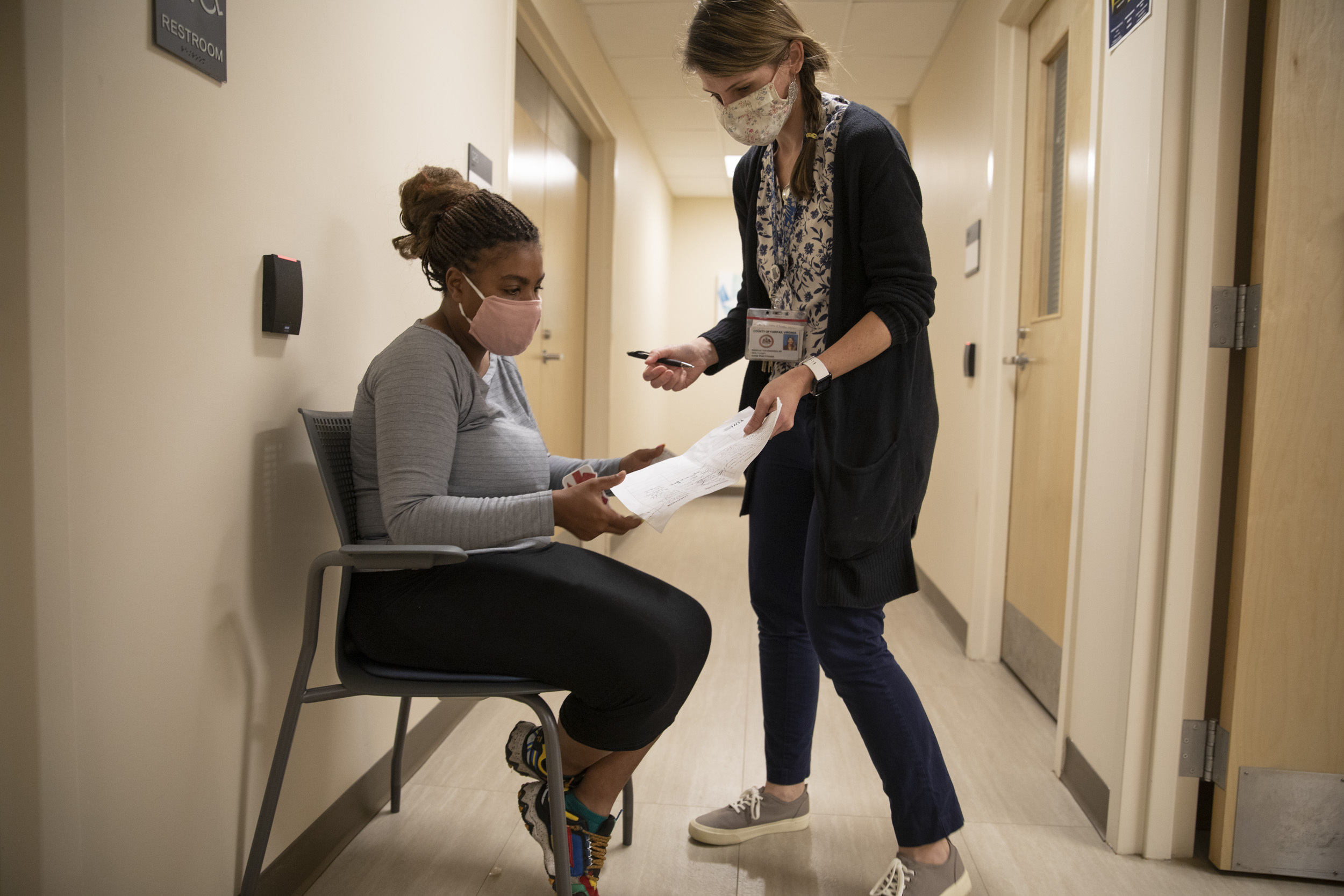
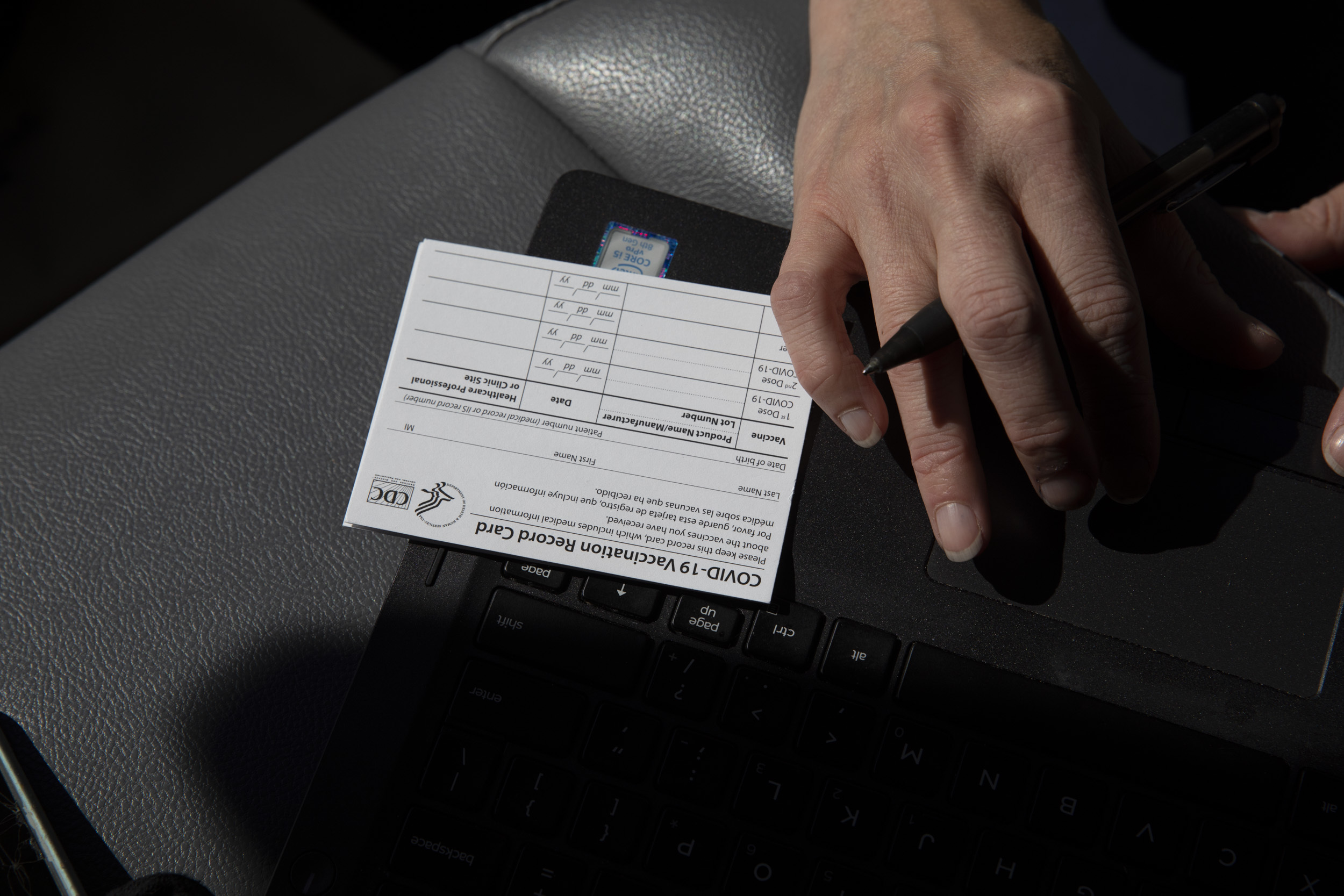
Hutson looks away as the needle goes into her arm (“Just as long as I don’t look at it, it won’t bother me,”) and then it’s over. Vukadinovich hands her a filled-out CDC vaccine card and offers her a $20 gift card to Target, an incentive the Fairfax Health Department has been offering as part of the vaccination effort.
Afterwards, Hutson says she hopes her young children will be able to get shots soon, too, and imagines telling them about her own vaccination experience. But she hesitates when asked if she’ll encourage other people to take the shot. She’s skeptical of government mandates.
“I will,” she says. “But …everybody else, it’s still their choice. Everyone has a voice.”
Hutson is one of roughly 1,200 unhoused residents in Fairfax County, according to the county’s January 2021 point-in-time count. The total number fluctuates significantly over time, as people enter and leave the county and the seasons change.
Getting COVID-19 vaccines to this transient — and highly vulnerable — population is a major challenge for public health staff like Vukadinovich.
“One of the hardest parts of vaccinating this population is we have people come in and out of our system all the time,” she says. “It’s like trying to chase a train.”
The job can be especially hard in the suburbs. Fairfax County is big, and there’s a lot of variety in where people experiencing homelessness in the suburbs live — shelters, encampments, parks, parking lots, sometimes even deep in the woods. Public health workers doing outreach in the suburbs have to range over a large area, and they have to know where to look.
“We have to travel a little bit more to cover a larger area, because folks are not necessarily all congregated in Arlington in the same area,” says Kasia Shaw, a nurse practitioner who does homeless health outreach in neighboring Arlington. “It’s just ones and twos here and there.”
There’s certainly plenty of urgency to spur public health workers on: the rise of the Delta variant and the coming of colder weather, for one thing. And, due to the pandemic, shelters like the one Hutson lives in are at partial capacity (or “decompressed,” as Vukadinovich says), and the county has set up hotels where unhoused people can quarantine after an exposure or recover from a bout of COVID-19.
“We have really been pushing to give the COVID vaccine here, because we want all of our clients to be back in the shelter setting,” says Vukadinovich. “We want to be able to congregate again and to do that safely, we need to vaccinate as many people above a certain percentage.”
That “certain percentage” is 70%. The county estimates that just under 50% of unhoused people who access county services have gotten a shot — not bad, considering that only around 10% agree to get the annual flu vaccine.
Progress towards the 70% number has slowed since the spring. Fairfax County began vaccinating people experiencing homelessness in January 2021, and saw significant demand for the shot through the spring — but it’s all tapered off since March. Now, like most public health workers, Vukadinovich and her colleagues at the county’s Homeless Healthcare Program are using a combination of creativity and persistence to convince reluctant people to get vaccinated.
“It’s just constant education and incentives,” says Nathalie Washington, the nurse practitioner who oversees the entire program. “Gift cards, book bags, lunches — we’ve tried everything. Block parties.”
One of the things that works best is a simple one: just showing up, over and over and over again.
So, in the afternoon, Vukadinovich, Josue Reyes Larios, a nursing student, and Angela Sami, one of the shelter’s outreach workers, get in a shelter van and drive to spots around Annandale that Sami scoped out earlier. Sami has worked in homeless services for 25 years.
“I go out and I usually meet with a lot of the clients in the morning, try to ask them to come into the shelter, give them information that they need and different services that would apply to them,” Sami explains.
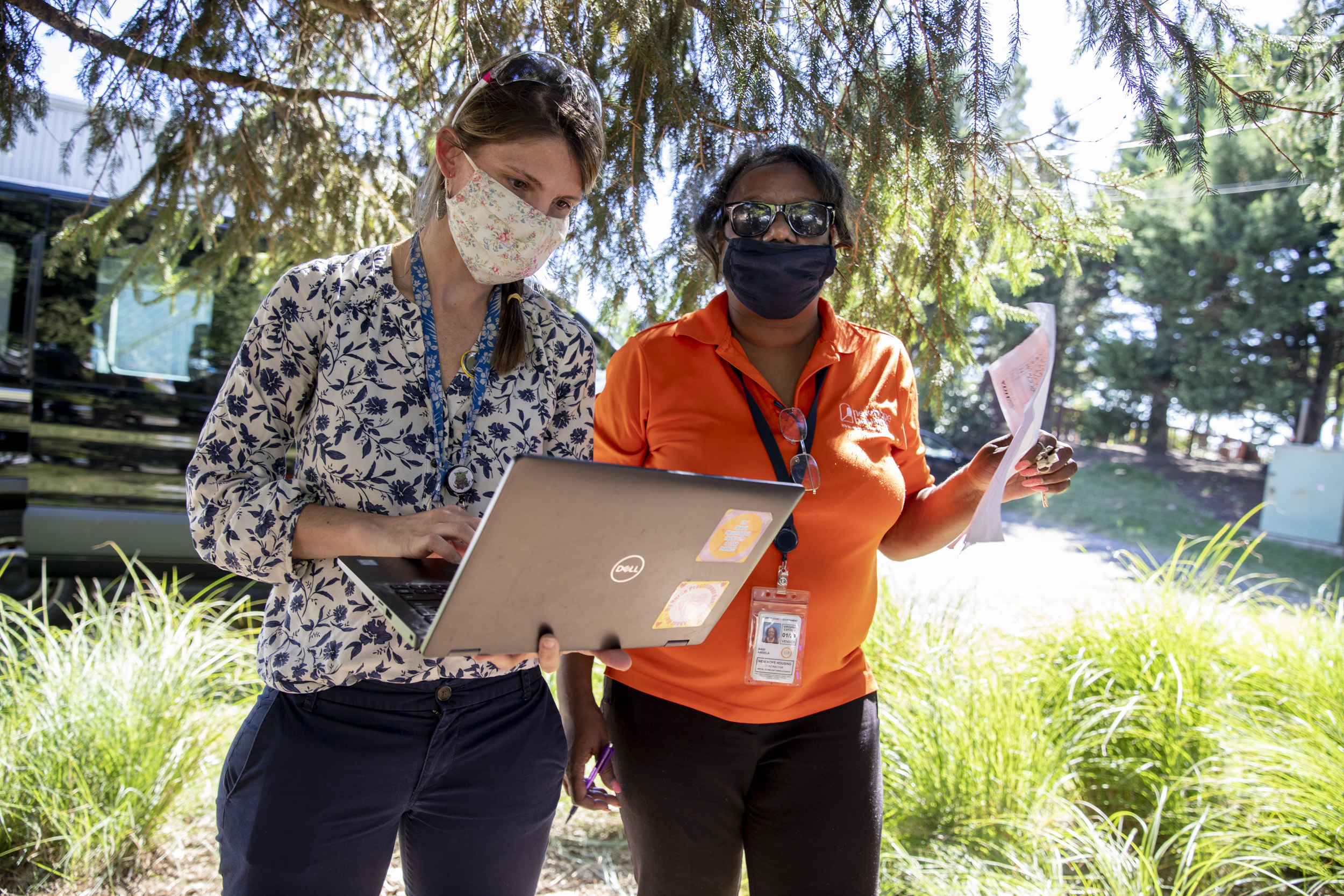
It’s a good thing Sami knows where to go, because the vaccine team is on the clock: they’ve got an open vial with several doses of the Pfizer vaccine with them in a cooler. It’s been open since the morning, and it’ll go bad after a few hours.
The drive takes them around strip malls and offices and sprawling parking lots. At their first stop, a Speedway gas station, Vukadinovich talks with two men pushing an old shopping cart stuffed to the brim with their belongings. They aren’t interested in the COVID vaccine — one of them, she notes afterward, may not have been able to give consent in the first place — but she tells them about the Bailey’s shelter and suggests they come see her there sometime.
Down the road, Sami parks the van in a dusty spot behind a retail store and the three make their way to the back of Tollhouse Park. There, they find a group of about eight men hanging out in the shade of a pine tree. Many of them are familiar faces.
“Does anyone else want the COVID vaccine today?” Vukadinovich says, walking to the center of the group. “You want it? I already gave it to you! You and you and you need it.”
The group goes to work, talking with the men — navigating a language barrier (most of the men speak Spanish), answering questions about the vaccine, including several about whether it’s okay to get the shot after a couple of drinks, and offering gift cards as incentives.
They offer other medical care, too. Vukadinovich examines a cut on one man’s finger and says she can take the stitches out for him, if he’ll meet her at the park or at the shelter later in the week.
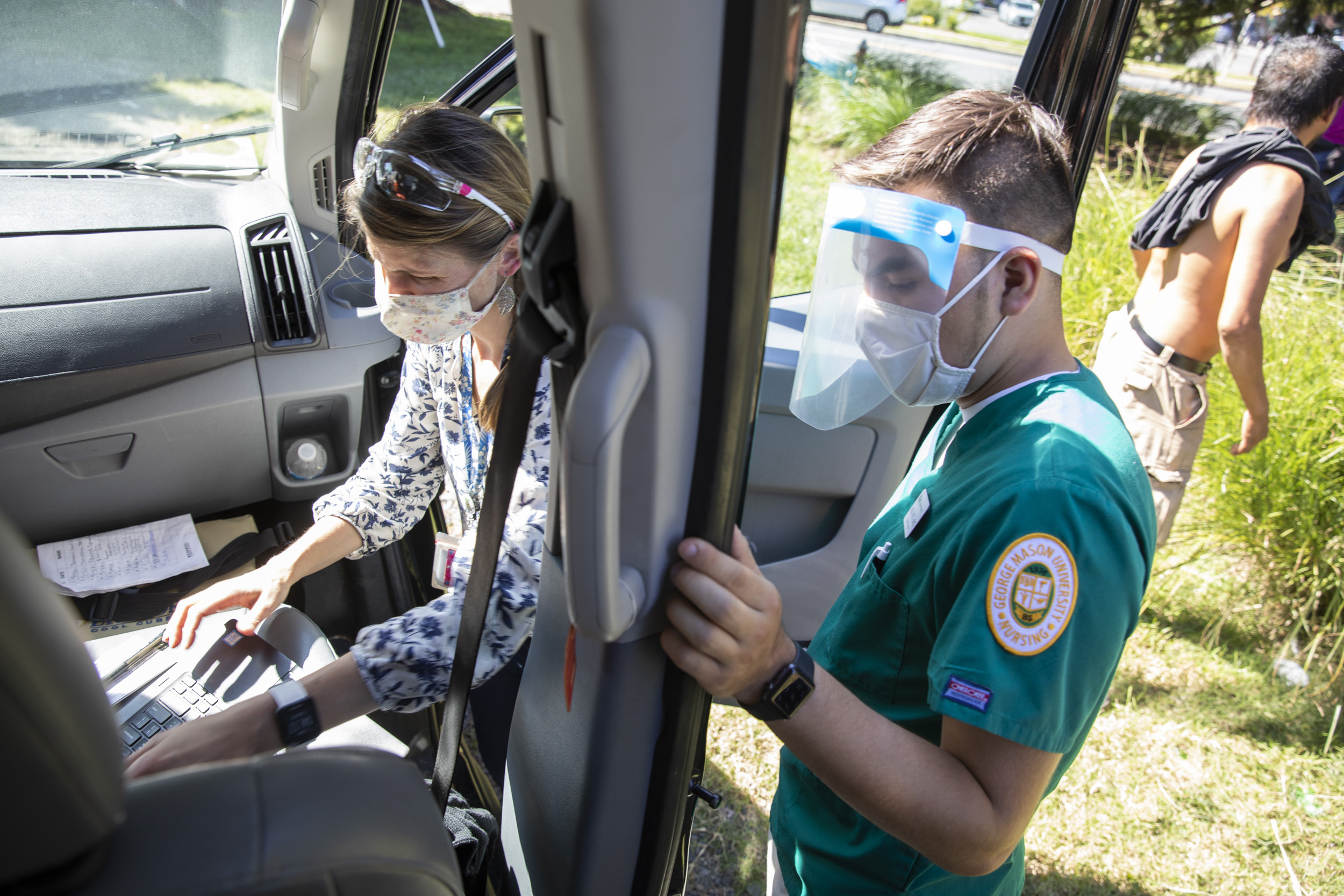
Finally, after 20 minutes of talking, one man agrees to get the shot. But first, Vukadinvocih has to look his name up in a database to see if he’s already been vaccinated. She can’t find him — a common problem, she explains. So she makes an executive decision.
“When you have people that are intoxicated, sometimes they don’t give the right name or date of birth,” she says. “So you know what, I’m going to give it to him. He’s willing, he’s asking for it. He looks pretty good today, so I think we should give it.”
The Virginia database also doesn’t contain vaccination information from D.C. or Maryland, so Vukadinovich has no ability to access the vaccination records of people traveling from those jurisdictions. When in doubt, she usually chooses to vaccinate, even if there’s a chance the person already got a shot. She even started keeping her own list of people she’s personally vaccinated against COVID-19, which helps fill in gaps when the database falls short.
But after all that and just before she can go and get the vaccine from the van, the man changes his mind.
Vukadinovich isn’t surprised.
“Our clients take a lot of time, just trying to educate them and answer any questions or relieve any fears and hoping they come around,” she says. “But you know, we can try again tomorrow. So that’s what we’ll do.”
They now have just an hour and a half before the open vaccine vial expires. But luck isn’t with them. In a nearby 7-Eleven parking lot, it’s the same story: a man almost agrees to get the shot, but then tells them to come back tomorrow.
“Okay! Yeah, no, you need to be comfortable,” Vukadinovich tells him. She doesn’t want to push too hard to get someone to take the shot, for fear of damaging her relationship with the patient — and possibly turning them off from seeking services at the shelter.
The day has been disappointing — Vukadinovich says they usually are able to give out three or four or even six vaccines in an afternoon — but for her and for Sami, it’s about the long game.
“Just people seeing you out, and they know that, ‘Oh, she’ll be back,’ makes a big difference,” Sami says.
They head back to the shelter, where they hope they can find another few people willing to be vaccinated.
This article is part of our 2021 contribution to the DC Homeless Crisis Reporting Project, in collaboration with Street Sense Media and other local newsrooms. The collective works will be published throughout the day at DCHomelessCrisis.press. You can also join the public Facebook group or follow #DCHomelessCrisis on Twitter to discuss further.