 Jordan Pascale
Metro says it’s working to bring back more trains this week as crowding and long wait times continue to plague travelers on the transit system. As the agency brings more trains online, service could be slightly improved next week.
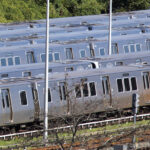
Metro had to take all of its 7000-series railcars (60% of its fleet) offline for inspection last week following a train derailment that could have led to a “catastrophic event.” It appears that the agency has experienced problems with wheelsets on its newest trains for years.
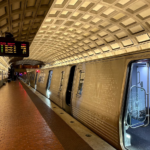
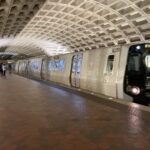
It remains unclear how long the trains will be out of use, and in the meantime, the region is grappling with drastically reduced service on the rail system. Trains are supposed to run every 15-20 minutes on the Red Line and every 30-40 minutes on other lines through Sunday. All trains are running with six cars. Riders should expect crowding conditions during peak times.
Metro is working to add more trains as it’s able, officials said in a press conference on Monday. The transit agency ran 31 trains on Monday and added an extra train on the Green Line to address crowding issues seen there.
Additionally, Metro is moving five trainsets daily out of the Shady Grove train yard over the next two weeks. Around-the-clock construction at Shady Grove and Rockville stations kept those trains penned in last week. An additional train will be ready on November 1 on the Green Line. Metro also says it’s bringing back one 6000-series trainset every two weeks. That process is moving slowly, Metro General Manager Paul Wiedefeld said, partially because the agency has had trouble getting necessary parts. Only 16 of the 180 6000-series cars have been available as couplers get reconstructed after several unintentional decouplings last year.
“It’s clearly not what we want to offer, but it is the safest thing that we can offer,” Wiedefeld said of service levels. Wiedefeld did not give any specifics about how often trains would come next week.
Metro also says it will start doing daily press briefings to keep the public informed of the latest service changes, where the situation stands with the 7000-series trains, and the latest on the investigation.
Metro still doesn’t have a solid timeline for the return of the 7000-series trains, but the agency has inspected all but 20 of the 748 newest train cars. Wheels moving outward on the 7000-series was one of the contributing factors in the Oct. 12 derailment on the Blue Line, and it’s what prompted the Washington Metrorail Safety Commission (WMSC) to remove the trains from service on Oct. 17.
Metro would not confirm reports from Greater Greater Washington that the agency had changed specifications halfway through its order of the 7000-series trains, asking for the second half of the order to be made with higher pressure applied to install the wheels on the axle. Some have speculated that the trains that were ordered later with the different specs could go back into service sooner.
“I think that’s too early to speculate on any of that,” Wiedefeld said. “I think that’s definitely one area that the NTSB is looking at, we’re looking at with them.”
On Tuesday, Metro, the National Transportation Safety Board, WMSC, railcar manufacturer Kawasaki, and wheelset subcontractor ORX Rail will test some of the non-conforming wheelsets to try to figure out the root cause of the issue.
In other updates, Metro said it’s investing in more sensitive testing and inspection equipment and migrating away from paper-based logs to electronic logs that can better monitor and predict train issues before they arise. Wiedefeld said Metro is also testing a pilot to use technology that can automatically inspect wheelsets on the tracks as another monitoring system on top of the usual 90-day inspections. Wiedefeld said they’re also surveying employees to identify any existing quality issues that require escalation throughout the organization. Officials from Metro’s board and WMSC said they were disappointed to learn about the reoccurring wheel issue only after the derailment.
Metro chair Paul Smedberg said he’s heard from stakeholders who are eager to increase service. On Friday around 11:30 a.m., Smedberg took the train from Alexandria to a meeting downtown.
“I waited close to 35 minutes for the train,” he said. “It’s a long wait. I just missed one (train) about a minute or two before that, but I’d given myself enough time to do that.
“It wasn’t all that bad crowd-wise, but I have heard from several folks that they have experienced some crowding in the trains.”
Wiedefeld says crowding issues have been varied depending on the time of day and which line you’re on.