Elliot C. Williams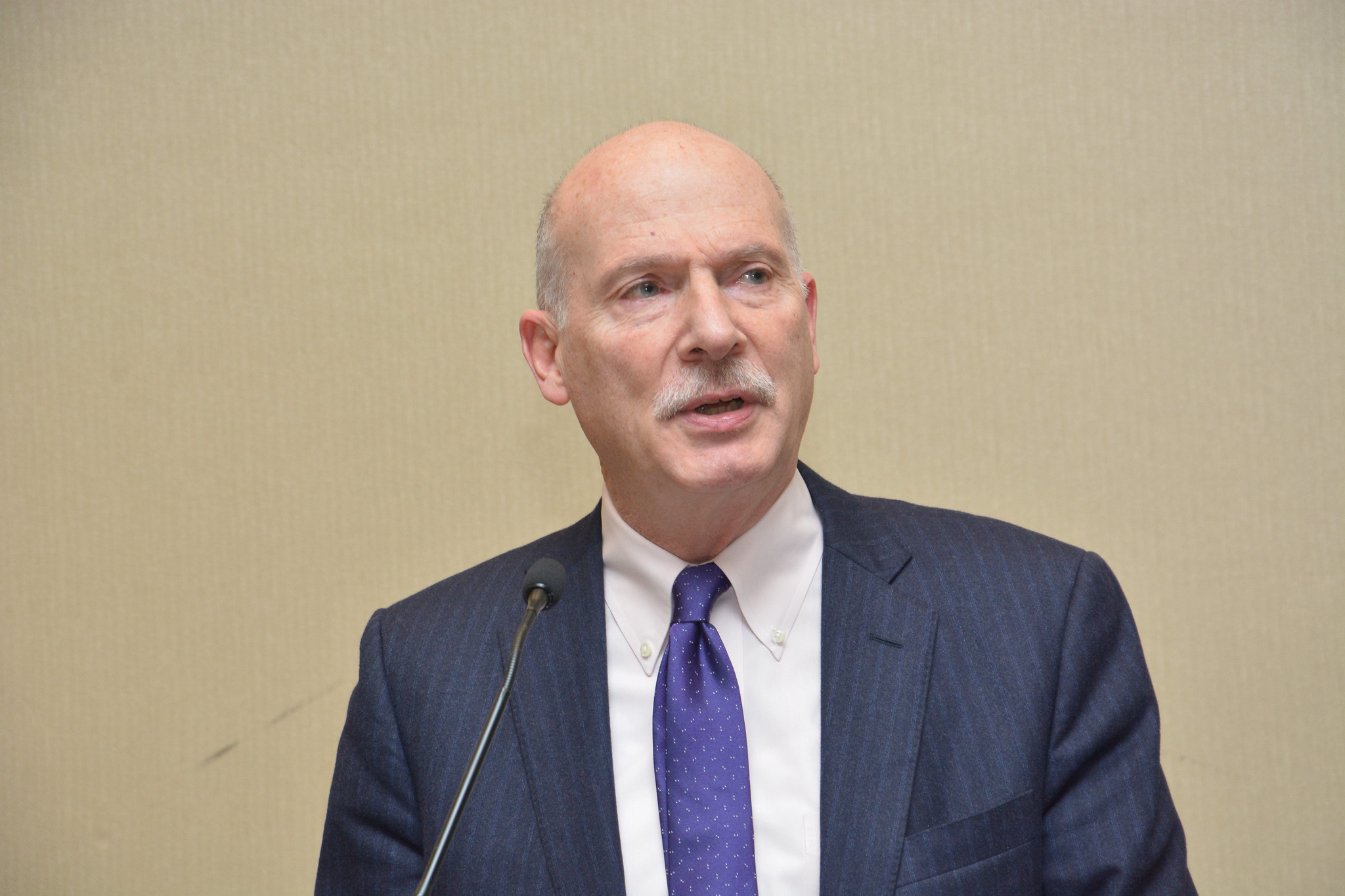
Update: Following an emotional debate during Tuesday’s D.C. Council meeting, the council moved to consider the re-nominations of Natalie Hopkinson and Cora Masters Barry to the D.C. Commission on the Arts and Humanities. All councilmembers except Chairman Phil Mendelson voted in favor of reconfirming them to their spots on the commission.
Original: A heated political battle over how the District handles its arts funding is reaching a boiling point, as the D.C. Council decides Tuesday whether to re-appoint four of Mayor Muriel Bowser’s nominees to the D.C. Commission on the Arts and Humanities. The controversy has involved a power struggle between the mayor and the council chairman, as well as discussions of race and equity, prompting the local chapter of the NAACP to get involved and spurring a rally organized by local activists.
At the heart of the matter is a vote that will take place during Tuesday’s D.C. Council meeting. Bowser has re-nominated four commissioners: Kymber Lovett-Menkiti, Gretchen Wharton, Natalie Hopkinson, and Cora Masters Barry, all Black women. However, Council Chairman Phil Mendelson has intentionally left Hopkinson and Barry off of Tuesday’s meeting agenda, leaving their nominations in limbo and putting their future on the arts commission in doubt.
Mendelson has said that he’s received complaints from other commissioners — whom he did not name — that Hopkinson and Barry are divisive and have “alienated” their colleagues. The two have been considered “controversial” figures in local politics and arts, as their outspokenness on the shortcomings of the commission has stirred discord among politicians and members of the arts community. Hopkinson is the author of three books on go-go and D.C. culture, a professor at Howard University, and an activist; Barry was married to the late Mayor Marion Barry, and leads an influential life of her own.
In a statement on Oct. 31, Mendelson also accused Barry of an ethics and conflict-of-interest violation, saying she had voted on a grant for her Ward 8 nonprofit organization, the Recreation Wish List Committee — of which she is the only paid employee, according to tax records. Barry did not immediately respond for a request for comment on this story, but her spokesperson, Raymone Bain, sent Washington City Paper an email that suggests the arts commissioners can’t see the names of grant applicants before casting votes. (Mendelson has since challenged that claim.)
Bowser said in a series of tweets on Saturday that the chairman has placed her nominees in “political purgatory” due to their outspokenness. And Hopkinson, in an open letter and in interviews, has said this vote without a hearing is a way to silence a conversation about racial equity in the local arts community.
The 17-member arts commission manages a budget of more than $30 million, and has for years faced accusations of racism and cronyism, and criticisms for supporting major arts organizations over grassroots and minority-led groups. Bowser and Mendelson have been in an ongoing power struggle over who controls the arts commission for years, and the councilmember moved legislation in 2019 to make it an independent commission, which passed.
Addressing reporters in a Monday press conference, Mendelson discussed the controversy and his statement on the two nominees, which referred to anonymous arts commissioners who have called Hopkinson and Barry “bomb throwers.”
“Where there is polarization or unhappiness between commission members, that is of concern to me,” Mendelson said.
Reached by phone Monday, Hopkinson said the past few days have been difficult and that she’ll be watching the D.C. Council meetings Tuesday to see how the legislative body handles the situation.
“The arts world is something that is very much policed by race, it’s divided by race,” Hopkinson says. “The art forms that white people and Europeans do, that white organizations do, they are supported very well by public policy and the private sector. And the arts that are not in those areas … those are not supported. I’ve made it my business to challenge these divides and actually do something about them.”
Hopkinson’s letter to the D.C. Council included a map she and a colleague created that shows the “redlining” of D.C. arts — with a vast majority of the city’s arts funding going towards the wealthiest, whitest wards.
Mendelson says that since the commission became independent and adopted a task force on equity and inclusion, it has made great strides toward inclusivity, and that it’s reworked its grant formula. He said the task force came up with dozens of recommendations that were adopted by the commission.
Asked by a reporter whether his decision not to move forward with the nominations was motivated by the stereotype of the “angry Black woman,” Mendelson, visibly upset, replied: “It’s absolutely not true.”
“I’d rather not drag this out,” Mendelson added.
At-Large Councilmember Robert White—who recently announced a run for mayor—is introducing an emergency bill to approve Barry’s and Hopkinson’s nominations Tuesday.
“The inequity in DC arts funding is a long-documented problem,” White said in a statement. “And re-orienting the Commission was not going to be an easy task. But it really bothers me that two Black women who would not take no for an answer are being described as angry Black women.”
It’s unclear whether White has support from his fellow councilmembers, but Mendelson hinted during Monday’s press briefing that the At-Large councilmember “doesn’t have the necessary votes.”
Meanwhile, Hopkinson says the supportive messages she’s received in the past few days have been “encouraging.”
“It’s a very ugly eviction that Cora Masters Barry and I are experiencing,” Hopkinson says. “It reinforces this idea that this is a rarified space where Black people don’t belong.”
The D.C. branch of the NAACP is organizing a rally with Don’t Mute DC on Monday evening at 14th and U Streets in support of Hopkinson and Barry.
“Reappointing the strong voices for Ms. Barry and Dr. Hopkinson to the CAH is critical to ensure resources reach more Black artists in the District’s most vulnerable communities,” NAACP D.C. President Akosua Ali wrote in a letter to Mendelson. “Each nominee brings a record of service in the arts which is critical at this historic moment. As a progressive member of the Council who advocates for racial equity and Black Lives, your position on this issue is telling and will be remembered because it is critical to ensure strong voices that are proven fighters for racial equality have the opportunity to continue serving on this Commission.”
This story has been updated with the voting results, as well as information about Mendelson’s accusations against Cora Masters Barry, as well as her spokesperson’s response.