Margaret Barthel
 Jordan Pascale
 Rachel Kurzius
Businessman and political newcomer Glenn Youngkin defeated former governor Terry McAuliffe in the race for Virginia’s governor, leading a dominating night for Republicans.
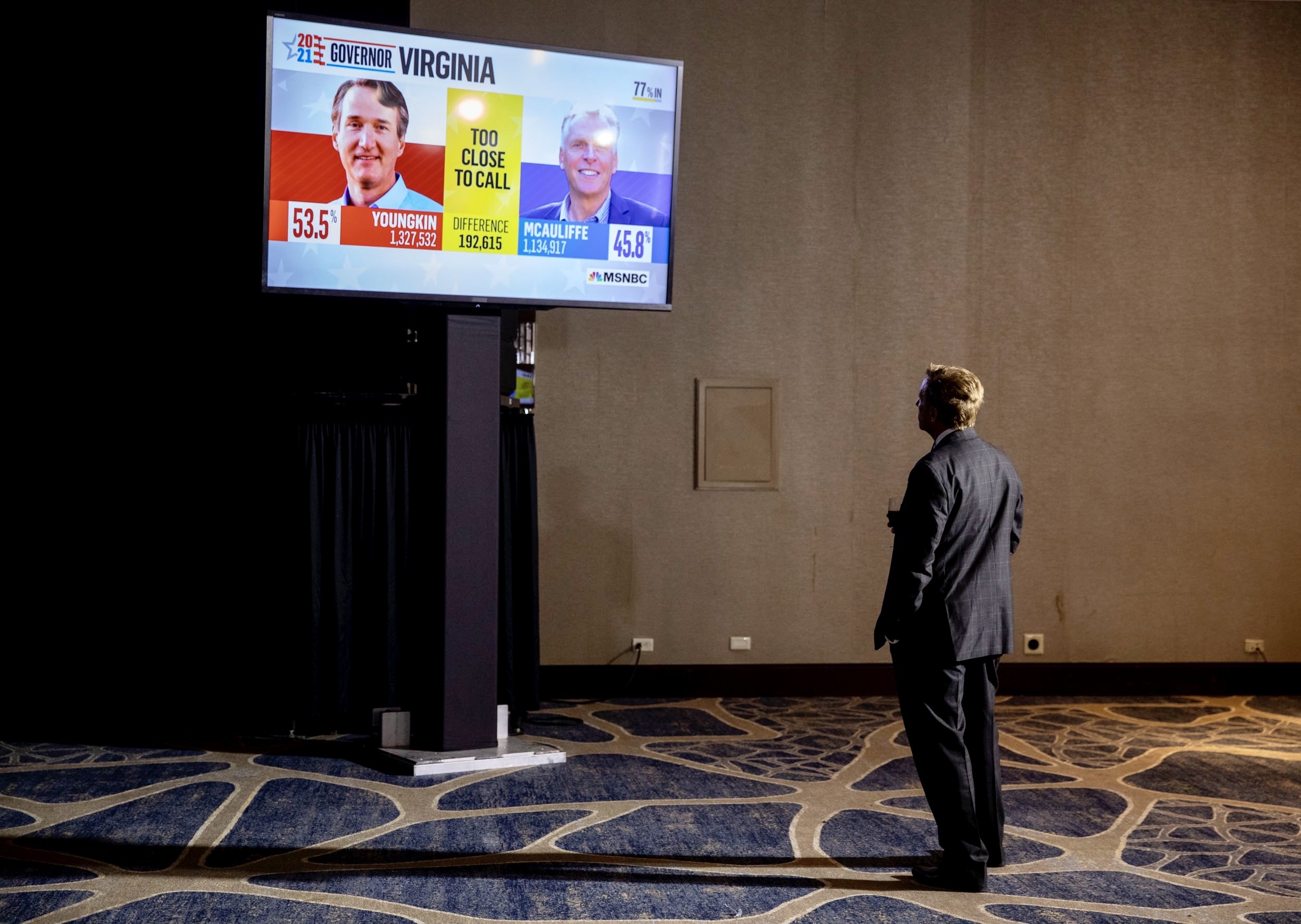
Youngkin ate away at McAuliffe’s early lead in the race, until most polls had the candidates neck-and-neck in the immediate run-up to Election Day. With 95% of precincts reporting, he is up by about 2 points.
Along the way, he delivered the lieutenant governor for Republicans. Jason Miyares, the GOP candidate for attorney general, is leading Democrat Mark Herring by about 1%, with 95% of precincts reporting. It also appears the party took control of the House of Delegates, picking up 7 seats, though a number of races are extremely close. The Senate, not up for election this year, will remain in Democratic control — ensuring a divided government.
Youngkin’s victory is likely to provide a template for Republicans nationwide looking to clinch victory in purple and blue states. He managed to walk a fine line, signaling to Donald Trump’s base that he shares their priorities, while maintaining enough distance from the former president himself to remain palatable to moderate Republicans and independents.
“It’s really important to emphasize how effective the Glenn Youngkin campaign was in keeping all Republicans onside. The ability to connect with Republicans who liked Trump and with Republicans who didn’t much care for the man created an environment that was challenging,” says Stephen Farnsworth, a political scientist at the University of Mary Washington. “For a first time candidate to sort of navigate through the shoals of the different factions of Republicanism in Virginia is no modest accomplishment.”
Youngkin’s win continues a four-decade trend of the opposite party winning the governor’s mansion the year after a presidential election. Only one person broke that rule: McAuliffe, who won in 2013 after then-President Barack Obama won re-election. He couldn’t repeat that feat.
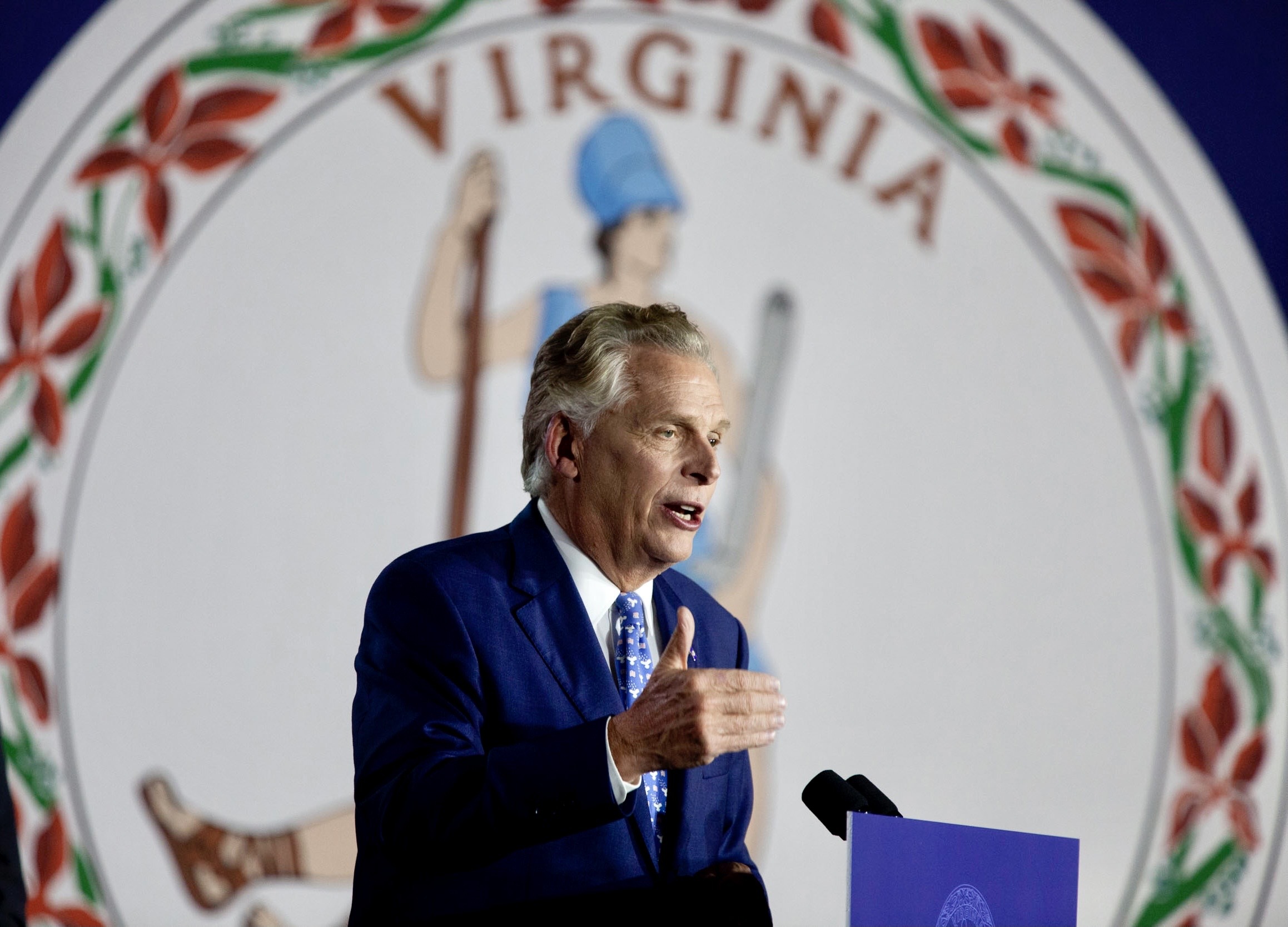
McAuliffe conceded on Wednesday morning and congratulated Youngkin on his win. “While there will be setbacks along the way, I am confident that the long term path of Virginia is toward inclusion, openness and tolerance for all,” McAuliffe said in a statement. “I will never stop fighting to make our Commonwealth stronger and brighter for all.”
A private equity executive who has never held elected office, Youngkin framed his campaign around culture-war debates in schools, dramatic slashes in taxes, and tough-on-crime rhetoric. Ultimately, education dominated the race, with voters galvanized by issues that have been roiling Loudoun County, in particular, for months.
At Youngkin’s election watch party, tables were piled high with a variety of posters for attendees to pick up. But there was a clear winning message, according to one staffer: “Parents for Youngkin” was the most popular sign by far.
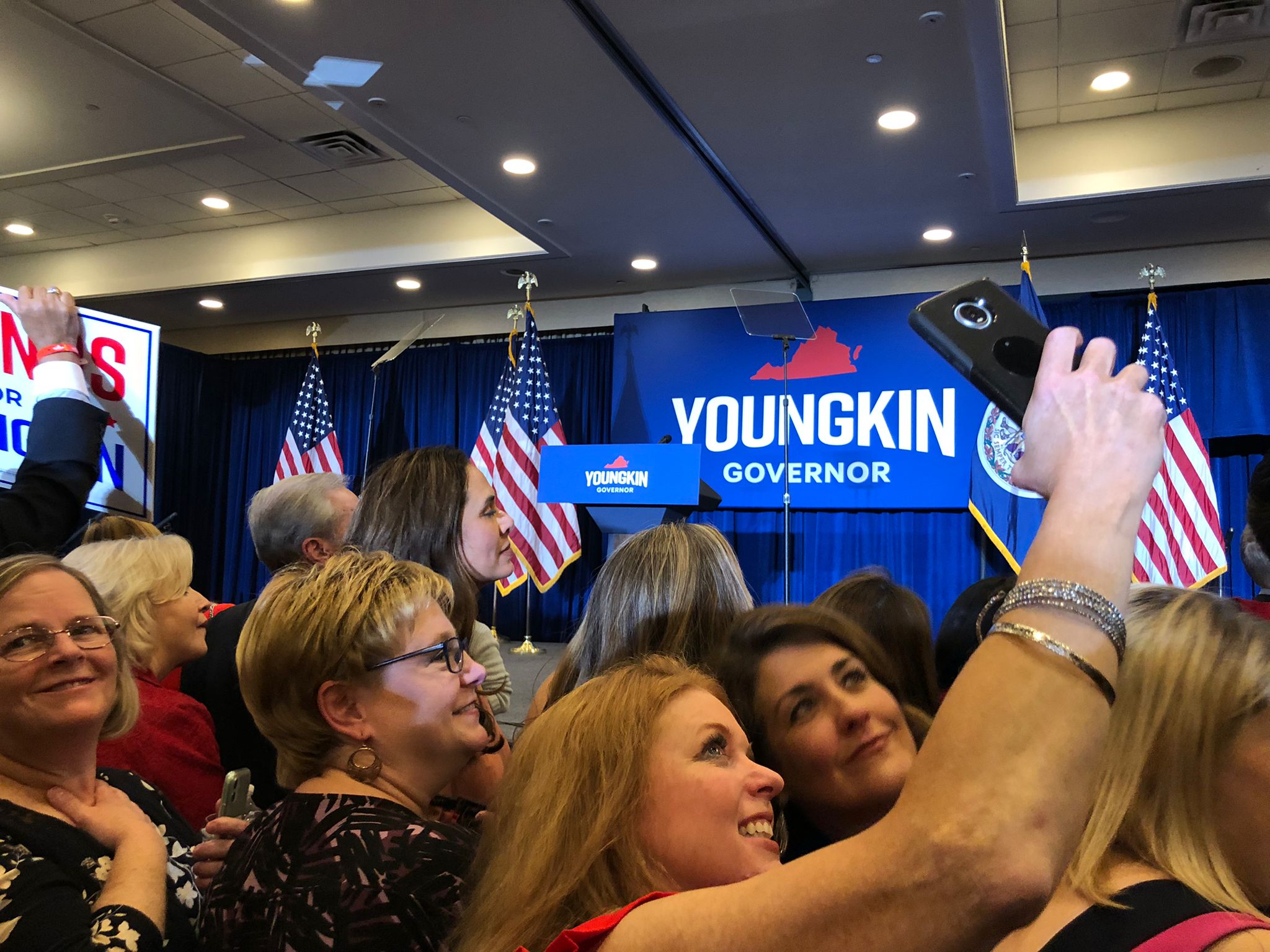
Youngkin’s win upsets an increasingly pronounced Democratic lean in Virginia.
The state has been trending Democratic for years, driven in large part by rapid population growth in the D.C. suburbs. Republicans hadn’t won a statewide contest in the commonwealth in more than a decade, and Democrats have had unified government in Richmond since they took control of the General Assembly in 2019.
President Joe Biden won the state by just shy of 10 points in 2020. But despite the large margin of victory in the presidential race, there were also clear cracks in Democrats’ hold. Narrow congressional victories and failure to flip a House seat sparked hope for Republicans’ future in the state.
It was borne out.
“The blueness of Virginia was really overstated during the Trump years,” says Farnsworth. “Virginia was a purple state all along. It was just a purple state that didn’t much like Trump.”
Virginia Democrats faced significant political headwinds in the 2021 contest, including a beleaguered Biden presidency and an electorate exhausted by the pandemic and four years of near-constant mobilizing against President Donald Trump. By contrast, Republicans appeared to have more momentum heading into Election Day, motivated by their national losses in 2020 and galvanized by hot-button cultural issues like race education, coronavirus protocols in schools, and unfounded claims of voter fraud.
Youngkin started off August nearly seven points behind McAuliffe, according to a 538 analysis that averages numerous polls. That lead narrowed in recent weeks before Youngkin overtook McAuliffe with a one point lead over the weekend.
Youngkin will have to contend with a Democratic Senate, with a split government likely creating gridlock in Richmond.
“The same kind of trench warfare you see in Congress, now is the shape of politics in Virginia,” according to Farnsworth.
In prior years of split government, legislators focused on sound fiscal management, maintaining the AAA bond rating, and holding on to Virginia’s reputation as a top business state. But while moderate Republicans and Democrats called the shots in Richmond two or three decades ago, they’ve since been replaced by more extreme members of their party.
“That really requires a unified government for either party to make much progress on their agenda items,” Farnsworth says. “What we’re really seeing here is the Washington-ization of Virginia politics.”
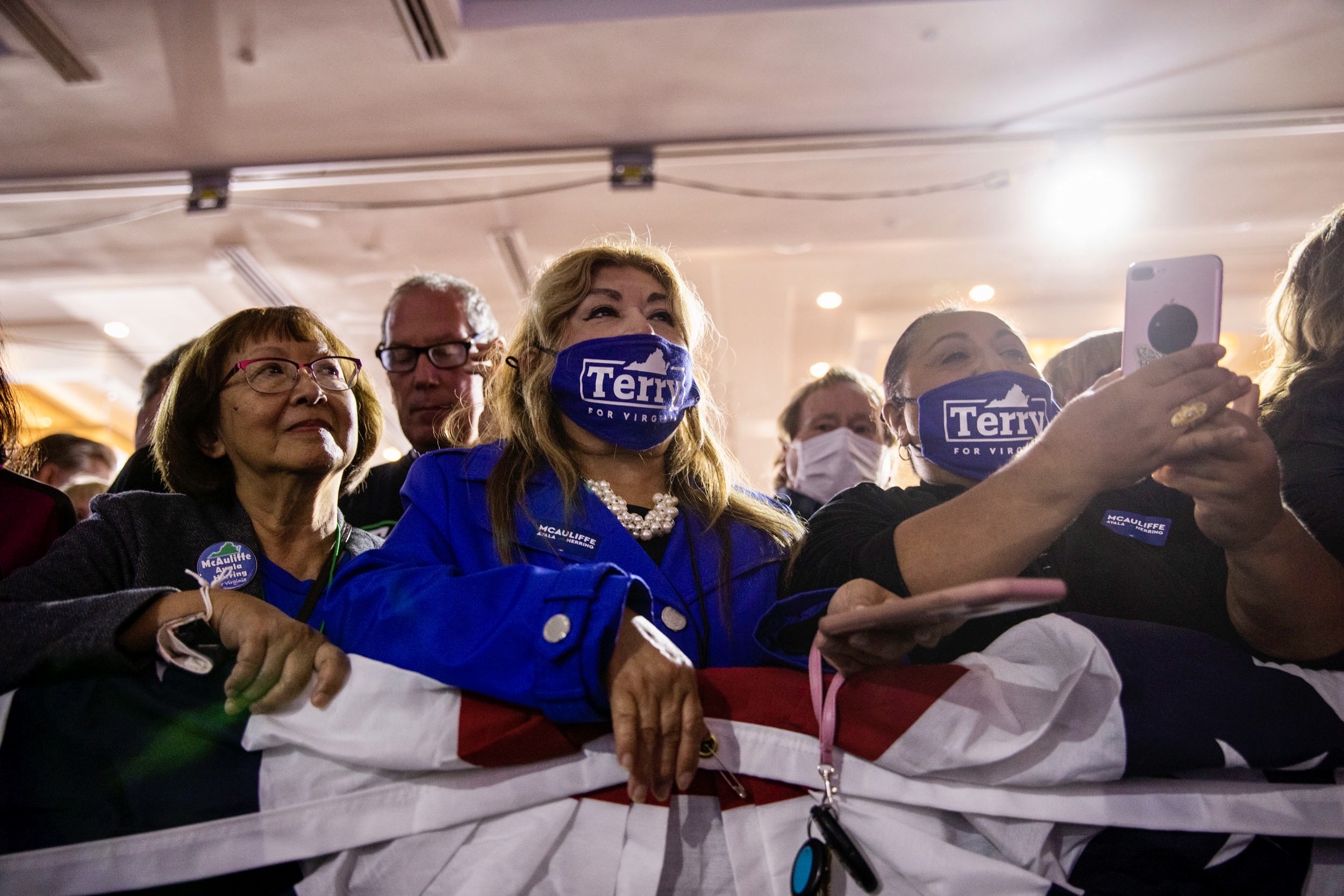
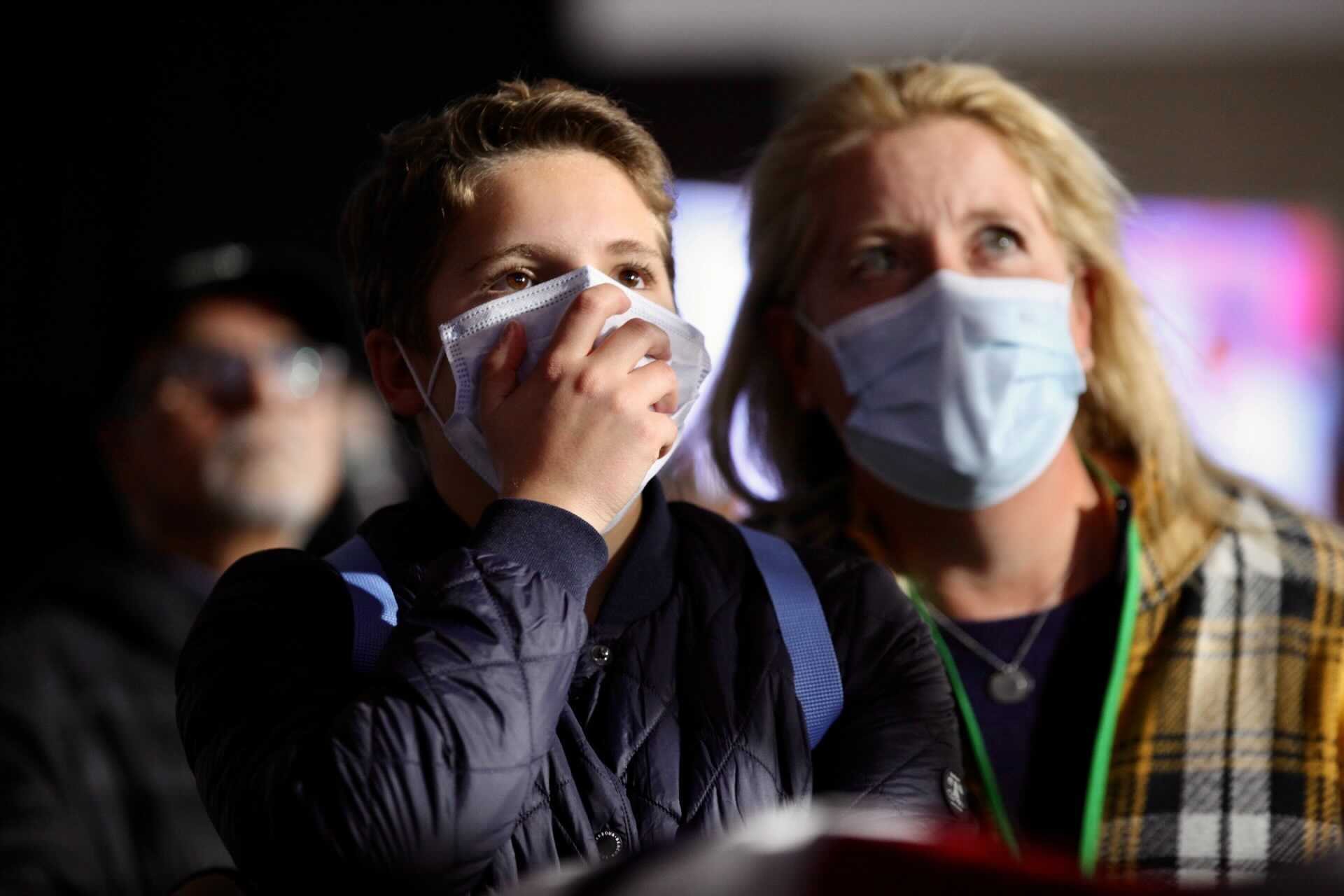
The Virginia election was one of just two gubernatorial contests this year, and one of the first major races following Biden’s 2020 win. As the polls tightened, so did national scrutiny, with political watchers trying to divine lessons for the 2022 national congressional midterms.
National debates — over critical race theory in schools, COVID-19 vaccine mandates, abortion, and election security — figured heavily in the Virginia race, as both parties appeared to test out messaging for future campaigns. With national messages came national figures: President Joe Biden, Vice President Kamala Harris, and former President Barack Obama all campaigned for McAuliffe in the final weeks before Election Day.
On the Republican side, former Vice President Mike Pence also visited Virginia, showing up at an education-related rally in Loudoun County. Trump weighed in several times during the race, calling in to a rally in Richmond organized by former advisor Steve Bannon, and joining a short video call in support of Youngkin just before Election Day.
But Youngkin shied away from campaigning with Trump, and rarely invoked him by name.
The former president’s presence in the race underscored a central challenge for the Youngkin campaign: appealing to the deep-red Trump Republican base while leaving the door open for suburban voters leery of Trump-style politics.
In a nod to Trump’s baseless accusations of election fraud in the 2020 election, one of Youngkin’s most consistent campaign messages was calling for an audit of Virginia’s voting infrastructure (such audits are routine).
Education emerged as a flashpoint in the race, particularly after a tense exchange at the second gubernatorial debate over McAuliffe’s 2017 veto of the so-called Beloved bill, a piece of legislation developed after a Fairfax County mother objected to her son reading Toni Morrison’s Pulitzer Prize-winning novel.
In the back and forth, McAuliffe included the sentence “I don’t think parents should be telling schools what they should teach” in his response — and Republicans seized on the line. Youngkin began rallying voters around the slogan “Parents Matter,” a catchall phrase for parent anxiety over teaching race in schools, policies to protect transgender students, and frustrations over school reopenings in the pandemic.
The Republican rhetoric built on — and fed — existing local divisions in the Northern Virginia suburbs, particularly in Loudoun County, where school board meetings have devolved into bitter debates over the school system’s racial equity work and a new policy designed to protect transgender students.
Youngkin repeatedly promised voters he would ban critical race theory in Virginia schools (the discipline is not currently part of state education standards), which McAuliffe has called a “racist dog whistle.”
On Election Day, Northern Virginia voters of both parties said they were motivated to vote by education and cultural controversies.
“I think the biggest issue for me is the false narrative, the idea that they have been propagating and selling this idea of critical race theory being in the schools, which it is not,” said Kathleen Kuhn, a Sterling resident who says she’s worked as an English teacher and a school librarian. “I’ve been following school boards ever since I worked for the schools. I’ve never seen anything like … this inflaming of parents against school boards.”
But education issues came up even more frequently among Youngkin voters.
“We don’t want the right or the left when it comes to politics in the schools. We want pure education. And I believe he’s the governor that will back that,” said Virginia Tade, a Lorton resident, at a watch party for Youngkin. “We know what’s being slipped into the curriculum and we don’t like it.”
The candidate’s message around parental choice particularly echoed.
“For me, it’s not political. For me, it is a parent’s right to have a choice in their children’s education,” said Abbie Platt, who is part of an organization trying to remove school board members in Loudoun, outside a polling site in Sterling. “So I’m supporting candidates that support me as a parent.”
This story has been updated to reflect additional results in the lieutenant governor’s race and House of Delegates contests.