Martin Austermuhle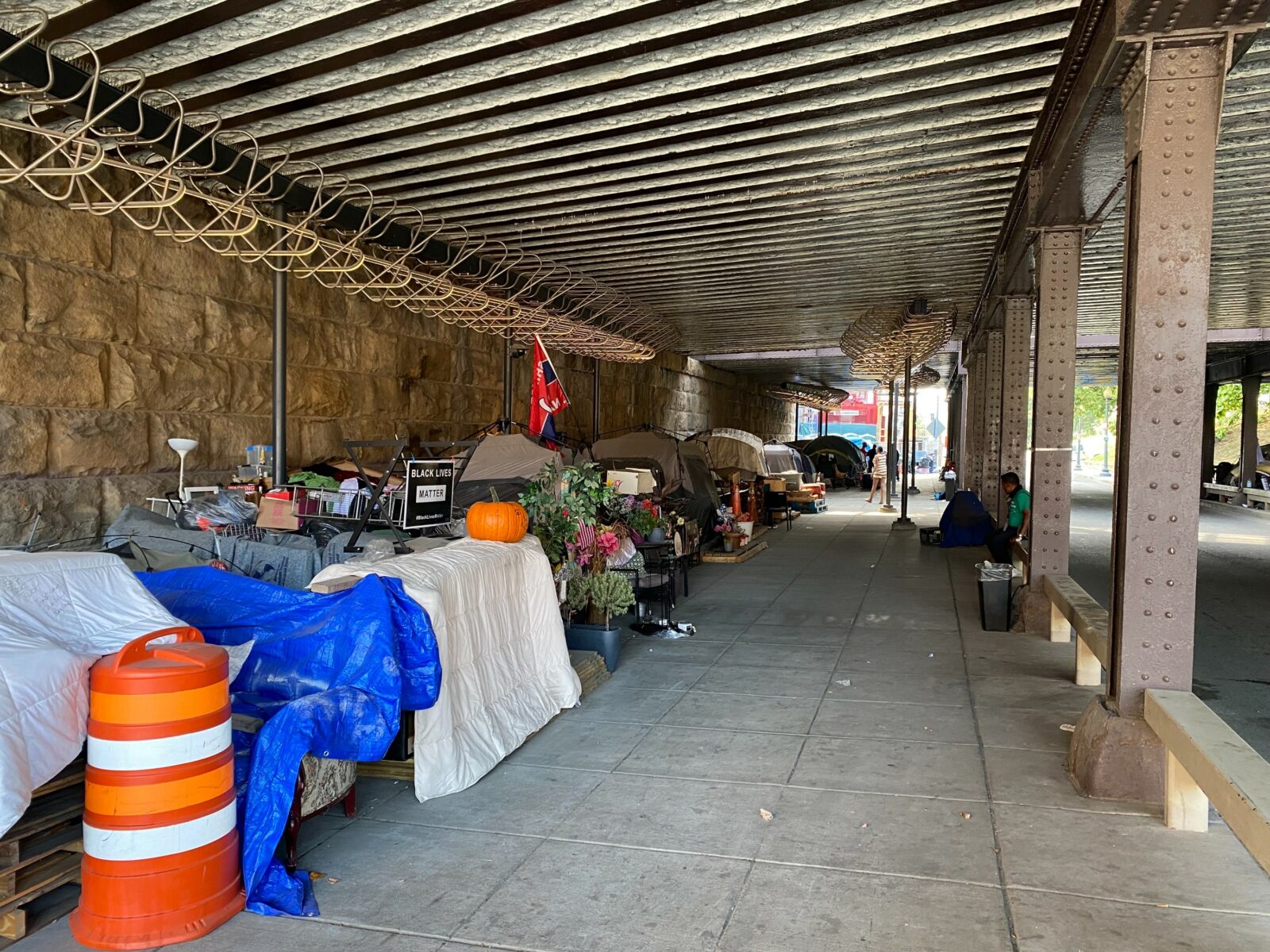
D.C. lawmakers and activists on Tuesday strongly criticized a new effort by the city to close five large homeless encampments, even as senior city officials strongly insisted that the program is showing success in housing people experiencing homelessness.
The sometimes-heated disagreements were the central feature of a day-long council hearing on the pilot program announced in August under which outreach workers aggressively work to connect people in the encampments to housing and services before the city formally clears the encampments and prohibits people from returning.
The pilot program — formally known as Coordinated Assistance and Resources for Encampments, or CARE — started with two longstanding encampments in NoMa, both of which have been cleared, and will move next to an encampment in Truxton Circle before ending with two sites in Foggy Bottom. All told, city officials say more than 100 people at the encampments could be housed. (City officials estimate there are more than 300 unhoused people at more than 130 encampments.)
In testimony submitted to the council, Deputy Mayor for Health and Human Services Wayne Turnage said that the pilot developed by his office was showing early successes. Of 45 residents at the L and M street encampments in NoMa, he said 29 were moved into housing and another 11 are in process of getting housing — an 89% “success” rate. He also said the city and outreach workers managed to shorten the timeframe to get people connected to housing to four weeks, “a significant reduction in time from normal process which can take up to 6-9 months.”
Turnage also pushed back against the five hours of testimony that preceded him, criticizing what he termed “florid cynicism and misstatements” from dozens of area residents and advocates who questioned how the encampments were chosen, why residents there are threatened with possible eviction if they don’t accept housing on the city’s timeline, how many of the people experiencing homelessness would get permanent housing, and even what the budget of the program was and where the money was coming from.
“This pilot is a response to a real emergency,” said Turnage. “No government… can stand idly by and watch those who are unhoused live in these conditions.”
But the activists who spoke and lawmakers who questioned him insisted that while they support the goal of getting people experiencing homelessness into housing quickly, they did not understand why setting strict timelines to close encampments was necessary — or why D.C. should then establish no-tent zones after an encampment is cleared. (Concrete jersey barriers have been placed along the sidewalks of the L and M street underpasses, preventing any future encampments.)
“We need all of our residents to be housed, but the how matters,” said Councilmember Janeese Lewis George (D-Ward 4), early in the hearing. “I worry this rush to remove and bar neighbors from the streets comes at a cost of rupturing trust in government further and signals the wrong priorities of erasing and harming our unhoused neighbors versus caring for them.”
“The goal of this program was not to house people, but to move people,” said Councilmember Robert White (D-At Large), who is running for mayor.
City officials speaking at the hearing told lawmakers that outreach workers have created lists of all the people living at the targeted encampments, and then worked with them to find temporary housing accommodations ranging from hotels to year-long apartment leases, pending final determinations on whether they would qualify for permanent supportive housing.
But advocates said that in many cases getting an unhoused person into the right type of housing can take time, and working on the pilot program’s deadlines before an encampment is cleared won’t necessarily produce the best result.
“It’s not enough to force someone to take an apartment just because it’s free. You have to place people where they’re going to succeed instead of just pushing them into housing,” said Kate Coventry, an analyst at the D.C. Fiscal Policy Institute.
Turnage conceded that the pilot program had created a “moral hazard” — people moving to encampments upon hearing that they might qualify for housing there, but arriving too late to get placed on the city’s list. According to data provided by Turnage, some 15 people moved to the NoMa encampments after the pilot was announced; of that group, 11 were forced to leave the encampment when the city closed it.
That, said activists, is merely pushing people experiencing homelessness from one encampment to another, a sometimes violent and disruptive process during which they can lose possessions or be forced into more dangerous circumstances. (During the clearing of the NoMa encampment, a man in a tent was briefly lifted by a small bulldozer.) At one point during the hearing, Jamal Thomas, 37, called in from the Truxton Circle encampment at New Jersey Avenue and O Street NW. He said he had moved to that encampment when the NoMa sites were closed down.
“Now, they’re saying we have to move from here,” he said, referring to the Nov. 18 date D.C. has set for the large encampment to be cleared. “It’s a lose-lose situation. It hurts. I would rather stay here than be pushed out and sleep in an alley.”
Some residents and civic leaders said they support the city’s pilot, calling it a necessary means to address health and safety hazards at the encampments, whose numbers have grown by 40% since the pandemic hit. Maura Brophy, president of the NoMa Business Improvement District, said “the status quo isn’t working” and asked that the pilot be given time to work. Rachelle Nigro, the ANC commissioner representing the area encompassing the encampment at New Jersey Avenue and O Street, said neighboring residents had seen fires, rodent infestations, drug sales, and even deaths since tents started going up in late 2019.
“Why is this acceptable to anyone at this point? It is dangerous for all parties,” she said. “While the pilot program is not meant to end homelessness, it will put an end to this dangerous situation for both residents inside and outside the park,” she said.
Activists countered that D.C. could address those challenges with better sanitation and regular services, not only by clearing encampments. And they urged the city to focus its efforts on housing encampment residents — but without the threat of an encampment closure hanging over them.
“We believe that if this process isn’t rushed, the way the pilot proposes, the large encampments that we see today could become a thing of the past, and I think that we all would agree that that would be a good thing,” said Ann Marie Staudenmaier, a staff attorney from the Washington Legal Clinic for the Homeless.
Turnage said the dates for closing the encampments were “aspirational,” and that he would adjust them if not all the residents on the city’s list had been able to secure housing in time. But he said the pilot program would continue as planned, unless the council legislated otherwise. (Some activists were urging lawmakers to do just that.) And Turnage argued with the characterization that the city was “evicting” people from the sites.
“Why can’t we house people without removing them?” asked Councilmember Brianne Nadeau (D-Ward 1), who chairs the council’s human services committee.
“No one has been ticketed. No one has been arrested. And no one has been evicted from an encampment site,” responded Turnage.
“That’s not true,” said Nadeau. “Why are we asking people to leave?”
“We want to see if we can close encampments humanely by offering people housing. If we [close an encampment] by offer of housing, that is humane,” he said.
“There is nothing nefarious about this, this is not criminalizing homelessness,” said Turnage in another exchange with White.
“You’re saying you can be homeless,” responded White. “But you can’t be homeless here.”
Read other coverage of the hearing by The Washington Post and Axios.