 Dominique Maria Bonessi
Prince George’s County councilmembers approved a controversial redistricting proposal Tuesday night despite opposition from residents, 150 of whom stayed at a council meeting late into the night to testify against the plan.
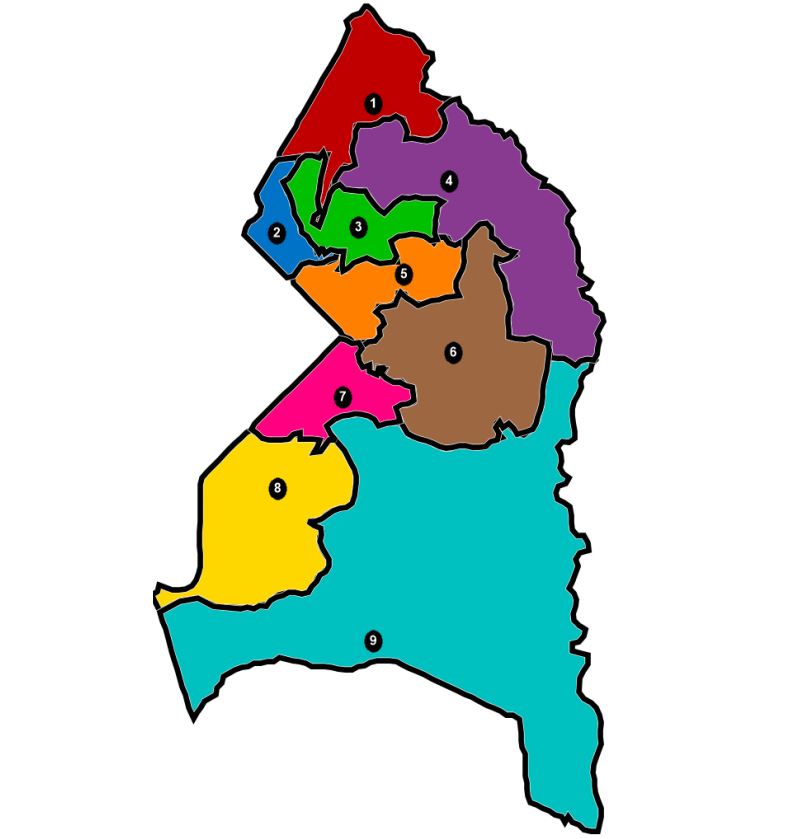
After a six-hour hearing Tuesday night, councilmembers approved the new redistricting map in a 6 to 3 vote. The plan was introduced by Councilmember Derrick Leon Davis (District 6) late last month as an alternative to the redistricting map introduced by the county’s independent redistricting commission in September. The alternative map’s six proponents said it creates a majority-Latino district, likely allowing for better representation for Latino residents. The changes also account for the population changes following the county’s 2020 census results.
Councilmember Deni Taveras (District 2), the council’s only Latina member, voted in favor of the alternative map and told DCist/WAMU late last month it was a “compromise map.”
“The reason I’m supporting this map is because this is the first time in history where Latinos are at the seat of the table [in the county],” Taveras said.
Other councilmembers like Mel Franklin (At-large) and Todd Turner (District 4) said that the redistricting process was fair, followed proper rules and procedure, and was more transparent than redistricting processes have been in the past.
But the plan also drew opposition from public officials and candidates for office who say that the process in fact lacked transparency. Councilmembers in opposition to the plan said proponents went behind their backs to come up with a map that would squeeze out liberal members and possible challengers of more moderate councilmembers.
The new map shifts the boundaries between Districts 1 and 3 in the area of College Park, and removes three county council candidates from the districts in which they were running and/or had already started campaigning. Two of those candidates, Krystal Oriadha who planned to run in District 7, and Tamara Davis Brown who was planning a run in District 9, lost their 2018 elections in the same districts by less than 60 votes each.
Councilmember Danielle Glaros said the council could create a majority-Latino district without dividing her district, District 3, in the area around College Park.
“There is no justice today with this decision,” Glaros told council members. “They know what gaslighting is.”
Several community members were also outspoken in their opposition to the alternative map, arguing that it was not representative of the community’s interest. Those opposed, like Linda Thornton-Thomas, president of the county’s branch of the NAACP, said the council should have approved the map created by the independent commission instead.
“I’m extremely disappointed,” Thornton-Thomas told DCist/WAMU. “I can’t say whether or not it’s gerrymandering, but we know it was not a fair process.”
The decision is already causing frustration for residents who live in the area that is now District 3, but will be in District 1 after the redistricting map goes into effect. For school parents, Thornton-Thomas said, the decision could cause an issue in figuring out which school their children now attend.
College Park City Councilmember John Rigg, who represents and lives the Calvert Hills neighborhood in District 3, will now live in District 1 under the new redistricting map.
“From an economic development perspective and from an electoral representative perspective it’s going to be very complicated,” Rigg told DCist/WAMU. He added that currently College Park can rely on one councilmember for downtown development issues, but under the new plan the residential portions of downtown will be in District 1 and the other portions of downtown, including parts of the University of Maryland, will be in District 3.
Asked if College Park officials are considering legal action against the county council, Mayor Patrick Wojahn said “we’re considering our options.” Thornton-Thomas said the county’s NAACP is reading through the county’s charter and may seek “recourse through the courts.”
Rigg pointed out that all county councilmembers are up for reelection this year and that he and other constituents “won’t forget” their decision.
“It would be really hard to support those councilmember that took that vote,” Rigg said. “I think it was a purely baldly political move…because it was a way of choosing who their successors and/or who their colleagues would be for the next council by systematically removing others from eligibility.”
This story was updated to correct a quote from John Rigg.