 Jordan Pascale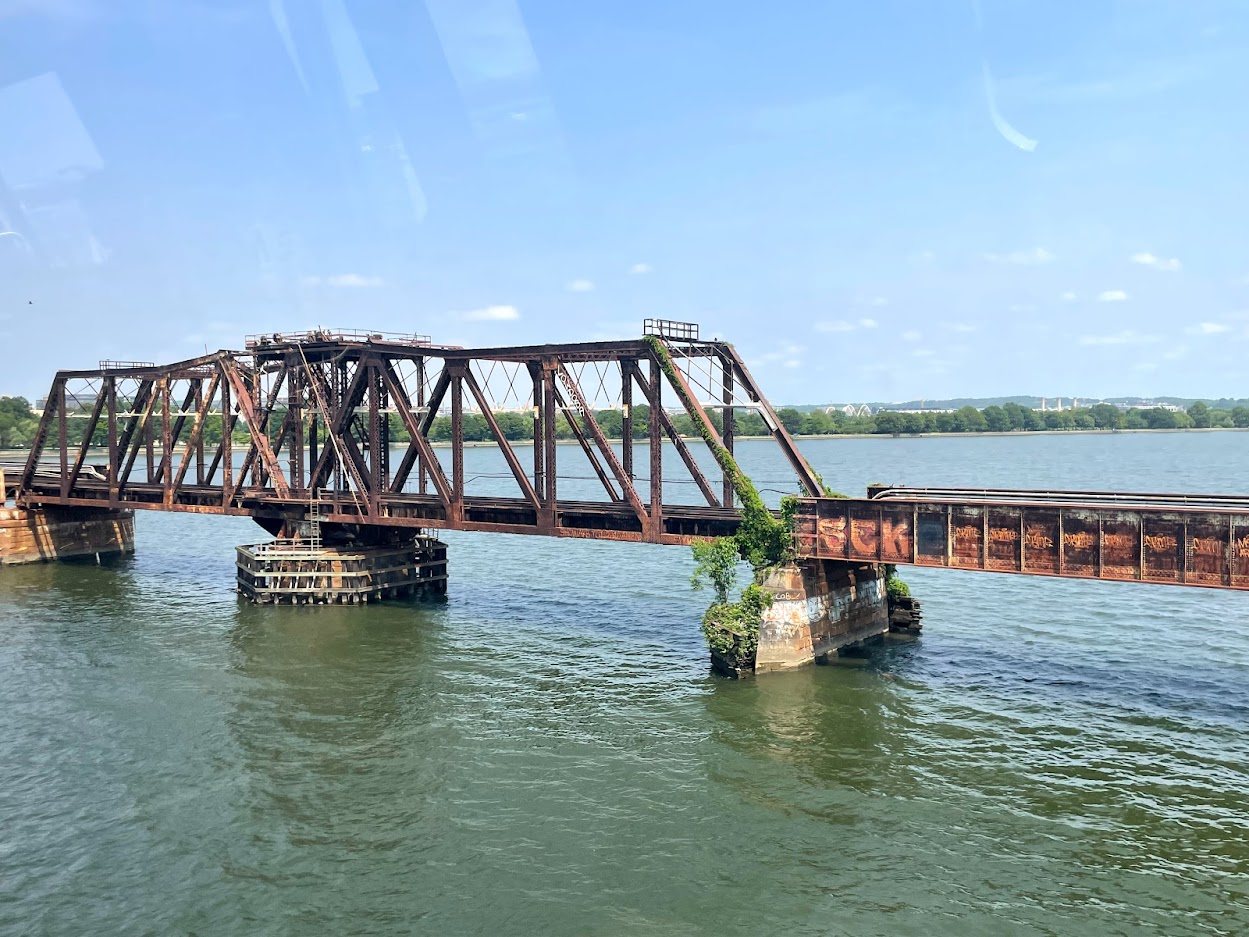
Renovating Union Station, creating another passenger train bridge across the Potomac, repairing deficient bridges, improving the water quality in the Chesapeake Bay are just some of the items on the region’s to-do list after congress passed and President Joe Biden signed the historic $1.2 trillion infrastructure bill.
But the next questions on everyone’s mind — “what exactly is my state going to do with the money and when will I see the improvements?” — is a little harder to answer at the moment.
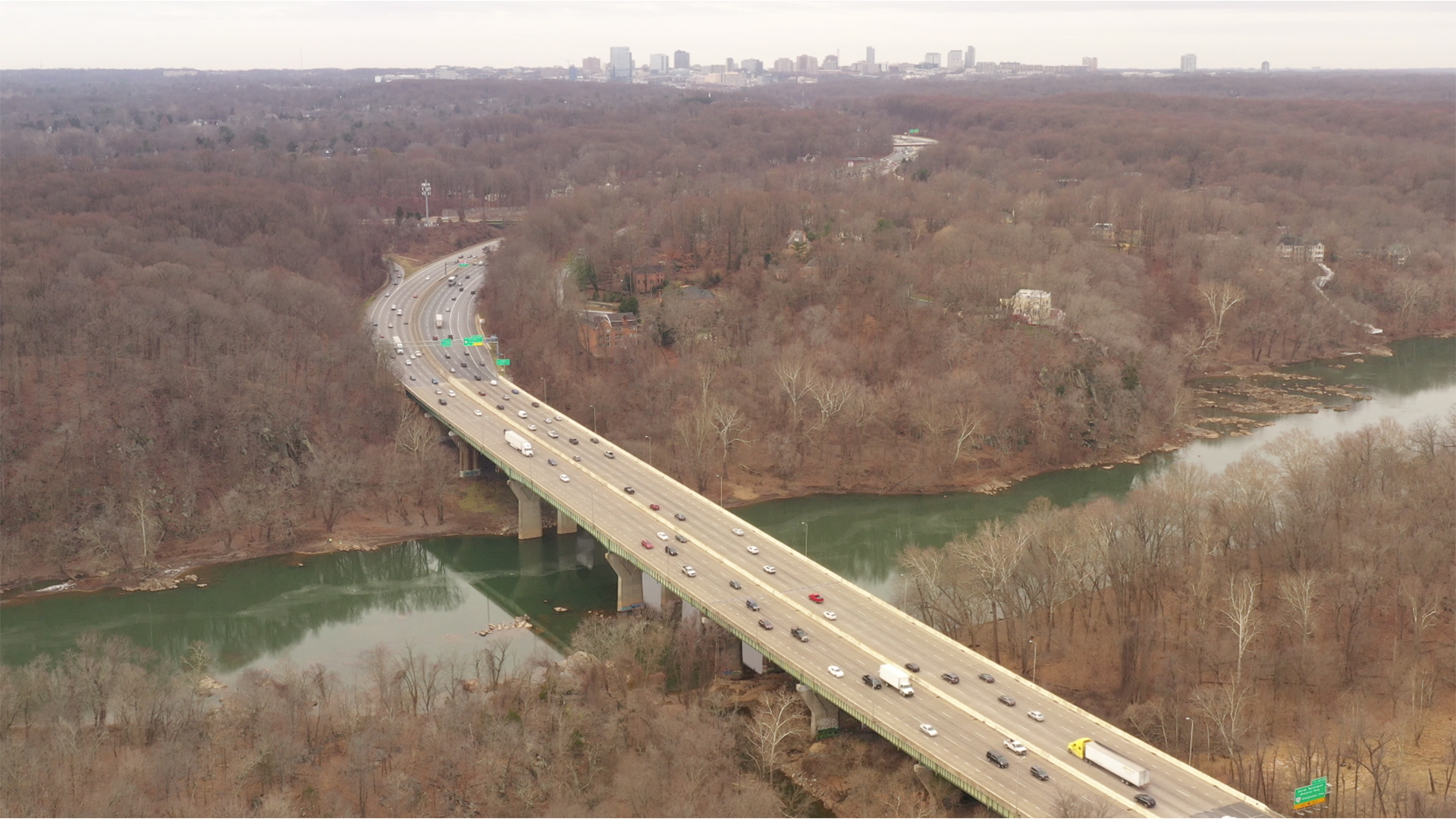
Jurisdictions in the region are dropping ideas here and there, but there’s no exhaustive list of projects they hope to get done. We do know that a wave of cash will flow into the region over the next five years because of the bill: nearly $19.3 billion for D.C., Virginia, and Maryland combined, with nearly two-thirds of that going towards road projects (unless states choose to reallocate those dollars to other modes of transportation). So far, no jurisdiction has highlighted which major road projects they’d like to tackle, but bets could be on the replacement of the American Legion Bridge, the Maryland toll lane project if it gets approved, and improvements to I-81 in western Virginia.
Most money will come through already established programs for roads, bridges, trains, and transit. State governments will see about a 30% bump in the annual funding that’s doled out through federal formulas for roads and bridges. That means more money to fund new projects or accelerate ones already in the hopper. Then there are national grants, like $125 billion for major transportation projects, that each state will compete for. Many of those grants will be administered by the Department of Transportation, putting Secretary Pete Buttigieg in a power broker role in the coming years.
While the negotiations over the bill may have seemed endless, completing the projects funded by the bill may take much longer. The bill aims to get shovel-ready projects going, but transportation projects can move notoriously slow.
“Infrastructure investments take years if not generations to get done,” says Joe McAndrew, who heads up transportation policy for the large business alliance, Greater Washington Partnership. “What is most important (right now) is for states and the region to have a clear vision of what they want to do.”
Here’s a table listing numbers of deficient roads and bridges in each state, plus an infrastructure report card grade, according to the American Society of Civil Engineers. Following that is the amount of money each state will get, according to White House fact sheets. The bar graph below shows the minimum that each state is expected to get in each category. That illustrates just how large road funding is in this bill, dwarfing other categories. States can choose to reallocate those dollars to other modes if they choose.
| DC | Maryland | Virginia | |
| ASCE Infrastructure Report Card | C- | C | C- |
| Deficient bridges | 8 | 273 | 577 |
| Poor roads | 402 miles | 2,201 miles | 2,124 miles |
| Bridges | $225 million | $409 million | $537 million |
| Roads | $1.1 billion | $4.1 billion | $7 billion |
| Transit | $1.2 billion | $1.7 billion | $1.2 billion |
| EV Chargers | $17 million | $63 million | $106 million |
| Broadband | $100 million | $100 million | $100 million |
| Wildfire Resiliency | – | $8 million | $15 million |
| Cyber Resiliency | $10 million | $16 million | $21 million |
| Water Infrastructure | $355 million | $844 million | $738 million |
| Aviation Infrastructure | – | $158 million | $386 million |
McAndrew says the success of the bill will largely come down to local leaders, so they need to be prepared.
So far, governments in the region are scant on details of what they hope to achieve, something McAndrew says needs to develop quickly.
“We encourage our local and state DOTs and transit agencies to start to develop a clear understanding of what they’re expecting to receive under this bill, and what they’re aiming to achieve,” he said. “Because that output is really important for the public to have trust and confidence that we’re spending the money wisely and that we’re going to have a better system at the end of the day.”
Governments also need to get ready to compete for the larger national grants.
McAndrew says localities need to have a list of projects that are “shovel worthy” — namely projects that are “worth doing even if they’re not the ones that are the easiest to get off the ground. McAndrew says it’s important to invest in the right types of projects that reduce emissions and are based on equity, unlike when interstates and highways tore through Black communities in the 1950s. A smaller pot of money will go toward tearing up some of those highways and repurposing that land.
Federal grants often require a local match — 20% for road projects and 60% for transit projects — so states should make sure they have money stowed away for that. And lastly, states need to staff up on grant managers who will come up with strategies to compete and project managers to make sure the dollars get used timely and correctly.
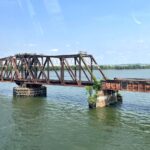
McAndrew says the top projects in the region that could benefit include the Long Bridge project, which would add a second train bridge across the Potomac and open up room for more passenger trains in the region, Purple Line construction, which is creating intra-county transit and would potentially get accelerated with federal funding and catching up on “state of good repair,” basically getting roads and bridges in poor condition back to good condition.
And he says the region should also focus on “stretch goals” over the next decade, like adding two more passenger train tracks between D.C. and Baltimore, which could lead to 30-minute MARC express trains and 22-minute Acela rides between the cities. He also mentioned active transportation projects like building out the $1.1 billion vision of the Capital Trail Coalition, creating 402 miles of new trails around the region.
Here are some specifics we do know from D.C, Maryland, and Virginia.

D.C
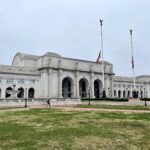
Mayor Muriel Bowser said she would like to see money go toward the redevelopment of Union Station that would allow more bus bays and a greatly expanded concourse. Though, as the Washington Business Journal points out, the project may not be far enough along in the planning phase to get money yet.
During a hearing at the D.C. Council, District Department of Transportation Director Everett Lott said he sees money going toward fixing and replacing two structurally-deficient bridges, the H Street Bridge near Union Station and the Teddy Roosevelt Bridge over the Potomac River. He also was glad to see more money for electric vehicle charging and dedicated transit money for more electric Circulator buses.
“(We’re) looking at how we can make investments that are going to provide safety, really reduce carbon emissions, and really get our infrastructure in a state of good repair,” Lott said.
Virginia
Virginia says all of the transportation projects will go through the commonwealth’s SMART SCALE program, which scores projects based on a series of factors including congestion mitigation, safety, accessibility, economic development, environment, and land use. The program was created in 2015 to take the politics out of transportation projects and instead fund projects that provide the most impact for Virginia’s limited dollars.
Last year. the program had $6.3 billion in requests but only $1.4 billion available for funding.
“This means we have a prioritized list of potential improvements on the shelf that could benefit from the funds in this bill,” says Spencer Gilbert, Special Assistant to the Secretary of Transportation Shannon Valentine.
Part of the money goes towards creating more flood-resilient roads and bridges in places with lots of flooding like Hampton Roads, Alexandria, and other low-lying areas. Virginia also hopes to compete for grants for port infrastructure and to fund waterway and coastal infrastructure.
Virginia will also seek federal grants to accelerate and expand its Transforming Rail in Virginia project, which would drastically expand passenger rail service in the commonwealth.
Gilbert said the specific projects funded through the programs must be approved by the Commonwealth Transportation Board.
Meanwhile, Dulles Airport officials are eyeing replacing Concourse C/D that was built in the 1980s and meant to be temporary.

Maryland
Maryland transportation officials have not laid out specific projects yet, but in a statement, Transportation Secretary Greg Slater said the funding is “an important step in providing our state with much-needed funding to develop and maintain critical infrastructure, grow our regional economy and give today’s residents and future generations travel options that are reliable and resilient.”
Slater said one of the main focuses should be “repairing and preserving Maryland’s aging infrastructure and addressing our backlog of critical projects.” Slater and transportation officials are touring the state this fall to hear more about needs.
Senator Chris Van Hollen highlighted $238 million to improve the health of the Chesapeake Bay and meet the pollution reduction targets. There is also money that could go toward the Purple Line and money that could go toward the Port of Baltimore.

Regional/National
Several other programs that will impact the D.C. region were approved in 2,000-plus page bill.
Metro will get $150 million a year for capital improvements through 2030. Part of the bill also strengthens the transit agency’s Inspector General office for more oversight.
Metro says it will compete for national grant programs, but has not said which projects it will present. A new Rosslyn tunnel, a bottleneck on the Blue, Orange and Silver line, could potentially be one of those big-ticket items. A study on the project says it could cost up to $25 billion. One option would create a new tunnel and a new Blue Line that would go through Georgetown, east to Union Station, south to National Harbor, and back into Alexandria.
Amtrak will get $66 billion, with about $24 billion going toward rehabilitating the aging infrastructure on the Northeast Corridor from D.C. to Boston, investing in new trainsets, and increasing train speed.
Sen. Mark Warner highlighted $25 billion to improve the country’s airports including runways, gates, terminals, and concessions, and a $47 billion grant program for climate resilience measures that will help “communities weather increasingly severe storms, droughts, floods, fires, heatwaves, and sea-level rise.”
Some money will go toward traffic safety and preventing traffic deaths.
Each state will get at least $100 million to expand broadband internet or make it more affordable for residents.