Margaret Barthel
Bethany Wagner, a lifelong Democrat, voted for Republican Glenn Youngkin in the Virginia governor’s race last month. After years of watching CNN, she now sometimes turns to Fox News for information. The impetus behind her political transformation? Frustration with her local school board, which eventually prompted her to help organize recall petitions for board members.
“This whole thing has just upended my politics completely,” she says.
Wagner wasn’t activated by racial equity policies or her school’s curriculum. For Wagner, the parent of two elementary schoolers, it started last year with questions about when and how schools in Fairfax County were going to reopen.
And like many other parents, she felt her concerns weren’t being heard–not by her school, not by Democrats vying for her vote, nor by media coverage focused on the extremes of the debate.
Wagner supported the initial decision to close schools at the onset of the pandemic, but by summer 2020, she and a group of fellow moms on Facebook wanted to know what their school board was doing about back-to-school later that fall.
“We kept watching school board meetings and emailing school board staff, and we would get nothing,” she recalls. “We would get canned responses that were just not helpful [and] didn’t give us any sort of information as to what to expect. We just felt like we’re in limbo.”
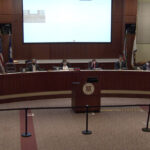
Eventually, Wagner joined a group of increasingly frustrated parents. They began collecting signatures on legal petitions to recall three Fairfax County school board members, alleging they failed to act in the best interest of Fairfax students and disregarded community input by voting against reopening the schools.
Wagner’s involvement in the recall petitions and the school reopening movement started to shift her politics. She chose to support Youngkin in November’s election and increasingly identifies as a libertarian. Wagner herself seems surprised by the transformation.
“I never would have expected this to happen,” she says.
In many ways, her politics are still fairly middle-of-the-road, even leaning left in some cases. She’s pro-choice. She believes in science-based school responses to the pandemic. She knows “critical race theory” is a graduate-level academic course not taught in K-12 public schools, and she wants her children to learn the full history of racism. Some of the right-wing comments in Fairfax school reopening Facebook groups strike her as lacking empathy. But the extreme tenor of the schools debate — and the national media scrutiny trained on Northern Virginia — helped drive a shift in her politics.
She’s turned off by what she feels are unfair characterizations of the school debates as racist and hysterical by the mainstream media, by the Virginia Democratic Party, and by local political figures. When it comes to curriculum, what upsets her is possible changes in advanced classes. She also cites the debate over changes in admissions requirements at Fairfax’s famous STEM magnet school, Thomas Jefferson High School. And she worries that schools are not addressing learning loss from virtual education during the pandemic. When she raises those concerns, she feels people on the left are increasingly inflexible and unresponsive, and she’s begun using language like “woke-ism” to describe it.
“You know, if you’re not with me, you’re against me and therefore you’re a racist or a white supremacist,” she explains.
Wagner, who is white, says she felt dismissed. She started reading the National Review and watching Fox News, even as she recognizes that conservative outlets may be capitalizing on her frustrations to capture her attention.
“I think that they’re awful, too. But I can watch Fox News without feeling belittled and dehumanized,” she says. “It’s a calculated thing. They’ve seized upon this because they see that the other side really isn’t covering it very well. So they’re giving us a sympathetic ear.”
There are some indications that Wagner’s analysis may be accurate. Left-leaning media monitoring site Media Matters found that Fox News ran nearly 100 segments on “critical race theory” in Fairfax County Public Schools and neighboring Loudoun County Public Schools (the epicenter of the schools debate and recall movement in the region), between March and June 2021. Media Matters analysis also found that many of the commenters positioned as concerned Northern Virginia parents in Fox News coverage were actually Republican strategists or had other significant ties to the GOP. Involvement of groups or people with ties to the conservative establishment at school board meetings is now a trend now being seen across the country. Some extremist organizations are even attempting to capitalize on the drama in Northern Virginia: flyers that appear to be from the KKK even surfaced in Fairfax over the summer, criticizing school board members and directing people to the racist organization’s podcast.
Meanwhile, some of the root causes of the parent movement— school reopening strategies, concerns about learning loss, worries about possible changes in advanced classes (concrete changes to state standards are not on the horizon) and in admissions requirements at coveted magnet programs — have received less attention.
What has received attention are the sensational extremes, particularly as the governor’s race heated up this fall. Coverage focused on out of control school board meetings, demands to unmask children, calls to ban (or even burn) books by queer authors and authors of color, pushback on schools’ racial equity efforts, and over state-mandated policies to protect transgender students.
The debate over one issue in particular, the teaching of critical race theory, has lacked nuance. Certainly, for some parents — including a handful of vocal opponents at school board meetings — “critical race theory” has become a conservative rallying cry. But like Wagner, plenty of parents know the graduate-level theory isn’t technically part of the curriculum. But for many, “critical race theory” is becoming an umbrella term for schools’ sometimes-clunky attempts at teaching the past and present of race and privilege in America. And Wagner, like some of those parents, has questions and concerns about how the schools are actually implementing racial equity in the classroom — and if they are doing so in an age-appropriate manner. Many are frustrated when their questions about the curriculum are summarily dismissed as racist (Democratic gubernatorial candidate Terry McAuliffe, for instance, called the anger over CRT “a racist dog whistle”). They feel there’s a real conversation to be had about how schools approach complicated lessons about race and the history of racism, but see their schools as unwilling to engage in the discussion.
Many Northern Virginia parents’ politics and views on current school issues defy easy categorization. And there’s nuance being lost as the inflamed debate pushes parents like Wagner to their corners.
An ‘unprecedented’ challenge for local schools
Local school districts, including Fairfax County Public Schools, had to navigate a range of issues and competing demands amid the unprecedented public health crisis of coronavirus. There were changing local transmission rates and shifting public health guidance (including at one point different recommendations for different age groups of children). Some parents and community members pushed to keep schools closed rather than risk sending younger unvaccinated children back to school buildings. Many parents and teachers expressed deep concerns about how prepared schools were to return safely in-person. And there continue to be medically compromised students and staff to accommodate.
But many parents across the political spectrum were unhappy with the way schools responded — and are still responding — to the pandemic. Some wanted schools to return sooner than they did, or to do so more creatively. Others are concerned about how schools are addressing student learning loss and mental health issues after more than a year of virtual school. Most agree that getting kids through virtual school came with challenges. A number of parents, including Wagner, chose to take their kids out of public schools, with some deciding to homeschool and others with the means turning to private schools (Wagner chose a private school.) In Fairfax County, Virginia’s largest school district, enrollment fell by 5% in 2020.
“The broad umbrella of all of this is that the schools were closed and parents found out that they were more broken than they thought. I think every other issue falls underneath that,” says Rory Cooper, a political strategist and Fairfax County parent involved in local recall campaigns. (Cooper once served as the communications director for former Republican House Speaker Eric Cantor.)
Christy Hudson, a Fairfax parent and a leader with the Fairfax County Parents Association (FCPA), a parent advocacy organization that grew out of the Open FCPS movement, agrees. But FCPA, which strives to be nonpartisan and has a policy committee split evenly between Democratic and Republican members, hasn’t come to agreement on any other schools-related issue.
“There aren’t very many issues beyond open schools that we can collectively advocate for,” she says, noting that reopening schools and keeping them open cuts across party lines.
Schools in Northern Virginia reopened slowly and cautiously, and understandably so: state and local governments, teachers unions, parents and the general public all had an array of ideas about how and when to open schools, and what the impact on the public health crisis would be, particularly in the months before vaccines became widely available to adults in late spring of 2021. Most local schools were virtual for almost a full year, starting in March 2020 — and only brought some students back in hybrid arrangements in spring 2021. Even then, the majority of school-aged children were not yet eligible to be vaccinated.
Symone Walker, an Arlington public schools parent and community activist with the local NAACP chapter, says she understands and shares parent frustrations about slow school reopenings and the lack of community input, particularly as an advocate for students with special needs. She wishes Arlington schools and the county had worked harder to find extra space to bring students back, perhaps creating outdoor classrooms or allowing students to spread out in empty office buildings or churches.
“I saw a lack of urgency and commitment from our county leaders in stepping in to be part of the solution for schools,” Walker says.
Walker unsuccessfully ran for school board in Arlington last year, and she thinks recall petitions should be a tool to remove people from office for misconduct, not over differences in policy. (Critics of school board recall petitions in Fairfax and Loudoun counties frequently suggest recalls undermine the democratic process, since the petitions only require a number of signatures equivalent to 10% of the vote cast in the official’s original election).
Nearly all students in Northern Virginia schools returned for in-person instruction this fall. But Walker, Wagner, and many other parents say they still have unanswered questions about how schools will address learning loss and the potential for future shutdowns after a year of virtual learning and as the pandemic enters yet another phase.
“There’s been a lack of details from the school system, and a lack of community input as to what this needs to look like,” Walker says. “So that’s disappointing.”
Cooper, the strategist in Fairfax, says he wants to see revisions to in-school COVID restrictions according to the latest science. His children, he says, are required to face in one direction and not speak to other kids in the cafeteria during lunch.
“We know at this point in the pandemic that that’s not how air circulates. That’s not a threat to them,” he says. “All you’re doing is creating these really bizarre anti-social behaviors.”
Other parents express similar frustrations, but also point out that the pandemic was an unprecedented and entirely new challenge for school boards, administrators, and teachers alike.
“They did the best that they could,” says Zakiya Worthey, an Arlington parent. “They made the decisions that they thought were best, when they were dealing with people saying ‘Open schools!’ and the teachers saying, ‘I’m not coming back to the school.’”
And despite the vitriol on some issues, the school reopening movement served one important function: it got a lot of parents engaged and involved in school advocacy. The Fairfax County Parents Association, Hudson says, wants to take that knowledge and provide parents with the tools they need to go out and advocate for other issues of their choosing.
“After spending a year and a half getting all of that information and really educating ourselves on how the school system operates, we’ve collected all of this information. We have parents who’ve become specialists in certain areas, like military kids and special education, advanced academics, all those sorts of things,” she says. “And we don’t want that information to go away.”
And with Virginia’s high-profile governor’s race over, some parents are eager to step back and think about where they want to take their advocacy next.
“We had a chance to really regroup and really nail down sort of what our plan is for the next year — you know, what issues and what policies do we want to push the school board to implement,” says Rasha Saad, a founding member of Loudoun 4 All, a parents group dedicated to pushing back on local school board recall petitions and promoting diversity and inclusion in schools. “It’s exciting. We’re all galvanized and energized.”
Policies become political
Some of the loudest and most divisive parent debates in Northern Virginia have been pitched battles over teaching race in schools and the concept of critical race theory. Many right-leaning parents have raised concerns about the way schools teach about racism, past and present, and related concepts of white privilege and implicit bias.
In Loudoun County, parents with Fight For Schools, an organization dedicated to fighting against critical race theory in schools, have also criticized the school district’s hiring of a consulting firm to diagnose and propose solutions for promoting racial equity in schools, following a damning 2019 report that found rampant instances of racist slurs in the schools and prompted an investigation by the Virginia Attorney General. (Fight For Schools parents are also spearheading recall petitions against school board members for violating open meetings law by participating in a Facebook group called Anti-Racist Parents of Loudoun County.)
“They have been given materials that show them that they are part of privilege, that they should be ashamed of that because of the color of their skin. That they are the oppressor. That they need to check their privilege,” says Elizabeth Perrin, a white Loudoun County parent and a founding member of Fight For Schools.
Perrin and others — including Gov.-elect Glenn Youngkin — have suggested local schools are dividing children and shaming white students by overemphasizing systemic racism.
That’s the wrong way to think about it, says Symone Walker in Arlington.
“As a Black mother, I can’t protect my child from racism. I can’t shield and keep my child in a bubble because of the color of his and her skin,” she says. “We don’t get that option to protect our kids. And the reason for that is because they are navigating a world in which people don’t teach their kids or they weren’t taught themselves to see color and appreciate it.”
Education officials and many in the Democratic establishment have dismissed parent concerns about critical race theory, closing the subject by stating that CRT is not part of Virginia’s curriculum and labeling any discussion of the subject as racist. That stance says Cooper, the strategist, further inflamed people on the subject.
“I think the CRT issue is one of parents feeling like they’re being gaslit by elected officials, and frankly, some in the media, who tell them that this issue doesn’t exist,” Cooper says.
Walker is also frustrated by how school officials have handled the CRT panic, but for a different reason: she wants to know why school administrators haven’t defended why it’s important to teach concepts like systemic racism, which underlies critical race theory, instead of simply denying that it’s being taught.
“So what if it was taught in schools, at a level that kids could understand? What is wrong with that?” she asks. “Nothing is wrong with understanding structural racism and how we got here.”
Parents like Bethany Wagner fall somewhere in the middle of the debate.
“Banning CRT, that is a whole discussion. I don’t know what that would look like. I like the changes that I’m seeing in the history books,” she says, referring to additions to better reflect Black history. “But, you know, applying a racial lens to everything is kind of weird.”
Andy Rotherham, a partner at education reform nonprofit Bellwether Education Partners and a former member of the Virginia Board of Education, says that there are differences between parents who want to ban books from schools and parents who have questions about teaching the concept of white privilege in kindergarten classes, for example.
“If you lump all those parents together, you will antagonize a lot of people,” he says.
Rotherham also thinks some parents were frustrated by local school boards’ decisions to prioritize things like changing the names of schools honoring people with Confederate ties or racist histories— something that polling shows is generally popular, but which some believed was less pressing than a coherent pandemic response.
“There was broad support that they should be renamed, but a lot of parents were like, ‘But right now? My kid’s using a closet as a classroom, the quality of virtual isn’t good, the curriculum sucks and this is what the school board is focused on?’” Rotherham says.
Heather Keppler, a self-described progressive Arlington parent and substitute teacher, thinks an opportunity for a more nuanced conversation around teaching young children about racism in an age-appropriate way is getting lost in the vitriol. She herself has undergone an evolution on the issue.
“The first time I substituted in a kindergarten classroom and I saw that they have a whole unit on slavery, I was like, initially like, ‘Whoa, this seems like a little young, doesn’t it?’” she recalls.
But then she considered further. “I’m sure you’ve seen the whole meme going around that says ‘If my child is young enough to experience racism, yours is young enough to learn about it,’ she says. “So I do think it’s appropriate for kids to learn this at any age, and they do it in an age appropriate way.”
What that looks like, she thinks, would be a better focus for the conversation.
“Why don’t we discuss what we think is appropriate and isn’t appropriate? That’s an OK discussion,” she says. “We might not agree, but I think it’s okay to have a discussion about that without just saying ‘We don’t want CRT in our schools.’”
Rotherham believes Youngkin would do well to push for that conversation — and better standards and support for diversity, equity and inclusion work in schools — instead of a ban.
“Banning it like this, with executive orders… it gets the headlines,” he says. “But the real action is going to be, what should teachers be teaching and how do you support them? That doesn’t get headlines. That’s slow work. And it can’t frankly be sort of the favored versions of history of either the right or the left.”
The Virginia Board of Education may take up some of that slow work next year, when the state standards of learning for social studies and history come up for their regular 7-year review.
In the meantime, while the right and the left dig in, Symone Walker points out that historically, Democrats and Republicans have both struggled to support Virginia students.
“Our system is broken,” she says. “Neither party has really done right by educating Black students and brown students and students of special special education in Virginia.”
That fact makes Walker even more frustrated by the current debate.
“None of these angry parents that are talking about school closures and are talking about learning loss cared that in the state of Virginia, 84% of Black kids [haven’t been] reading or doing math proficiently for decades,” she says. “Where were they then?”
In January, Republican Glenn Youngkin and members of both parties in the General Assembly will get their shot at improving Virginia schools, which face historic funding gaps, construction backlogs, and a worsening teacher shortage. In addition to his focus on banning critical race theory and prioritizing parental input in schools, Youngkin has signaled his support for expanding school choice in the commonwealth, including building more charter schools. He has also suggested mandating law enforcement officers be in school buildings. Meanwhile, outgoing Democratic Gov. Ralph Northam has proposed a two-year, 10% increase in teacher pay across the state in the budget that the General Assembly will consider during its session (Youngkin’s transition team has not indicated whether or not they support the specific proposal, but have generally indicated support for more education spending).
Education priorities in general will have to make it through a narrowly divided General Assembly, where Republicans will control the House and Democrats will control the Senate. And they’ll be subject to scrutiny from increasingly organized and engaged parents, too.
“I think people have realized that you can never be complacent anymore,” says Loudoun 4 All’s Rasha Saad. When the legislative session begins next year, she’ll be paying attention.