Ally Schweitzer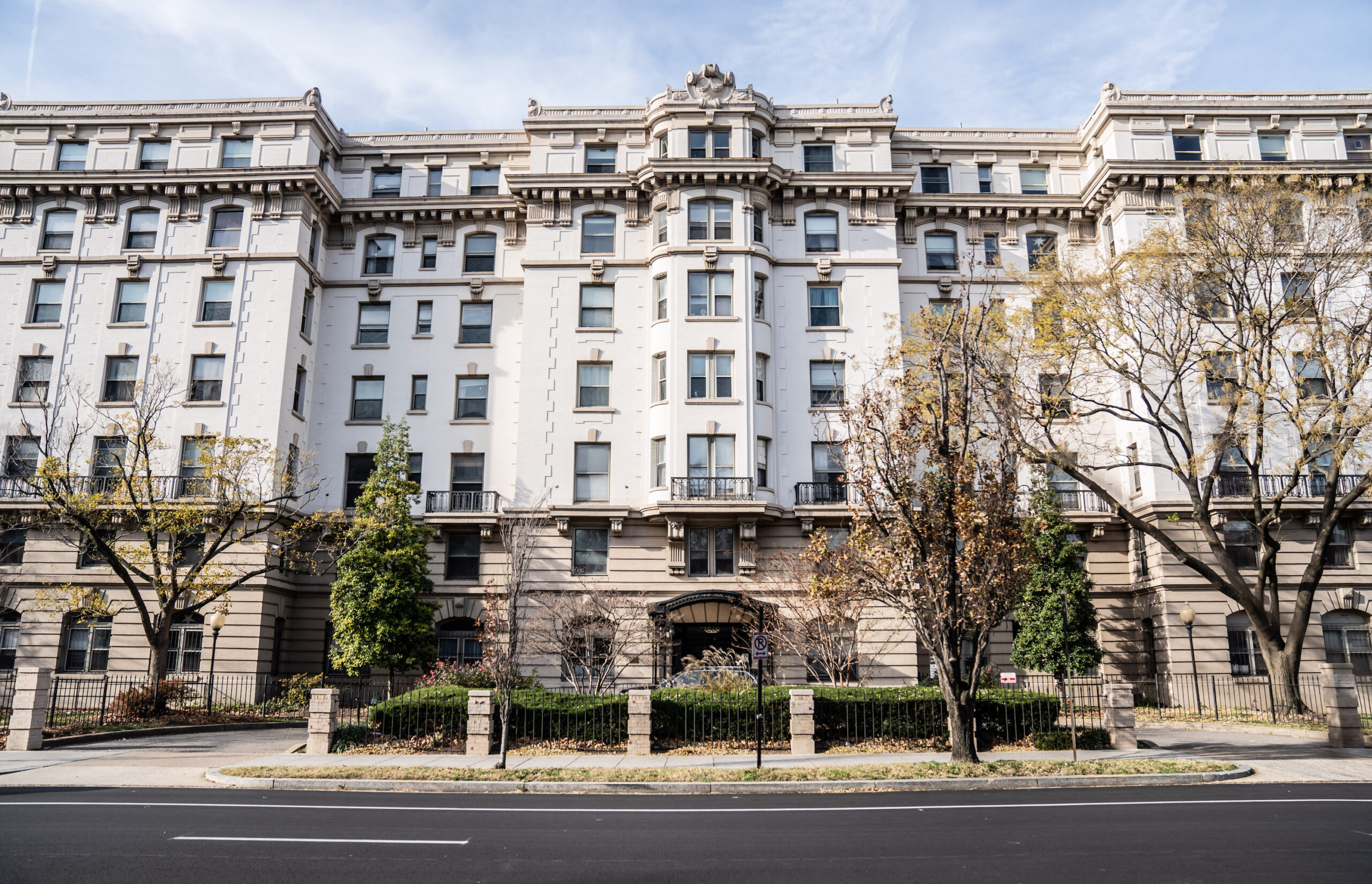
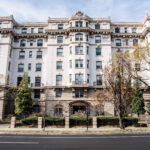
The 25 balconies adorning the historic Kenesaw/Renaissance apartments in Mount Pleasant are certainly elegant. But should residents have to pay $1.5 million to restore them?
That’s the question at the center of a long-simmering dispute between residents of the 16th Street Beaux Arts building and the city’s Historic Preservation Review Board. After unsuccessfully trying to seek a compromise with board members, residents of the part-co-op, part-condominium building are now taking their case to the Mayor’s Agent, the city official who has final say over whether the Kenesaw/Renaissance can be spared the board’s ruling for economic reasons. A hearing is scheduled for Jan. 28, 2022.
The conflict encapsulates a tension between two important goals of the District government: to protect the city’s distinctive historic architecture, and to preserve affordable housing.
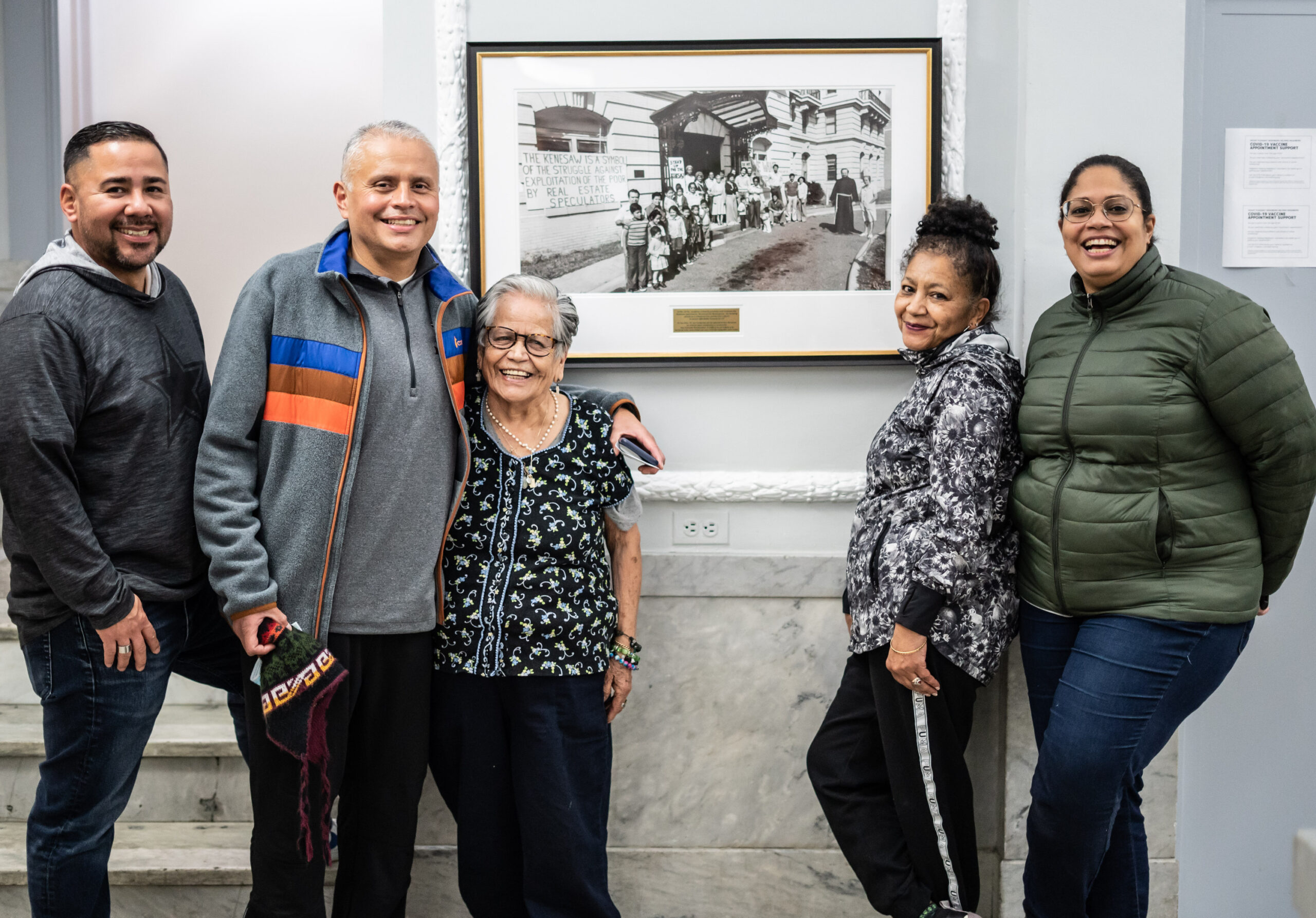
Randy Keesler, president of the building’s Kenesaw-Phoenix Cooperative, says low-income households who have lived at the Kenesaw/Renaissance since tenants first organized to buy it from their landlord in the 1970s shouldn’t be forced to shoulder the financial burden of preservation requirements, especially for decorative balconies that have no useful purpose.
“We’re being asked to pay for the city’s love of architecture,” Keesler says.
Keesler and the building’s condo association are facing powerful resistance from the board and preservation groups, who say the crumbling ornamental features at the Kenesaw/Renaissance must be fully restored to their original luster, even if low-income households have to seek financial assistance to do so.
“The balconies are an original, distinctive, characteristic feature. Removing them would not enhance this contributing building nor sufficiently retain its fabric or character,” says a staff report from the Historic Preservation Review Board.
The board voted unanimously in September to reject several alternatives proposed by residents, including one that would replace the balconies with decorative railings for half the cost of full restoration.
There aren’t many apartments in D.C. like the Kenesaw/Renaissance. Completed in 1905 in what was then a sparsely developed part of the city, the seven-story edifice was originally envisioned as a luxurious haven for the well-heeled — an extension of the many grand apartment buildings that had been constructed along 16th Street in Northwest.
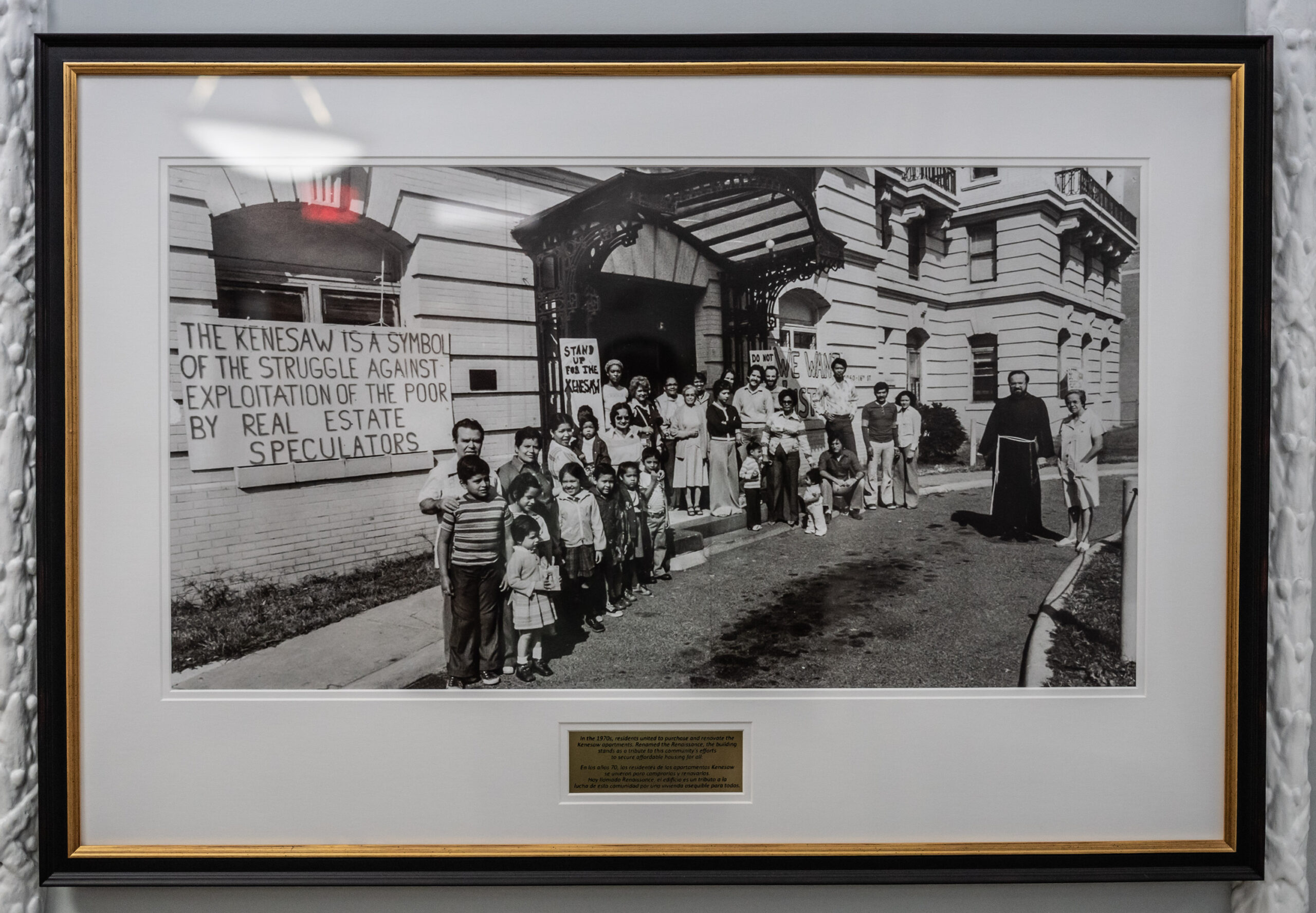
But by the 1970s, the Kenesaw — as it was known then — had fallen into disrepair following decades of neglect by previous owners. Liberal arts institution Antioch College purchased the apartments in 1974 with the intention of locating a law school there, but sought to offload it just two years later. In its efforts to sell the building, the college repeatedly threatened to evict the building’s 28 households — mostly low-income immigrants — if they couldn’t raise at least $750,000 to purchase the property, the Washington Post reported at the time.
A bidding war ensued between Kenesaw residents and a Rhode Island-based company that offered $900,000 in cash for the property. But the college finally agreed to accept the co-op’s lower offer of $825,000 after a passionate campaign by residents that embarrassed leaders at the progressive school. The purchase, finalized in 1984, marked one of the earliest successes of D.C.’s Tenant Opportunity to Purchase Act.
Keesler remembers those days clearly; he moved to the building in 1977 and helped organize the sale.
“We have a history here of fighting,” Keesler says.
Today, residents have been thrust into battle yet again. Because Mount Pleasant was officially deemed a historic district in 1986, the Kenesaw/Renaissance is subject to preservation laws that require homeowners to maintain the historic features of their home’s exterior. (The residence is also located within the Meridian Hill Historic District.) The law applies to multifamily buildings, too, and there are no exceptions for unique properties like the Kenesaw/Renaissance. The apartments make up a legally unique entity called a “condop,” with 58 market-rate condominiums and 29 collectively owned co-op units. Co-op members pay fees that are well below market-rate — in Keesler’s case, $1,000 a month for a two-bedroom unit — to live in one of the city’s most desirable neighborhoods.
Fifteen units in the building are required to be affordable to low- and moderate-income residents until Jan. 31, 2024. Roughly one third of current occupants earn less than the region’s median income, according to a statement the residents’ attorney submitted to the Mayor’s Agent.
Resident Martha Leonzo, whose parents moved to the Kenesaw/Renaissance in the 1970s, worries that her aging mother could lose her home if her co-op fees are increased to cover the cost of restoring the balconies.
“She’s already retired. She’s on Social Security. Affordability is definitely a huge factor,” Leonzo says. “And at 87, I don’t think my mom wants to start all over again somewhere new. This is what she knows.”
Neha Desai, president of the Renaissance Condominium Association, has spent three years dealing with the balcony issue. She first realized they were a problem when one of them crumbled and fell to the street during a routine inspection in 2018. An engineering firm hired by the building’s property manager said fully restoring the balconies would cost around $1.5 million, but removing and replacing them with decorative railings would cut the price in half, to $750,000. Another option — restoring just the balconies facing 16th Street and replacing the rest with railings — would run $900,000.
In a hearing earlier this year, the city’s preservation board dismissed any alternative to fully replicating the balconies, calling the idea “incompatible with the purposes of the preservation law.” But preservation staff did offer to locate financial assistance to cover the restoration costs, according to Desai. Previously, multifamily buildings weren’t eligible for the city’s Targeted Homeowner Grant Program, which was established to help low- and moderate-income single-family homeowners cover preservation expenses. Now they are eligible through next year, thanks to emergency legislation brought by D.C. Council member Brianne Nadeau (D-Ward 1) — and supported by the Historic Preservation Office — that makes the Kenesaw/Renaissance eligible for up to $250,000 in nontaxable grants.
Residents have begun applying for that money, but they’re still hoping to win an economic hardship exemption from the Mayor’s Agent. The amount of grant money they could receive wouldn’t make a big difference for low-income residents, Desai says. The building’s bylaws assess fees based on a unit’s square footage, not residents’ income, and there isn’t enough money in the building’s reserves to cover low-income households’ share, she says. Because each unit owner would have to pay between $10,000 and $28,000 to cover the restoration, the added costs could raise monthly fees on a low-income household from $813 to $2,641 over a one-year period, according to documents filed with the Mayor’s Agent.
The balconies are also not the only expensive renovation project that residents must cover, Desai says. The building is staring down another $1.2 million in essential repairs to the rest of the building, including exterior work to prevent water seepage. The total costs — more than $3 million — would be crushing for some households, Desai says.
“The only way they could afford the repairs is to leave,” she says.
Residents have found an ally in their local Advisory Neighborhood Commission, which has urged the Historic Preservation Review Board to exercise lenience with the Kenesaw/Renaissance.
A resolution passed by ANC1D in September says the people who live at 3060 16th Street “are already balancing the cost of a few structurally necessary, expensive repairs. That precarious balance may be upset because of this: purely ornamental balconies whose primary function is in this circumstance is evidently to remind us that the aesthetic preferences of long-dead white men are what define Mount Pleasant’s character, not the diverse, living and breathing residents who call it home today.”
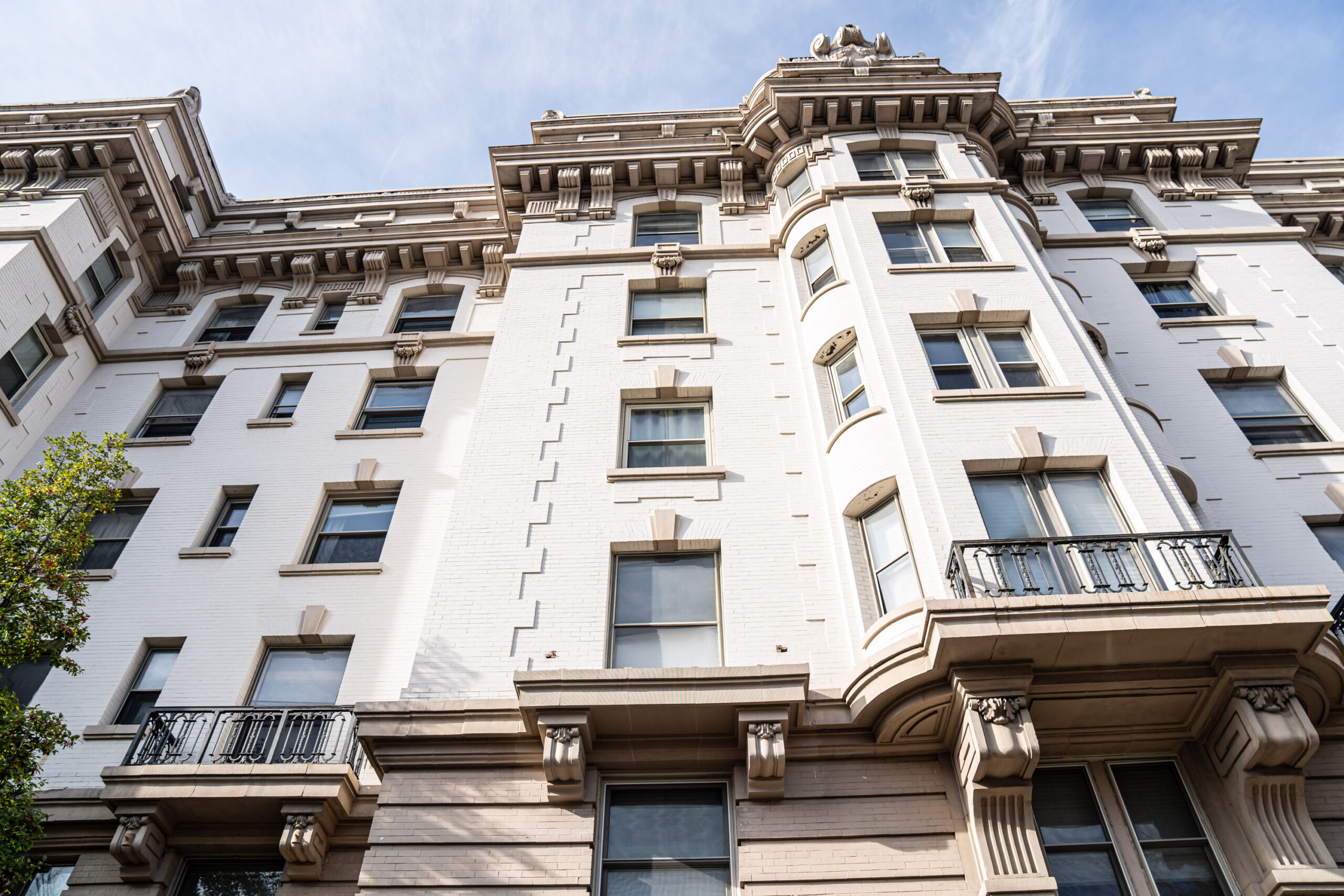
Residents’ case is being challenged by two influential voices in the preservation community: Historic Mount Pleasant and the D.C. Preservation League. On Dec. 2, a lawyer for the two groups sent a letter to the Mayor’s Agent’s hearing officer, J. Peter Byrne, arguing that the balconies are “prominent components” of the building, and their removal or alteration “would severely undermine the Kenesaw’s architectural and design integrity.” The groups are also fighting the Kenesaw/Renaissance residents’ claim that the restoration would impose an economic hardship on some households.
“While a number of coop shareholders or unit owners are likely to be determined to be low-income, the vast majority appear not to be,” the letter says. Those owners who are low-income, it says, “will not suffer an unreasonable economic hardship.”
The letter adds that the building’s owners are ultimately responsible for its decaying architectural features due to “decades of neglective routine and preventative maintenance on the balconies and a failure to maintain a sufficient capital fund for such repairs.”
Rebecca Miller, executive director of the D.C. Preservation League, says city officials have made every effort to accommodate residents at the Kenesaw/Renaissance.
“They are the only building that is allowed to apply for these grant funds, at this point. That shows how important the city views this historic building — that they are willing to change the program in order to accommodate these low- and moderate-income residents,” Miller says.
But Keesler, Desai, and other residents are pushing back against the opposition. Their hearing with the Mayor’s Agent, previously scheduled for Dec. 17, was postponed to Jan. 28 to allow residents to gather more information about residents’ economic situations and demonstrate that the restoration would, in fact, be financially burdensome for some households.
“We are not attorneys, advocates, or developers,” residents wrote in a statement responding to the preservation groups’ letter. “We are simply members of a community trying as best we can to represent our neighbors’ hardship as we navigate an opaque legal process.”
If the Mayor’s Agent determines that the Kenesaw/Renaissance must pay $1.5 million to restore the balconies, Keesler says, residents are likely to keep fighting.
“We haven’t looked into what it takes to take a district out of historic preservation. I don’t know if that’s ever been done in this city,” he says. “But that’s something we may have to look into if they’re going to put architecture over people’s lives.”
This story has been updated to include the new date for Kenesaw/Renaissance residents’ hearing with the Mayor’s Agent.