Amanda Michelle Gomez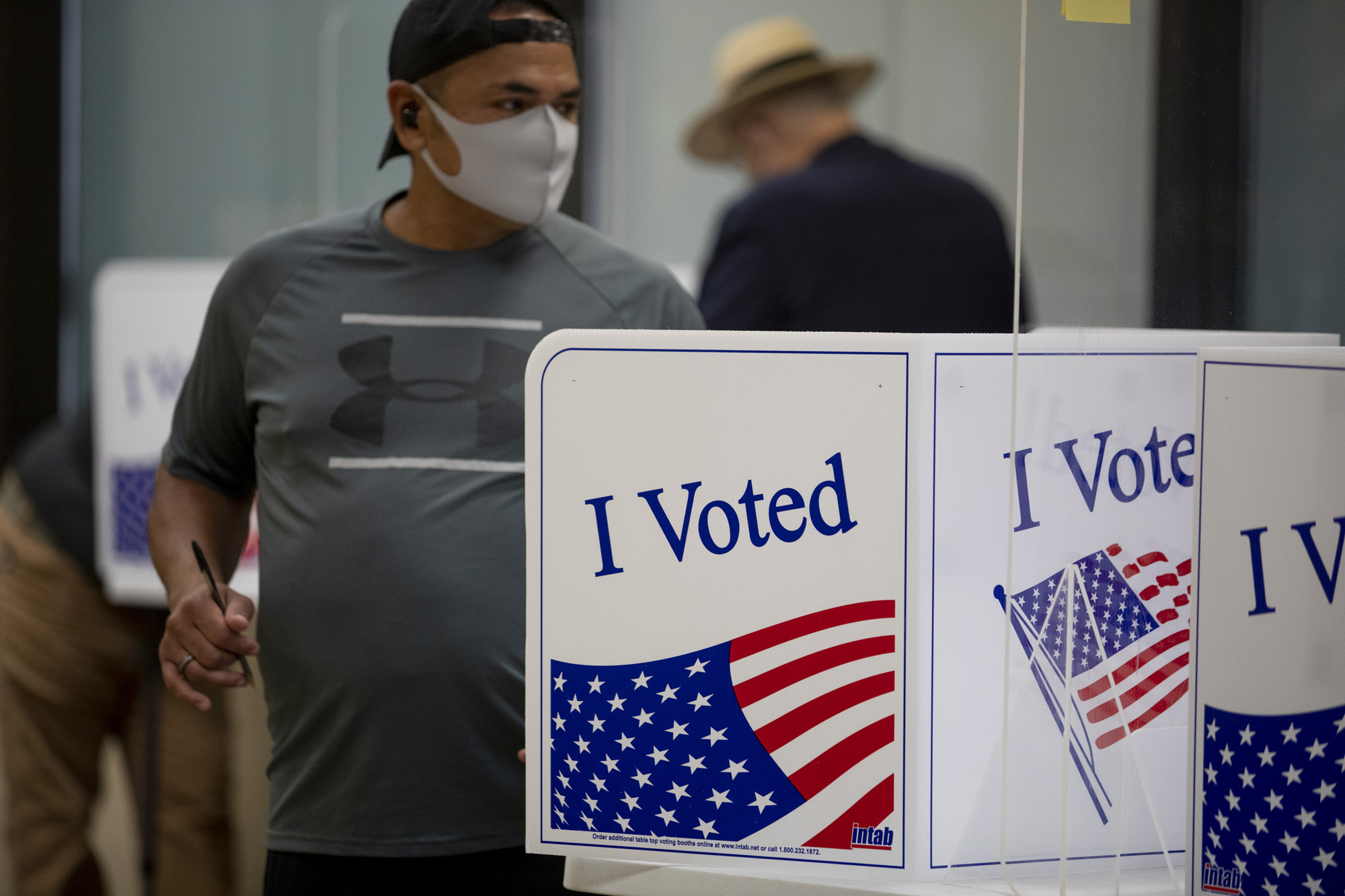
Two counties in the D.C. region — Prince George’s and Prince William — must offer language access assistance during elections to Latinos who do not speak or understand English, in order to be in compliance with the Voting Rights Act. The new federal determination speaks to how fast the Latino population is growing in the capital region.
Earlier this month, the U.S. Census Bureau announced that 331 jurisdictions across the country, along with three states, are required by law to offer language assistance to specific groups, based on the areas’ changing demographics. Among the areas selected are Prince George’s County in Maryland and Prince William County in Virginia. Two other jurisdictions in the region required to comply — Montgomery and Fairfax counties — had been added to the list a decade ago.
According to the Census, determinations are based on whether a state, county, or subdivision has more than 5% of its voting-age citizens who are limited in speaking English proficiently, among other considerations. The group needing language assistance also needs to be covered by Section 203, or the language provisions within the Voting Rights Act.
Prince William’s County already provides translation services in some areas, but “some forms and processes” will need to be translated and offered in Spanish, said Eric Olsen, the director of elections for the county. “I can state unequivocally that we will be working to be fully compliant with the VRA and making sure that our signage, forms, etc. for Election Day provide both English and Spanish options,” Olsen said in an email to DCist/WAMU. “The preparation for that is and will be ongoing in the coming months to make sure our everyday services are compliant and that our mail, early voting, and Election Day processes are ready for voters for the Primary Election in June of next year.”
The Board of Elections for Prince George’s County did not immediately respond to request for comment.
Deni Taveras, a Latino councilmember for Prince George’s County, says non-English speakers already have access to ballots, be they early voting or regular, in Spanish. She’s hoping the Census determination means the Board of Elections will provide more assistance at the polls.
“To me, what that would mean is that every person is asked, ‘Do you need help? Do you need help filling out your ballot,” Taveras said. “We can’t have people that are going to sway the vote because that’s illegal. But we do need Latino people that say ‘Do you need somebody in your language to go help you vote?'”
“Latinos are countywide, so we’ve got to make sure we’ve got Latinos at every precinct,” Taveras added.
Taveras stressed this need because it could be someone’s first time voting, so they may not know their rights or know who to ask for help. She also underscored the importance of language access for the Spanish-speaking community given Latinos are the fast-growing population in Prince George’s County. This is why she also introduced a language access bill for government agencies. Latinos make up nearly 20 percent of the local population, according to the Census.
“We need to start ensuring that the county and all county services and the staff reflect the population that lives in the county,” she says.
According to the Census, 24,244,810 voting-age citizens nationwide need to be offered language access assistance — a 22 percent increase compared to 2016. The Bureau releases new determinations every five years.