Colleen Grablick
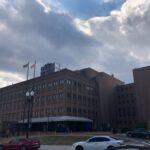
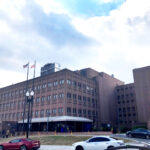
The D.C. Attorney General will no longer represent the city’s Department of Corrections in “all matters arising out of or pertaining to” a federal inspection into allegations of poor living conditions and treatment at the jail, which has led to the removal of at least 200 residents.
The Washington Post was first to report the news.
According to a letter reviewed by DCist/WAMU, D.C. Attorney General Karl Racine wrote DOC Director Quincy Booth on Dec. 9 that “the interests of DOC…will be better served by outside counsel.” He directed the department to “seek outside counsel as soon as possible.” The letter did not give an explanation for Racine’s decision.
The letter said the OAG would continue to represent DOC “in all other matters and in all existing litigation where OAG has entered its appearance,” including in an ongoing lawsuit against D.C. Jail leadership over its handling of the coronavirus.
Racine’s office declined to comment further on the letter because of attorney-client privilege.
The letter came days after a Dec. 7 media tour of the D.C. Jail, where officials, including the Deputy Mayor for Public Safety and Justice Chris Geldart, attempted to correct course on reports of “egregious conditions” at the facility.
In October, an inspection by the U.S. Marshal Service for D.C. found “evidence of systemic” failures and unacceptable living conditions at the jail. Inspectors reported clogged toilets, and observed guards who punitively withheld food and water from residents. 400 people held in federal custody at the jail were slated to be transferred to a federal prison in Pennsylvania, but as of Dec. 3, only 200 residents had been moved, according to the USMS.
Impetus for the inspection came after months of allegations from lawyers for Jan. 6 defendants being held at the jail, who reported that their clients were being denied medical treatment or having other rights violated. Five days before the inspection, a judge held DOC officials in contempt of court for failing to provide information on the medical treatment of one Jan. 6 defendant. (None of the 400 residents scheduled to be transferred were Jan. 6 defendants).
Shortly after the USMS inspection, D.C. entered into agreement with them, pledging to “provide a collaborative, accurate assessment of conditions of confinement” at the jail, and establish a plan to fix the problems. That agreement barred both the city and the U.S. Marshals from conducting “a media interview in connection with the activities that are the subject of this agreement without prior consent by the other party” – a term that the Dec. 7 media tour may have violated.
The USMS did not immediately return DCist/WAMU’s request for comment on Racine’s decision to withdraw representation, or on any violations of the USMS agreement with the city.
Mayor Muriel Bowser discussed the attorney general’s decision with D.C. Council Chairman Phil Mendelson and Ward 6 Councilmember Charles Allen on Dec. 13, according to a letter from the mayor to both lawmakers on Dec. 17, reviewed by DCist/WAMU. During the meeting on Dec. 13, the mayor and lawmakers “discussed the sudden need for the District government to forge a new process for its legal representation” after Racine decided to “step away without notice.”
According to the letter, the city will need to set up “legal funds and a process to represent the city,” and develop a plan for future instances where the attorney general decides to opt out of representation. (Per D.C.’s Home Rule Act, the city’s attorney general can opt out of representation if they deem it in “the public interest.”)
Spokespeople for Mendelson and Allen, who chairs the Council’s Judiciary and Public Safety committee, did not immediately return DCist/WAMU’s request for comment.
This story has been updated with further detail from the OAG’s letter to the mayor.
More:
Two Hundred People Have Been Transferred Out Of The D.C. Jail Amid Concerns About Conditions
D.C. Enters Agreement With U.S. Marshals Service As Calls To Empty D.C. Jail Intensify
After Inspection Finds ‘Systemic Failures’ At D.C. Jail, 400 Residents Will Be Moved