 Dominique Maria Bonessi
 Margaret Barthel
 Martin Austermuhle
Much of the new legislation passed in state and local legislatures this year went into effect July 1 or Oct. 1. But several laws passed in 2021 are set to take effect in the new year, from minimum wage increases in Virginia to the end of the gas-powered leaf blower in D.C.
Virginia
Minimum wage: The minimum wage in Virginia will jump from $9.50 to $11 per hour on Jan. 1, part of a longer-term push to raise the figure to $15 per hour by January 2026.
Criminal records in college admissions: Starting Jan. 1, public colleges and universities in Virginia, with the exception of the Virginia Military Institute and public law schools accredited by the American Bar Association, will no longer be able to include questions about an applicant’s criminal history in their own admissions materials, and will also not be allowed to deny an applicant based on any information about their criminal history provided in third-party admissions materials. The law does still allow colleges and universities to ask about criminal history after admitting a student, and to potentially rescind the admissions decision if they decide the applicant could be a safety risk.
Arlington, Fairfax and Alexandria:
Bag tax: Earlier this year, officials in Arlington County, Fairfax County, and Alexandria all voted to approve a 5-cent plastic bag tax, with the goal of reducing plastic bag waste in local rivers and streams. The tax will be levied on disposable plastic shopping bags at convenience stores, grocery stores, and drug stores. Money from the tax will fund environmental cleanup work and the purchase of reusable bags for low-income residents.
Arlington:
Speed cameras near schools and highway work zones: In Arlington, the county’s authorization of speed cameras in school and highway construction zones will be in effect in January. This comes after the General Assembly approved legislation allowing the use of cameras starting on July 1, 2020.
The District
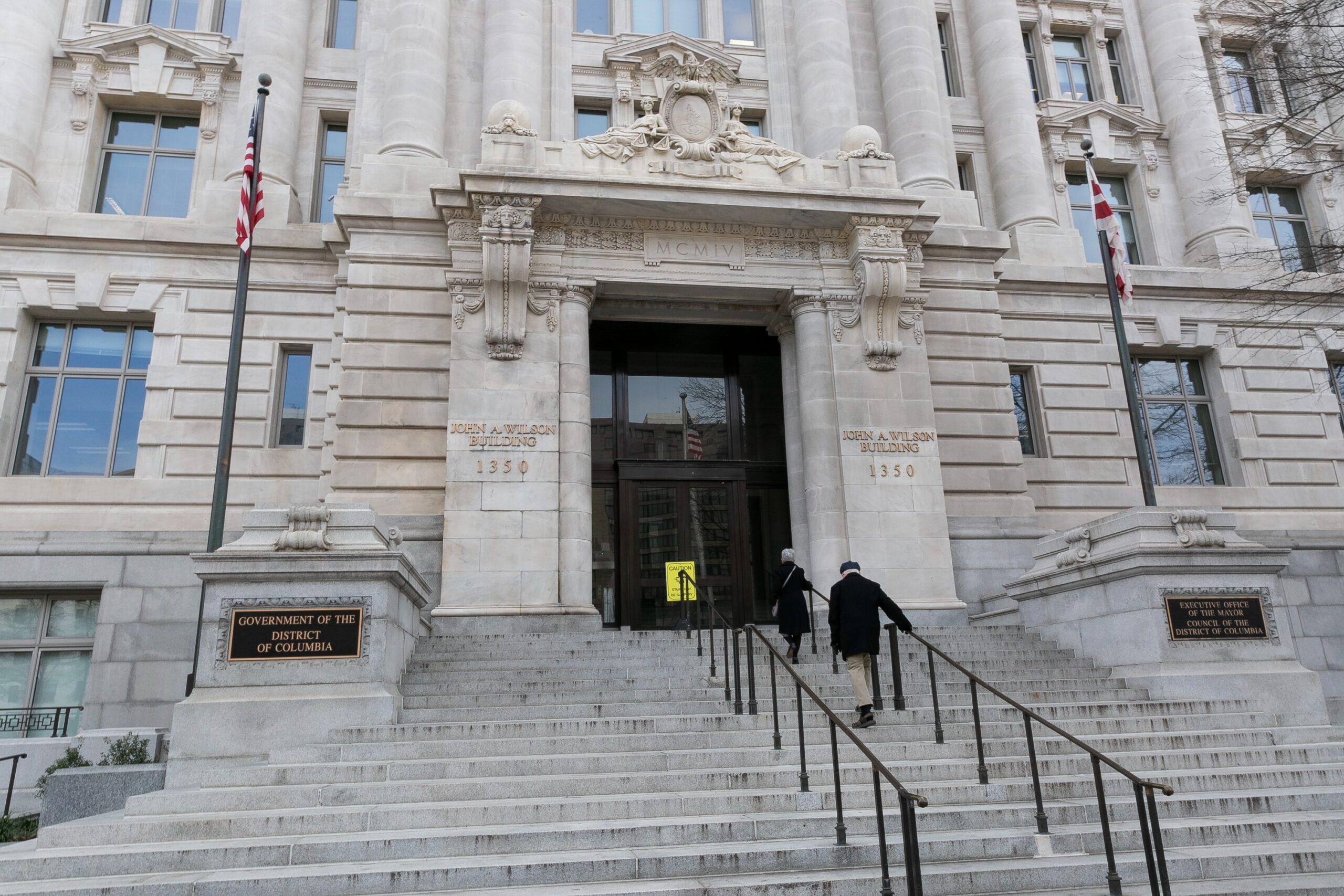
Gas-powered leaf blowers: For years, the noisy machines have divided neighbors and set off debate on the D.C. Council over banning them. As of Jan. 1, 2022, they are no longer legal to buy or use in the District. Lawn care companies and individuals will have to use electric leaf blowers, or else risk a fine of $500. The city also rolled out a rebate program to help people switch to an electric alternative.
In addition to the gas-powered leaf blower ban, the District’s rent increase moratorium during COVID ends as of Dec. 31. And for those with outstanding D.C. parking tickets and minor moving violations, the amnesty program on penalties ends Dec. 31.
Maryland
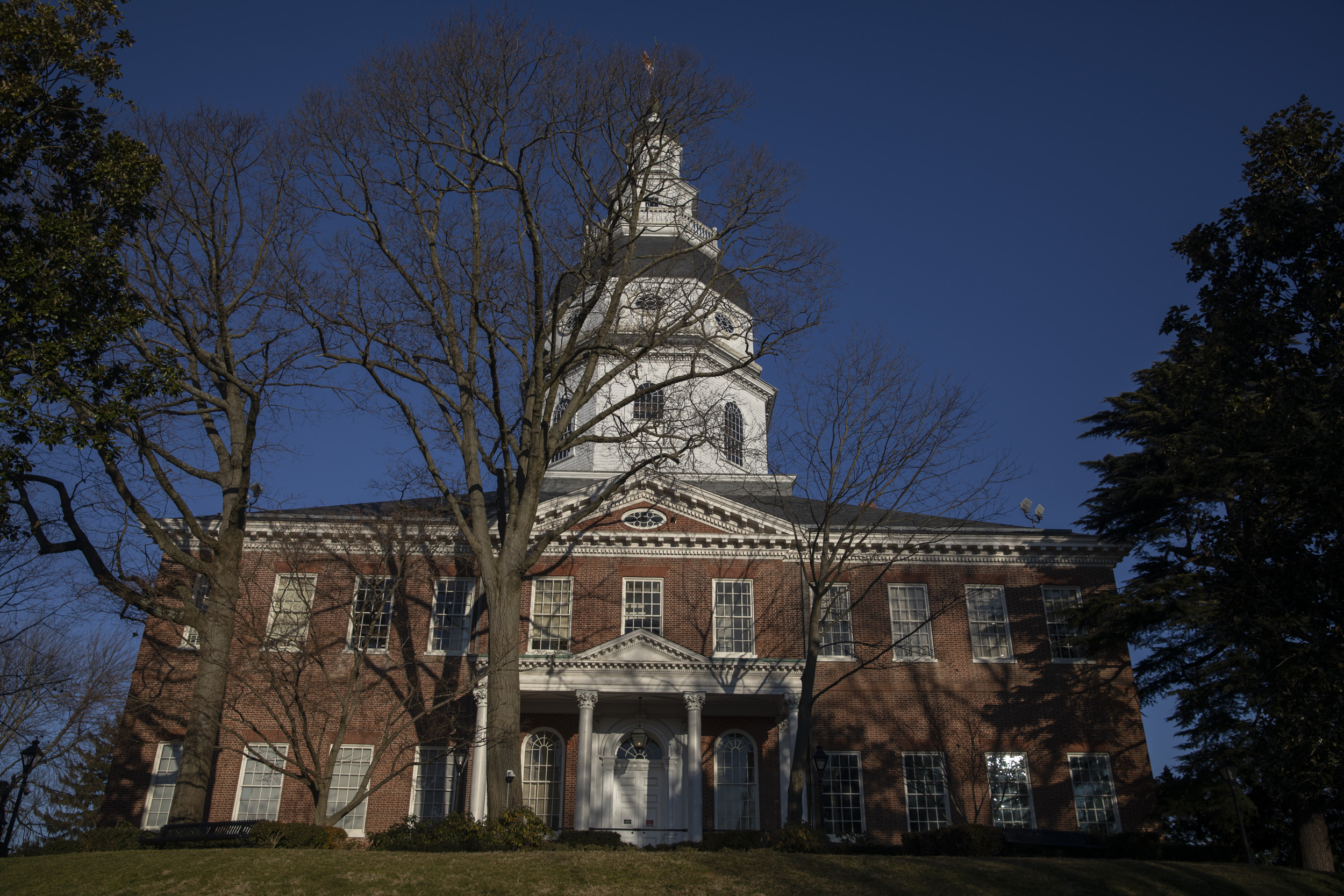
Medical debt protection: The law aims to protect low income residents from excessive medical debt. It applies to patients making 200% or less than the federal poverty level, around $53,000 for a family of four. The law includes a number of provisions; it extends the timeline to apply for free or reduced cost care; requires hospitals to have patients sign a form stating that they have been informed of reduced cost care; prohibits debt collection for 180 days after billing; ensures patients’ payment plans don’t exceed 5% of their income, and forbids liens on homes, garnishment of wages, or making an arrest for unpaid medical debt.
The law was passed after the state’s Health Care Review Commission found in December 2020 that at least 60% of the unpaid debt at hospitals belonged to low-income patients who should have qualified for free care. The issue was exacerbated during the pandemic, with many losing jobs, income and health insurance.
The bill passed unanimously out of both chambers and was signed by Gov. Larry Hogan. Patient advocate groups however were disappointed with the outcome. Maryland’s Consumer Rights Coalition and End Medical Debt Maryland wanted the legislation to prohibit hospitals from collecting smaller debts — under $1,000 – and to raise the income level to include people making 500% or less of the federal poverty level, roughly $100,000 a year for a family of four.
Long-term care: The new law requires the state’s department of health to publish informational materials to assist residents with long-term care planning. By April 1 2022, the materials must be completed, including websites and phone numbers residents can contact for assistance. The materials must be available in English, Spanish, and any other language requested, and accessible to individuals with limited literacy skills.
Licenses for genetic counselors: The state board of physicians is now required to certify licenses for genetic counselors to practice in the state. A genetic counselor assesses an individual’s or a family’s risk of inherited conditions, such as genetic disorders and birth defects. The bill passed earlier this year and requires the board to establish a genetic counseling advisory committee with seven members, three of whom are certified genetic counselors, three physicians, and one member of the public with no previous experience working in the healthcare profession.
Organ donation: This law passed in 2021 but goes into effect in July 2022. Marylanders who opt-in to donating their organs – indicated on their driver’s license with a heart and “Organ Donor” printed next to it – will now be able to select where they would like to have their organs donated. On or after July 1 2022, a driver can choose for their organs to go toward research and education or transplantation and therapy. The state’s motor vehicle administration must also provide information about each of the options to drivers.
Montgomery County:
Window guards: Earlier this year, County Executive Marc Elrich signed Ezechiel’s Law, which requires landlords to install window guards in tenant units where children under 1o years old are living, or where a tenant requests them.
The bill, which passed unanimously, is named after 2-year-old Ezechiel Nguemezi, who died in October 2020 after he fell from a third-floor window in a Takoma Park apartment building. When the bill was passed in June, Alvine Nguemezi, Ezechiel’s mother, and other council members expressed hope that the new regulations could become a model for future legislation across the state of Maryland.
Settlement agreements: The bill goes into effect on Jan. 12, and requires the county attorney to report periodically to the county executive and the council about any settlement agreements the county has entered into. These settlement agreements would apply to all county agencies, including the police department. The county attorney would need to identify those making the claim, the dollar amount of the settlement, the nature of the claim, and the department involved in the claim. Payouts for claims are funded by county taxpayer dollars.
The bill was part of a slew of police reform measures passed by the council earlier this year. The passage of the bill came after a string of lawsuits against the county police department, including one from a Silver Spring family alleging county police violated the county’s current body-worn camera policy while conducting a no-knock warrant at their home in September 2019.