Margaret Barthel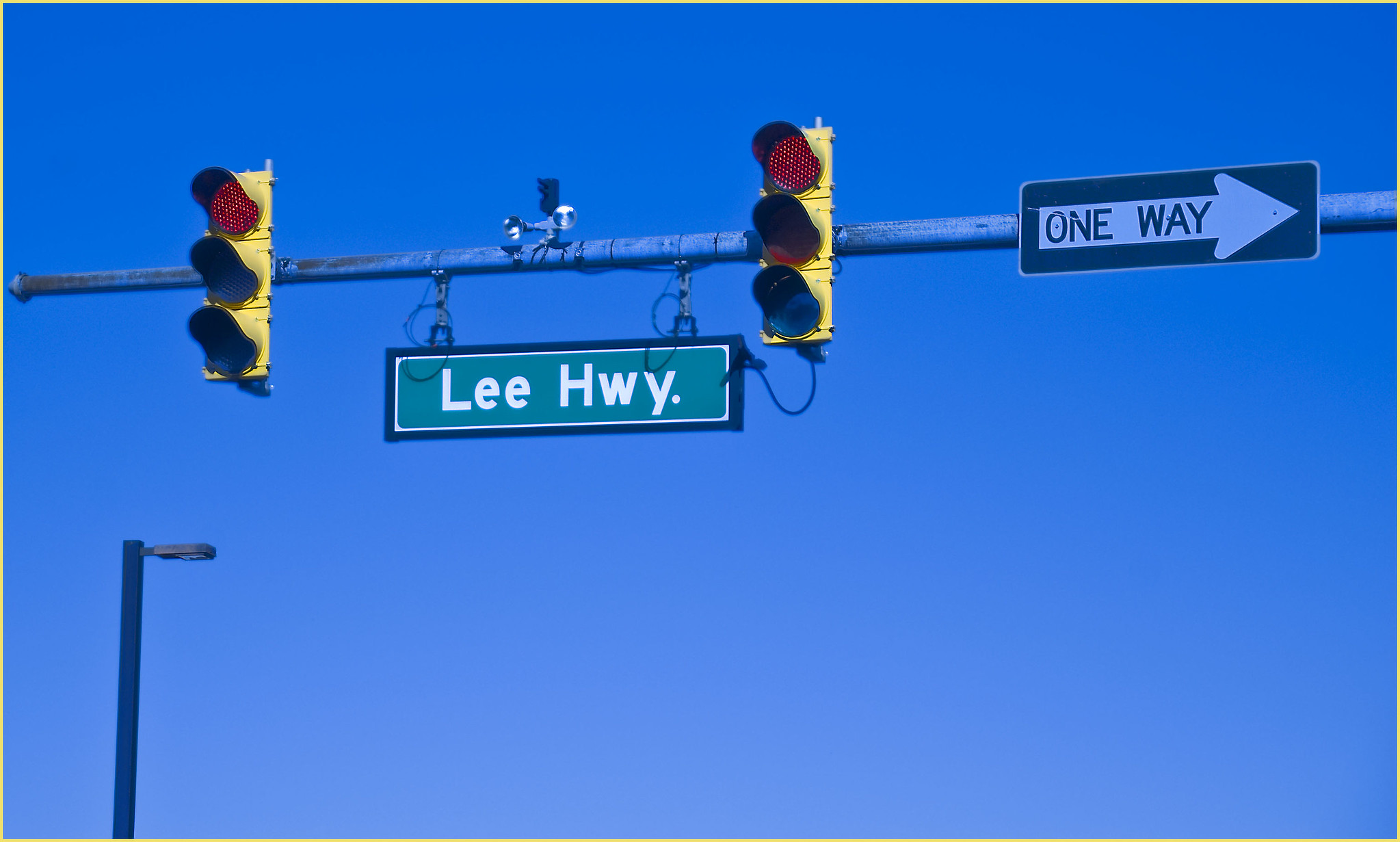
Two major roads in Fairfax County currently named for Confederate generals could get new names, if the county follows recommendations from a panel asked to study the matter by the Board of Supervisors.
On Tuesday morning, the county’s Confederate Names Task Force presented a report with recommendations to rename Lee Highway (Route 29) and Lee-Jackson Highway (Route 50) to the Board at its meeting. This follows a contentious months-long process aimed at addressing different interpretations of history and gathering community input.
The recommendation to proceed with name changes was not unanimous: the final task force vote was 20-6 in favor of changing the name of Lee Highway, and 19-6, one abstaining, for changing the name of Lee-Jackson Highway.
“Many of the task force members agreed that the names Lee Highway and Lee-Jackson Highway did not send an inclusive message to all members of the Fairfax community,” said Evelyn Spain, who chaired the task force.
A handful of task force members expressed concerns that renaming the roads would “erase history” and be costly for local businesses.
Board of Supervisors Chairman Jeff McKay acknowledged that there were differing opinions among the group and said he appreciated the members’ willingness to engage.
“You don’t make progress in a community unless you can sit down civilly, have the tough conversations, share people’s life experiences and how they affect them in their day-to-day life and try to learn from those,” he said.
For Lee Highway, the group suggested several possible alternative names, including Cardinal Highway, Route/Highway 29, Langston Boulevard/Highway, Lincoln-Douglass Highway, and Fairfax Boulevard/Highway. Of that selection, a majority of task force members preferred Cardinal Highway. The name change would apply only to the two segments of the highway in Fairfax County, not the section in the City of Fairfax, which is called “Fairfax Boulevard-Lee Highway.”
For Lee-Jackson Highway, recommended new name options include: Little River Turnpike, Unity Highway, Route 50, Fairfax Boulevard, and Blue & Gray Highway. A majority of task force members preferred the Little River Turnpike option, which would connect to a section of road already referred to as Little River Turnpike. The name change would affect Route 50 west of the City of Fairfax; east of the city, the road is called Arlington Boulevard.
Some of the naming options included in the report echo renaming efforts in neighboring counties. Arlington renamed its portion of Route 29 — formerly called Lee Highway in the county — Langston Boulevard, after John M. Langston, an abolitionist attorney who was the first Black Virginian elected to Congress in 1890. In Loudoun County, officials voted to refer to the section of Route 50 in the county as “Little River Turnpike,” instead of John Mosby Highway, after another Confederate commander.
Robert E. Lee and Stonewall Jackson, for whom the highways are currently named, were prominent generals in the Confederate Army and leaders of the Confederate rebellion that led to the Civil War. Both men enslaved Black people. The move to get rid of the two men’s names from the highways is part of a larger countywide project to identify — and consider renaming — the more than 150 names of parks, streets, and other public places that currently memorialize people with ties to the Confederacy.
“In Fairfax County, our diversity is our greatest strength and it’s important that we honor and celebrate that diversity,” said Fairfax County Board of Supervisors Chairman Jeff McKay in a statement, after the board approved the task force moving forward with presenting alternative recommendations last year. “We cannot ignore what the Lee and Lee-Jackson Memorial Highway names represent in our community and especially to our African-American neighbors.”
In making its renaming recommendations, the task force acknowledged that its public engagement process showed 58% of respondents supported keeping the names the same. That engagement included an online survey, community engagement events, and phone calls and emails from the public. However, the online survey, which generated by far the most responses, was not set up to prevent people from filling it out multiple times, or to block people from outside the county from weighing in.
A handful of people on the task force, which has more than two dozen members, dissented from the group’s decision to recommend renaming the two highways. Some cited the imperfections in the community engagement process, suggesting that the task force was not representative of the county, and also hadn’t adequately solicited opinions from non-Black communities of color.
Others said they believed changing the names would “erase history” and ignore the historical significance of Lee and Jackson’s military strategy — and one letter of dissent appeared to reference swirling controversies over teaching race in local schools.
“Demonstrations in the last several months indicate a significant portion of citizens have meaningful concerns about school curriculum and how American history is taught,” the letter reads. “Fairfax County cannot be an ‘inclusive’ society without acknowledging these opinions exists [sic] amongst its citizens, and respect the prevailing public opinion.”
In her presentation, Spain said the panel took into account public comments against renaming, but ultimately decided to move forward with the recommendations to make the changes.
Braddock District Supervisor James Walkinshaw also weighed in on the historical debate.
“This is one of the topics that is very difficult to unravel the history from the mythology, and those of us who grew up and went to school, especially in the South and here in Virginia, unfortunately, were taught that mythology rather than the history,” he said.
Some task force members opposed to the renaming were also concerned about the price tag.
“We believe the $1M to $4M required to rename these two roads would be more effectively spent pursuing a community engagement project (e.g. an African-American Heritage Trail, a museum, and/or new historic markers),” wrote one group of dissenting task force members. “We believe changing these road names will be divisive and ill-received by a majority of those impacted while providing minimal substance to benefit the community.”
“Changing a road name is harder and more difficult than just removing statues,” noted Springfield District Supervisor Pat Herrity, who expressed concerns about the financial impact.
McKay said the county would conduct another survey and set up a dedicated email address for the businesses and residents along the highways to understand how they might be affected financially by the name changes, which would require them to change their addresses (the route numbers of the roads, which will remain the same, can’t be official mailing addresses, per the U.S. Postal Service, McKay noted). The results of that outreach will be shared with the Board in June, which McKay also said would allow the Board to gather further historical information on the proposed new names.
The renaming process, Walkinshaw suggested, was also an opportunity to remove existing confusion over names of roads in major intersections in the county, including in the Kamp Washington area, where Route 29 and Route 50 intersect with Route 236 in an explosion of different street names, including Lee Highway, Lee-Jackson Highway, Fairfax Boulevard, and Main Street.
“Businesses that are in the Braddock District that I’ve talked to are frustrated with the status quo, because it’s confusing for people who want to get to their business,” he said.