 Jordan Pascale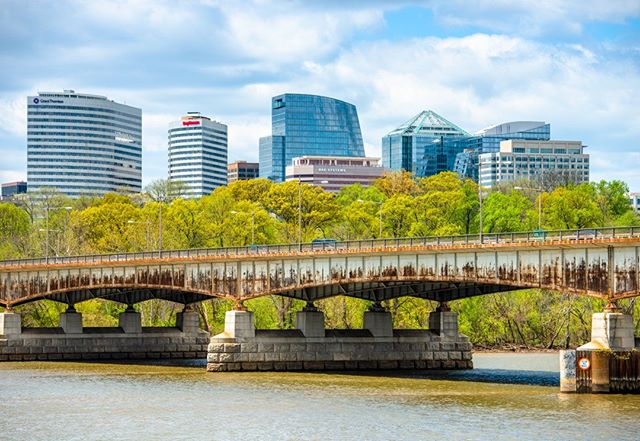
The Theodore Roosevelt Bridge, which carries I-66 traffic between Arlington County and D.C., will have three of its seven lanes closed for the next four months as the District Department of Transportation (DDOT) conducts emergency repairs.
The 58-year-old structure is one of four D.C. bridges said to be in “poor” condition according to DDOT, and has not had a major rehabilitation since it was opened. Authorities told the Washington Post that steel support beams have continued to deteriorate. It is slated for repair in coming years as the District gets $225 million for bridge replacement and repairs from the federal infrastructure bill. DDOT has previously requested about $29 million for repairs specifically for the Roosevelt Bridge.
DDOT Director Everett Lott told the Post that he decided to close the bridge Friday night ahead of a snowfall on Saturday that would have put heavy equipment across the bridge.
“We wanted to make sure we were being overly cautious,” Lott told the Post on Saturday. He also had a heightened sense of awareness after a bridge collapse in Pittsburgh.
Nearly 100,000 vehicles travel across the Roosevelt Bridge on an average day. DDOT is asking drivers to take alternate routes or be prepared for longer travel times. Two outer lanes on each side of the bridge will remain open, but those lanes will have a vehicle weight restriction of 10 tons, which would limit buses and semis which can weigh up to 35,000 pounds.
The work should take four months, but may take longer if weather affects the construction schedule or ongoing supply chain issues affect the delivery of materials.
In a recent council oversight hearing document, DDOT said “The primary goal of the project is to perform major repairs on the aged bridge deck and other bridge components to extend its service life.” Other documents say the bridge has “cracks in bridge deck with efflorescence and spalls with exposed and corroded reinforcing steel in deck soffit.”
The other bridges in poor condition in the District include the H Street NE bridge near Union Station, an on-ramp bridge from Benning Road to Kenilworth Avenue, and the Anacostia Freeway bridge over Suitland Parkway. Many are already being replaced, or under design to be replaced.
In June, Director Lott talked spoke on bridge conditions across the District following a pedestrian bridge collapse. He emphasized bridges in poor condition are still “safe for vehicles and for pedestrians to use every day,” and that the poor, or those having a 4/10 rating, simply alert the DDOT team “to begin making plans for replacement.”
“But I want to reiterate, it is still safe for pedestrians and for vehicles to use,” Lott said.
A “1” rating means the bridge needs to be closed. A “2” means officials should consider closing it. A “3” means officials should pay closer attention to the structure and also consider closing it. Bridges undergo regular inspections that examine the concrete on the bridge deck, the superstructure beams (where the deck sits on top), and the substructure (the footings and girders underneath), following federal criteria for evaluation.
DDOT told the Post that the bridge is federally required to have an inspection every two years since it was rated in “poor” condition, but DDOT does its own inspections twice a month.
DDOT did not return DCist/WAMU’s request for comment or additional information on the Roosevelt Bridge closure.