 Jenny Gathright
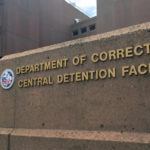
The D.C. Department of Corrections has agreed to five unannounced inspections of the D.C. Jail over the next six months to measure its compliance with coronavirus-related protocols. The inspections are part of a settlement announced Tuesday with jail residents who filed a class action lawsuit against the department over its handling of the pandemic.
An infectious disease specialist selected by both parties will perform the inspections, according to the ACLU of D.C., one of the parties to the lawsuit. (The others include the Public Defenders Service for D.C. and the law firm Munger, Tolles & Olson LLP.) The inspections will check to make sure residents have access to cleaning supplies, prompt medical care for COVID-19 related symptoms, contact tracing, and reasonable time for recreation and showers, among other health-related measures.
According to court filings, both parties have agreed to a settlement and are awaiting the approval of a judge. In the meantime, however, the DOC has agreed to the inspections.
Edward Banks, one of the plaintiffs in the lawsuit, said in a press release that “it should have never come to a lawsuit to force the D.C. Jail to protect the people in their custody. These measures will protect incarcerated people, officers, and the whole community.”
The announcement comes after nearly two years of litigation.
Attorneys for jail residents originally filed the lawsuit in March 2020, alleging that the DOC was not doing enough to test residents for the virus or prevent its spread. By April, people incarcerated in the jail were watching a significant outbreak of the virus unfold around them, and continued to sound the alarm about a lack of cleaning supplies and delays in access to medical care despite COVID-19 symptoms.
By June 2020, more than 200 residents of the jail had tested positive for the virus. (On average the jail holds some 1,500 people.) U.S. Judge Colleen Kollar-Kotelly found that the DOC was “aware of the risks” of COVID-19 and had “disregarded those risks by failing to take comprehensive, timely, and proper steps to stem the spread of the virus” — and ordered the department to implement additional precautions and safety measures.
In Jan. 2021, Kollar-Kotelly wrote in an opinion that while the DOC had demonstrated some “marked improvements” in its COVID-19 response, it still had “substantial deficiencies,” including in access to medical care and access to legal calls while in isolation. By that point, advocates were calling out another serious consequence of the jail’s coronavirus response: A strict 23-hour lockdown that experts said amounted to mass solitary confinement. That lockdown lasted more than a year, until D.C. officials began to ease it last May.
In October, the jail faced another wave of scrutiny after the U.S. Marshals Service announced it found “systemic failures” during a surprise inspection. The complaints including cell toilets clogged with human waste, guards punitively withholding food and water from jail residents, and other abuses. And then, as the winter began, another round of infections spread through the jail. At the height of the outbreak, likely driven by the highly-contagious omicron variant, 12% of residents and 20% of staff were positive for COVID-19.
In total, at least 764 people incarcerated at the D.C. Jail and 633 staff have contracted COVID-19 since the start of the pandemic, and one resident of the jail and three corrections staff have died from the virus.
Movement towards a settlement in the nearly two-year-long lawsuit also comes weeks after DOC Director Tom Faust — who previously led the agency from 2011 to 2016 — took over leadership of the corrections agency. Former Director Quincy Booth will remain on in an advisory role.
In its press release, the ACLU of D.C. said that while the settlement is a “significant step forward regarding COVID-19 precautions,” advocates would continue to push for longer-term changes. Among those changes, the press release said, would be an independent oversight body that had unrestricted access to the jail and the ability to regularly report to the D.C. Council and the public about conditions there.