The number of people who died while homeless in the District went down last year for the first time since 2016 — the largest single-year drop since the Office of the Chief Medical Examiner began releasing this data in 2013.
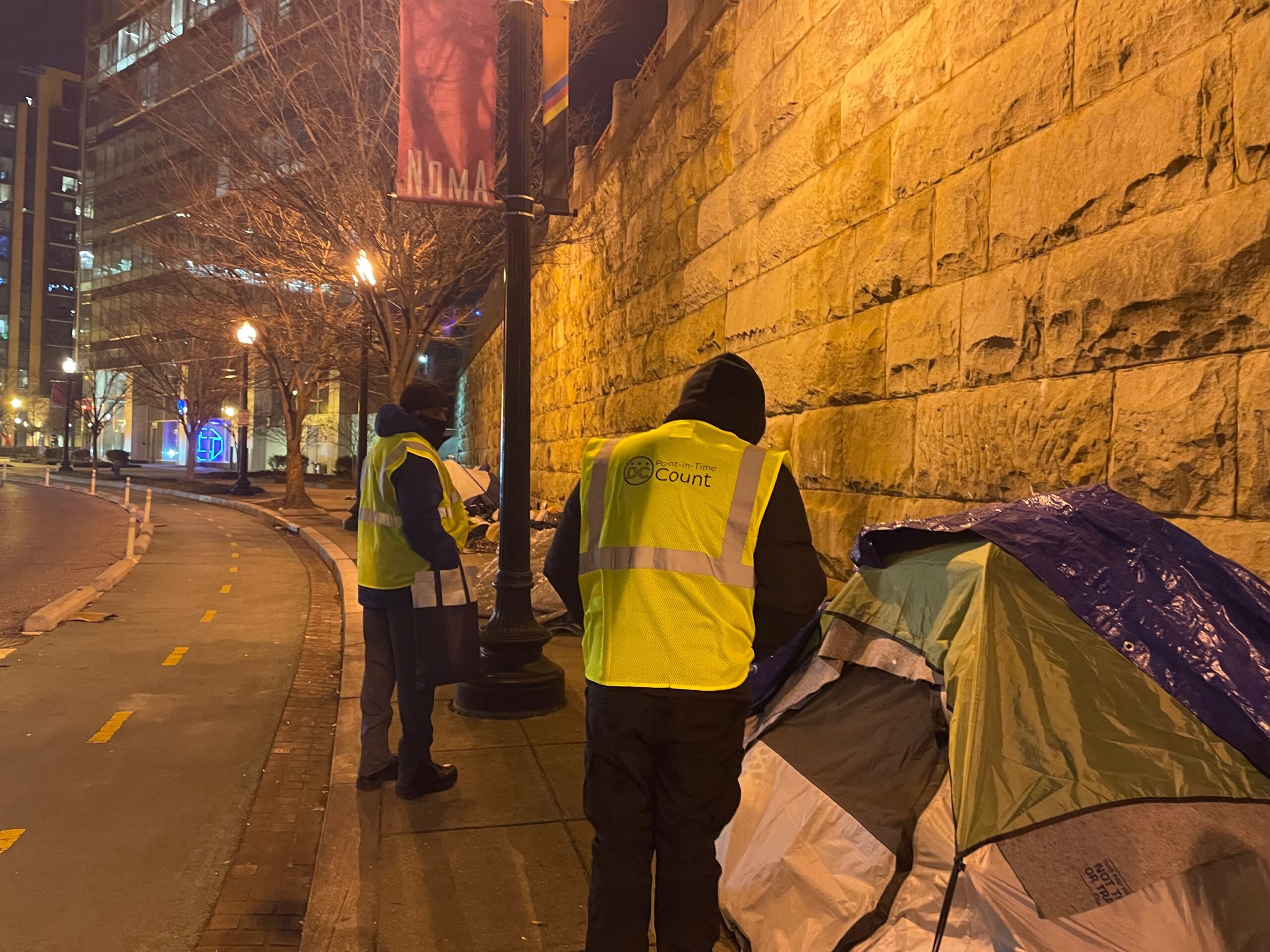
The new information, which was obtained via a public records request by DCist/WAMU, reverses a stark upward trend in the deaths of people experiencing homelessness over the past decade. In 2013, 26 people died while homeless. By 2020, that annual count had risen to 180 — nearly a 600% increase in deaths. While it fell to 124 last year, more people still died than in any year prior to 2019. (While estimating the total number of unhoused people is challenging, the most recent numbers released by the Community Partnership for the Prevention of Homelessness indicate that 5,111 people were experiencing homelessness in the District in January 2021.)
Advocates and District agencies offered no definitive cause for the precipitous rise in deaths, or for last year’s abatement. Advocates say that changes to housing policy as well as drug use and treatment offer some clues, but the diversity of experience among unhoused people makes it difficult to draw conclusions with certainty.
“You’re in environments where it’s difficult to sanitize. You’re in environments where you can’t control the weather, you can’t control the traffic,” said Reginald Black, who is a member of the Interagency Council of Homelessness and who experienced homelessness himself for about 10 years. “There are so many things to run into that can create a dangerous situation.”

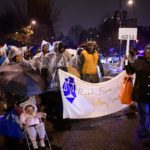
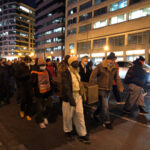
Black helps organize a vigil every year for the people in D.C. who died without a home in partnership with the advocacy group he’s a part of, the People for Fairness Coalition. As deaths have risen District-wide, Black says more and more people he knows have died — half a dozen of his acquaintances have passed away in the last five years alone. When people die in shelters, encampments, or on the street, he added, their friends and families may not receive word of their deaths for months.
The entry of fentanyl into the city’s illegal drug supply around 2014 is one possible factor for the multi-year rise in deaths, said Daniel Smith, the director of addiction services at community health clinic Mary’s Center. Dealers began introducing fentanyl into heroin and cocaine products to make their supply stronger, easier to smuggle, and more addictive, Smith said. Fentanyl’s potency (up to 50 times stronger than heroin, by some estimates) has been driving up overdose deaths in the District, including amongst housing insecure people.
In 2015, 114 people died of opioid-related causes, with fentanyl present in 62% of them, according to the medical examiner. In 2020, opioid overdose deaths reached 411, with fentanyl or an analog a factor in 94%. Eighteen percent of overdoses that year were amongst people who were homeless.
“Substance abuse is both a cause and a result of homelessness, often coming after people lose their housing,” said Derrick King, spokesperson for the Department of Behavioral Health.
Deaths categorized as “accidents” by OCME, which includes deaths by intoxication and overdose, have seen the largest rise of any category of deaths of people who are unhoused in D.C. In 2020 and 2021, intoxication and overdose were the biggest causes of death among people experiencing homelessness. The numbers, Smith said, are “heartbreaking.”
“It’s not surprising to me that there’s been an increase because we know that the sheer number of deaths related to overdose and intoxication has gone up so much in that time period,” said Smith, who is also on the mayor’s Opioid Fatality Review Board. “We know how much more [at] risk the homeless population is for substance use disorder and overdose.”
Smith said he was surprised by last year’s downturn in deaths, but added but that it could be related to the expanded distribution of naloxone (a medication that reverses overdoses) as well as increased treatment options for substance use in the District. In 2020, the city expanded its Naloxone distribution program: Free nasal spray kits are available at 35 locations across the city, including at various drugstores. The Department of Behavioral Health said shelters and a mobile van also helped expand access.
Advocates pointed to the city’s expanded COVID-19 emergency housing program as another possible reason for last year’s drop. The Pandemic Emergency Program for Medically Vulnerable Individuals offers private accommodations in hotel rooms for people who are homeless and at a high-risk of severe illness from COVID-19, until they can be transferred into permanent supportive housing. Though the program began in March of 2020, it took several months to grow and build capacity, said Amber Harding, staff attorney with the Washington Legal Clinic for the Homeless. The number of COVID-19 deaths among people experiencing homelessness fell in 2021, likely as a result of the program, Harding said.
“I would imagine that placing people in hotels also prevented them from having worsening health in other ways: It could have improved mental health, it could have prevented conflict,” she said. “Less disease transmission, doctors on site, ability to do preventative care. It’s been an incredible public health initiative beyond COVID.”
To date, nearly 500 people have been moved from PEP-V into stable housing, according to a spokesperson for the Department of Human Services.
“PEP-V is a huge victory in D.C. and something that DHS should be proud of,” said Jesse Rabinowitz, senior manager for policy and advocacy at Miriam’s Kitchen. “Housing saves lives and housing ends homelessness.”
Substance use may also decrease when people are in stable housing, Rabinowitz said, meaning fewer overdose deaths. Rabinowitz said the D.C. government should prioritize extending the program, which the federal government currently plans to fund until the spring.
“People experiencing homelessness — particularly people experiencing long-term or chronic homelessness — are dying frequently and dying young, often from manageable and preventable diseases,” Rabinowitz said.
D.C. has struggled to address transitional housing in recent years. A controversial pilot program Coordinated Assistance and Resources for Encampments, or CARE, launched in August 2021, with the aim of closing the city’s homeless encampments and connecting its residents with housing and services. Advocates and lawmakers have criticized the program, saying the closure of a handful of encampments has been rushed, and that it’s not clear why the city would ban residents from returning to the encampments after they’re closed.
DHS declined to comment on trends or correlations to OCME data, “due to the differences in data definitions and especially because, just like their counterparts in housing, people without housing have wide-ranging causes of death.”
“DHS takes seriously our responsibility for the care and attention needed to protect the safety and well-being of our residents who experience homelessness,” a spokesperson for the agency said in a statement. “We are continuously evaluating ways to strengthen services, improve our outreach, and prevent loss of life whenever possible.”
A spokesperson for OCME said the office had not changed its methodology in any way that could account for the rise and fall in deaths. Counts for 2020 and 2021 include dates from Jan. 1 to mid-December, but not the last few days of the year.
The number of deaths reported by the Office of the Chief Medical Examiner is higher than that reported by advocates who facilitate the annual homeless vigil in the District, in part because they use different definitions of homelessness.
Still, advocates say, preventing deaths is the most important thing.
“One person dying without housing is too many,” said Rabinowitz.
Black, the co-organizer of the vigil, noted that people experiencing homelessness may also be dealing with emotional challenges.
“You could just give up, you could be alive walking around, but you could just give up on life,” he said.
He remembers one friend he’d known for years who died last year, after battling health issues while living on the street. Black and others tried to help him get stable housing over the years but their efforts didn’t stick.
“We walked from Foggy Bottom to Fort Totten one night,” he reminisced about an evening he spent looking out for his friend. “I wanted to make sure he got to his destination.”
Black said that he and others will keep organizing the vigil — to bring awareness to homelessness, as well as to mourn and remember — but that he wishes they didn’t have to.
“We don’t want to do a memorial for homeless people every year,” he said. “[People who are homeless] should be at the center of the solutions.”