 Jenny Gathright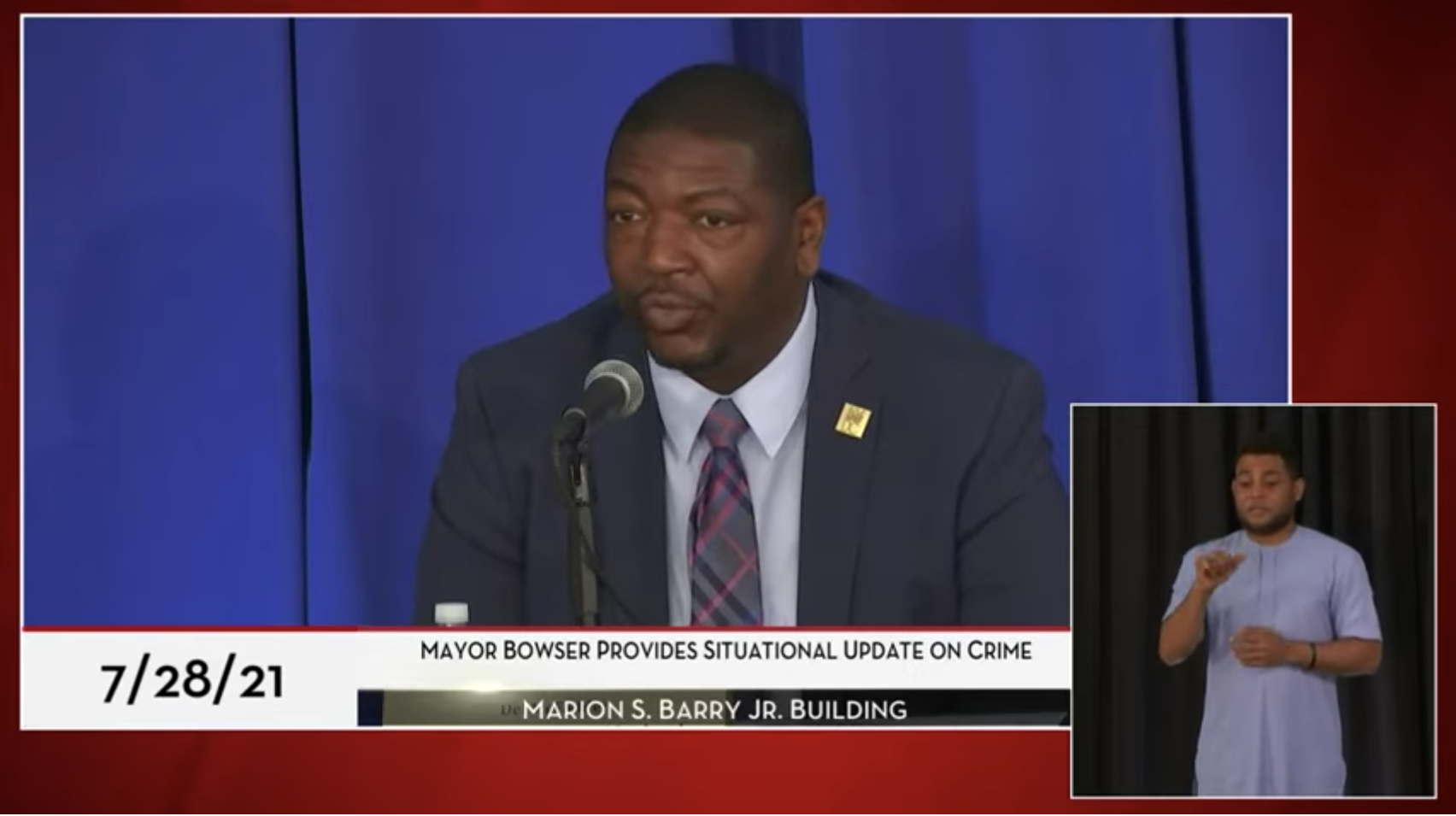
Delbert “Del” McFadden, the inaugural Executive Director of D.C.’s Office of Neighborhood Safety and Engagement, has resigned from his role, according to a spokesperson for D.C. Mayor Muriel Bowser.
McFadden was the first director to lead ONSE, which opened in 2017 and was created by legislation that championed a public health approach to reducing violence in the District. McFadden, through a spokesperson, declined to comment on his resignation.
“The Office of Neighborhood Safety and Engagement (ONSE) was established to implement comprehensive violence reduction strategies including increased access to public health and employment services as well as violence mediation and interruption,” wrote Bowser in a statement confirming McFadden’s resignation. “Director Del McFadden accepted the herculean challenge of leading the new agency and worked tirelessly to build the capacity and community that we know of ONSE today. Director McFadden’s dedication and leadership will be missed and I wish him success in his future endeavors.”
During his time at ONSE, McFadden has overseen violence interruption efforts in neighborhoods across the District, working with community nonprofits to directly engage individuals who are most at risk of being a victim or perpetrator of violence. Under McFadden’s direction, ONSE also established and grew the Pathways Program, a job and life skills program for high-risk individuals that includes mental health services and subsidized employment.
“I’ve got nothing but respect and appreciation for what he has done and accomplished with that office,” Ward 6 Councilmember Charles Allen told DCist/WAMU. Allen chairs the council’s committee on public safety, which performs oversight of ONSE. “That work will continue, but I’m really grateful for everything Del did.”
Both the ONSE violence interruption program and the Pathways Program are expanding significantly this year, with an influx of federal funding going toward non-police forms of violence prevention in D.C. But, Allen noted, the funding picture looked very different when McFadden first assumed the role.
“He took over something that the city essentially had stopped investing in for years,” said Allen. “The first few years, every year it was a budget fight to decide, you know, was this office going to get funded or not? And now that’s not the conversation at all. The conversation is just, ‘what’s the right level of funding?’”
Community members and advocates have praised the Pathways Program for its measurable impact on participants’ lives. In early 2020, the ONSE office reported that 90% of the program’s participants were avoiding criminal involvement. Data from ONSE for 2021 also indicate that as homicides continued to increase across the District, the neighborhoods where ONSE employs violence interrupters saw violent crime and homicides remain the same as 2020 or decrease slightly.
Those accomplishments stand against a backdrop of criticism that despite the hard work of D.C. agencies, individuals, and community leaders working to combat violence, the city’s overall violence prevention strategy has lacked cohesion, coordination, and urgency.
Allen also acknowledged that McFadden’s role was demanding and emotionally difficult.
“This job takes a toll,” said Allen. “On a personal level, how much [McFadden] has given just day in and day out to this just can’t be understated. And whomever it is that takes [it] on, this is not a 9 to 5 job. This is a job that basically is everything you do. And it is hard and you absorb a whole lot of trauma in the process of doing it.”