 Jordan Pascale
Metro delivered two major news items Thursday that rail riders won’t want to hear.
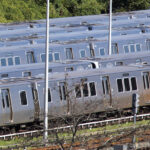
The transit agency says it has no quick fix for the beleaguered 7000-series trains. They’ve been out of service since an October derailment and that has meant reduced service across the system for five months — that’s expected to continue through summer. It has also proposed a plan to gradually bring the trains back with daily inspections paired with ongoing in-track monitoring.
Meanwhile, the extension of the Silver Line to Dulles Airport and Ashburn will not open before July 1, missing yet another target.
The problems ailing the wheels of the 7000-series trains, which make up 60% of the fleet, are multi-faceted and have no “near term solution,” General Manager Paul Wiedefeld said during Thursday’s board meeting.
Metro will attempt to bring back eight more of the older 6000-series trains by May, which is expected to help with reliability and add more trains on the crowded Yellow and Green lines, bringing service levels to every 15 minutes instead of every 20 minutes.
The aim then is to gradually bring back the 7000-series trains throughout the summer, eventually getting to 10-minute headways on the Red Line and trains every 15 minutes on all other lines. Metro did not say exactly how many of the 93 trains would come back.
They’re requesting permission from the Washington Metrorail Safety Commission to use digital tools to speed up the daily inspection of the wheels. Metro has been using manual devices and that is so far the only approved method to measure the distance of the wheels.
Metro also wants to use six in-track monitoring systems to provide constant surveillance of the wheels in operation.
“It is a mitigation measure,” Wiedefeld said. “We’ll get real-time information, every time a train passes over one of these. So instantly, we will know if there’s an issue… (and if there is ) any variation, we can pull that train off well before it would ever get to a point where we would if we were doing it manually.”
In a statement, the WMSC said it has not yet received Metro’s formal return to the service plan but encourages ongoing dialogue that they’ve been having every day.
Wiedefeld, who is retiring in July, says he has no concern about overcrowding on the rail system, even with more people are returning to the office, the tourism season underway, and the pandemic winding down.
“I’ve been using the system…it’s not where it was pre-COVID, for sure, but it’s gotten me around very well,” Wiedefeld said. “I’ve done it in the evening, I’ve done it coming to work, so I just think the system is a very good system, even at that reduced level.”
Metro was set to have five-minute headways on the Red Line and 10 minutes on every other line starting this July, but it’s unclear if the agency will be able to meet that level with the 7000-series trains returning only gradually. Metro also has a disruptive eight months ahead for Yellow Line maintenance starting this fall, adding to the complications.
Last Tuesday, Metrorail had its largest ridership day since the pandemic began — 245,000 riders — largely because of cherry blossom season, great weather, and return to work. Ridership will likely continue to climb, but Metro doesn’t expect pre-pandemic levels of ridership (about 650,000 rides on an average weekday), for another few years. Wiedefeld says Metro has been working with employers to understand how and when workers will be back.
In January, Metro said it would pull the 7000-series trains out of service for 90 days to find the root cause of the wheel problem that involves them moving apart on the axle. That issue can lead to derailments like the one near Arlington Cemetery last October.
Wiedefeld did not provide the exact root causes Thursday but said a consultant is working on seven tests to help determine the problem.
Silver Line Delayed Again
The Silver Line will not open before the new fiscal year begins July 1 and it’s unclear what happens after that. The Metro Board is in charge of setting an opening date, but many tests have to be completed and issues resolved before that happens.
The new Silver Line delays are stemming from an issue revealed to the public for the first time on Thursday: waterproofing/insulation issues where the power cables connect, known as the “orange boot.”
They’re not meeting standards, which Wiedefeld calls “a no-go for us.” Wiedefeld said the Airports Authority, which is building the line, has known about it for a while but hasn’t moved to fix the problem yet and it needs to be addressed before the line opens.
Past problems with the boots have led to fires and smoke incidents, which launched a National Transportation Safety Board investigation.
Metro is also waiting on certifications of occupancy for buildings, safety certifications, and reviews for the train signaling system.
Northern Virginians and public officials in the area have grown impatient with the continual delays – at least ten by DCist’s count. Board chair Paul Smedberg said he too was dismayed by the delay.
“(The Silver Line extension) is critical to getting people out of cars as they head back to work to alleviate road congestion,” he said. “But it’s also very critical to the region’s economy in terms of visitors, business, travelers… businesses and people are depending on Metrorail, and we’re hearing this over and over again, particularly as people come back to work.”
The extension will add 11.5 miles of track from the Wiehle-Reston East Station to a terminus near Ashburn in Loudoun County. It includes six new stations: Reston Town Center, Herndon, Innovation Center, Dulles Airport, Loudoun Gateway, and Ashburn. Smedberg also took swipes at the Metrorail Safety Commission for their work on the project, but he did not list specific instances of delays.
“It’s important that we get the WMSC to work and get approvals along the way, so they’re not starting that entire process at the very end… that potentially adds an additional several months before we can get service out there,” Smedberg said. “They are on the ground, they are cooperating… working with WMATA staff on a daily basis, but we need to get them to make those your any approvals that they can, so we can in effect, check things off the list.”
In a statement, the WMSC said its role is oversight and its actions “are dependent on WMATA following its written safety certification processes.”
“Metrorail plans to complete some of these steps closer to the start of revenue operations,” spokesperson Max Smith said in an email. “Only after Metrorail completes all of the required steps can the WMSC concur that WMATA has followed its safety certification process.
“The WMSC has previously shared the steps necessary to reach that point, which has further helped Metrorail to lay out its draft internal schedule.”
Budget Approved With Fare Discounts
Metro’s board unanimously approved its $4.5 billion operating and capital budget Thursday. It includes several new fare discounts like $2 one-way trips after 9:30 p.m. and cheaper unlimited monthly passes ($64-$192 depending on your usual distance down from the current $72-$216).
WMATA will also run a $29/half-off deal for 7-day unlimited passes for six months, but the date has not been announced.
Metro is also making several service improvements from 2021 permanent, including running 36 of the most popular bus routes every 12-20 minutes. Metrorail service was set to improve, but that is contingent on the 7000-series trains being available.
Metro also has budgeted for the Silver Line extension when it opens and the new in-fill station at Alexandria’s Potomac Yard on the Yellow Line later this fall.
Inspector General Finds Handicap Parking Misuse, Cell Phone Use
New interim Inspector General Rene Febles told the board about several investigations, including one that found 46 Metro employees used handicap placards that did not belong to them to get free parking near the Western Bus Division in Friendship Heights.
The placards have either been returned or justified.
The OIG also found evidence a train operator was using his cell phone to sort out a personal financial matter while operating a train. Using a cellphone on the job is a fireable offense for operators. That incident was reported to management.
Relatedly, board chair Paul Smedberg would not address why the board did not re-appoint Geoff Cherrington as inspector general, calling it an “HR-related matter.”
This story was updated with additional context and full information from the board meeting and press conference.