Avery Kleinman
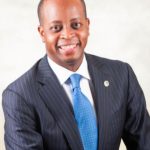
Howard University announced today that the school’s president, Wayne A. I. Frederick, will retire by June 2024. Frederick was appointed as interim president in 2013 and has been in the permanent role since 2014. Prior to taking on the presidency, Frederick served as a faculty member, an administrator, and also attended the HBCU as an undergraduate and graduate student.
A replacement for Frederick has not yet been chosen. In a letter to the Howard community, Chair of the Howard University Board of Trustees Laurence C. Morse wrote that the board is developing and finalizing the selection process for the next president.
“I join my fellow trustees in expressing my profound gratitude to Dr. Frederick for his tireless, unwavering efforts to lead our University to greater academic excellence, fiscal strength, and service to our community and country,” Morse wrote. “Needless to say, given his outstanding performance, the board desired that he would have chosen to remain in office longer.”
In the letter, Morse pointed to Howard’s improvements under Frederick’s presidency, including increasing the four-year graduation rate by 20 percentage points, boosting financial aid to first-time in college students, and jumping 60 spots in the U.S. News & World Report ranking, placing Howard in the top 100.
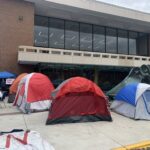
Frederick’s leadership has not been without controversy. In the fall of last year, students camped outside during a month-long protest, demanding an improvement to poor and unsanitary housing conditions, including mold in the walls of the dorms.
On Monday, workers at Howard University Hospital, including nurses, began a strike over unfair labor practices, including inconsistent work schedules and staffing shortages. The labor union has been unable to reach an agreement with the University. Howard has also recently struggled to reach a deal with faculty during union contract negotiations.
Frederick is the 17th president of Howard University. After earning his medical degree at the age of 22, he spent much of his career working in medicine at Howard. He served as the director of the Cancer Center, associate dean in the College of Medicine, division chief in the Department of Surgery, and deputy provost for health sciences.