 Jordan Pascale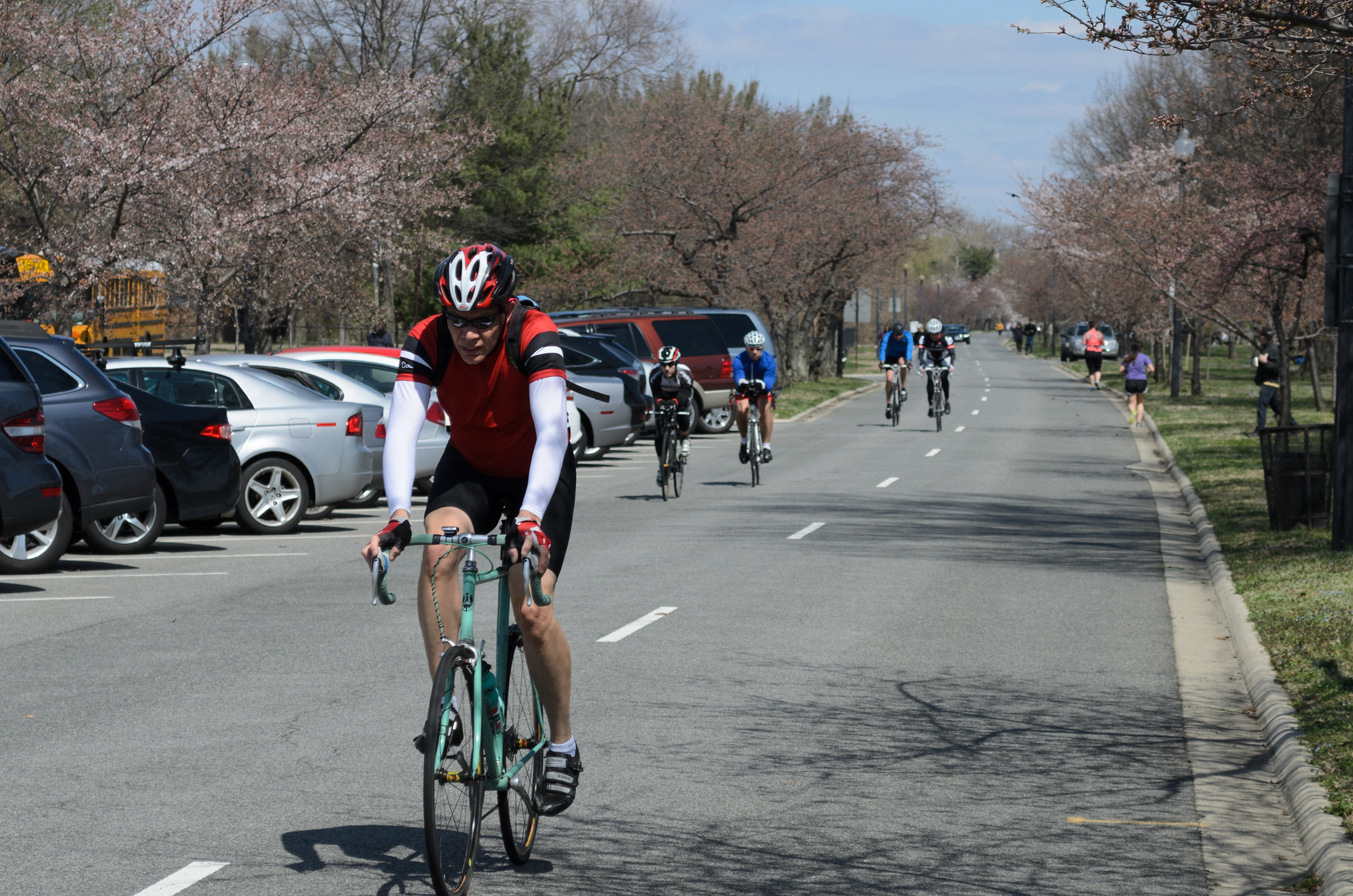
Hains Point, one of D.C.’s largest outdoor recreation areas, could get a new transportation setup later this year.
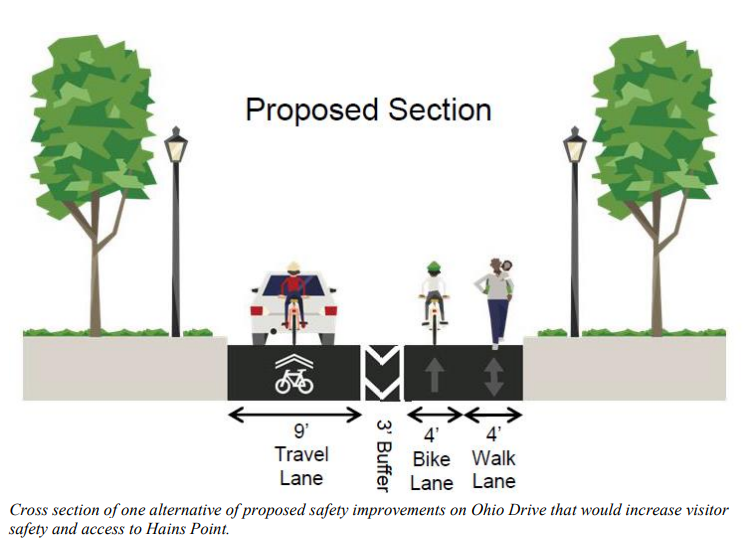
The National Park Service is seeking to remove one of two vehicle lanes on Ohio Drive and replace it with an unprotected bike and walking lane. The one-way, 2.5-mile road loops around East Potomac Park. NPS says the changes will improve visitor safety and access to Hains Point at the end of the park.
The three proposals on the table place the biking, walking, and vehicle lanes in different configurations with different buffers.
A public meeting is scheduled to lay out the proposal and answer questions. It will be held as a virtual meeting on April 19 from 5 p.m. to 6:30 p.m. Public comments can be sent through May 19 on the NPS website or by mail to
Superintendent Jeff Reinbold
National Mall and Memorial Parks
900 Ohio Drive, SW
Washington, DC 20024
ATTN: East Potomac Park Traffic Safety
The changes would start just after the golf course entrance, then go down to Hains Point and back up to Buckeye Drive. All vehicles except motorcoaches would still be able to access the area parking lots. The remaining lane would be nine feet wide, which authorities hope will slow traffic.
East Potomac Park has many recreational amenities including a playground, barbecue areas, fishing, a tennis center, and golf and mini-golf courses. Many people drive to these amenities, but the road itself attracts many walkers, cyclists, and runners because of the relatively low traffic compared to the rest of the city. Serious cyclists often use the area to train or ride as fast as they can.
Some drivers speed down the street because of the low traffic and long stretches of road.
Last April, two walkers, Waldon Adams and Rhonda Whitaker were killed by a driver in a hit and run crash. It’s unclear if the driver of the pickup truck — who later turned themself in but hasn’t been publicly identified — will be charged. The U.S. Attorney’s Office says the case “remains under investigation” and can’t comment on ongoing cases. The U.S. Park Police have not returned a request for comment.
Jeremiah Lowery, advocacy director of the Washington Area Bicyclist Association, says it’s hard to gauge the safety of the project when so few facts are known about the fatal crash. But Lowery said the NPS proposal was a step in the right direction.
“We’re glad to see the Park Service recognizing that streets in and around our national monuments and parks were not built with pedestrian or bicyclist safety in mind and that NPS has a big responsibility to protect park visitors from unsafe driving,” he said in an email.
On Reddit, one person said that the only way to slow drivers down is to add speed bumps or other physical interventions like chicanes to the road.
“(Currently) if a driver wants to treat it as a drag racing strip, there’s nothing stopping them from doing it,” they wrote.
Some called for protected lanes with bollards and low-profile concrete slabs that would prevent cars from entering the bike lane. Others called for banning cars from the loop altogether. Another person in the thread said they had “significant concerns” about combining pedestrians and bikes within an 8-foot-wide area.
“You’re reducing a pedestrian’s chances of being hit by a car, but increasing the chances of being hit by a bike,” they wrote. “And while your chances are obviously worse with the car, being hit by a bike going 25 mph or faster isn’t great either, and can be fatal. And I’ve frankly had more scary experiences with bikes than cars on (Hains Point).”
NPS spokesperson Mike Litterst said they looked at other parks to see how on-road bike and pedestrians lanes are used and designers found that most operated safely without the physical separation.
“Additionally, Ohio Drive in East Potomac Park is the site of a number of foot races each year, and vertical elements like curb stops are a tripping hazard for large groups of runners and pedestrians,” Litterst said in an email. “The concepts we are considering do incorporate flex posts and curb stops at the areas with the highest potential for conflict.
“Should any of these proposals move forward, we will monitor safety improvements after they are implemented and make adjustments as necessary.”
This story was updated with comment from the National Park Service.