Martin Austermuhle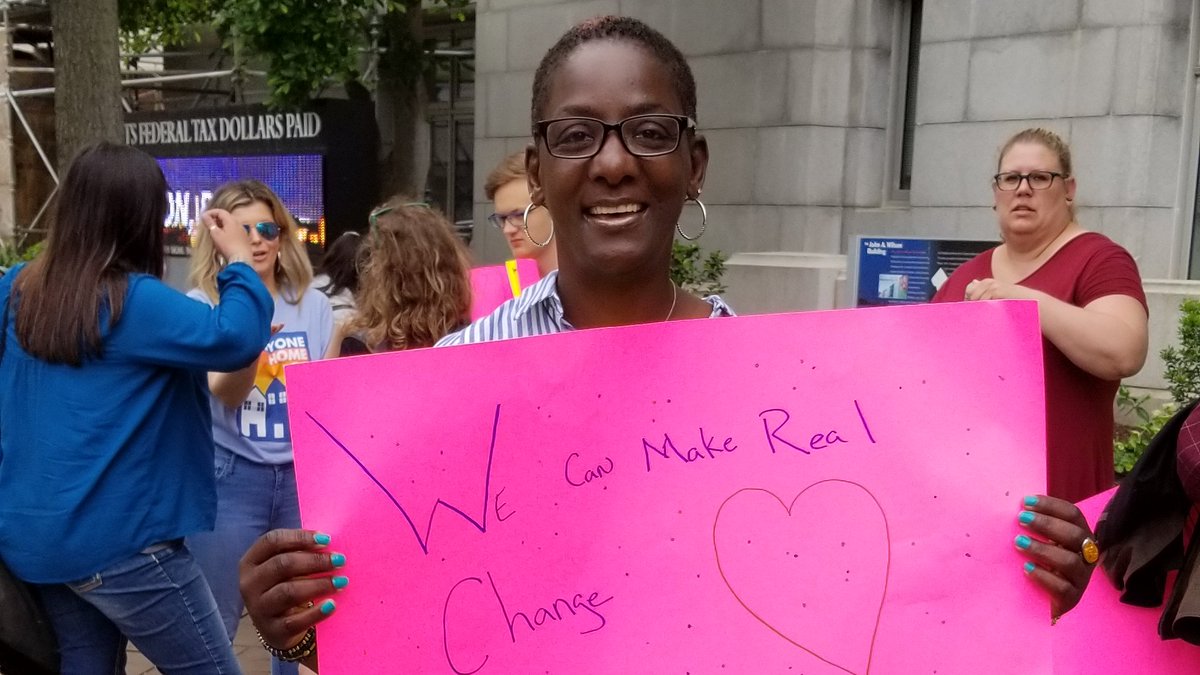
The last time Erick Whitaker heard from his mother was early in the morning on April 24, 2021.
She was off to Hains Point for her usual walk with a friend, and Erick said they had plans to meet at her apartment after that so he could help her with papers for a degree she was pursuing at the University of the District of Columbia.
But the next phone call he received wasn’t from her.
A detective with the U.S. Park Police and a distant cousin were on the line, telling Erick that his mother, Rhonda Whitaker, had been killed by a driver at Hains Point. Waldon Adams, her friend and fellow advocate for people experiencing homelessness, was also dead.
In the year since the fatal crash, Erick Whitaker, 33, has learned little more about the crash or the driver who took his mother’s life. The case was investigated by the U.S. Park Police, which refused to turn over the name of the driver, who was found and questioned. By keeping that name secret — which many local police departments do not do — the Park Police delayed what is otherwise the routine process of starting an insurance claim for wrongful death. Moreover, since the case was turned over to the U.S. Attorney for D.C. for potential prosecution, Erick has heard nothing at all.
“A year later, and I have absolutely no idea of what’s going on. I can’t make heads or tails of anything,” he says. “I don’t know anything about what happened that day. I just know that my mom went to exercise and she did not come back.”
Multiple layers of law enforcement operating within the city are a fact of life in the District, but they also make life complicated for victims and families trying to follow investigations or get the facts of a case. Moreover, the tangle of enforcement power creates roadblocks for local officials trying to curb skyrocketing traffic deaths — how do you make a city safer when you don’t control all the roads, or all investigations into deaths at the hands of drivers?
The crash
April 24, 2021 was a typical spring day in Washington: partly cloudy, with a low in the mid-40s and a high in the mid-60s. It was exactly the sort of day that Washingtonians take advantage of by getting outside after what can feel like months of hunkering down during the winter.
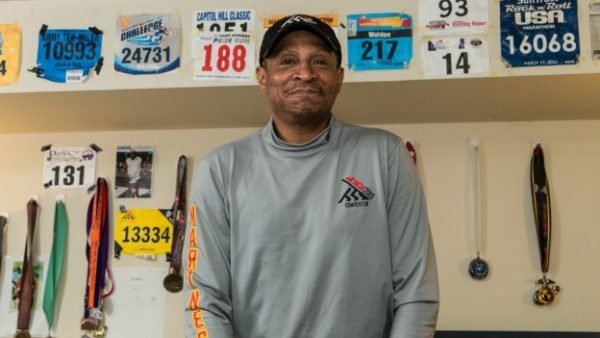
Whitaker and Adams, both of whom experienced and emerged from homelessness and then become fervent advocates for ending it, chose Hains Point for their walk. It’s a popular destination for pedestrians and cyclists; the three-mile loop circling the man-made island is framed by views of the Washington Channel and Potomac River, and its two lanes of traffic are regularly shared by runners, walkers, cyclists, and drivers.
At some point around 10:30 a.m., Park Police officers received word of a crash — a tan or gray-colored pickup truck with D.C. license plates had hit two pedestrians and fled the scene. An officer arrived to find “2 individuals lying supine in the right lane of Ohio Drive with serious injuries consistent with trauma,” according to a police report. Two people were performing CPR on Adams, who was 60 at the time, and the responding officer turned his attention to Whitaker, 55, who had an “apparent injury to her head and serious injury to her left leg.”
D.C. Fire and Emergency Medical Services responded to the scene within minutes, transporting both Adams and Whitaker to the George Washington University Hospital, where they later died. Their deaths were the 16th and 17th road fatalities recorded to that point in 2021, seven more than during the same period the previous year.
The U.S. Park Police — which operates under the National Park Service and patrols federal areas in and around D.C. — said that the driver was later found and questioned, and that their truck was towed to an impound lot.
The police report included few details about what happened, only noting that the weather was clear, the roadway dry, the driver had been driving straight ahead, and the crash did not happen in a work zone or at an intersection. A later notation added that a blood test found that alcohol was not a factor in the crash. As for any other possible cause, the report only added the following on the driver: “Unknown if distracted.”
‘Nothing about this was routine’
Like many who have lost loved ones, Erick Whitaker had to balance the immense grief of those first days with the imperative to complete basic bureaucratic matters.
“Everything had to happen so very fast. One had to hit the ground running. There was so much to do, like making funeral arrangements and packing up [Rhonda’s] apartment,” he says.
Rhonda Whitaker’s apartment in Van Ness was of particular importance to her, largely because of the life that preceded it: she had experienced homelessness off and on for almost two decades, and served a short stint in jail for stealing food from a store. Erick, who is a preschool teacher, remembers her as an intense and driven woman, one who later turned her energy to working with organizations looking to help people experiencing homelessness find housing.
After being thrust into settling her affairs, Erick Whitaker realized he needed something basic: “It wasn’t until I started realizing that for a lot of things that involved her job that I was going to need a police report.”
Police reports of this sort are regularly shared with families and representatives of those killed in traffic crashes, both in D.C. and elsewhere. Along with details of the crash, they typically include the name of the driver, a crucial detail for filing insurance claims.
“It’s really very simple. All I need is the name of the person involved and hopefully their license plate number. And if I’m really lucky, the police will give me their auto insurance information,” says Allyson Kitchel, the D.C. attorney representing Whitaker, who has developed a practice around helping the victims of car crashes. “From there, it’s very routine.”
But Kitchel, 45, says nothing was routine in this case.
The Park Police gave Erick Whitaker a copy of the police report from the crash, but redacted the name of the driver. When Kitchel followed up with a Park Police detective to get it, she says they hung up on her. (In Jan. 2022, DCist/WAMU asked Park Police for a copy of the redacted police report. We were told to file a Freedom of Information request, which we did. We have yet to receive a copy of the report.)
In a statement, a Park Police spokesman confirmed that it is agency practice to withhold the name of a driver who is involved in a fatal traffic crash. A former law enforcement official with experience investigating traffic deaths, who asked that we not share their name so as to speak candidly, said that police and prosecutors often want to keep a driver’s name private so as to not prejudice any ongoing criminal investigation.
“Prosecutors have to be very mindful of their roles. It is not to represent a decedent’s family for civil litigation, or to even be seen as doing anything that favors them,” they said. “It’s not their job to win a lawsuit for someone down the road. Prosecutors have to maintain objectivity.”
But the Park Police’s practice stands in contrast to that of many local police departments, most of which allow attorneys to obtain police reports that include the name of the driver in the wake of serious traffic crashes. That’s the case in the local portions of D.C. served by the Metropolitan Police Department, which specifies that information about a crash — including the name of the driver — is to be released to family members or their representatives.
“We certainly did not want to interfere with the criminal investigation. We certainly wanted criminal justice to play out whatever way is appropriate, but there were wrongful death benefits available to this family and we wanted to pursue them,” says Kitchel.
After weeks of bureaucratic frustrations, Kitchel took matters into her own hands. By chance, the Park Police had only lightly redacted the name in the police report, allowing her to see it if she held the paper up to the light. She then hired a private investigator to find the driver’s insurance information, and has since filed a wrongful death claim on Erick’s behalf.
But Kitchel and other attorneys say these delays can have real consequences: In D.C., the statute of limitations for filing a wrongful death claim is two years. Had she not gotten the driver’s name the way she did, one of those years would now be gone.
‘There’s still no consequences’
Once a preliminary investigation of a traffic fatality is completed by police, it’s turned over to the U.S. Attorney for D.C., which prosecutes all major crimes in the city. In its statement, the Park Police confirms that the case involving Whitaker and Adams’ death was turned over to the attorney’s office, but would not disclose when. In an email, a spokesperson for the U.S. Attorney tells DCist/WAMU that the matter remains under investigation.
D.C. law offers a number of possible charges for traffic deaths, ranging from first- or second-degree murder (differentiated by the level of intent) to voluntary manslaughter or negligent homicide.
The former law enforcement official who spoke to DCist/WAMU on the condition of anonymity says that some traffic deaths are easy cases to close quickly; those tend to involve obvious cases of excessive speed, obvious negligence, or impairment.
In 2019, for one, the U.S. Attorney’s office secured a guilty plea from Jeoffrey Richard Williams, who drove into a park on Pennsylvania Avenue and killed two people sleeping there, Jesus Antonio Llanes-Datil and Thomas Dwight Spriggs. He had been driving 68 miles an hour and under the influence of alcohol. That same year, another driver was sentenced to six years in prison after pleading guilty to hitting and killing motorcyclist Oren Dorell; the driver had been speeding and driving under the influence of PCP. In late 2018, a Maryland driver who hit and killed cyclist Thomas Hollowell after running a red light at a high rate of speed near the National Mall pleaded guilty to manslaughter; he was sentenced to 18 months in jail.
But the former official says that from their experience in law enforcement, other cases are less clear cut — and can leave prosecutors and grand juries struggling to decide if what seems like an accident should merit prosecution that could end in jail time or a prison sentence. Eileen McCarthy, a longtime activist for pedestrian causes in D.C., says she’s heard much the same.
“Think about what a jury would be like, especially a jury of people who drive everywhere and who can easily think, ‘Oh, those pedestrians come out of nowhere. Do I want to prosecute? Do I want to convict this person?'” she says.
In the year since Rhonda Whitaker was killed, Erick and Kitchel say they haven’t heard anything from the U.S. Attorney’s office on the case. Coupled with the little information Erick got from the Park Police, he says he’s often at a loss when people ask him about his mother’s death.
“I’m always hoping that, ‘Oh my God, I hope nobody asks me about this’ because I don’t have anything to say. I can’t make something up, you know? I just feel so small and sort of useless,” he says.
Denis Mitchell, an attorney for Waldon Adams’ family, says that information has not been forthcoming and adds that the investigation has gone on for longer than similar situations he experienced in Maryland and Virginia, where local prosecutors handle the cases. (Adams’ surviving family declined to comment on the case.)
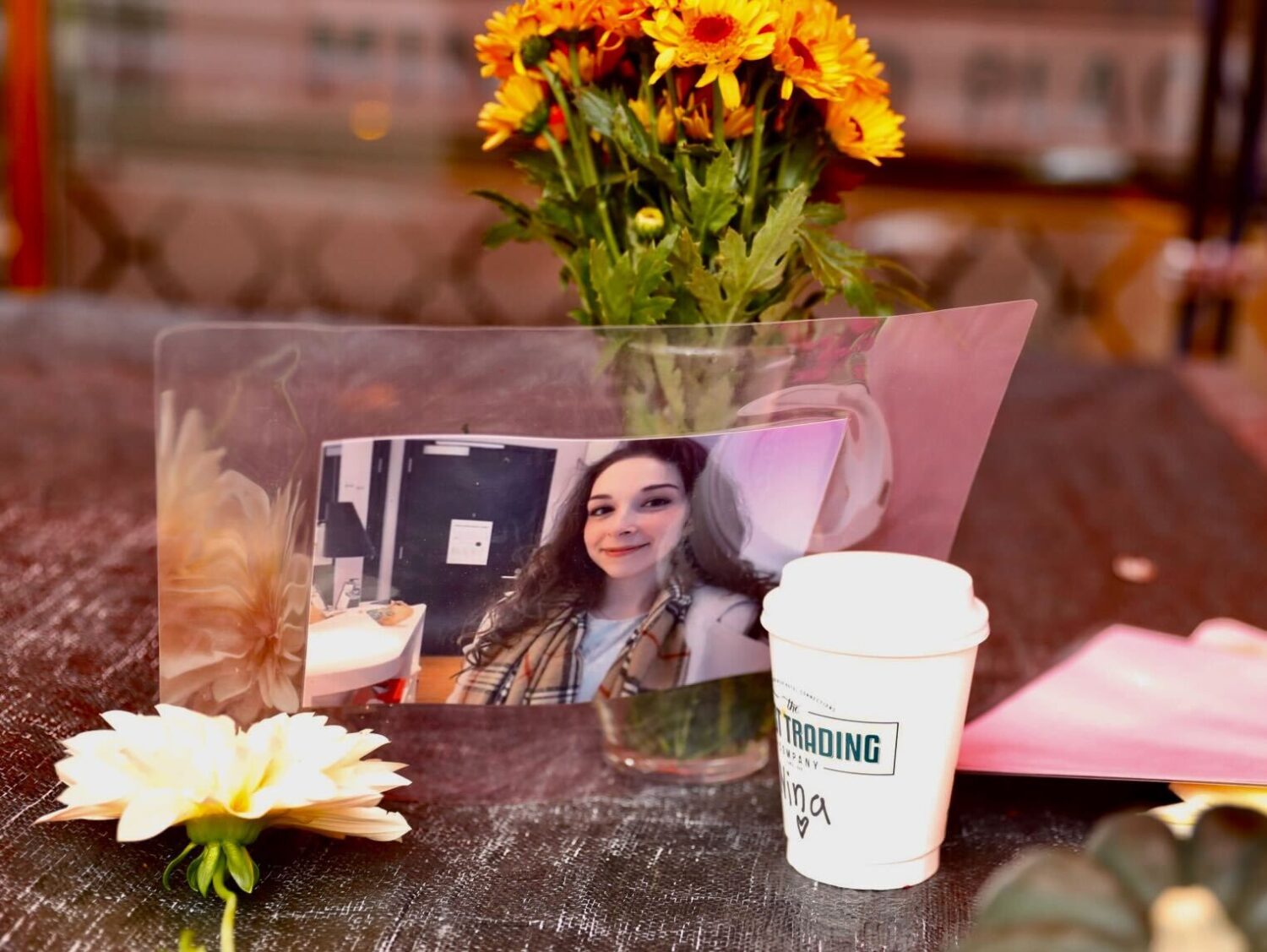
Matilde Larson, 62, lost her 24-year-old daughter Nina when a driver hit and killed her as she crossed a street in Adams Morgan last November. She says she’s having a similar experience with the U.S. Attorney.
“I am now suffering the indecency of the U.S. Attorney’s office. It’s been five months and they will not give me any information on any progress in the investigation, and they very rarely return my phone calls,” she says. “Five months later, and there’s still no consequences for hitting someone in broad daylight.”
Kitchel says that the lack of information and apparent slow action by Park Police and the U.S. Attorney can leave friends and family of those killed in traffic crashes without a feeling of closure — and deny elected officials information they might be able to use to make broader changes to prevent future crashes.
“It’s absolutely devastating for the family,” she says. “This man lost his mom and then he felt that law enforcement was against him and wouldn’t even give him basic information about his mom, what had happened to her, how this occurred in the first place.”
Erick Whitaker agrees that the lack of information has damaged his trust in the investigation. “I hate to say it, but it does give you the feeling of such a deep sense of mistrust and foreboding.”
‘It keeps me up… at night’

Kitchel says what happened to Rhonda Whitaker and Waldon Adams at Hains Point — as well as the continuing silence Erick has experienced since — speaks to a broader problem with D.C.’s ability to prevent traffic injuries and deaths.
While D.C. government agencies and police control local roadways, federal police agencies like the U.S. Park Police are responsible for wide swaths of the city — including many popular destinations for recreation, like Hains Point, Rock Creek Park, Anacostia Park, Fort Dupont Park, and others. That, she says, can complicate the city’s already rocky implementation of Vision Zero, the five-year-old initiative to eliminate traffic deaths by 2024. (The number of people killed on D.C. roadways rose to 40 in 2021, the highest tally since 2007.)
“I would like the Park Police to get on board with the city where they live and work and help us solve these issues so that we can make roads safer places. We want to be a livable, walkable city, and when people are being killed and people aren’t being open about it and talking about it, you’re not able to actually solve a problem,” she says.
It’s also an issue of interest to D.C. Del. Eleanor Holmes Norton, who this week sent a letter to the National Park Service — which oversees the Park Police — to get details on federal policies on investigating crashes and why police won’t disclose the name of a driver to families of people killed in crashes.
“We do have an unusual situation in the District where we have many federal police, along with the Metropolitan Police Department. And that does sometimes make for strange interactions,” she says.
Pedestrian and cycling advocates say that the ultimate goal has to be one of safer drivers on the roads, and roads engineered to ensure that non-motorists can remain safe. Earlier this month, NPS unveiled a proposal for separate lanes for walking and cycling around Hains Point, which some advocates say is at least a step in recognizing that changes need to be made on roadways in D.C. controlled by federal agencies.
For Erick Whitaker, he says he has found some semblance of peace with what happened. He remembers life with his late mother as being full of peaks and valleys; Rhonda was an intense woman who fought through challenges of homelessness and trying to establish stability thereafter.
“She always operated at a 10. By hook or by crook was her catchphrase, and she really meant it. She believed that she deserved nice things, that she deserved the best there was. There was a sort of tenacity as it concerned getting things done,” he says.
That same tenacity has helped Erick make it through the last year, but he knows that the next person or family to suffer the same experience may not respond the same way.
“I worry, what if something like this happens to someone who isn’t as emotionally resilient? For some people things like this could go really bad. There could be serious ramifications or ripple effects,” he says. “It keeps me up sometimes at night.”