 Tamia Robinson
This article is part of a collection of work produced by young journalists. DCist/WAMU partnered with The Creative School, a nonprofit focused on empowering youth-led storytelling in Southeast D.C., to teach a foundations of journalism workshop during spring break. You can see all of the stories here.
Mental health issues in young people are often overlooked, disguised or misdiagnosed. In D.C., 41% of youth experiencing major depression do not receive the mental services they need, according to a 2022 report from Mental Health America But this is considered good when ranked against other states. The national average is 60% of youth with major depression who do not receive any treatment.
In fiscal year 2019, roughly 3,000 children ages 0-17 received mental health services, according to The D.C. Department of Behavioral Health. More than 90,000 students enrolled in public schools that year (including public charter schools).
“Mental health is something that a lot of youth go through without even knowing – dealing with depression, stress – not having a good relationship with older people,” said Rain Jewells, 15, who is the CEO of her own “beauty and fashion empire.” House of Jewells provides hair styling, photography, and beauty products.
In 2019 (the most recent data available), only 31% of D.C. middle school students said they would likely talk with an adult family member when they “felt sad, empty, hopeless, angry, or anxious” – though 68% said there was an adult at school they would feel comfortable approaching. More than one third of high school students said they felt sad or hopeless almost every day for at least two weeks straight, to the point that they stopped doing some usual activities.
Youth mental health awareness is a sensitive yet necessary topic. Millions of children and adolescents suffer from mental health issues that don’t get treated or diagnosed properly. Many are neglected and told, “Stop being lazy,” “You’re being dramatic”, “You’re a child, you don’t know anything about pain or struggle.” This can cause even more stress, anxiety, and depression.
Depression and anxiety are just two examples of many other disorders that youth face, such as bipolar disorder, eating disorder, personality disorder, post-traumatic stress disorder (PTSD), and many more. Suicide is a leading cause of death among youth ages 10-24 in the United States, according to the Centers for Disease Control and Prevention. In D.C., 14.4% of middle school students and 14.9% of high school students reported having attempted to kill themselves.
Jewells and other locals trying to make a difference gathered at the Kenilworth Recreation Center last month for D.C. Department of Youth Rehabilitation Services’s second “youthference” event.
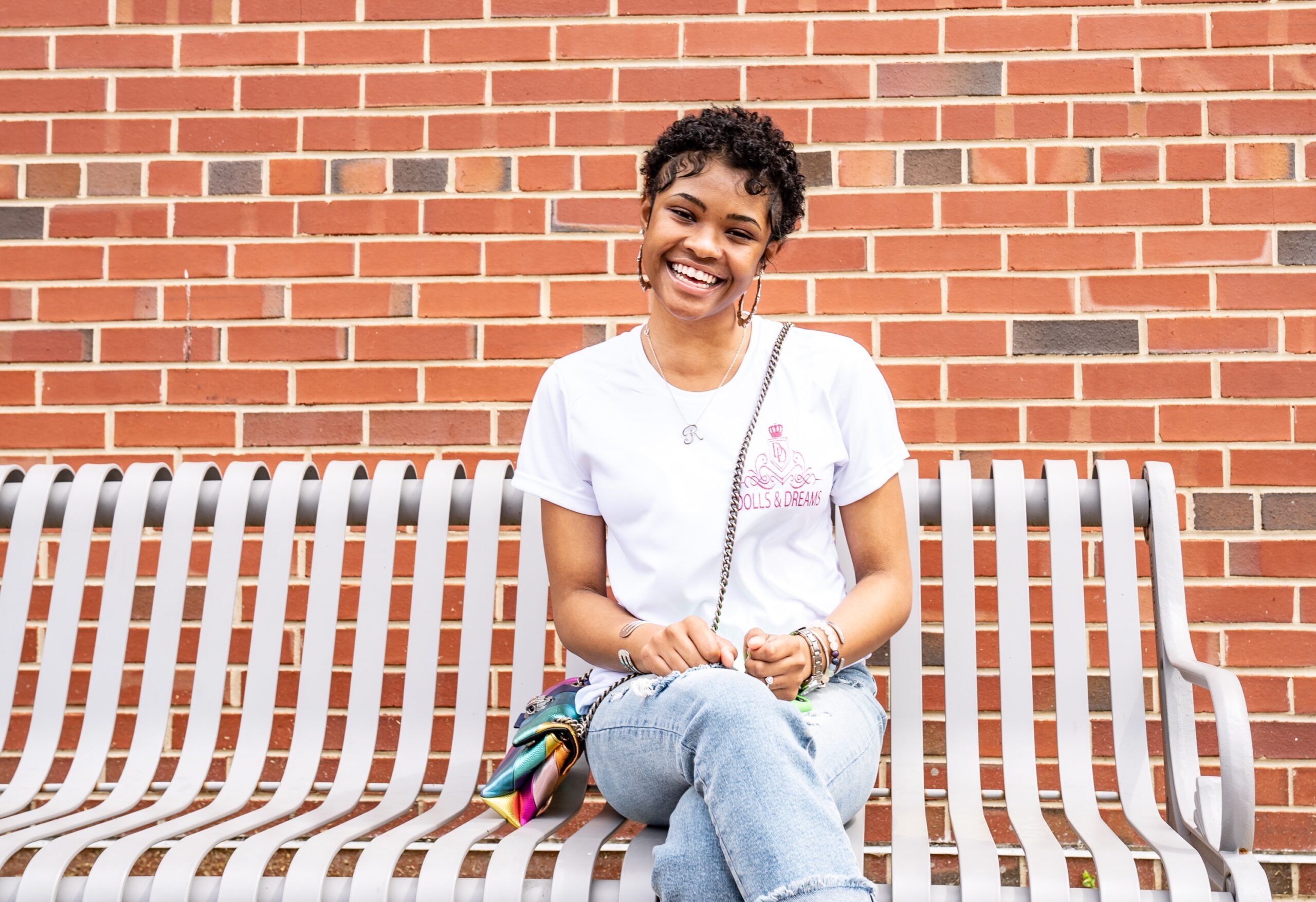
DCist/WAMU: I want to start off by getting your opinion on mental health [within] youth. Have you ever experienced or seen it?
Rain: Mental health is like a major issue for the youth, and if you’re going through it you can honestly seek help. This is a great topic because I’m also taking a health class and we talk a lot about mental health just being at a young age because a lot of people – like I would say, the age range is like 15 to 17 – deal with a lot.
Some things you can do is just try to meditate, take some time out to yourself, you know. Just try to help yourself have a better mindset in order to have a great mental health system. I also know a couple of people that deal with mental health issues. For instance, my cousin, she goes through a lot being depressed – like, suicidal thoughts. It hurts sometimes because I shouldn’t have to see my cousin have this element. Recently, she went to one of the suicidal mediation places. She had to stay there a long time. I can see that she has changed. She more interactive now, just being more social.
You spoke a lot about your cousin and her mental health. Has she ever tried to confide in you or asked you for help?
At first we didn’t really have a close relationship, but over time, we tried having cordial conversations. Sometimes she does come and talk to me and I’m the type of person like, if you need advice, I’ll be there. Even if I’m not going through the situation, I’m able to say that I have people around that element, so I’m able to help give advice to help you better your mental health.
Do you think that the youth have any other outlets? I know that there’s a lot of hotlines and groups that you can go to. Do you think that they’re good and that they can help improve your mental health?
I think some groups are and some groups are not, because some groups just tell you everything’s going to be OK but some groups also offer services. For instance, my mom,she has a business called DOLLs and Dreams. She works with young girls in the community, mostly the Ward 8 community. Basically, she mentors them, she’s like a second mom or godmother to them. Also, my mom [is] a very big help. I’m not exempt from nobody. I just see her and try to take the information she gives them. When people come to me, I use that information and give it to other young girls.
I want to speak about your business. Can you give a little insight on what that entails?
I started The House of Jewells around the age of seven. At first, it was just me selling lip gloss, just having different names, just being the girly girl I am. But over time, I started to learn new things, so I started to do hair, and then I started to figure out that I like styling. And then over time, I started to know that I like photography. I’ve been doing hair for a long time now. I’ve recently started to take it seriously about five months ago, and my business has expanded to a great point in life and I’m proud of myself. We will be launching The House Jewells this summer. We also have beauty products, which includes edge control, hair bonnets, brushes – also lashes, that’s what the youth like these days. I’m big on styling.
Well, I don’t know you personally, but I just want to say that I’m so proud of you.
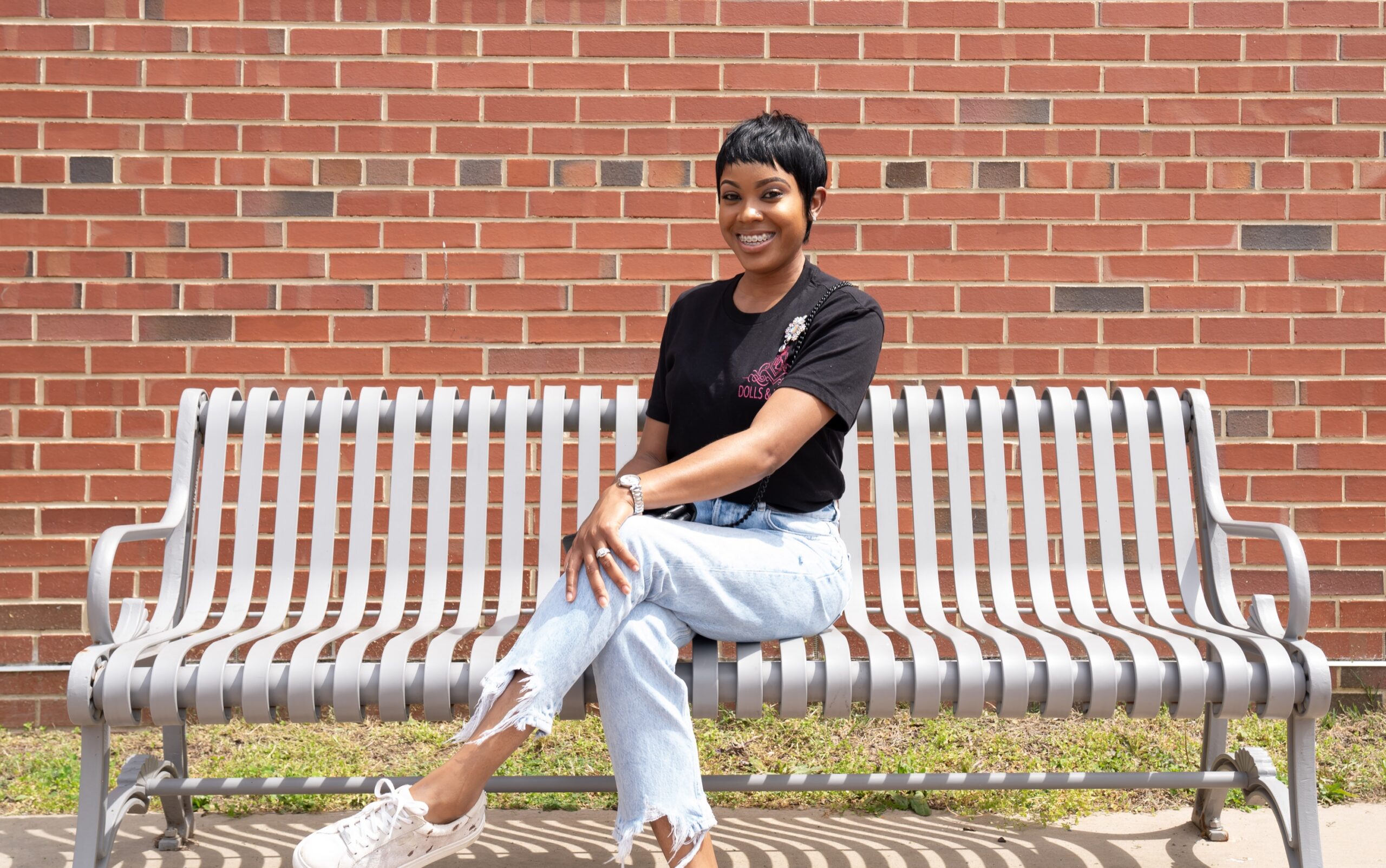
Remy Henderson-Smith is the CEO and founder of DOLLs and Dreams Inc. (Daughters Overcoming Life Lessons). The nonprofit organization educates and empowers young girls and women in D.C. to galvanize their voice and become changemakers within their community.
So I first want to get your opinion and your thoughts about the issues and awareness of mental health in the youth.
What we’re realizing is that it definitely takes a village. DOLLs and Dreams, or even me myself, Ms. Remy, cannot do this work alone. We have to learn to give our young people grace. We [must] learn to be more understanding. I think it’s important for every person who work with youth to have some type of knowledge or resource where, you know, if a youth come into our program and we can identify these struggles, we have the necessary tools and resources to refer them out to get the help that they need. So to your question, it’s definitely relevant, and it’s something that you know a lot of our young people struggle with.
We’ve witnessed a lot of our youth (ages 7 – 24) coming in the program who are very talented, very ambitious – however, they do struggle, as you mentioned, with several mental health issues: suicidal ideation, depression, [or] eating disorders.
Do you think that the youth have outlets that they can confide in when they are struggling with these mental health issues?
Absolutely. It all starts with having a trusting relationship. We see it from both sides. You know, as parents, yes, we want to have the best relationship with our children. But sometimes a lot of that hurt or trauma that the young person has experienced, comes from, you know, their own bloodline, family, their home.
It’s very important to have that outlet. Here at DOLLs and Dreams, we have innovative platforms. Our program is designed to be youth led. We learn what their strengths are and build off their strengths. If it’s art, we have programs that are tailored strictly for art. If it’s music, fashion, or you just want to have open dialogue – it is all youth led.
What’s really important [is] creating that safe space for the youth so that they can, you know, freely express themselves. Witnessing our participants who may struggle in those areas, they have evolved over time.
Have you ever experienced or seen someone else go through a mental health issue?
Absolutely, I remind people all the time … I’m not exempt. I have children, I have family members who suffer with mental health disorders. I think it’s just a beautiful thing for me to be a resource to my family, to be able to connect them with other resources, you know, within my network. [It’s] definitely something that I deal with myself. It is heartbreaking. You know, we don’t have all the answers, we can only just continue to shower our loved ones with love, keep them supported, check in with them and be understanding.
What was your inspiration for your organization when it very first started?
I am from Washington, D.C.: Ward 7, Northeast D.C., Paradise At Parkside Community. Just growing up in that community, I noticed there were a lot of things that, you know, I just wasn’t able to relate to because my family upbringing was different.
When I had my first child, she’s very gifted, so I kept her occupied. I believe that, you know, it is a life outside of the community that we live in. I just started supporting her with her gifts and talents, things that interest her. I got a lot of feedback from neighbors wanting to sign their daughters up, now relying on me as a resource as to how I could support them. It was a dream, honestly, that’s where DOLLs and Dreams stand for Daughters Overcoming Life Lessons. I had to learn how to overcome it.
I noticed a lot of people aren’t as resilient, you know, aren’t as audacious [or] willing to take these risks. But I did, and one thing that I never stopped doing was dreaming. I knew once I was in a position to start building and learning all the business aspects, I just kept going. One day I was fully prepared to go forth to register my business.
I’m so proud of your business, and I’m very excited to see what the future has in store for you as it continues to grow and flourish.
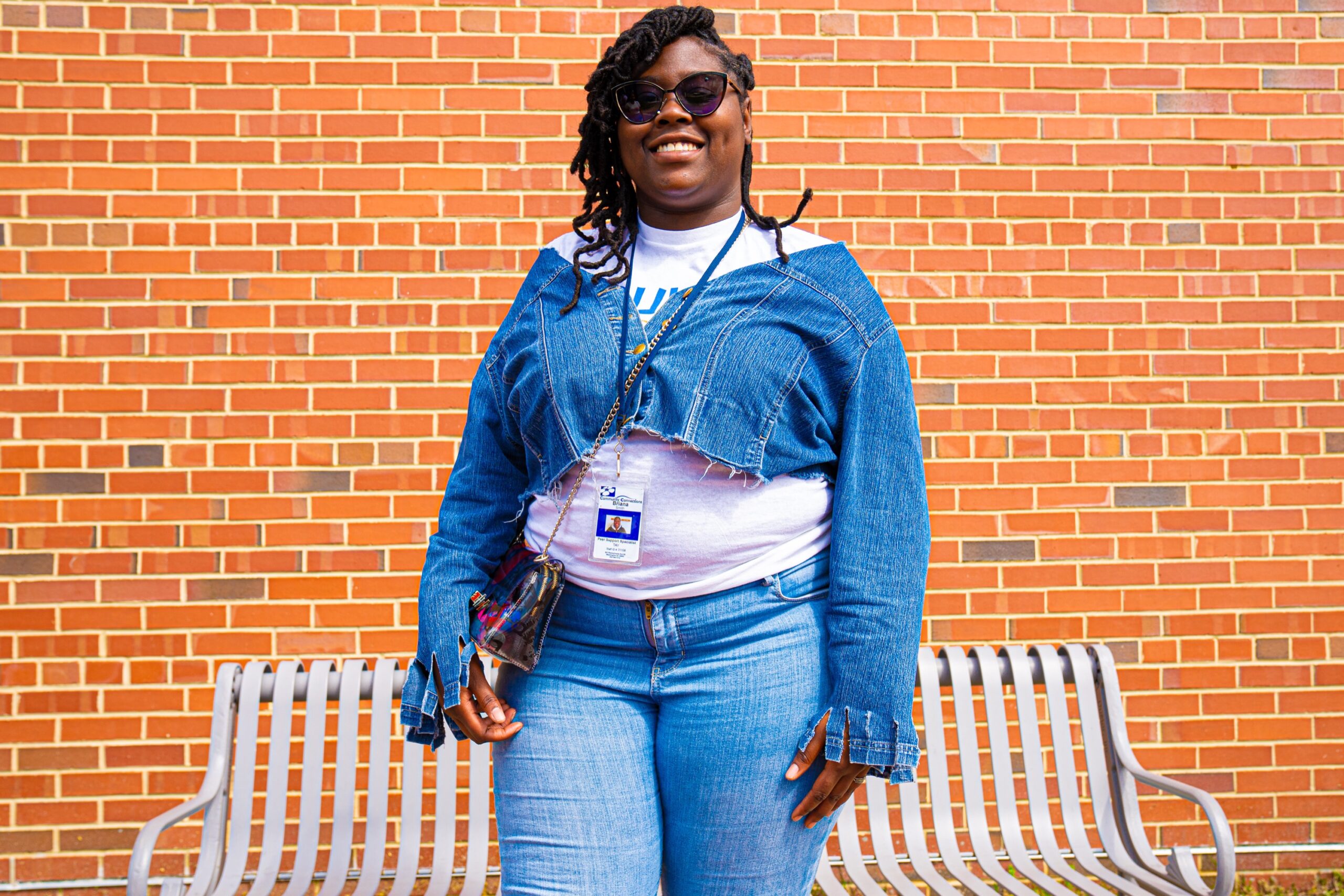
Brianna Smith, 23. works at Community Connections as a peer support specialist for the Transitional Age Youth program for the D.C. Departmentment of Behavioral Health.
Do you think that [mental health issues are] common? Do you think it’s rare? Do you think it’s overlooked? Do you think it’s being properly supported?
I will say it’s a little hard right now because our youth, our transitional youth, is going through a lot of traumas and stress. We just try to get them together to work on bettering themselves.
Howdo you support the youth with their mental health issues or any trauma?
I will ask the youth to come to 801 Pennsylvania Ave SE, Community Connections, and meet with me and my team. We will have an intake, [we’ll] speak on trying to help them [by] getting the youth housing. Anything they want to get off their chest we are there to help them with anything.
If you feel comfortable sharing, can you give an example of you, or anyone you know, suffering from a mental health issue?
Well, I have a few youths that’s going house to house … It [does] hurt me a little bit, but I still work through it. I gotta be strong.
When I was young, I was in a shelter. Arguing with my mom and dad. I found out about moving into the transitional age program and got my life together. I was also pregnant. This is my personal life story with an older dude (guy). I thought it was love and it wasn’t it. I was hit, I was put out – things like that. I grew from that, I love having positive people around me that, you know, help me push forward. I love what I do.
What made you get into the industry of helping the youth?
I love working with kids and adults. I grew up in Southeast, I love feeding kids, things like that. That’s what got me into it. Working in a daycare, feeding the homeless. I’m just a loving and kind person.
I’m extremely proud of your story and all that you’ve overcome. You’re killing it, you’re rocking it, keep going.
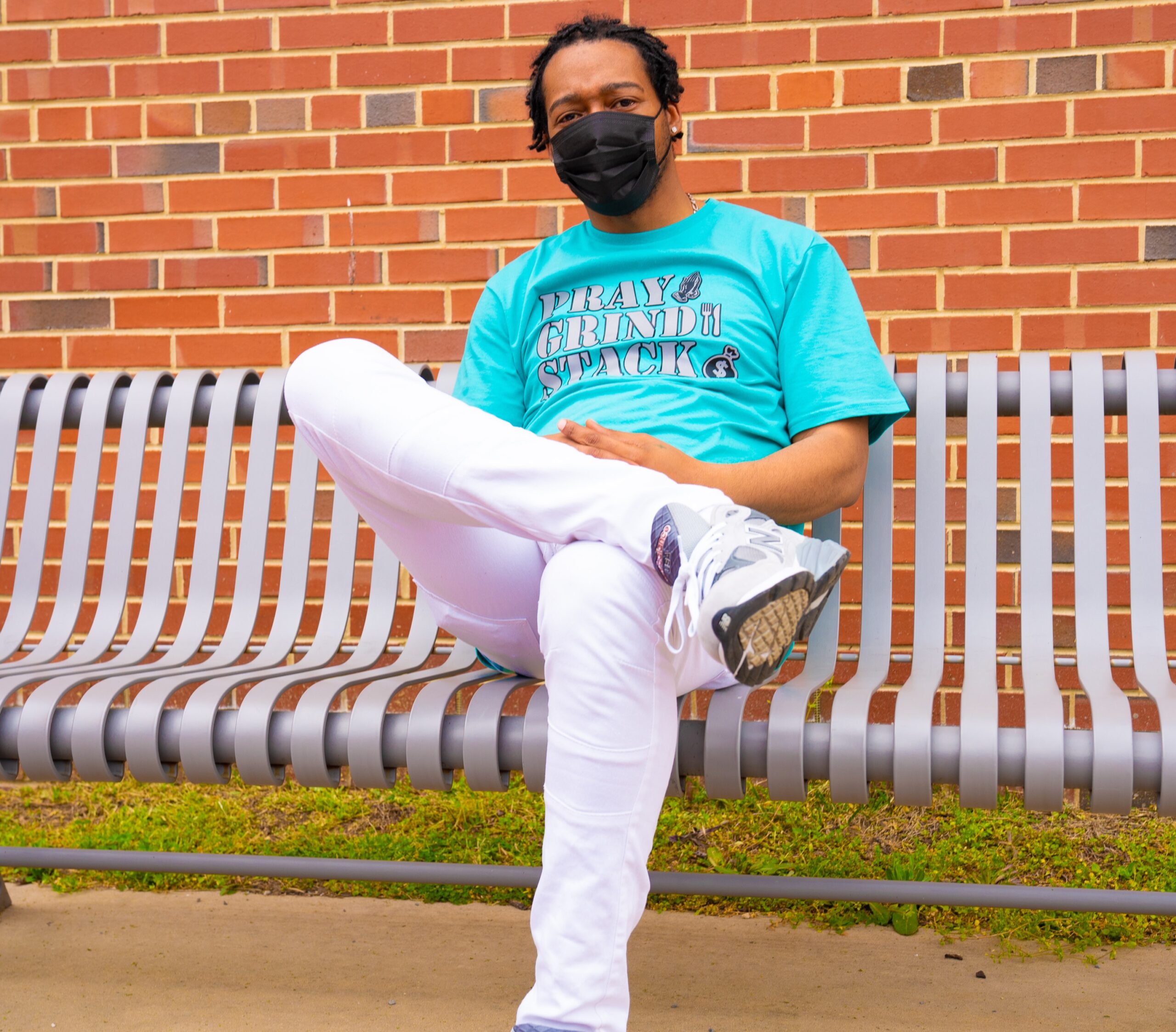
Antoine Johnson, 38, is a life coach, youth mentor, motivational speaker, and master barber with Righteous Enterprise LLC.
I want to first get your opinion about mental health struggles.
I think it’s still at an all time high, and I know that we do have resources out here, but I think that we do need to focus more on it. A lot of people out here probably suffer from mental illness and may not even be aware of it or have been diagnosed yet. So I think it’s something we [shouldn’t] take very lightly.
Do you think that the youth have good outlets to help them with their mental health?
Yes, I do. I think a lot of times in our communities, we don’t take advantage of resources. I know that we can have more. I welcome more mental health resources. But I mean, I know that there are some currently that everyone isn’t tapping into. So that’s why I’m here, to enlighten the youth and … let them know that things do get better, and change is possible.
Do you have any examples that you’d like to share of you or anyone you know who has suffered or who are currently suffering from mental health issues?
I did suffer from mental health issues before I started to give myself a chance. I was living a life full of misery due to just, um, childhood abandonment issues and other things that led me to substance abuse and stuff like that in the past. When I did get in trouble with the law, case managers, counselors and social workers were there to help me identify that I suffered from mental health issues.
What made you get into the industry of helping the youth?
I am a product of my environment and I also was a menace to society. So I want to make sure when God allow me to clean my life up and he gave me a second chance, I want to make sure I can come back out here and lead the youth to the right things, the right way in life.