Jacob Fenston
Ah, summer in D.C. … when stepping outside can feel like entering a sauna where someone left some dirty towels and gym clothes overnight.
So where’s the best place to take a dip and cool off?
Since the 1970s it has been illegal to swim in any of the District’s waterways, due to pollution. But that could change sometime soon: Water quality monitoring over the past three years shows the Potomac River and Anacostia River are often clean enough to swim in, and D.C. officials have signaled their intention to loosen, if not completely lift, the swim ban.
There are six locations along the Potomac in D.C., Maryland and Virginia that could make good swimming beaches, according to a new report from the Potomac Riverkeeper Network. It’s the latest effort to lobby for opening up aquatic recreation in the area’s rivers: The group Anacostia Riverkeeper is aiming to have a “splash day” in the Anacostia this summer, and D.C. Delegate Eleanor Holmes Norton has legislation pending in Congress that would direct the Army Corps of Engineers to conduct a full feasibility study of possible river swimming beach locations in the city.
The Potomac Riverkeeper report draws on water quality data from the past three years, during which time volunteers collected water samples for testing on a weekly basis at 20 sites on the Potomac and its tributaries. Overall, those 20 sites passed federal water quality criteria for bacteria 76% of the time. Many sites were in the 80% to 90% range.
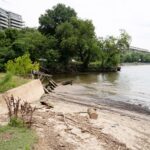
Combined with water quality data, the report also looks at where beaches where historically located or are still visible. “If you walk along the river at low tide, you can see where these areas have beaches already,” says Potomac Riverkeeper Dean Naujoks. “A lot of those beaches need to be revitalized if we’re ever going to have people swimming there.”
Additionally, the six possible beach locations identified in the report are located in parks that already have facilities such as bathrooms and parking.
D.C. would not be the first city to reclaim polluted waterways for swimmers. In Portland, Ore., for example, the Willamette River had a similar sewage problem as the Potomac. Once that was fixed, the city opened up more than a half dozen beaches to swimmers. In Boston, there have been regular swim days allowed on the once-highly-polluted Charles River for nearly a decade.
“The idea of creating beaches and swimming areas is not a radical concept,” says Naujoks.
Beach Option 1: Gravelly Point Park
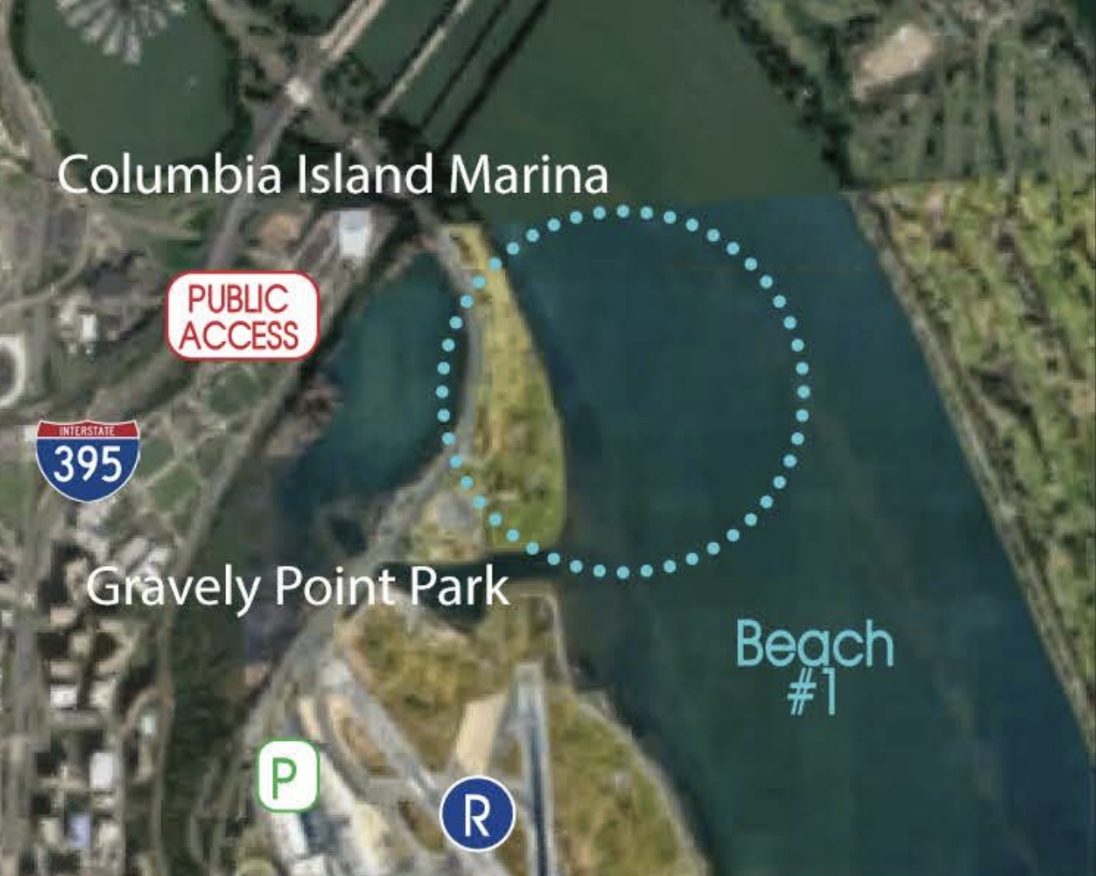
What’s now Gravelly Point — a riverside park on the Virginia side with great views of planes taking off and landing at National Airport — was once known as Arlington Beach. In its heyday in the early 1900s, the beach featured not only swimming areas and floating diving platforms, but also bath houses, canoes, a roller coaster, and other attractions. Nowadays, the freeway noise from I-395 might detract a bit, but only when the car traffic is not drowned out by air traffic.
Beach Option 2: East Potomac Park
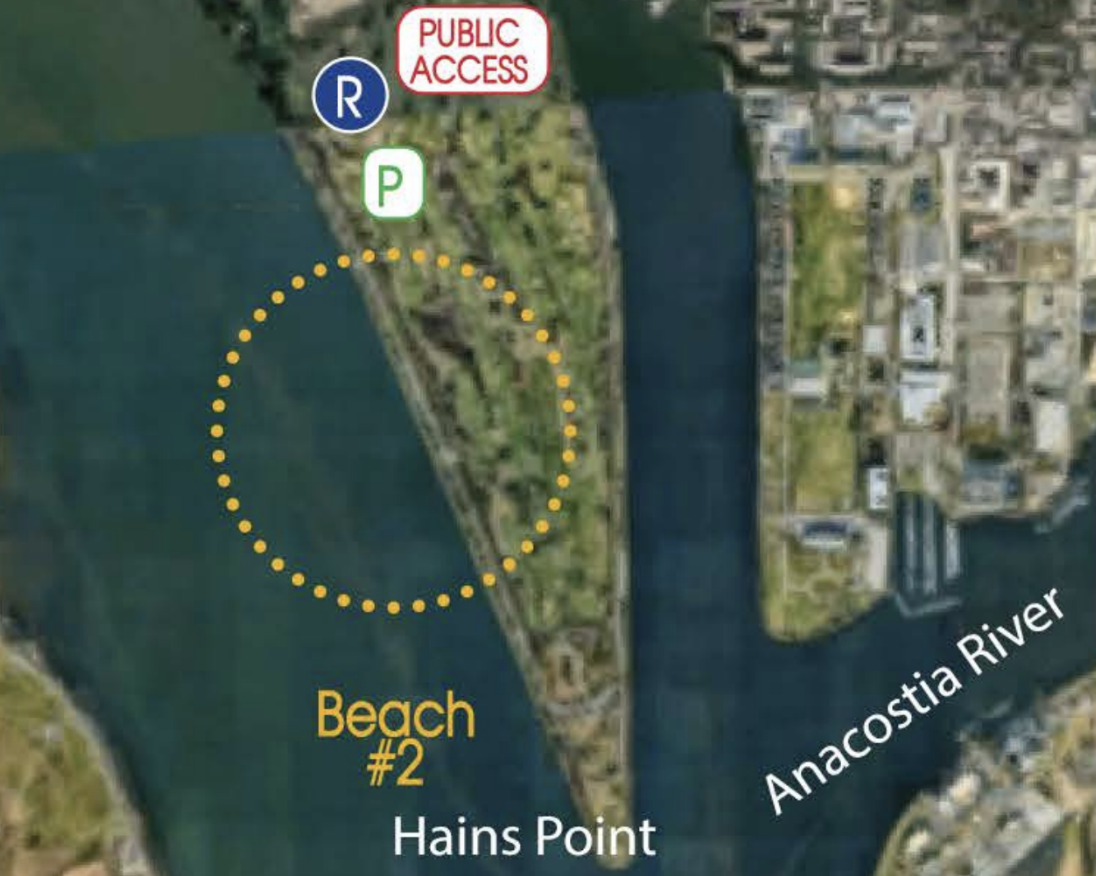
When you’re done riding your bike around Hains Point, time for a jump in the Potomac! Or, escape the crowds at the Tidal Basin and go sunbathing at the new East Potomac Beach!
None of these beaches would be safe to swim in all the time — heavy rainfall still brings sewage overflows and other pollution into the rivers. Such sewage pollution has been greatly reduced in recent years by DC Water’s Clean Rivers Project, and more upgrades in both D.C. and Alexandria are scheduled to go online, keeping more sewage out of the water, in 2025 and 2030.
Beach Option 3: Oxon Cove
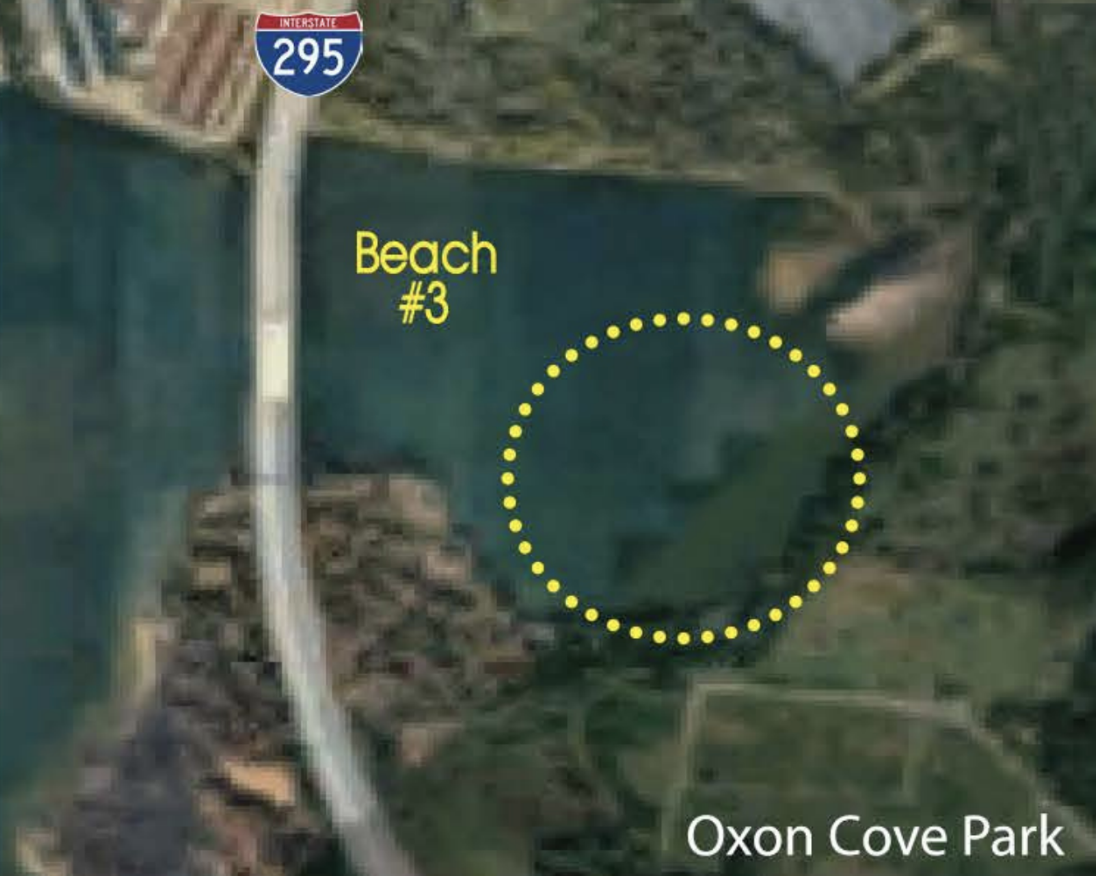
Just south of the District Line, in Prince George’s County, Oxon Cove could provide a nice sheltered swimming area, with access from the National Park Service’s Oxon Cove Park. One downside, it’s not easily accessible without a car (or a boat).
Beach Option 4: National Harbor
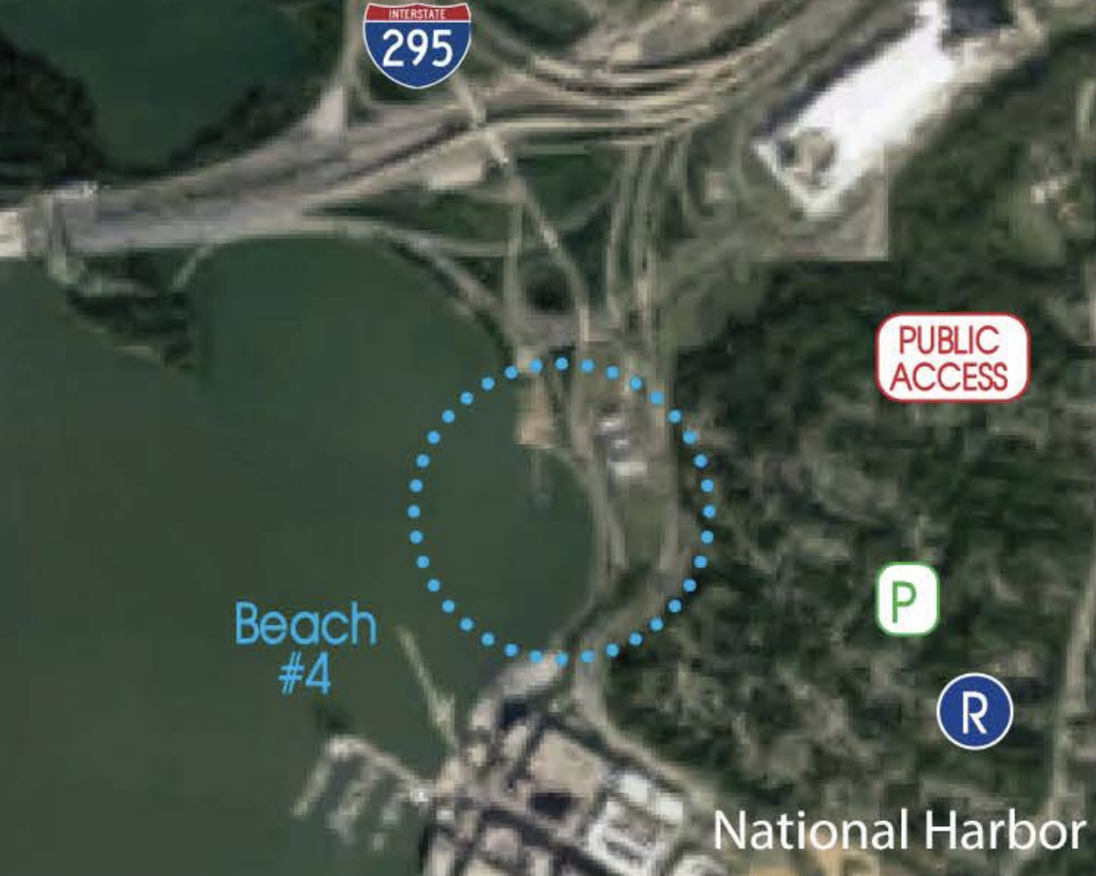
National Harbor is a natural choice! There is already a beach-like area in this protected cove, and an open-water swimming group, Wave One, has regular group swims from one of the docks. National Harbor has some of the best water quality in the area, with an 87% passing rate, according to Potomac Riverkeeper.
Beach Option 5: Jones Point Park
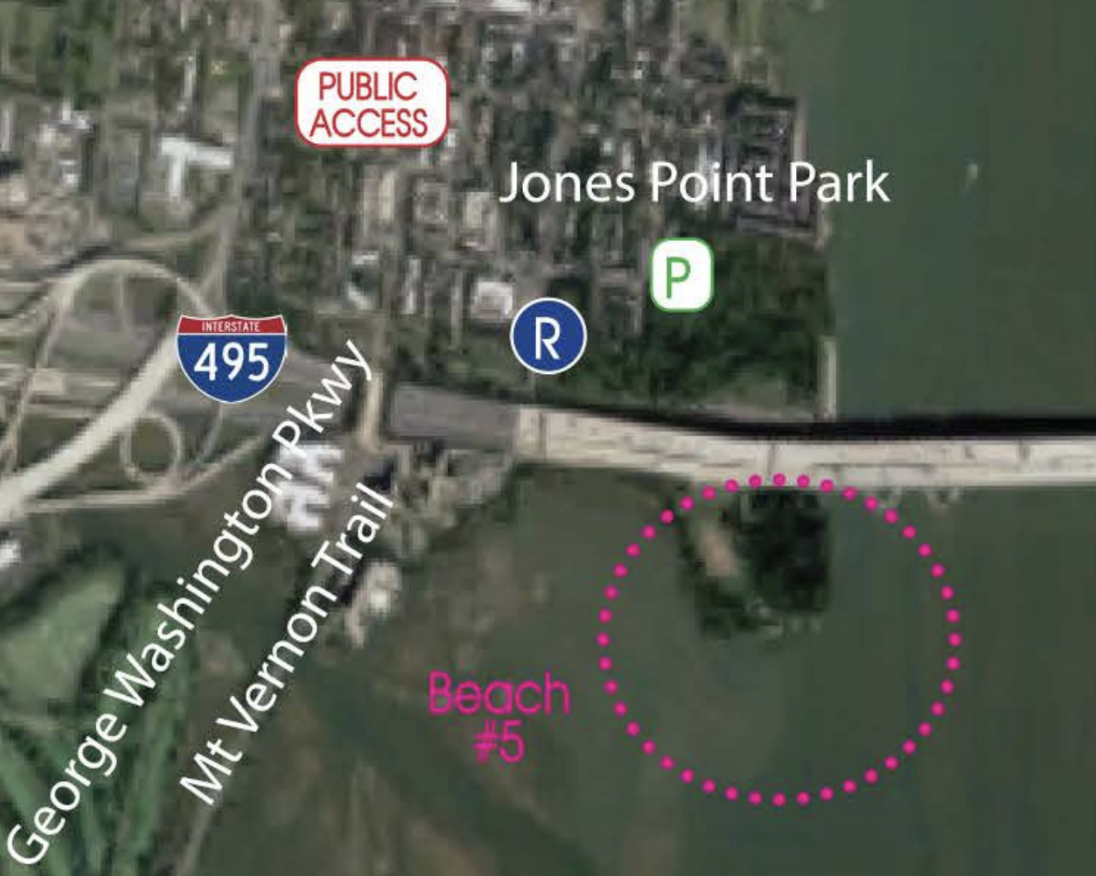
Historic Jones Point in Alexandria, home to the southernmost boundary stone marking the District’s original borders, has lots of open space, parking, and easy access from the Mt. Vernon Trail.
Beach Option 6: Belle Haven
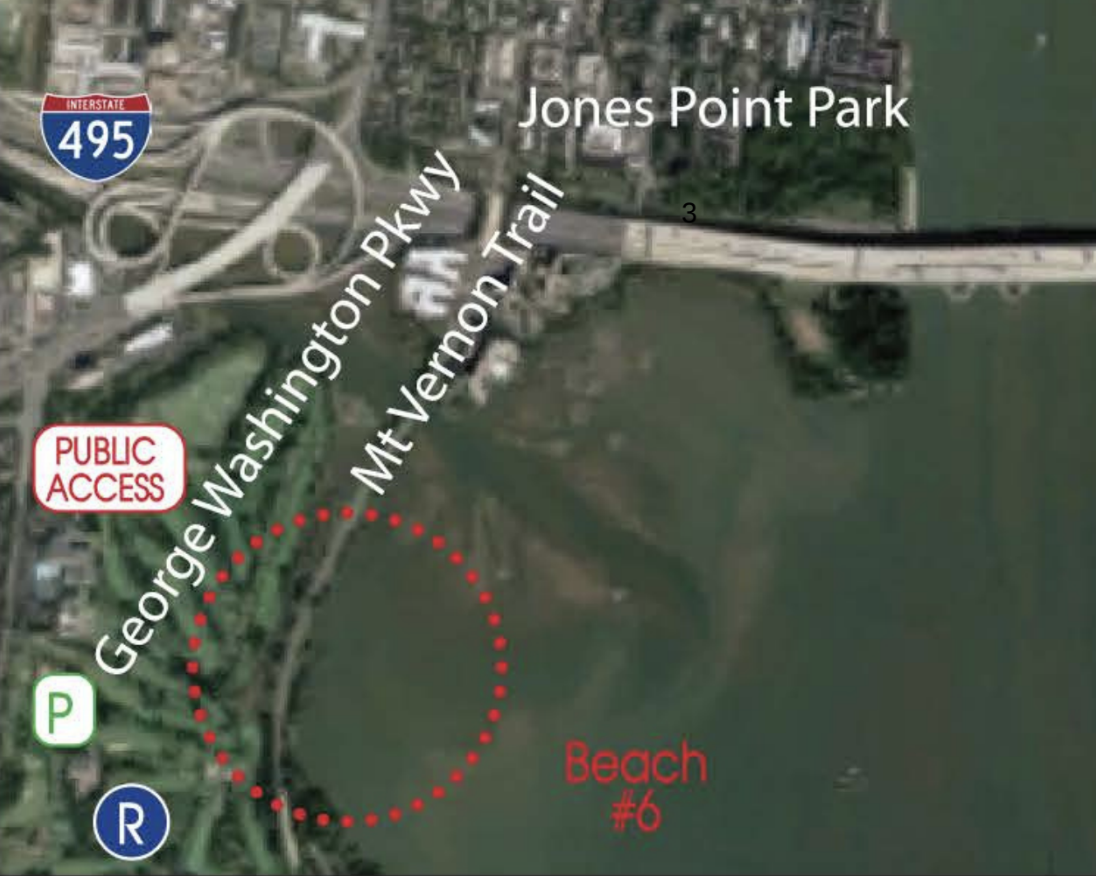
Just a bit farther down the Mt. Vernon trail is another beach option, on a protected cove near the Belle Haven Marina.