Martin Austermuhle
The June 21 D.C. primary has come and gone; if you missed the results, please read here. But as candidates awake from a raucous night of celebrating a win or mourning a loss, there are plenty of story lines and opportunities to parse what the outcomes mean. Below are some of the bigger themes and questions we saw emerge from this primary cycle.
Moderates win citywide and progressives win local, but does it matter?
When it comes to the Democratic Party, the national narrative has been one of periodic infighting between the progressive wing and the more moderate one. And in recent years, that same dynamic has existed in D.C.; we’ve reported about it here and here, the Washington Post had its own take, and so on. But did Tuesday’s Democratic primary do anything to clarify which faction is ascendant in D.C. politics?
Yes and no.
On the one hand, more moderate contenders won in citywide races, including Mayor Muriel Bowser, D.C. Council Chairman Phil Mendelson, and Councilmember Anita Bonds (D-At Large). On the other, progressive-leaning candidates for the D.C. Council emerged victorious, including Brianne Nadeau (D-Ward 1), Matthew Frumin in Ward 3, and Zachary Parker in Ward 5.
There’s caveats to both trends, though. In Mendelson’s race, for one, he did win — albeit more narrowly than in 2018, when he faced progressive challenger Ed Lazere. (This year his challenger was Ward 4 ANC Commissioner Erin Palmer; she ran a spirited campaign and lost by 10 points, while Lazere lost by 27.) As for Bonds, she only won with a plurality of the vote, taking advantage of a divided field of three challengers. On the other side, Nadeau was an incumbent, with all the advantages that can traditionally confer. And both Frumin and Parker were fighting for open seats.
It’s also worth noting that the moderate and progressive labels can get fuzzy pretty quickly, and those alliances on the council can often be situational more than permanent. If you were to define a progressive bloc on the council, it would likely include Nadeau, Janeese Lewis George (D-Ward 4), Charles Allen (D-Ward 6), Trayon White (D-Ward 8), Robert White (D-At Large), Elissa Silverman (I-At Large), and Christina Henderson (I-At Large). But members can realign depending on the vote; Allen and Henderson, for example, opposed Nadeau’s bill last year to stop Bowser’s pilot program to clear homeless encampments.
And what of Councilmember Kenyan McDuffie (D-Ward 5)? He voted against increasing taxes on the wealthy last year, but also wrote the bill creating a Baby Bonds program for low-income kids (which Mendelson then put in the budget), and passed the landmark public safety reform bill known as the NEAR Act.
Or how about Councilmember Mary Cheh (D-Ward 3)? She’s been seen as a leader on many issues related to the environment and transportation (she recently engineered a dramatic increase in registration fees for extra-large vehicles, for one), but was often more restrained on fiscal issues like taxes. And she backed Bowser in the mayoral race, but Frumin in the Ward 3 race.
“The labels don’t bother me very much,” she told me when I asked about the progressive-moderate split. “Government is a practical affair, it’s not ideology.”
When we talked to Henderson about this after she was first elected in 2020, she said much the same: “I think truly the best type of policy is made when you’re looking at each individual issue, not in couching it as [part of an] agenda.”
Finally, one voter I spoke with on Tuesday — who voted for Robert White for mayor and Palmer — struck at the heart of this apparent divide between progressives and moderates.
“I definitely lean towards the more progressive,” Ward 1 voter Michelle Kannan told me. “I also work in politics and understand that change often has to happen in the middle, and the extremes don’t get things done and you just end up with a lot of fighting. At some point solving problems in the middle makes sense even if I want to see more progress faster.”
Still, Nadeau told the City Paper that she does see the victories as a sign of things to come for progressive causes on the council. “I think we may see ourselves with an even more progressive council, and I’m excited about all we can get done,” she said.
The progressives got strategic
With every above caveat in mind, something fascinating happened in the Ward 3 race: progressives got strategic.
With voting already underway, early last week the field of nine suddenly shrunk by a third when Tricia Duncan, Ben Bergmann, and Henry Cohen dropped out in a 24-hour span. Around the same time, Silverman, Lewis George, and Allen announced that they were endorsing Frumin. This wasn’t just happenstance. Silverman told me she had paid for a poll on the Ward 3 race — note that she’s up for re-election in November, and not just in Ward 3 — and informally shared word of the results showing Eric Goulet, a staffer and former mayoral aide for Vincent Gray (D-Ward 7) who is seen as more of a moderate, narrowly leading Frumin in the Democratic primary.
The message was clear: if you consider yourself a progressive, staying in the race only helps Goulet beat Frumin. Duncan also told me that her decision was motivated by a flood of spending from D.C. Democrats for Education Reform, a pro-charter group with largely anonymous funders, to support Goulet. She says that she received six mailers from DFER supporting Goulet; for comparison, Duncan had budgeted $84,000 of her campaign funds for five mailers. For her, this amount of outside money to support Goulet was too much; she decided to throw everything behind defeating him.
“I think if you use political races as a model, our consolidation worked and it was appropriate. I was humble enough to know Matt was beating me, based on financial support and endorsements. I don’t think Matt would have won without us dropping out. Some people just have to set their ego aside and do what’s best with the ward,” she said.
How big of a difference did the three candidates dropping out make? It’s tough to perfectly quantify it, but consider this: when the D.C. Board of Elections first reported results from mail ballots on Tuesday night, Duncan and Bergmann were pulling almost 16% of the vote, and Goulet was ahead of Frumin. That eventually switched as day-of results rolled in, leaving Frumin with a 900-vote lead as of Wednesday.
Still, while the result may have pleased the progressive candidates, it still left a bad taste for some.
“I share the sense of uneasiness and discomfort felt by many with this last-minute attempt to consolidate a race to block a problematic candidate from winning with a tiny plurality. The primary is in one week and many have already voted. These kinds of political machinations — which too often result in candidates with compelling messages getting pushed out for the ‘safe’ (yet uninspiring) choice — are part of what is wrong with this town,” wrote Bergmann in his own announcement that he was dropping out.
And Bergmann said the only solution is ranked-choice voting.
Did this election make the case for ranked-choice voting?
Is Bergmann right? Lisa Gore and Dexter Williams seem to think so — and they should know. Along with Nate Fleming, they challenged Councilmember Anita Bonds (D-At Large) in a race that went the incumbent’s way partly because the votes were split. Fleming and Gore, for one, each got 26% of the vote, while Bonds got 38%. As the thinking goes, Bonds would have lost to a single challenger — or if she was forced to contend with ranked-choice voting.
Under that system, voters rank their choices; in the At-Large race, every voter could rank Bonds, Fleming, Gore, and Williams, from first choice to fourth. The lowest-ranked vote-getter after the first round would get dropped, and the second-place choices by their voters would be reapportioned to the remaining three contenders. This process would continue until a single candidate emerged with majority support.
Supporters say having ranked choice voting, or RCV, could have proven beneficial in the At-Large and Ward 3 races, where you had big fields of candidates with a high likelihood of splitting the vote in a number of ways that leaves the eventual victor with a mere plurality of votes. And they say it isn’t crazy to assume it could work — New York City has it, for one, and that’s largely how Eric Adams became mayor.
Last year Councilmember Christina Henderson (I-At Large) introduced a bill to bring RCV to D.C., and last November it got a public hearing. But since then the bill has stalled, even though Henderson recently renewed her call for it to be put to a vote.
“Even though I won my race against a field of 23 other candidates in the 2020 general election, I feel a deep responsibility to work to try to improve the system. Competitive elections in DC are here to stay, and our current system is not serving voters or candidates well. We can do better,” she wrote in an op-ed in The D.C. Line.
Councilmember Charles Allen (D-Ward 6), who chairs the council’s judiciary committee, tells me he supports the bill — but that the votes aren’t there yet to pass it. “What we’ve got to figure out is does [this election cycle] change the thinking of the seven votes it takes to pass it?” he said. (The D.C. Democratic Party has come out against RCV.)
Even with a new council, RCV’s fate would be uncertain. During the mayoral campaign both Robert White and Trayon White said they opposed implementing the new voting method, largely over fears that it would be under-utilized or confusing for low-income voters. And Parker, who could eventually be the Ward 5 councilmember, said he’d want voters to decide the issue.
Bergmann may well take Parker up on that.
“If the Council does not pass ranked choice voting, I am announcing today that I plan to mobilize my supporters to put an initiative on the ballot to create a runoff system that prevents this from ever happening again,” he tweeted last week.
Mail ballots, here to stay
Another point to ponder in the wake of the June 21 primary isn’t just about who D.C. residents voted for, but also how they voted.
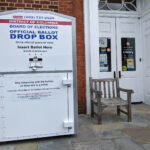
This is the second election cycle when every D.C. voter has had a ballot mailed directly to their homes. A product of the pandemic, proponents of mail ballots say they are the ultimate in convenience, and also a visual reminder for people to vote — which, some argue, could drive up turnout.
But has that happened in D.C.?
At first it looked a little unclear, but with a huge number of mail ballots being dropped off on Election Day itself (north of 27,000), turnout could well jump to close to 30%. That’s much higher than in the 2018 primary (when it was 18.6%, though Bowser had no real opponents) and even 2014 (26.9%). In fact, it’s looking like the highest turnout since the contested 2010 mayoral primary.
Still, there have also been a few incidents that show the steep learning curve to adopting mail ballots: candidates are still learning to adapt their campaign strategies, and some voters who cast mail ballots early later learned the candidates they voted for dropped out and they couldn’t change their votes. (This happened in Ward 3, as we describe above.)
While the final word on whether mail ballots make more people vote may take a few more election cycles to nail down, they do seem to be changing how people vote. In 2020 and this cycle, mail voting seems to be replacing early in-person voting as the preferred method for voters who just want to get their civic duty over and done with. As of the weekend some 51,000 voters had cast a mail ballot; only 12,000 or so voted early in-person.
Still, mail voting isn’t going away, says Allen. He’s got a bill he’s aiming to move forward this year that would make mail voting a permanent fixture of D.C. elections.
“It’s absolutely changed the way elections work in D.C. It’s good for the voters,” he tells me. “Every campaign has to realize this is the new normal, and the old way of making voters run a gauntlet at the polling place is no longer how you reach voters.”
The portion of this post that discusses mail ballots and turnout was updated to reflect new numbers of mail ballots dropped off on Election Day.